
Chef Juliette
John Dory (St. Pierre)
John Dory has the delicacy of sole and the firmness of turbot. A light flouring, a quick butter sauté, and nut-brown beurre noisette show exactly why looks never mattered.
A cooking platform built around craft, culture, and the stories behind what we eat.
Created by Chef Juliette
Based on No. 1391, Boiled Salted Pork à l’Anglaise, from Le Guide Culinaire (1907) by Auguste Escoffier
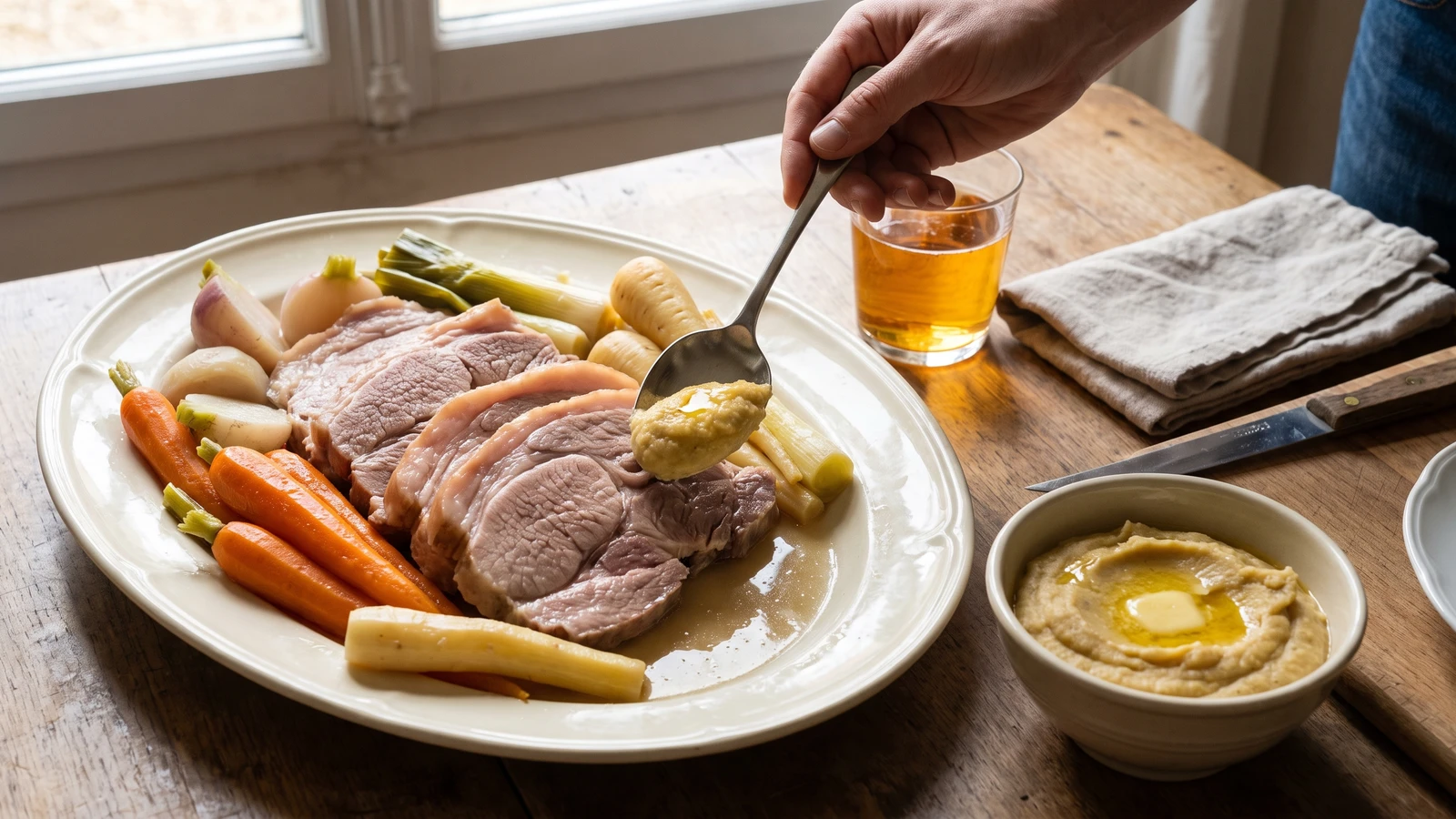
Porc Salé Bouilli à l’Anglaise pairs gently poached salted pork with sweet root vegetables and a buttery pease pudding, a plain-spoken lesson in controlling salt, heat, and texture at one generous table.
Porc Salé Bouilli à l’Anglaise (boiled salted pork, English style) teaches the discipline of a poach that only trembles. Despite the name, a rolling boil is precisely what you must not give it: fierce heat tightens the pork, clouds the cooking liquor, and knocks the vegetables to pieces. Start cold, climb slowly, and let the cured meat season its own pot.
The source assumes three pounds of pork, a pound of cooked split-pea purée already waiting, and a cook prepared to tie the pudding into a floured napkin. For four servings, the working proportion becomes two pounds of pork, 302 grams of purée, 57 grams of butter, and two eggs. The napkin is brigade scaffolding; a covered heatproof bowl in a bain-marie (hot-water bath) gives the same moist poach without the troublesome knot. No saucier, standing stock, or salamander belongs here. Plain water is deliberate, while the separately cooked pease pudding and the whole vegetables are the dish and must stay. One cook, one stove, one evening.
The finished pork should slice moist and rosy-beige, surrounded by vegetables that remain whole and sweet, with the pale ochre pudding waiting in its own serving dish. Guard the heat above everything else. A bare tremble makes the meal; a hard boil undoes it.
Porc Salé Bouilli à l’Anglaise has its real home at the English family table, particularly in North East England, where cured pork and pease pudding have long been served as companions. The French classical canon recorded the pairing as à l’Anglaise, preserving the English practice of poaching the meat plainly with vegetables and sending the enriched peas separately. Plain never meant flavorless: the curing seasons the cooking liquor, the roots sweeten it, and butter and eggs give the peas their generous finish.
Quantity
2 pounds (907 g)
tied if loose
Quantity
About 10 cups (2.4 L / 2.4 kg), or enough to cover the pork by 1 inch
Quantity
2 medium (about 1½ cups / 200 g)
peeled and cut into large lengths
Quantity
2 small (about 1½ cups / 220 g)
peeled and quartered
Quantity
2 medium (about 2 cups / 180 g)
washed and cut into large lengths
Quantity
4 small (about 2 cups / 300 g)
peeled and halved lengthwise
Quantity
¾ cup (180 ml / 150 g), to yield 302 g cooked purée
rinsed
Quantity
3 cups (710 ml / 710 g)
Quantity
4 tablespoons (60 ml / 57 g)
softened
Quantity
2
Quantity
⅛ teaspoon (0.6 ml / 0.8 g)
Quantity
¼ teaspoon (1.25 ml / 0.6 g)
Quantity
⅛ teaspoon (0.6 ml / 0.3 g)
Quantity
1 teaspoon (5 ml / 5 g)
Quantity
About 6 cups (1.4 L / 1.4 kg)
| Ingredient | Quantity |
|---|---|
| boneless unsmoked salted pork shouldertied if loose | 2 pounds (907 g) |
| cold water | About 10 cups (2.4 L / 2.4 kg), or enough to cover the pork by 1 inch |
| carrotspeeled and cut into large lengths | 2 medium (about 1½ cups / 200 g) |
| turnipspeeled and quartered | 2 small (about 1½ cups / 220 g) |
| leeks, white and pale green partswashed and cut into large lengths | 2 medium (about 2 cups / 180 g) |
| parsnipspeeled and halved lengthwise | 4 small (about 2 cups / 300 g) |
| dried yellow split peasrinsed | ¾ cup (180 ml / 150 g), to yield 302 g cooked purée |
| water for cooking the split peas | 3 cups (710 ml / 710 g) |
| unsalted buttersoftened | 4 tablespoons (60 ml / 57 g) |
| large eggs | 2 |
| fine salt | ⅛ teaspoon (0.6 ml / 0.8 g) |
| ground white pepper | ¼ teaspoon (1.25 ml / 0.6 g) |
| freshly grated nutmeg | ⅛ teaspoon (0.6 ml / 0.3 g) |
| unsalted butter for the pudding basin | 1 teaspoon (5 ml / 5 g) |
| hot water for the bain-marie | About 6 cups (1.4 L / 1.4 kg) |
Set the tied pork in a snug 5 to 6-quart pot and add enough cold water to cover it by 1 inch. Bring the water slowly toward a simmer over 20 to 25 minutes, skimming away the gray foam as it rises. The name says bouilli, but the technique is a poach: once only a few bubbles break the surface, reduce the heat and hold the liquor between 180 and 190°F (82 and 88°C). Leave the lid ajar and cook for 75 minutes before adding the vegetables.
While the pork begins cooking, put the rinsed split peas and their water in a saucepan. Bring them to a boil, skim once, then lower the heat and simmer uncovered for 45 to 55 minutes, stirring more often as they soften. Add a little water if the peas become exposed before they collapse. Drain them thoroughly, mash until smooth but not airy, and return the purée to low heat for 2 or 3 minutes, stirring until it sits heavily on the spoon. Weigh out exactly 302 g. If it is watery, keep drying it gently; if it is too stiff to stir, work in a spoonful of its cooking water. The pudding’s set depends on this consistency.
Beat the 57 g softened butter into the warm split-pea purée until it disappears and leaves a soft sheen. Let the mixture cool until it feels merely warm against a fingertip, then beat in the eggs one at a time. Add the salt, white pepper, and nutmeg. The mixture should fall reluctantly from the spoon rather than pour; hot purée scrambles the eggs, while wet purée makes a pudding that never gains its proper body.
Butter a 1-quart heatproof pudding basin and spoon in the pea mixture, smoothing the top. Cover it tightly with buttered parchment and foil. Set the basin on a small rack or folded kitchen towel in a deep saucepan, pour hot water halfway up its sides, and cover the saucepan. Hold the bain-marie at the barest simmer for 45 to 55 minutes. Move directly to the vegetables while it cooks. The pudding is ready when its center is set, a thin knife comes out almost clean, and an instant-read thermometer reaches 160°F (71°C). If the center remains soft, cover it again and give it another 10 minutes. Do not turn up the heat.
Once the pork has cooked for 75 minutes, add the carrots and turnips to its pot. Keep the liquor at the same bare tremble. After 15 minutes, add the parsnips and leeks, then continue for another 25 to 35 minutes. Lift each vegetable out as soon as a knife enters without resistance and keep it covered with a little poaching liquor. The pork shoulder is ready when a skewer slips easily into its thickest part and the internal temperature is between 175 and 185°F (79 and 85°C). If the vegetables finish first, hold them separately; if the pork still resists, let it continue alone. Tender vegetables and tender meat need not arrive at the same second.
Lift the pork from its liquor and rest it loosely covered for 15 minutes. Keep the vegetables moist with a few spoonfuls of the hot liquor. Unmold the pease pudding onto its own warm dish, or serve it directly from the basin if it feels delicate. Slice the pork across the grain, arrange the carrots, turnips, leeks, and parsnips generously around it, and spoon over just enough strained cooking liquor to give everything a sheen. Send the pease pudding separately, exactly as the dish requires. À table!
1 serving (about 480g)
Culinary guides, cultural storytelling, and the editorial depth that makes cooking meaningful.
Discover Culinary ExplorerChef Juliette
John Dory has the delicacy of sole and the firmness of turbot. A light flouring, a quick butter sauté, and nut-brown beurre noisette show exactly why looks never mattered.

Chef Juliette
Fresh haddock proves its delicacy in the meunière pan: a fine flour crust, moist pearly flakes, and beurre noisette sharpened with lemon and parsley, ready from one skillet in half an hour.
Chef Juliette
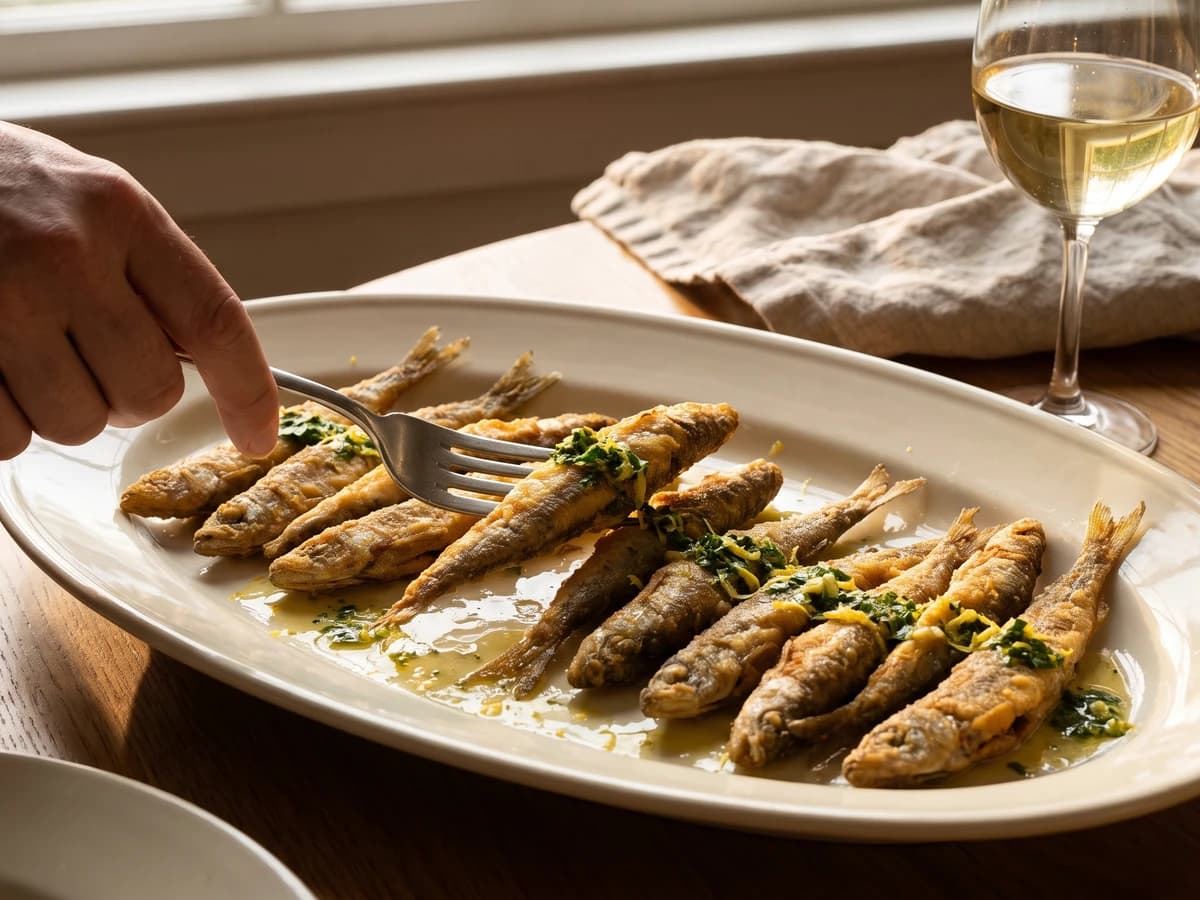
Éperlans à l’Anglaise turns small fish into a lesson in disciplined coating: boned smelts under a close, crisp crumb, pan-fried in clarified butter and finished with bright, half-melted maître d’hôtel butter.

Chef Juliette
Tiny smelts, shallot, mushrooms, white wine, gratin sauce, and fine bread raspings meet a fierce oven, where the fish must turn tender in the same breath the buttered crust bronzes.