
Chef Juliette
John Dory (St. Pierre)
John Dory has the delicacy of sole and the firmness of turbot. A light flouring, a quick butter sauté, and nut-brown beurre noisette show exactly why looks never mattered.
A cooking platform built around craft, culture, and the stories behind what we eat.
Created by Chef Juliette
Based on No. 1366, Carré d’Agneau Printanier, from Le Guide Culinaire (1907) by Auguste Escoffier
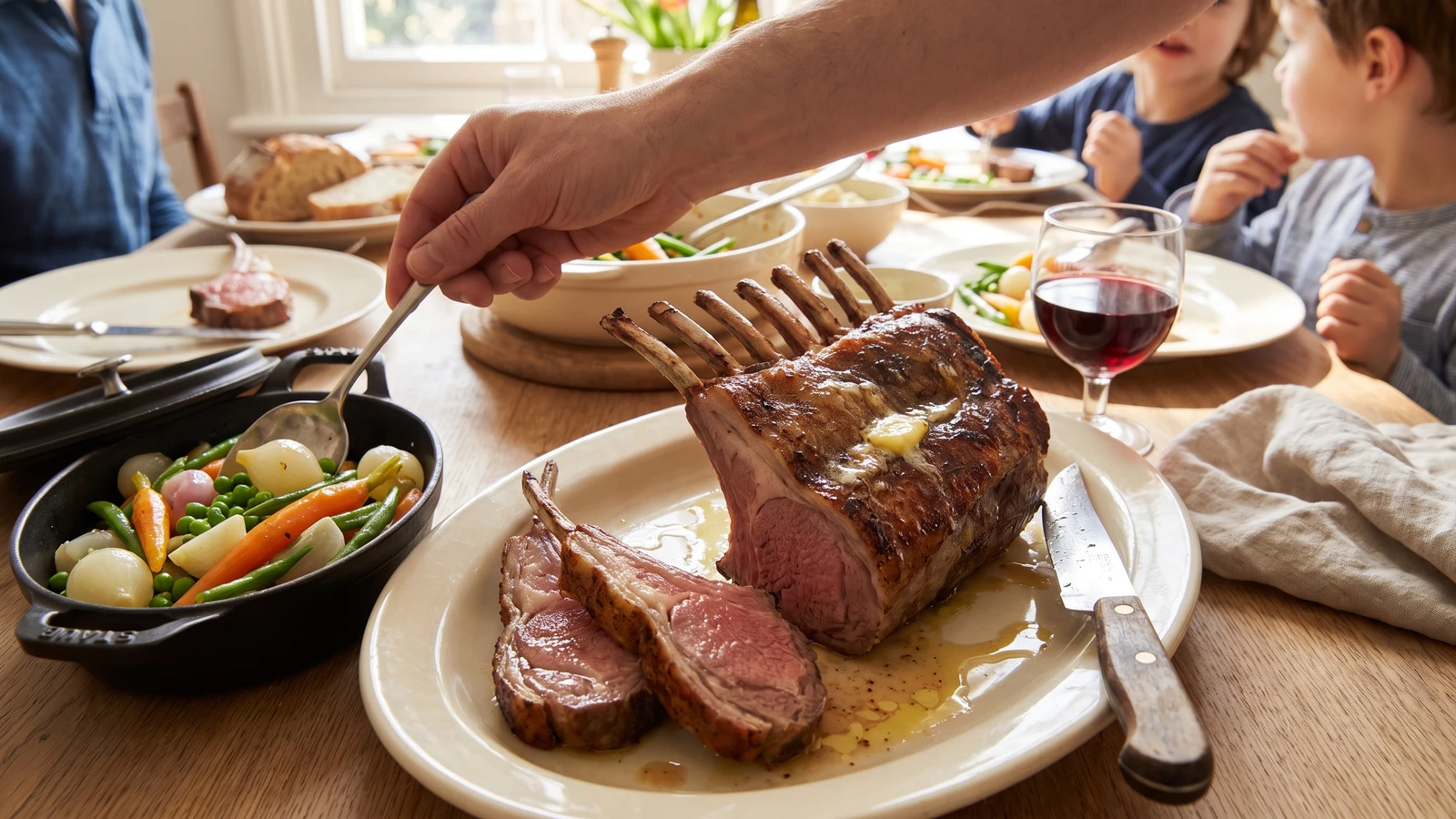
Carré d’Agneau Printanier brings a butter-poëled rack to the table beside a cocotte of glazed spring vegetables, each cooked on its own clock, then finished together until bright, tender, and shining.
Carré d’Agneau Printanier (butter-poëled rack of lamb with spring vegetables) teaches one essential truth: vegetables may share a season, but they do not share a cooking clock. The onions begin in butter, the carrots and turnips are glazed separately, and the peas and beans enter raw at the finish. Put everything in one pot from the beginning and spring turns grey before the lamb reaches the table.
Classical service assumed a butcher-shortened rack, a saucier on staff, consommé and clear stock never off the fire, and a commis turning every root into a perfect little clove. A salamander might stand nearby, but this dish earns its colour by uncovering the poëling pan, so your oven needs no help. At home, a compact lidded casserole replaces the deep earthen poëling vessel, an instant-read thermometer replaces guesswork, and one saucepan handles the roots in sequence. Perfect seven-sided tournage is brigade scaffolding and can go; equal size, butter-rich Poëlings (No. 250), separate vegetable cooking, and the final cocotte are the dish and must stay. One cook, one stove, one evening.
The finished rack should be deeply bronzed, rosy at the centre, and shining with butter, with the vegetables gathered beside it rather than scattered as decoration. The step that decides dinner is the final union in the cocotte: cook the peas and beans through without sacrificing their colour, then reduce the clear stock until every vegetable wears a fine gloss.
Carré d’agneau printanier belongs to the Parisian classical table, where printanier names a precise spring garnish of turned roots, small onions, peas, and French beans, not a loose handful of herbs. The service carried the market garden into the grand kitchen, where each vegetable was cooked on its own clock before being reunited in the cocotte beside a butter-poëled rack. Poêler here does not mean a quick pan-fry: it is a covered, butter-rich roast finished uncovered for colour.
Quantity
1 rack (1½ to 1¾ lb / 700 to 800 g), for Poëlings (No. 250)
chine bone removed, ribs frenched, and fat cap trimmed to ¼ inch
Quantity
1½ teaspoons (7.5 ml / 9 g), divided
Quantity
½ teaspoon (2.5 ml / 1 g)
Quantity
8 tablespoons (120 ml / 113 g), divided
Quantity
8 (about 4 oz / 120 g)
peeled
Quantity
10 pieces (about 1 cup / 150 g)
pared to the size and shape of garlic cloves
Quantity
10 pieces (about 1 cup / 170 g)
pared to the size and shape of garlic cloves
Quantity
1½ cups (360 ml / 360 g), divided
Quantity
3 tablespoons (45 ml / 30 g)
Quantity
3 tablespoons (45 ml / 30 g)
cut raw into small lozenges
Quantity
3 tablespoons (45 ml / 45 g)
| Ingredient | Quantity |
|---|---|
| eight-bone rack of lambchine bone removed, ribs frenched, and fat cap trimmed to ¼ inch | 1 rack (1½ to 1¾ lb / 700 to 800 g), for Poëlings (No. 250) |
| fine salt | 1½ teaspoons (7.5 ml / 9 g), divided |
| freshly ground black pepper | ½ teaspoon (2.5 ml / 1 g) |
| unsalted butter | 8 tablespoons (120 ml / 113 g), divided |
| small pearl onionspeeled | 8 (about 4 oz / 120 g) |
| carrot piecespared to the size and shape of garlic cloves | 10 pieces (about 1 cup / 150 g) |
| turnip piecespared to the size and shape of garlic cloves | 10 pieces (about 1 cup / 170 g) |
| clear beef or veal consommé | 1½ cups (360 ml / 360 g), divided |
| shelled fresh peas or frozen petits pois | 3 tablespoons (45 ml / 30 g) |
| French beanscut raw into small lozenges | 3 tablespoons (45 ml / 30 g) |
| good clear veal, lamb, or chicken stock | 3 tablespoons (45 ml / 45 g) |
Take the lamb from the cold about 30 minutes before cooking. Heat the oven to 375°F (190°C). Pat the rack completely dry, then season it all over with 1 teaspoon of the salt and the pepper. A wet surface delays browning, and the covered beginning of the poëling already treats the meat gently, so give the butter a dry surface to work upon.
Pare the carrots and turnips into ten pieces of each, all roughly the size and shape of garlic cloves. They need not have the exact seven faces of formal tournage, but they must match in thickness so they finish together. Trim the root ends of the onions without cutting so deeply that their layers separate.
Melt 1½ tablespoons of the butter in the vegetable cocotte over low heat. Add the onions with a small pinch of the remaining salt, cover, and cook for 7 to 9 minutes, rolling them occasionally, until their outer layers have softened but their centres remain firm. Keep them pale. Lift them to a plate and leave the butter in the cocotte.
Put the carrots in a small saucepan with ¾ cup of the consommé and 1 tablespoon of the butter. Bring to a gentle simmer and cook uncovered until the point of a knife enters with slight resistance, then let the remaining liquid reduce until it coats the carrots in a clear glaze. Transfer them to the plate with the onions. Repeat with the turnips, another ¾ cup of consommé, and 1 tablespoon of butter. If the liquid disappears before a root is tender, add a spoonful of water; if the root softens before the glaze forms, lift it out, reduce the liquid alone, and return it briefly. Ça se rattrape.
Cook the rack according to Poëlings (No. 250), using a compact lidded casserole and the remaining 4½ tablespoons of butter. The pan should hold the meat closely enough for frequent basting, and no moistening liquid goes in while the lamb cooks. That dry, butter-rich environment is the technique; add stock now and you have begun a braise. Uncover for the final colouring as the preparation directs, with no salamander needed, and begin checking the centre after about 22 minutes. Remove the rack when the thickest part of the eye reaches 128 to 130°F (53 to 54°C) for rosy lamb after resting.
Transfer the rack to a warm platter, cover it loosely, and rest it for 10 to 12 minutes. Do not wrap it tightly, or the bronzed surface softens. The internal temperature will continue to rise and the juices will settle back through the eye of the meat.
While the lamb rests, return the onions, carrots, and turnips to the vegetable cocotte. Add the raw peas, French beans, and all 3 tablespoons of clear stock. Cover and cook over gentle heat for 4 to 6 minutes, shaking the cocotte rather than stirring hard, until the beans are tender with a little bite and the peas are cooked through. Uncover and reduce the liquid until it clings in a shining film. If the vegetables are ready while the cocotte is still watery, lift them out and reduce the stock alone, then fold them back through the glaze. Ça se rattrape.
Taste the vegetables and add the last salt only if the consommé and stock require it. Present the rack whole, then carve cleanly between the bones into chops. Spoon over any clear buttery juices produced by Poëlings (No. 250), and bring the spring vegetables to the table in their cocotte, exactly as the dish intends. À table!
1 serving (about 280g)
Culinary guides, cultural storytelling, and the editorial depth that makes cooking meaningful.
Discover Culinary ExplorerChef Juliette
John Dory has the delicacy of sole and the firmness of turbot. A light flouring, a quick butter sauté, and nut-brown beurre noisette show exactly why looks never mattered.

Chef Juliette
Fresh haddock proves its delicacy in the meunière pan: a fine flour crust, moist pearly flakes, and beurre noisette sharpened with lemon and parsley, ready from one skillet in half an hour.
Chef Juliette
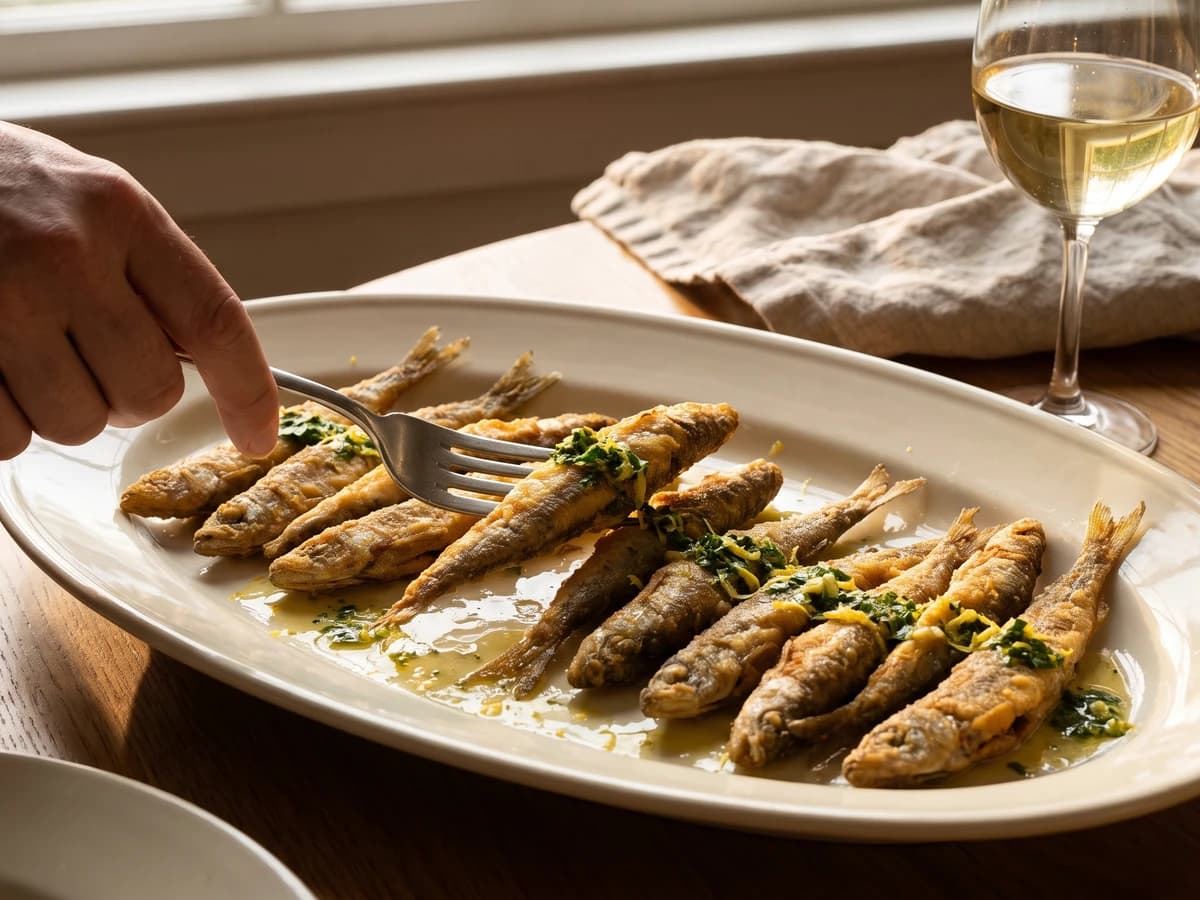
Éperlans à l’Anglaise turns small fish into a lesson in disciplined coating: boned smelts under a close, crisp crumb, pan-fried in clarified butter and finished with bright, half-melted maître d’hôtel butter.

Chef Juliette
Tiny smelts, shallot, mushrooms, white wine, gratin sauce, and fine bread raspings meet a fierce oven, where the fish must turn tender in the same breath the buttered crust bronzes.