
Chef Juliette
John Dory (St. Pierre)
John Dory has the delicacy of sole and the firmness of turbot. A light flouring, a quick butter sauté, and nut-brown beurre noisette show exactly why looks never mattered.
A cooking platform built around craft, culture, and the stories behind what we eat.
Created by Chef Juliette
Based on No. 1357, Quarter of Lamb, from Le Guide Culinaire (1907) by Auguste Escoffier
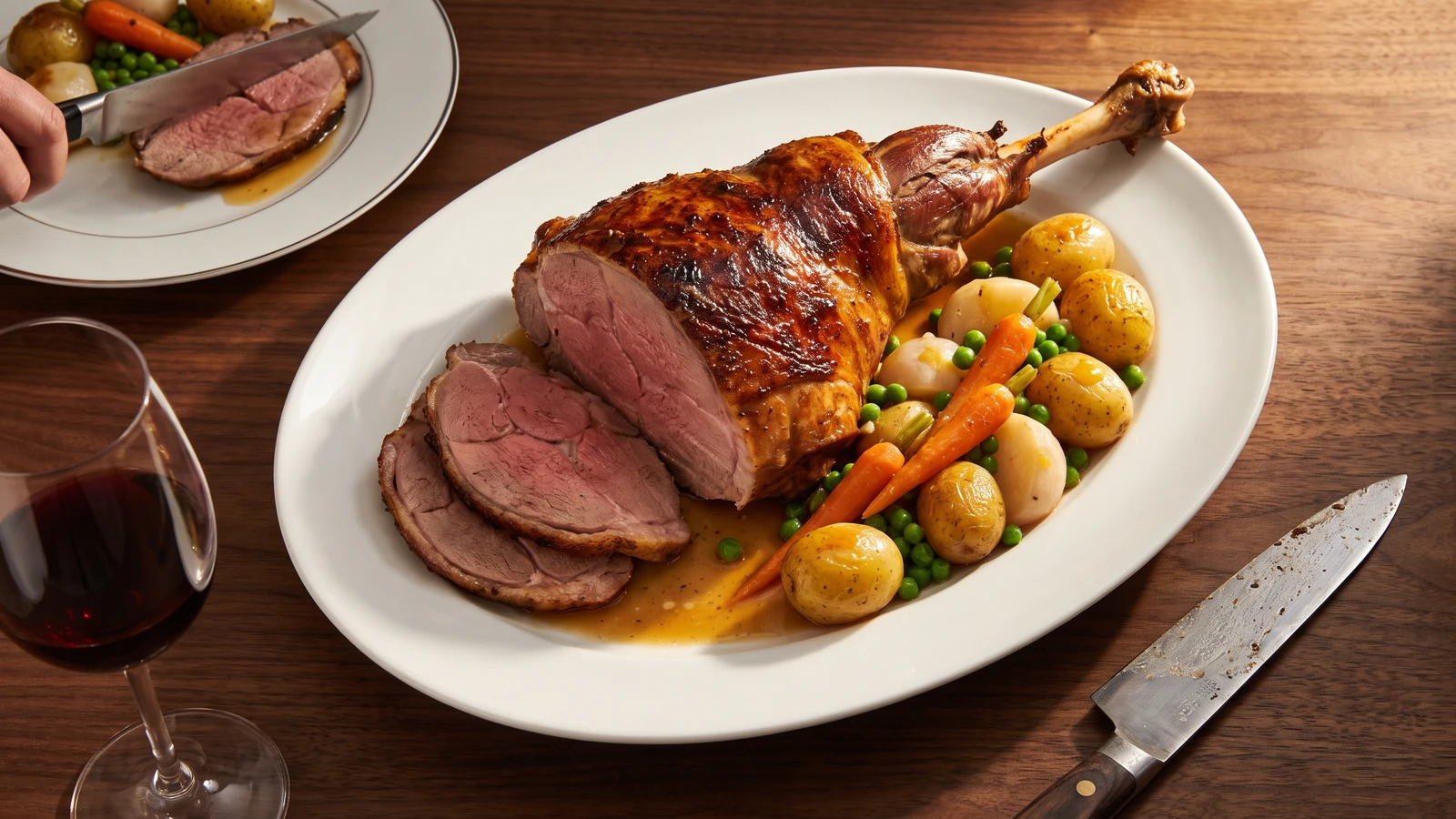
Quartier d’Agneau Poêlé teaches the discipline of basting: a young hindquarter slowly enclosed with butter, then uncovered to bronze, with clear lamb jus and spring vegetables carried proudly to the Sunday table.
Quartier d’Agneau Poêlé teaches one true thing: the basting fat is not decoration. It bronzes the outside, carries the flavor of the aromatic bed, and guards the young meat while the leg and loin cook together. Keep that butter moving and sweet, never black, and the joint will arrive burnished, succulent, and smelling unmistakably of Sunday dinner.
The original entry assumed a butcher dividing a small lamb for relevé service, stock never off the fire, a saucier attending the gravy pan, and a salamander nearby if the surface needed stronger color. At home, ask the butcher for one trimmed hindquarter with the leg and half loin attached. A tightly covered roasting pan replaces the poêle, a small jug of lamb stock builds the jus, and the oven’s final higher heat supplies the bronzing. One cook, one stove, one evening.
The separate sauce station and parade of garnishes were brigade scaffolding, so they go. The poêlé itself, frequent basting, the clear jus made from the joint’s own juices, and the légumes nouveaux all stay because they are the dish. Dry the lamb thoroughly before it meets the butter, then watch the basting fat closely; that is the step that decides everything.
Quartier d’agneau belongs to the classical French relevé, the substantial joint served at a formal table, and to the bourgeois Sunday dinner that gave such roasts a less ceremonial home. The canon cut lamb much as it cut mutton but recognized the haunch as its own joint, one leg with half the loin still attached, a reminder that a quarter was a butcher’s construction rather than four neat equal pieces. Young lamb was poêlé or roasted and accompanied by its own clear jus and légumes nouveaux, whose small size and tenderness marked the season.
Quantity
1 joint, 5 to 6 lb (2.3 to 2.7 kg)
leg and half loin attached, chine bone removed or cracked, hip joint loosened and joint tied
Quantity
6 tbsp (90 ml / 85 g)
for the lamb
Quantity
2 tbsp (30 ml / 28 g)
for the vegetables
Quantity
2 tbsp (30 ml / 28 g)
reserved in case the basting fat scorches
Quantity
2 tsp (10 ml / 12 g)
for the lamb
Quantity
1 tbsp (15 ml / 18 g)
for the vegetables and their cooking water
Quantity
1 tsp (5 ml / 2 g)
freshly ground
Quantity
1½ cups (360 ml / 225 g)
thickly sliced
Quantity
1½ cups (360 ml / 190 g)
thickly sliced
Quantity
1
2 thyme sprigs, 4 parsley stems, and 1 bay leaf
Quantity
2 cups (480 ml / 480 g)
warmed
Quantity
about 4 cups (960 ml / 680 g)
scrubbed
Quantity
about 3 cups (720 ml / 340 g)
scrubbed and trimmed
Quantity
about 2½ cups (600 ml / 340 g)
scrubbed and trimmed
Quantity
2 cups (480 ml / 290 g)
Quantity
1 tsp (5 ml / 4 g)
| Ingredient | Quantity |
|---|---|
| butcher-prepared hindquarter of young lambleg and half loin attached, chine bone removed or cracked, hip joint loosened and joint tied | 1 joint, 5 to 6 lb (2.3 to 2.7 kg) |
| unsalted butterfor the lamb | 6 tbsp (90 ml / 85 g) |
| unsalted butterfor the vegetables | 2 tbsp (30 ml / 28 g) |
| unsalted butter (optional)reserved in case the basting fat scorches | 2 tbsp (30 ml / 28 g) |
| fine sea saltfor the lamb | 2 tsp (10 ml / 12 g) |
| fine sea saltfor the vegetables and their cooking water | 1 tbsp (15 ml / 18 g) |
| black pepperfreshly ground | 1 tsp (5 ml / 2 g) |
| yellow onionthickly sliced | 1½ cups (360 ml / 225 g) |
| carrots for the aromatic bedthickly sliced | 1½ cups (360 ml / 190 g) |
| bouquet garni2 thyme sprigs, 4 parsley stems, and 1 bay leaf | 1 |
| unsalted lamb stockwarmed | 2 cups (480 ml / 480 g) |
| small new potatoesscrubbed | about 4 cups (960 ml / 680 g) |
| baby carrotsscrubbed and trimmed | about 3 cups (720 ml / 340 g) |
| baby turnipsscrubbed and trimmed | about 2½ cups (600 ml / 340 g) |
| shelled fresh or frozen peas | 2 cups (480 ml / 290 g) |
| granulated sugar | 1 tsp (5 ml / 4 g) |
Take the lamb from the cold 45 minutes before cooking. Heat the oven to 325°F (165°C). Remove any wrapping, pat every surface thoroughly dry, and inspect the butcher’s work: the chine should be removed or cracked, the hip joint loosened, and the leg and loin tied into a compact joint. Season all over with the 2 teaspoons salt and the black pepper. Wet lamb sheds water into the pan and dilutes the butter, so do not hurry the drying.
Melt the 6 tablespoons butter in the roasting pan over gentle heat, or melt it separately and pour it in if the pan cannot sit safely on the stove. Add the sliced onion, sliced carrots, and bouquet garni, turning them through the butter for 4 to 5 minutes without letting them color. Set the lamb on this aromatic bed with the fat side uppermost. Spoon butter over every exposed surface, cover the pan tightly with its lid or a sheet of parchment under foil, and place it in the oven.
Roast the lamb covered for 80 to 90 minutes. Every 20 minutes, uncover it just long enough to tilt the pan and spoon the butter and lamb fat repeatedly over the leg and loin. The fat you baste with is what browns the surface and guards the meat. If the pan becomes dry, add 2 tablespoons of the warm stock at a time, using no more than ½ cup (120 ml) altogether. Raise the oven to 400°F (200°C), remove the cover, and roast for another 25 to 40 minutes, basting every 10 minutes. The fat should remain hazelnut-gold. If it turns black, lift the lamb out at once, discard the scorched fat and aromatics, wipe the pan, and continue with the reserved butter and ¼ cup (60 ml) stock. Ça se rattrape. You lose a little fond, not the dinner. Begin checking both muscles after 25 minutes. Probe the thickest part of the leg and the center of the loin without touching bone. If the loin cooks ahead, cover only that section with buttered foil. Remove the joint when its coolest reading reaches 140°F (60°C); carryover heat during the rest should bring it to at least 145°F (63°C).
During the lamb’s final 45 minutes, place the new potatoes in a saucepan, cover them with cold water, and add 2 teaspoons of the vegetable salt. Bring them slowly to a bare simmer and cook for 15 to 20 minutes, until a knife enters without resistance but the skins remain intact. Drain and keep them covered. Put the baby carrots and turnips in a wide sauté pan with the 2 tablespoons butter, the sugar, the remaining vegetable salt, and enough water to reach halfway up their sides. Cover and simmer gently for 12 to 18 minutes. The vegetables should become tender without collapsing; lift out any smaller pieces as they finish.
Transfer the lamb to a warm carving board or platter and cover it loosely with foil for 20 minutes. Do not wrap it tightly, or the burnished surface softens in its own moisture. Check the temperature after the rest; it should have reached at least 145°F (63°C). If it stops short, return the joint to a 375°F (190°C) oven for 5 to 10 minutes, then rest it briefly again. Pour every resting juice into the finished jus.
Remove and discard the bouquet garni. Tilt the roasting pan and spoon away the surface fat, leaving the browned film and aromatic vegetables behind. Add the remaining warm lamb stock and set the pan over medium heat. If the pan is not suitable for the stove, add boiling stock, scrape thoroughly, and transfer everything to a saucepan. Bring it to a lively simmer while scraping up every bronze trace of fond. Simmer for 8 to 12 minutes, then strain through a fine sieve without pressing the vegetables, which would cloud the jus. Skim again and reduce to about 1 cup (240 ml), adding the lamb’s resting juices at the end. The jus should be clear, deeply savory, and just substantial enough to glaze a spoon. If it is greasy, let it stand for a minute and skim rather than whisking; if too strong, loosen it with warm stock, and if thin, reduce it further. No flour is needed because this version follows the source’s own-stock jus rather than its alternative thickened gravy.
When the carrots and turnips are tender, remove the lid and let their cooking liquid reduce until the butter forms a bright glaze around them. Add the drained potatoes and peas with 2 to 3 tablespoons water, then turn everything gently over medium heat for 3 to 4 minutes. Stop as soon as the peas are tender and vividly green. If the glaze catches, loosen it immediately with a spoonful of water; patience, not scraping, preserves the vegetables.
Remove the strings. Slip a sturdy knife through the loosened hip joint to separate the loin from the leg, then carve the leg across the grain into broad slices and divide the loin between its ribs. Arrange the meat generously on a warmed platter with the glazed new vegetables around it. Spoon over enough clear jus to make the cut surfaces gleam and pass the rest at the table. Never apologize at your own table. À table!
1 serving (about 800g)
Culinary guides, cultural storytelling, and the editorial depth that makes cooking meaningful.
Discover Culinary ExplorerChef Juliette
John Dory has the delicacy of sole and the firmness of turbot. A light flouring, a quick butter sauté, and nut-brown beurre noisette show exactly why looks never mattered.

Chef Juliette
Fresh haddock proves its delicacy in the meunière pan: a fine flour crust, moist pearly flakes, and beurre noisette sharpened with lemon and parsley, ready from one skillet in half an hour.
Chef Juliette
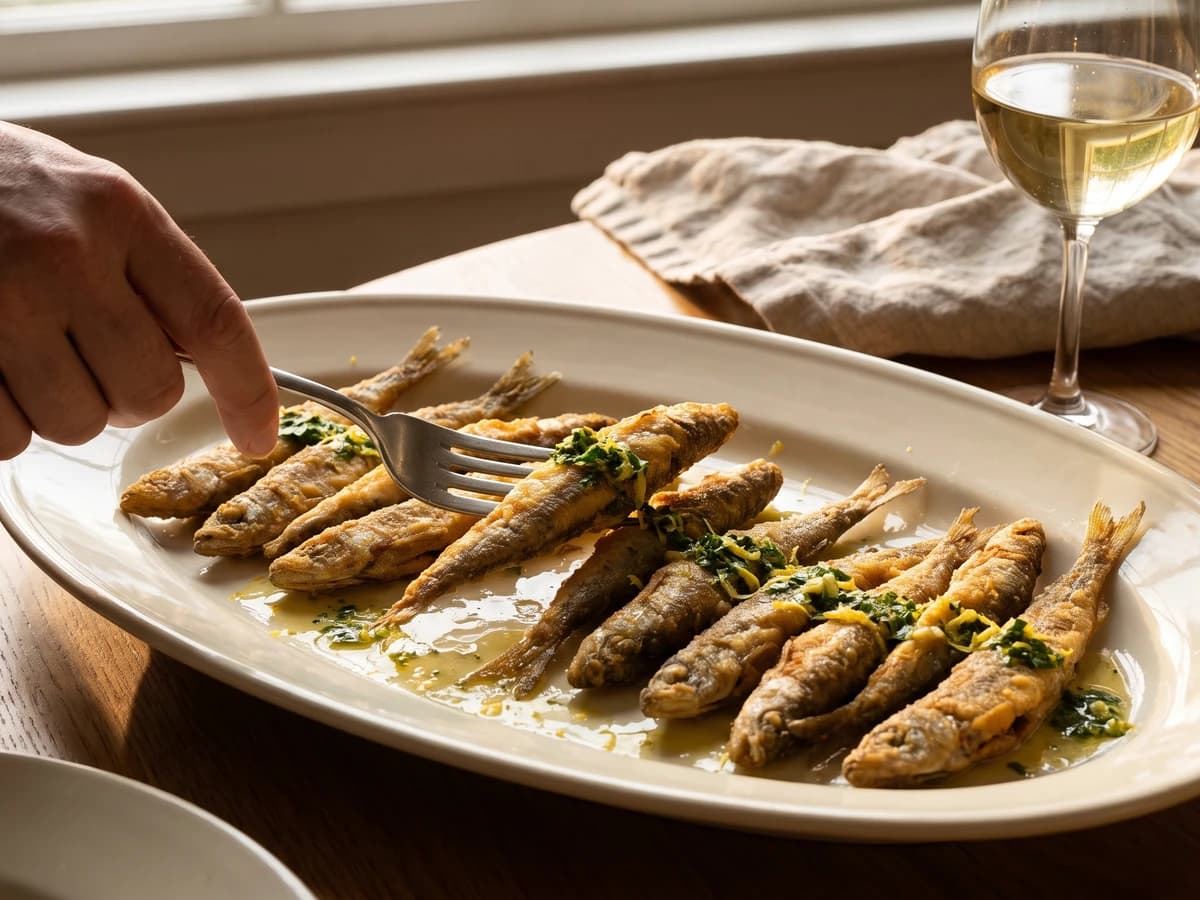
Éperlans à l’Anglaise turns small fish into a lesson in disciplined coating: boned smelts under a close, crisp crumb, pan-fried in clarified butter and finished with bright, half-melted maître d’hôtel butter.

Chef Juliette
Tiny smelts, shallot, mushrooms, white wine, gratin sauce, and fine bread raspings meet a fierce oven, where the fish must turn tender in the same breath the buttered crust bronzes.