
Chef Juliette
John Dory (St. Pierre)
John Dory has the delicacy of sole and the firmness of turbot. A light flouring, a quick butter sauté, and nut-brown beurre noisette show exactly why looks never mattered.
A cooking platform built around craft, culture, and the stories behind what we eat.
Created by Chef Juliette
Based on No. 1333, Rognons Sautés au Champagne, from Le Guide Culinaire (1907) by Auguste Escoffier
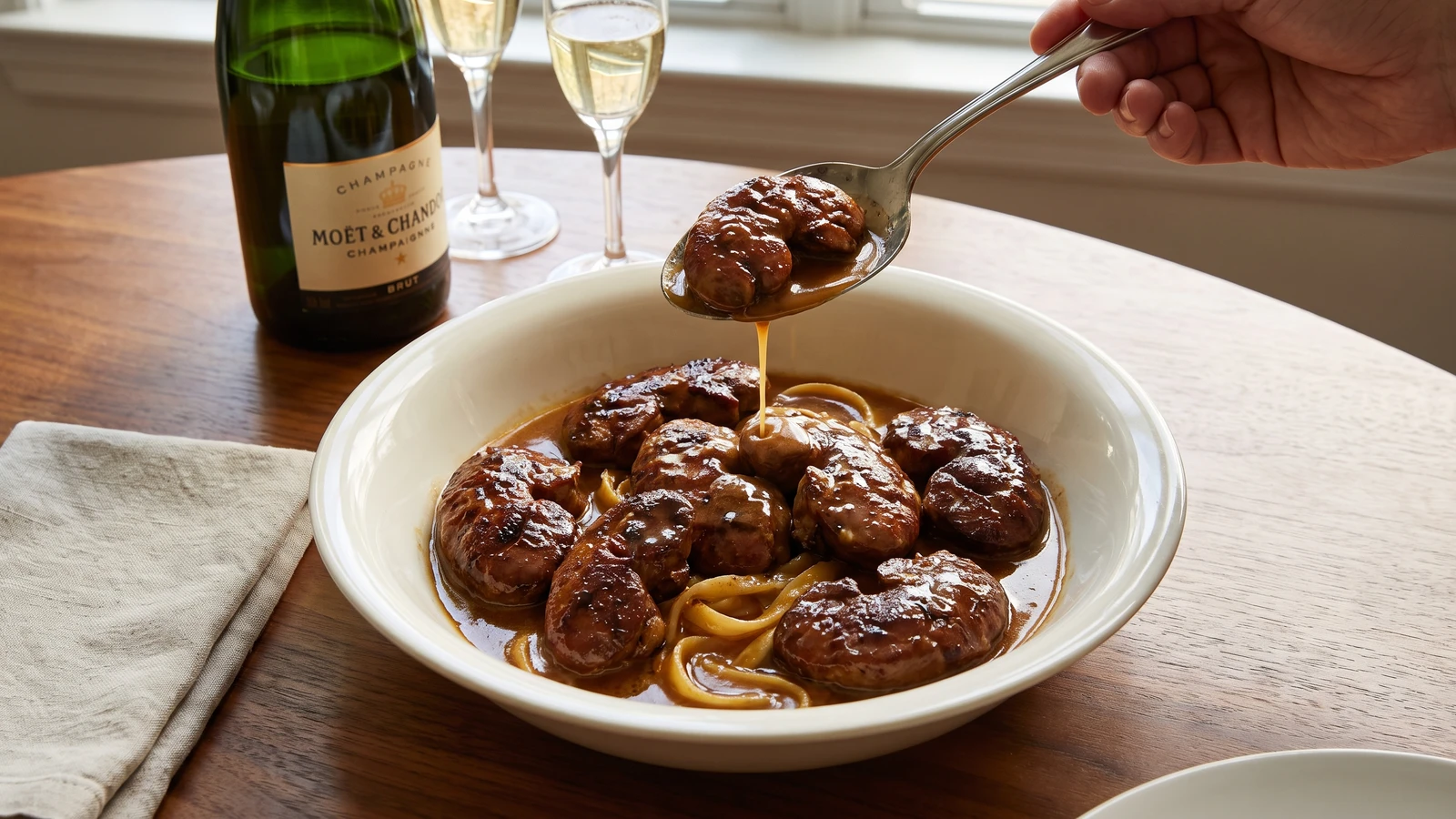
Rognons sautés au Champagne teach the essential wine-pan sauce: brown the kidneys fast, reduce Champagne almost dry, then add meat glaze and mount with butter until every piece wears a bright, savory gloss.
Rognons Sautés au Champagne (mutton kidneys sautéed with Champagne) teaches the wine-pan sauce at its clearest. One true thing: the kidneys wait for the sauce, never the sauce for the kidneys. Brown them quickly, lift them out, and don't return them until the reduction is finished. Let them simmer in Champagne and tenderness is gone.
The original entry assumed a saucier on staff, meat glaze held beside a stockpot never off the fire, a fierce range that could take six kidneys without cooling, and a timbale waiting warm for service. A salamander has no work here, because the entire sauce is made in the pan. At home, an unsalted refrigerated meat-glaze concentrate replaces the perpetual stockpot, two small batches replace the fierce range, and a warmed deep serving bowl replaces the timbale. We scale six kidneys to four while keeping the precise wine-to-glaze ratio. The ready glaze and service vessel are brigade scaffolding; the near-dry reduction and final butter are the dish itself. One cook, one stove, one evening.
The finished kidneys are deeply bronzed, tender within, and wrapped in a thin, lustrous sauce that tastes savory first and Champagne second. Before the pan heats, dry the kidneys completely. Moisture turns a sauté into a simmer, and that is the one mistake this sauce cannot conceal.
Rognons sautés belong to Parisian bistro and bourgeois cookery, where kidneys were prized as quick-cooking cuts and the browned pan became the foundation of supper. The Champagne version comes from the grand-kitchen branch of that practice: the same sauté-and-deglaze grammar used with Madeira or port, made more festive with Champagne and reinforced by meat glaze. It is not a provincial dish from Champagne; the wine names the sauce, while the method belongs to the national classical canon.
Quantity
4 (about 1 lb / 450 g total)
outer skins removed and halved lengthwise
Quantity
2 tablespoons (30 ml / 28 g)
divided
Quantity
½ teaspoon (2.5 ml / 3 g)
Quantity
¼ teaspoon (1.25 ml / 0.5 g)
Quantity
¾ cup plus 1 tablespoon (190 ml / 190 g)
Quantity
4 teaspoons (20 ml / 23 g)
Quantity
1 tablespoon (15 ml / 14 g)
cut into 3 pieces
| Ingredient | Quantity |
|---|---|
| mutton kidneysouter skins removed and halved lengthwise | 4 (about 1 lb / 450 g total) |
| unsalted butter for sautéingdivided | 2 tablespoons (30 ml / 28 g) |
| fine sea salt | ½ teaspoon (2.5 ml / 3 g) |
| freshly ground black pepper | ¼ teaspoon (1.25 ml / 0.5 g) |
| brut Champagne | ¾ cup plus 1 tablespoon (190 ml / 190 g) |
| melted unsalted meat glaze | 4 teaspoons (20 ml / 23 g) |
| cold unsalted butter for finishingcut into 3 pieces | 1 tablespoon (15 ml / 14 g) |
Peel away any remaining translucent outer skin and split each kidney lengthwise. If the butcher has left a dense white core in the center, trim it narrowly with a small sharp knife while keeping each half intact. Pat every surface thoroughly dry, then leave the kidneys uncovered in the cold while you measure the Champagne and meat glaze. Warm a deep serving bowl with hot water, dry it, and set it beside the stove.
Season the kidneys with the salt and pepper just before cooking. Heat a wide stainless-steel sauté pan over medium-high heat, then add half the sautéing butter. When the foam rises and begins to subside, lay in four kidney halves, cut sides down. Sauté for 1½ to 2 minutes without disturbing them, turn, and cook the rounded sides for another 1 to 2 minutes. Transfer them to the warmed bowl while still slightly underdone, about 150 to 155°F (66 to 68°C) at the thickest point. Repeat with the remaining butter and kidneys.
With all the kidneys out of the pan, immediately pour in the Champagne. Swill the pan, scraping every browned morsel from its floor and sides into the wine. Boil briskly until the Champagne has reduced almost entirely, about 5 to 7 minutes. As the liquid narrows, lower the heat and watch closely. It is ready when only about 1 tablespoon remains and the pan wears a syrupy, wine-scented glaze rather than a puddle.
Lower the heat and stir in the melted meat glaze. Let it bubble gently for 20 to 30 seconds, just until the reduction and glaze become one glossy base. Taste before adding any further seasoning, because even an unsalted concentrate becomes powerful when reduced. If it tastes too forceful, loosen it with 1 teaspoon (5 ml / 5 g) water and bring it back to one brief simmer.
Take the pan completely off the heat. Monter au beurre, finish the sauce with cold butter, by whisking in two pieces one at a time until the sauce gleams and lightly coats a spoon. If the butter floats in greasy beads, whisk in 1 teaspoon (5 ml / 5 g) cold water off the heat, then continue. Ça se rattrape. Return the kidneys and their resting juices to the pan, toss them gently over the lowest heat for 30 to 45 seconds, and confirm that the thickest pieces reach 160°F (71°C). If their juices thin the sauce, lift the kidneys out, reduce the sauce briefly, remove it from the heat, and whisk in the reserved final piece of butter before coating them again. Transfer everything to the warmed bowl and serve immediately. À table!
1 serving (about 105g)
Culinary guides, cultural storytelling, and the editorial depth that makes cooking meaningful.
Discover Culinary ExplorerChef Juliette
John Dory has the delicacy of sole and the firmness of turbot. A light flouring, a quick butter sauté, and nut-brown beurre noisette show exactly why looks never mattered.

Chef Juliette
Fresh haddock proves its delicacy in the meunière pan: a fine flour crust, moist pearly flakes, and beurre noisette sharpened with lemon and parsley, ready from one skillet in half an hour.
Chef Juliette
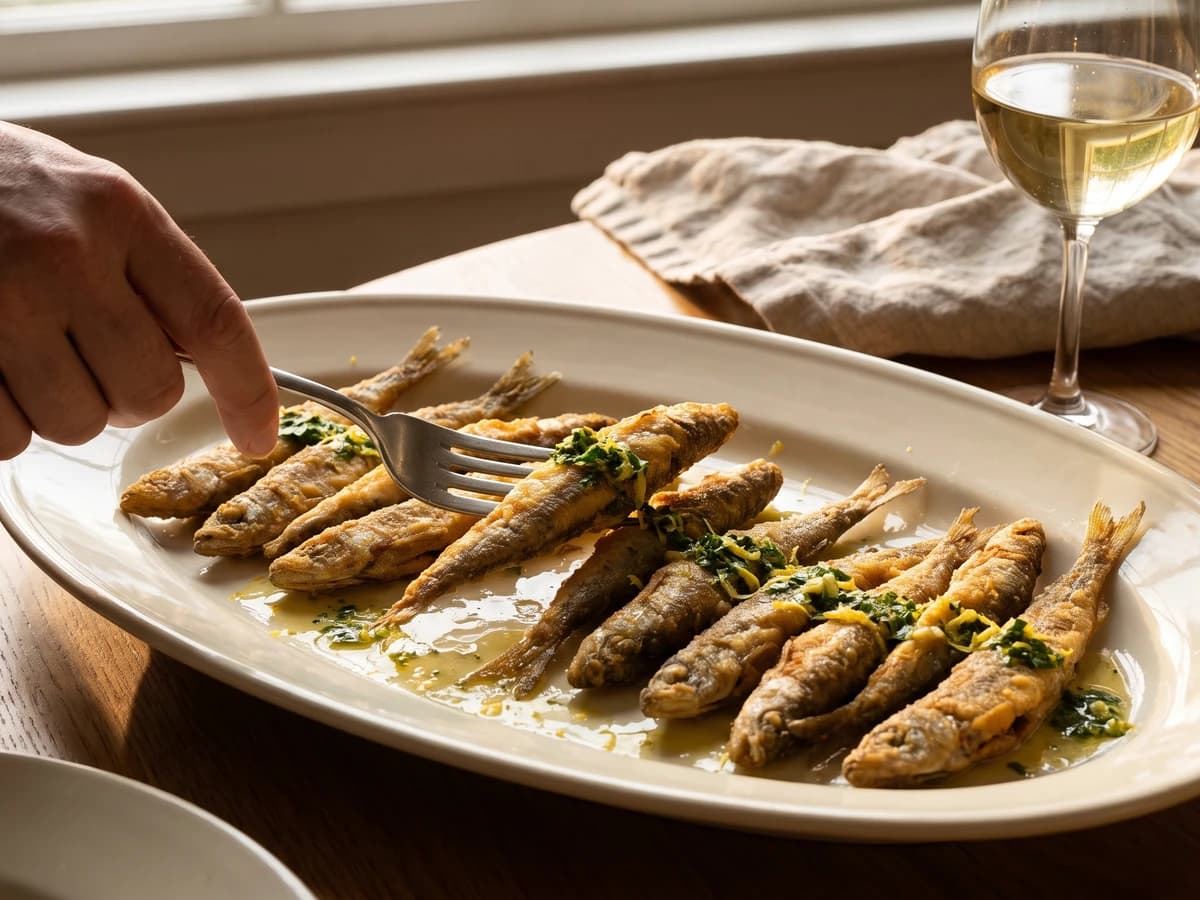
Éperlans à l’Anglaise turns small fish into a lesson in disciplined coating: boned smelts under a close, crisp crumb, pan-fried in clarified butter and finished with bright, half-melted maître d’hôtel butter.

Chef Juliette
Tiny smelts, shallot, mushrooms, white wine, gratin sauce, and fine bread raspings meet a fierce oven, where the fish must turn tender in the same breath the buttered crust bronzes.