
Chef Juliette
John Dory (St. Pierre)
John Dory has the delicacy of sole and the firmness of turbot. A light flouring, a quick butter sauté, and nut-brown beurre noisette show exactly why looks never mattered.
A cooking platform built around craft, culture, and the stories behind what we eat.
Created by Chef Juliette
Based on No. 1329, Mutton Kidneys, from Le Guide Culinaire (1907) by Auguste Escoffier
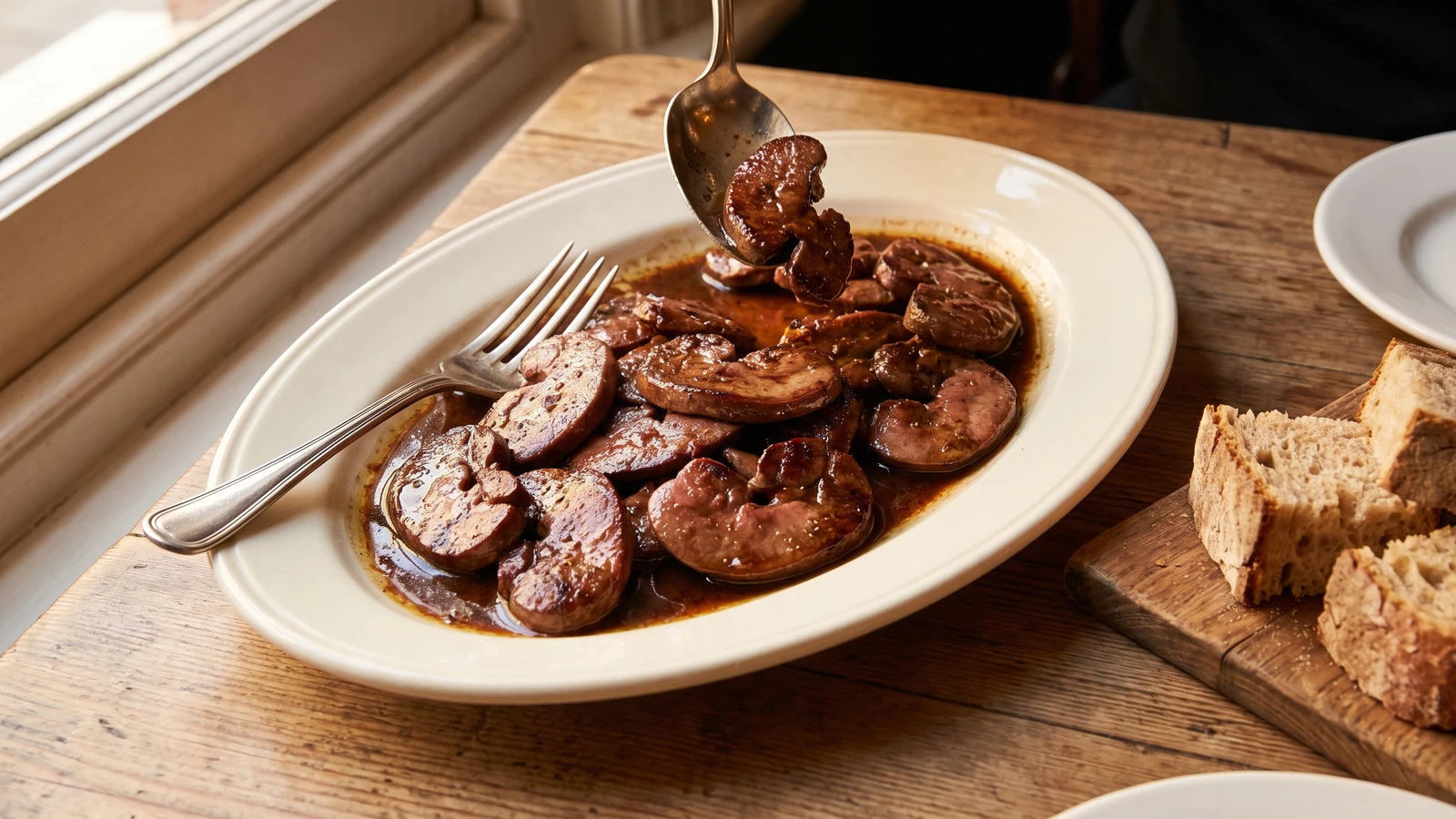
Mutton kidneys sliced thin, seared hard in butter, drained briefly, and returned only after the glossy pan sauce is finished: the quick supper whose tenderness depends on never boiling.
Rognons de mouton sautés (mutton kidneys quickly tossed in hot butter) teach one truth: the kidneys must cook faster than their sauce. Let the thin slices boil in liquid and their tender spring turns to rubber. Sauté them fiercely, drain them, build the sauce alone, then return them only after the heat is off.
The original entry offers two separate paths, grilled or sautéed. We take the sautéed path for tonight. Its brief instruction to swill the pan and finish the sauce assumed a saucier on staff and stock never off the fire; your honest equivalent is one wide skillet, a small measure of good stock, and cold butter whisked in at the end. The skewers and overhead grill belong to the other path, so there is no reason to imitate a salamander under the home broiler. One cook, one stove, one evening.
I've scaled the dish to eight kidneys for four people and kept what cannot change: the fine quarter-inch slices, fierce heat, short draining rest, and absolute refusal to boil them in the sauce. A separate sauce station was brigade scaffolding; the timing is the dish. Before you touch the pan, have the stock measured, the cold butter ready, and a sieve waiting beside the stove.
Rognons de mouton belong to the French tradition of abats, particularly the Parisian bistro and Lyonnais bouchon tables where the butcher's whole animal moved quickly from market to pan. Grand kitchens formalized two treatments already suited to household cooking, kidneys split and skewered for grilling or thinly sliced for the sauté, with the latter joined to a sauce made from its own pan. Draining the first-cooked slices was practical as well as culinary: kidneys from mature sheep can release sharply scented juices, and removing them keeps the finished sauce clear and balanced.
Quantity
8 (about 1½ lb / 680 g total)
thin skin removed, halved, white cores trimmed, and sliced ¼ inch / 6 mm thick
Quantity
5 tablespoons (75 ml / 70 g)
divided; keep the final 2 tablespoons cold and cubed
Quantity
¾ cup (180 ml / 180 g)
Quantity
¾ teaspoon (4 ml / 4 g)
divided
Quantity
½ teaspoon (2.5 ml / 1 g)
| Ingredient | Quantity |
|---|---|
| mutton kidneysthin skin removed, halved, white cores trimmed, and sliced ¼ inch / 6 mm thick | 8 (about 1½ lb / 680 g total) |
| unsalted butterdivided; keep the final 2 tablespoons cold and cubed | 5 tablespoons (75 ml / 70 g) |
| good low-sodium veal or beef stock | ¾ cup (180 ml / 180 g) |
| fine sea saltdivided | ¾ teaspoon (4 ml / 4 g) |
| freshly ground black pepper | ½ teaspoon (2.5 ml / 1 g) |
Peel away every trace of the fine membrane surrounding each kidney. Split the kidneys lengthwise, lift out the hard white core and tubes with the point of a small knife, then cut across into slices ¼ inch / 6 mm thick. Keep the thickness even because uneven slices cannot finish together. Pat them thoroughly dry between clean towels; surface moisture prevents the fast sauté this dish requires.
Place a fine sieve or colander over a bowl beside the stove. Measure the stock, cube the cold finishing butter, and warm four plates. Season the kidney slices with the salt and pepper only now. Once the first batch meets the pan, there is no useful pause until the sauce is finished.
Heat a wide, heavy skillet over high heat. Add 1 tablespoon of the butter and let it foam, then turn hazelnut-gold. Add one-third of the kidneys in a single loose layer and sauté over fierce heat, tossing after about 45 seconds, until the surfaces are just firm and marked with brown at the edges, 75 to 90 seconds altogether. Transfer them immediately to the sieve. Repeat twice with the remaining sautéing butter. If a crowded batch releases a puddle, lift it out at once, pour that liquid into the draining bowl, return the empty pan to high heat, and continue with fewer slices. Ça se rattrape.
Let the kidneys stand in the sieve for 3 to 4 minutes while you make the sauce. They will release ruddy juices, sometimes with the distinctly sharp aroma described in the original method. Discard those juices completely. Do not press the slices, and do not leave them waiting longer than the sauce requires.
Pour off any excess butter from the skillet while preserving the brown fond stuck to its floor. Add the stock and bring it to a vigorous boil, scraping with a wooden spoon until every browned speck dissolves. Reduce to about ⅓ cup / 80 ml, 4 to 6 minutes. The liquid should taste concentrated and lightly coat the spoon, but it should not become salty or syrupy.
Take the skillet completely off the heat. Monter au beurre, mount the sauce with cold butter, by whisking in the final 2 tablespoons a few cubes at a time until the sauce turns glossy and softly thickened. If it looks greasy or separates, whisk in 1 teaspoon of cold stock away from the heat. Ça se rattrape. Taste before adding any further salt.
Add the drained kidneys to the finished sauce and toss off the heat for 20 to 30 seconds, just long enough to glaze every slice. If they have cooled too far, set the pan over the lowest heat for no more than 10 seconds while tossing continuously. The sauce must not simmer. Never let the kidneys boil in it, because they will harden immediately.
Divide the kidneys among the warm plates and spoon over every drop of the butter-glossed pan sauce. Serve immediately, with purée de pommes de terre or thick country bread ready to catch the sauce. This dish waits for nobody. À table!
1 serving (about 155g)
Culinary guides, cultural storytelling, and the editorial depth that makes cooking meaningful.
Discover Culinary ExplorerChef Juliette
John Dory has the delicacy of sole and the firmness of turbot. A light flouring, a quick butter sauté, and nut-brown beurre noisette show exactly why looks never mattered.

Chef Juliette
Fresh haddock proves its delicacy in the meunière pan: a fine flour crust, moist pearly flakes, and beurre noisette sharpened with lemon and parsley, ready from one skillet in half an hour.
Chef Juliette
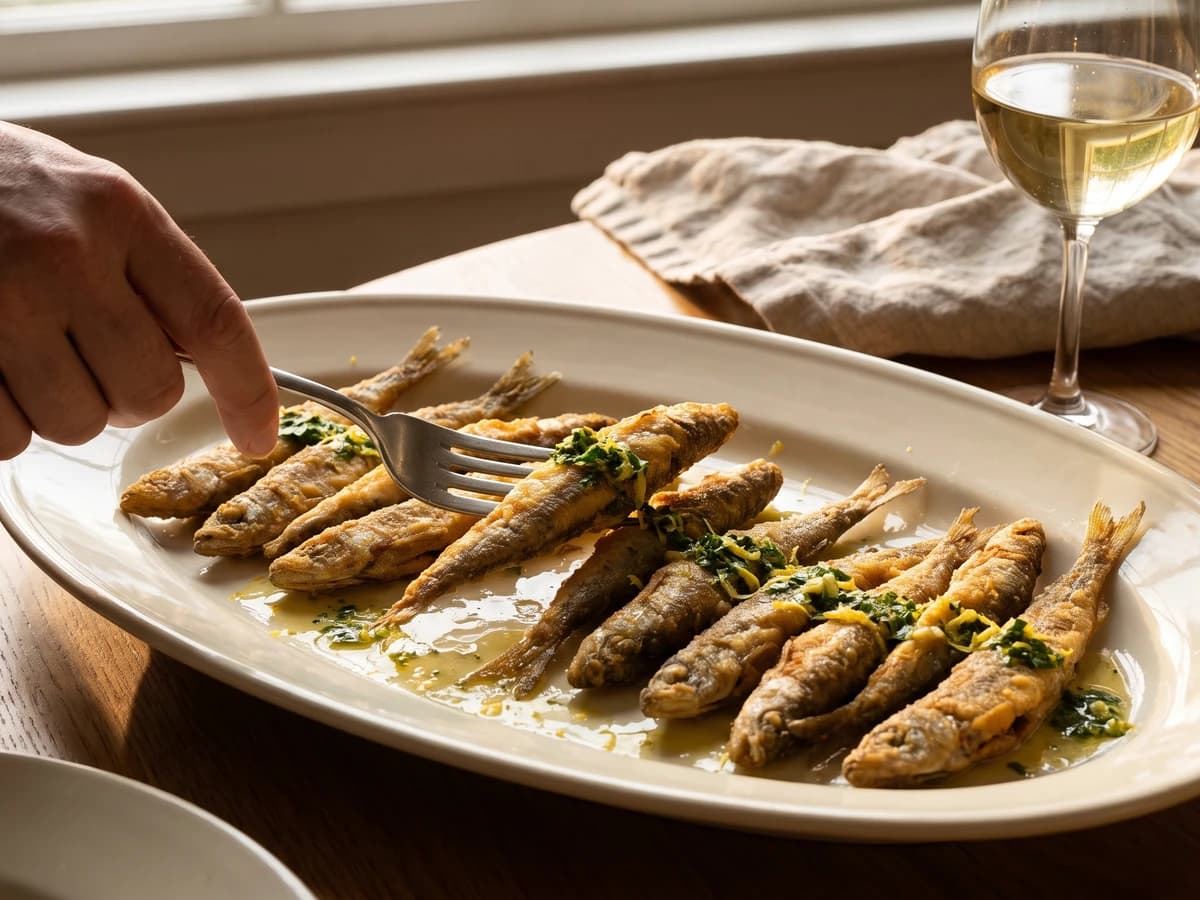
Éperlans à l’Anglaise turns small fish into a lesson in disciplined coating: boned smelts under a close, crisp crumb, pan-fried in clarified butter and finished with bright, half-melted maître d’hôtel butter.

Chef Juliette
Tiny smelts, shallot, mushrooms, white wine, gratin sauce, and fine bread raspings meet a fierce oven, where the fish must turn tender in the same breath the buttered crust bronzes.