
Chef Juliette
John Dory (St. Pierre)
John Dory has the delicacy of sole and the firmness of turbot. A light flouring, a quick butter sauté, and nut-brown beurre noisette show exactly why looks never mattered.
A cooking platform built around craft, culture, and the stories behind what we eat.
Created by Chef Juliette
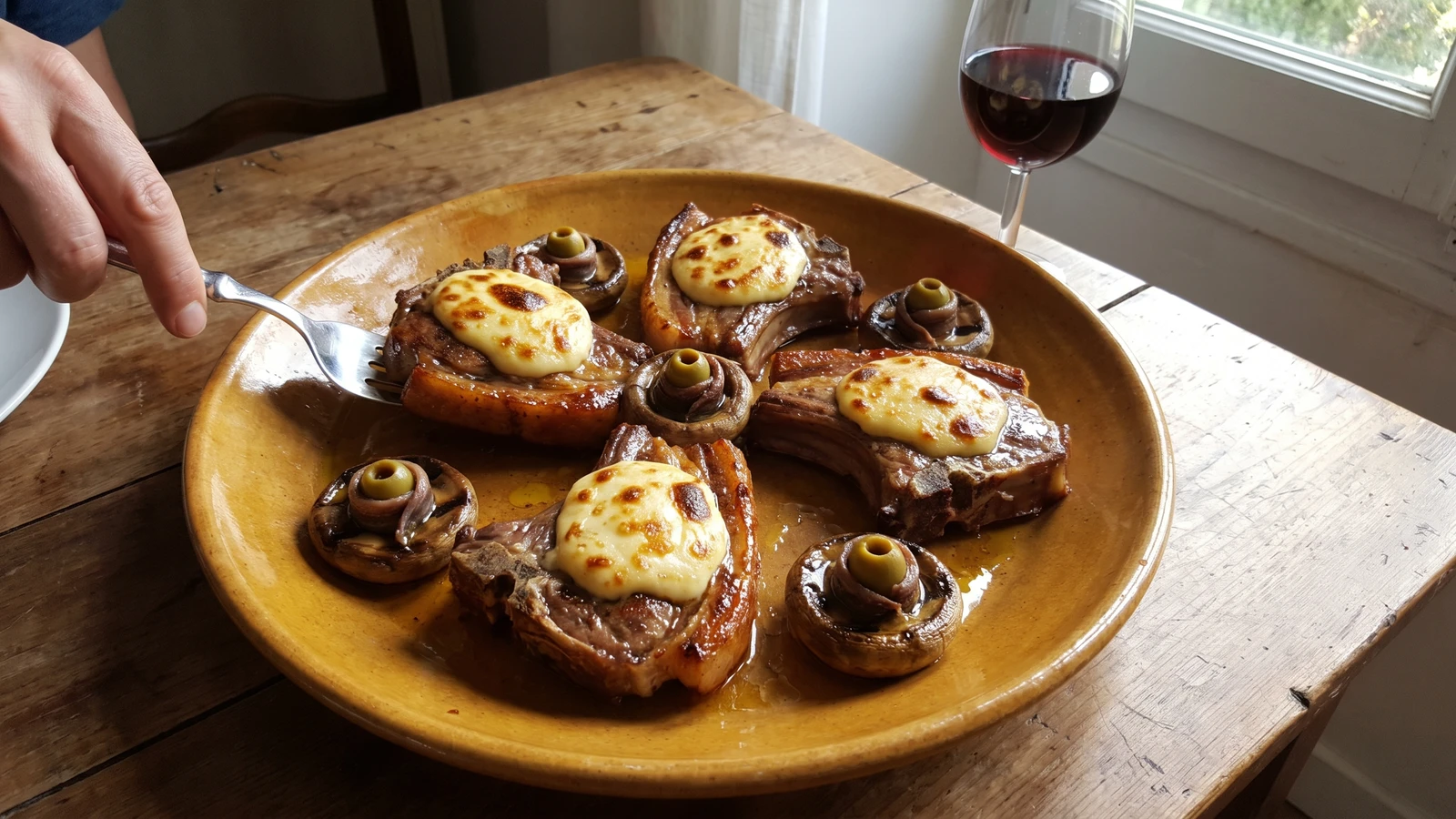
Based on No. 1316, Côtelettes à la Provençale, from Le Guide Culinaire (1907) by Auguste Escoffier
Butter-fried lamb cutlets, cooked on one side only, carry a garlic-and-egg Béchamel glaze, a browned mushroom cap, and an anchovy-girdled olive: a precise Provençal garnish made practical for four.
Côtelettes à la Provençale (lamb cutlets with garlic Béchamel, mushrooms, olives, and anchovy) teach a lovely classical discipline: cook the meat from one side, then let the garnish and oven finish the other. The one true thing to know before touching the pan is that the Béchamel must be reduced to one third before the yolk goes in. Leave it loose and the crown slides off; take it to a thick, spoon-holding cream and the whole construction stays put.
The entry assumed a saucier had finished the Béchamel, a stockpot never went cold at the sauce station, and a salamander stood ready to glaze ten cutlets while another pair of hands grilled ten mushrooms. At home, a scant half cup of finished sauce, one ovenproof skillet, and the broiler do the same work for four. I have kept the one-sided frying, yolk-bound garlic sauce, grilled mushroom, and poached olive girded with anchovy because those steps are the dish. The brigade simultaneity, service tray, and production of four bespoke filled olives are scaffolding, so ready-stuffed green olives and an ovenproof skillet take their place. One cook, one stove, one evening.
The result is generous rather than delicate: bronzed lamb under an ivory-gold glaze, a butter-dark mushroom cap, then the briny snap of olive and anchovy. Reduce the sauce by volume, not by guesswork, and temper the yolk off the heat. If it tightens too sharply, ça se rattrape, and the method tells you how.
À la Provençale belongs to the classical French vocabulary of garnishes associated with Provence, where garlic, olives, and anchovies carry the southern accent. In this cutlet formula, a grand-kitchen Béchamel and butter frying frame those ingredients, so it is better understood as the canon translating a Provençal larder than as a farmhouse specialty from one village. Tomato is not mandatory simply because the name says Provençale; this preparation takes its identity from garlic and the olive-anchovy garnish, with grilled mushroom supplying the formal finish.
Quantity
4 large cutlets (about 1¼ lb / 560 g total)
French-trimmed and ¾ inch / 2 cm thick
Quantity
1 teaspoon (5 ml / 6 g)
Quantity
¼ teaspoon (1.25 ml / 0.6 g)
Quantity
Scant ½ cup (115 ml / 115 g)
Quantity
⅛ teaspoon (0.6 ml / 0.4 g), from about ⅛ small clove
Quantity
1 large yolk plus 1 teaspoon (5 ml) beaten yolk from a second egg (22 g total)
beaten together
Quantity
4 large caps (about 4 oz / 115 g total)
stems removed
Quantity
4 large olives (about 1 oz / 30 g total)
drained
Quantity
2 fillets (about ⅓ oz / 10 g total)
drained and split lengthwise into 4 strips
Quantity
5 tablespoons (75 ml / 70 g)
divided
Quantity
1 cup (240 ml / 240 g)
for poaching the olives
| Ingredient | Quantity |
|---|---|
| lamb rib cutletsFrench-trimmed and ¾ inch / 2 cm thick | 4 large cutlets (about 1¼ lb / 560 g total) |
| fine sea salt | 1 teaspoon (5 ml / 6 g) |
| freshly ground black pepper | ¼ teaspoon (1.25 ml / 0.6 g) |
| finished Béchamel sauce | Scant ½ cup (115 ml / 115 g) |
| garlic paste | ⅛ teaspoon (0.6 ml / 0.4 g), from about ⅛ small clove |
| egg yolkbeaten together | 1 large yolk plus 1 teaspoon (5 ml) beaten yolk from a second egg (22 g total) |
| button mushroom capsstems removed | 4 large caps (about 4 oz / 115 g total) |
| pimento-stuffed green olivesdrained | 4 large olives (about 1 oz / 30 g total) |
| oil-packed anchovy filletsdrained and split lengthwise into 4 strips | 2 fillets (about ⅓ oz / 10 g total) |
| unsalted butterdivided | 5 tablespoons (75 ml / 70 g) |
| waterfor poaching the olives | 1 cup (240 ml / 240 g) |
Set an oven rack about 6 inches / 15 cm below the broiler and heat the oven to 450°F / 230°C. Pat the cutlets completely dry, but wait to season them until the sauce and garnishes are ready. Dry meat browns; wet meat merely cooks pale. Warm the serving platter with hot water, then dry it just before plating.
Put the finished Béchamel sauce in the smallest heavy saucepan you own. Simmer gently, stirring often, until it measures 2 tablespoons plus 2 teaspoons (40 ml / about 40 g), roughly one third of its starting volume. Check it in a heatproof measure rather than guessing. If it goes too far, whisk in cold water 1 teaspoon at a time until 40 ml remains. Remove it from the heat and cool for 2 minutes. Stir in the garlic paste. Whisk a spoonful of the warm sauce into the beaten yolk, then whisk that mixture back into the saucepan. It should form a thick cream that stays mounded on a spoon. If it turns grainy, pull it from the heat at once, whisk in 1 teaspoon cold water, and pass it through a fine sieve. Ça se rattrape. Keep it barely warm and never let it boil.
Bring the water to a bare simmer in a small saucepan. Add the stuffed olives and poach them gently for 2 minutes, just long enough to warm them and soften their briny edge. Drain and blot them dry. Wrap one anchovy strip around the equator of each olive, overlapping the ends underneath so the strip holds without a toothpick.
Melt 1 tablespoon of the butter in a 10-inch / 25 cm ovenproof skillet over medium-high heat. Add the mushroom caps, hollow side down, and cook for 2 minutes. Turn them and cook on the convex side until deeply golden and tender, about 2 minutes more. Season with a small pinch of the measured salt, then lift them out and hold them convex side upward.
Season the cutlets on both sides with the remaining salt and pepper. Melt 2 tablespoons butter in the skillet over medium-high heat. When the foam settles and the butter smells nutty, lay in the cutlets with their best-looking side down. Fry without moving them until that side is deeply bronzed, 2½ to 3 minutes. Do not flip them. Lift them out with the raw side still raw. If the butter solids have turned black rather than brown, wipe out the skillet and add fresh butter from the reserve before continuing; scorched bitterness follows the meat all the way to the table.
Take the skillet off the heat and coat its floor with 1 teaspoon fresh butter. Return the cutlets raw side down. Spread about 2 teaspoons of the garlic-and-yolk Béchamel over the browned side of each, taking it almost to the edges, then sprinkle each crown with a few drops of melted butter. Transfer the skillet to the oven and cook until the glaze is set and the lamb reaches 140°F / 60°C at the centre, about 5 to 7 minutes. If the surface remains pale, switch on the broiler for 30 to 60 seconds and watch without looking away. If it colours before the lamb is ready, turn off the broiler and finish with oven heat alone. Rest the cutlets in the skillet for 3 minutes; carryover heat will bring them close to 145°F / 63°C.
Arrange the cutlets in a shallow overlapping circle on the warm platter, glazed sides upward. Set one grilled mushroom in the middle of each cutlet with its convex side uppermost, then balance an anchovy-girt stuffed olive on every mushroom. Spoon any clean melted butter from the skillet around the cutlets, never over their glaze. Serve at once. À table!
1 serving (about 165g)
Culinary guides, cultural storytelling, and the editorial depth that makes cooking meaningful.
Discover Culinary ExplorerChef Juliette
John Dory has the delicacy of sole and the firmness of turbot. A light flouring, a quick butter sauté, and nut-brown beurre noisette show exactly why looks never mattered.

Chef Juliette
Fresh haddock proves its delicacy in the meunière pan: a fine flour crust, moist pearly flakes, and beurre noisette sharpened with lemon and parsley, ready from one skillet in half an hour.
Chef Juliette
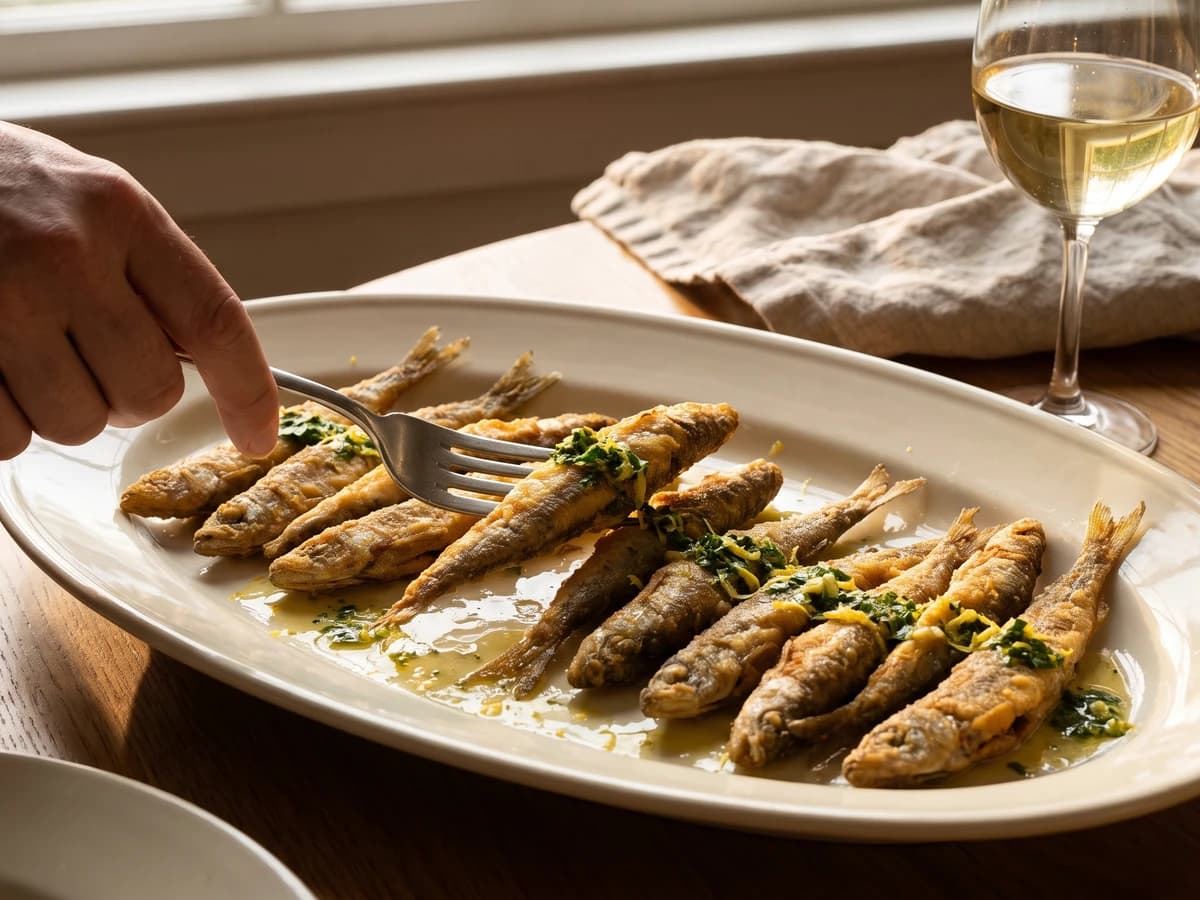
Éperlans à l’Anglaise turns small fish into a lesson in disciplined coating: boned smelts under a close, crisp crumb, pan-fried in clarified butter and finished with bright, half-melted maître d’hôtel butter.

Chef Juliette
Tiny smelts, shallot, mushrooms, white wine, gratin sauce, and fine bread raspings meet a fierce oven, where the fish must turn tender in the same breath the buttered crust bronzes.