
Chef Juliette
John Dory (St. Pierre)
John Dory has the delicacy of sole and the firmness of turbot. A light flouring, a quick butter sauté, and nut-brown beurre noisette show exactly why looks never mattered.
A cooking platform built around craft, culture, and the stories behind what we eat.
Created by Chef Juliette
Based on No. 1315, Côtelettes à la Murillo, from Le Guide Culinaire (1907) by Auguste Escoffier
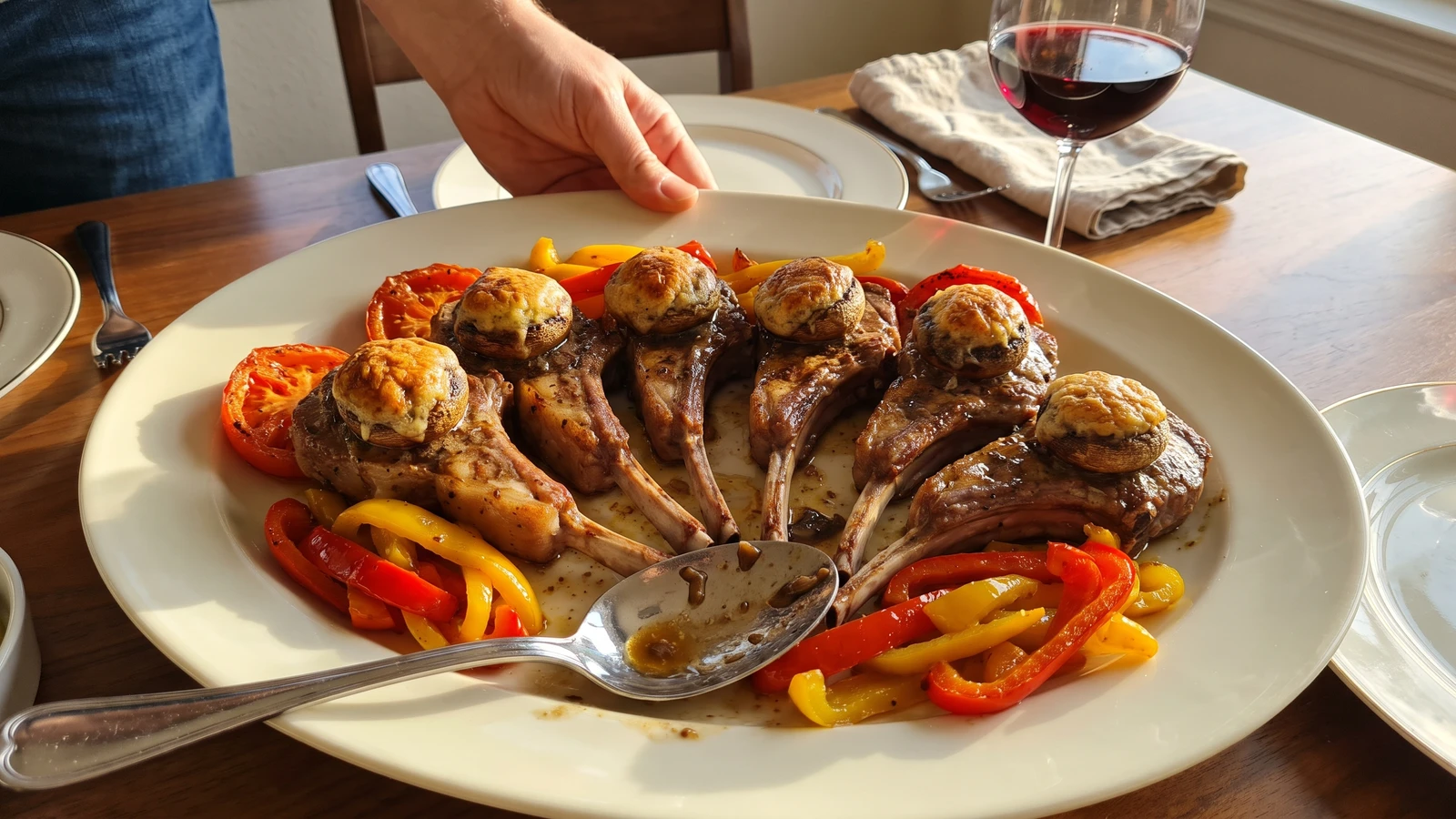
Butter-fried lamb cutlets carry a domed mushroom hash bound with reduced béchamel, then meet fierce heat beneath Parmesan before glossy peppers and tomatoes gather around the crown.
Côtelettes à la Murillo (lamb cutlets Murillo style) teach the discipline of a composed cutlet: one browned face, a topping dry enough to stand, and fierce heat that finishes meat and glaze together. The one true thing is this: the mushroom hash must surrender all its water before the reduced béchamel, a milk sauce tightened with a pale roux, binds it into a dome. Leave that mixture wet and it slides from the lamb while everything underneath grows damp.
The original stood in a kitchen with a saucier tending béchamel, a stockpot never off the fire, and a salamander waiting to glaze each order. This entry actually asks for no stock, so the honest home translation leaves the stockpot alone. A small saucepan does the saucier's work, while a blazing broiler and a preheated metal tray replace the salamander. Eight lamb cutlets feed four. The paper frills are brigade scaffolding and can go; the one-sided frying, mushroom dome, Parmesan glaze, and ring of butter-tossed capsicum and tomato are the dish and must stay.
Done properly, the cutlets arrive in a proud crown, their Parmesan caps bronzed, the lamb juicy beneath, and the red and gold vegetables gleaming around them. Cooking well is not cooking fancy. Dry the mushroom hash completely before it meets the béchamel; that is the step that decides the dish.
Côtelettes à la Murillo belong to the named-garnish repertory of Parisian grand cuisine rather than to a particular French regional table. Murillo is generally understood as a tribute to the Sevillian painter Bartolomé Esteban Murillo, with tomato and mild capsicum supplying an Iberian note of colour around a thoroughly French construction of cutlet, béchamel, butter, and gratin. The crown and paper frills announced formal service, but the mushroom dome and fierce final glazing carry the dish's lasting identity.
Quantity
8, about 1½ pounds (680 g) total
cut about 1 inch (2.5 cm) thick
Quantity
5 cups (1.2 L / 340 g)
brushed clean and very finely chopped
Quantity
7 tablespoons (105 ml / 100 g)
divided
Quantity
1 tablespoon (15 ml / 8 g)
Quantity
½ cup (120 ml / 120 g)
reserve 1 tablespoon
Quantity
⅓ cup (80 ml / 30 g)
Quantity
2 medium, about 2½ cups sliced (600 ml / 300 g)
cored and cut into ¼-inch strips
Quantity
4 medium, about 2½ cups sliced (600 ml / 400 g)
cored and cut into ¼-inch rounds
Quantity
2 teaspoons (10 ml / 12 g)
divided
Quantity
½ teaspoon (2.5 ml / 1 g)
divided
| Ingredient | Quantity |
|---|---|
| French-trimmed lamb rib cutletscut about 1 inch (2.5 cm) thick | 8, about 1½ pounds (680 g) total |
| whole button mushroomsbrushed clean and very finely chopped | 5 cups (1.2 L / 340 g) |
| unsalted butterdivided | 7 tablespoons (105 ml / 100 g) |
| all-purpose flour | 1 tablespoon (15 ml / 8 g) |
| whole milkreserve 1 tablespoon | ½ cup (120 ml / 120 g) |
| finely grated Parmesan | ⅓ cup (80 ml / 30 g) |
| mild sweet bell peppers, one red and one yellowcored and cut into ¼-inch strips | 2 medium, about 2½ cups sliced (600 ml / 300 g) |
| plum tomatoescored and cut into ¼-inch rounds | 4 medium, about 2½ cups sliced (600 ml / 400 g) |
| fine sea saltdivided | 2 teaspoons (10 ml / 12 g) |
| ground white pepperdivided | ½ teaspoon (2.5 ml / 1 g) |
Set a heavy metal baking sheet in the oven and heat it to 475°F (245°C), with a rack about 6 inches (15 cm) below the broiler. Meanwhile, melt 1 tablespoon (14 g) butter in a small saucepan. Whisk in the flour and cook for 60 to 90 seconds without letting it colour, making a roux blanc (pale roux). Gradually whisk in all but the reserved tablespoon of milk, then add ¼ teaspoon salt and a pinch of white pepper. Simmer gently, whisking often, until the béchamel is very thick and the whisk leaves a path across the pan for two full seconds, about 5 to 7 minutes. If it lumps, take it off the heat, whisk hard, and pass it through a fine sieve. Ça se rattrape. Cover its surface and set it aside.
Melt 2 tablespoons (28 g) butter in the wide skillet over medium-high heat. Add the mushrooms with ¼ teaspoon salt and a pinch of white pepper. Cook, stirring and scraping frequently, as the mushrooms first release their liquid and then absorb the butter again, 10 to 12 minutes. Keep going until the skillet is dry and the hachis de champignons (fine mushroom hash) gathers into a moist but waterless mass. Fold in the reduced béchamel a spoonful at a time, using only enough to make the hash hold a rounded mound. If the mixture slumps, return it to medium heat and stir until a spoon drawn through it exposes the pan; if it becomes too stiff, work in the reserved milk a teaspoon at a time. Set it aside to cool until warm.
Wipe the skillet and melt 1½ tablespoons (21 g) butter over medium-high heat. Add the capsicum strips with ¼ teaspoon salt and cook for 4 to 5 minutes, tossing, until supple but still holding their shape. Add the tomato rounds, another ¼ teaspoon salt, and a pinch of white pepper. Toss gently for 60 to 90 seconds, just until the tomato surfaces turn glossy and soften at the edges. If the tomatoes release a pool of juice, lift the vegetables out, reduce the liquid quickly to a buttery glaze, then fold everything together again. Hold the mixture warm.
Pat the lamb cutlets thoroughly dry and season both sides with the remaining salt and white pepper. Melt 2 tablespoons (28 g) butter in the clean skillet over medium-high heat. When the foam subsides and the butter smells nutty, fry the cutlets in two batches, presentation side down, for 2 to 3 minutes without moving them. Brown that face deeply, but do not turn the cutlets. Transfer each one with its uncooked side down to a clean plate while the second batch fries. The one-sided frying is deliberate: the hot tray and fierce oven will finish the underside while the topping glazes.
Using oven mitts, draw out the preheated baking sheet and set the cutlets on it immediately, uncooked side against the hot metal. Divide the mushroom mixture among the browned faces, pressing and smoothing it into compact domes that stop just short of the edges. Sprinkle each dome evenly with Parmesan. Melt the remaining ½ tablespoon (7 g) butter and let a few drops fall over each cutlet, exactly enough to help the cheese glaze.
Switch the broiler to high and slide the tray beneath it. Glaze for 3 to 6 minutes, watching continuously, until the Parmesan is mottled deep gold and the mushroom domes bubble faintly at their edges. Check a cutlet sideways with an instant-read thermometer, avoiding the bone; the centre must reach 145°F (63°C), followed by a 3-minute rest. If the cheese bronzes before the lamb reaches temperature, lower the tray and finish at 425°F (220°C). The colour is already won, so gentler heat can finish the meat without burning the cap.
Warm the capsicums and tomatoes briefly if needed. Arrange the rested cutlets in an overlapping crown on a heated round platter, bones pointing outward and the mushroom domes fully visible. Surround the crown with the mixed capsicums and tomato, spooning their butter around the vegetables rather than over the Parmesan. The paper frills have done no cooking and are not missed. Bring the platter straight to the table. À table!
1 serving (about 340g)
Culinary guides, cultural storytelling, and the editorial depth that makes cooking meaningful.
Discover Culinary ExplorerChef Juliette
John Dory has the delicacy of sole and the firmness of turbot. A light flouring, a quick butter sauté, and nut-brown beurre noisette show exactly why looks never mattered.

Chef Juliette
Fresh haddock proves its delicacy in the meunière pan: a fine flour crust, moist pearly flakes, and beurre noisette sharpened with lemon and parsley, ready from one skillet in half an hour.

Chef Juliette
Éperlans à l’Anglaise turns small fish into a lesson in disciplined coating: boned smelts under a close, crisp crumb, pan-fried in clarified butter and finished with bright, half-melted maître d’hôtel butter.

Chef Juliette
Tiny smelts, shallot, mushrooms, white wine, gratin sauce, and fine bread raspings meet a fierce oven, where the fish must turn tender in the same breath the buttered crust bronzes.