
Chef Juliette
John Dory (St. Pierre)
John Dory has the delicacy of sole and the firmness of turbot. A light flouring, a quick butter sauté, and nut-brown beurre noisette show exactly why looks never mattered.
A cooking platform built around craft, culture, and the stories behind what we eat.

Created by Chef Juliette
Based on No. 1311, Cutlets, from Le Guide Culinaire (1907) by Auguste Escoffier
Côtelettes teach the discipline of fierce heat and short cooking: grill them bare for a bronzed edge and rosy centre, or fry the Anglaise-coated version in clarified butter until the crust holds fast.
Côtelettes de mouton et d’agneau (mutton and lamb cutlets) teach the discipline of fierce heat and short cooking. Their fat should bronze, their centre stay rosy, and the meat must leave the fire before patience turns into punishment. Sauté (quick cooking in a little hot fat) is possible, but the source is plain: grilling suits them best; when they are treated à l’anglaise (coated with egg and breadcrumbs), they belong in clarified butter.
The original entry assumed a service grill or salamander already fierce, racks pared by the butcher, and several orders moving at once. No saucier or stockpot belongs here; the cutlet is carried by its own juices. At home, eight rib cutlets feed four, a cast-iron grill pan or close broiler replaces the service grill, and a shallow skillet replaces the broad frying range. Perfectly whitened bones and elaborate platter work are brigade scaffolding and can go; hot dry cooking, a rosy centre, and clarified butter beneath an Anglaise crust are the dish and must stay. One cook, one stove, one evening.
The one true thing is heat before contact. Dry the cutlets, bring the grill or butter fully hot, then lay them down and let the first hard sizzle set the surface. If the sound is timid, lift them out and heat the pan properly; ça se rattrape, but a cold start can only soak the crust and grey the meat.
Côtelettes de mouton et d’agneau have no single provincial claim; their classical home is the Parisian kitchen and the bourgeois dining table, where a rib rack was divided into neat individual portions and cooked to order. Their treatment alongside tournedos shows the canon’s family logic: both are tender, quick-cooking cuts that accept garnishes, though the cutlet entry specifically excludes garnishes served with sauces. À l’anglaise is not a claim of British ownership; in French kitchen vocabulary it names the flour, seasoned egg preparation, and breadcrumbs that form a protective crust in hot fat.
Quantity
8, about 1½ lb (680 g) total
cut ¾ inch (2 cm) thick
Quantity
1 teaspoon (5 ml / 6 g)
Quantity
½ teaspoon (2.5 ml / 1 g)
Quantity
½ cup (120 ml / 60 g)
Quantity
¾ cup (180 ml / 180 g) Anglaise (for Egg-and-bread-crumbing) (No. 174)
Quantity
1½ cups (360 ml / 150 g)
Quantity
½ cup (120 ml / 110 g)
| Ingredient | Quantity |
|---|---|
| lamb or mutton rib cutletscut ¾ inch (2 cm) thick | 8, about 1½ lb (680 g) total |
| fine sea salt | 1 teaspoon (5 ml / 6 g) |
| freshly ground black pepper | ½ teaspoon (2.5 ml / 1 g) |
| plain flour (optional) | ½ cup (120 ml / 60 g) |
| Anglaise (for Egg-and-bread-crumbing) (optional) | ¾ cup (180 ml / 180 g) Anglaise (for Egg-and-bread-crumbing) (No. 174) |
| fine dry breadcrumbs (optional) | 1½ cups (360 ml / 150 g) |
| clarified butter (optional) | ½ cup (120 ml / 110 g) |
Take the cutlets from the cold twenty minutes before cooking. Trim away loose scraps of fat, but leave the firm rim that protects and flavours the meat. Pat every surface thoroughly dry. Season the grilled cutlets evenly with the salt and pepper just before cooking; for the breaded treatment, season lightly because the Anglaise preparation already carries seasoning.
For the source’s preferred treatment, leave the cutlets bare and continue to the grilling step. For cutlets panés à l’anglaise, use the breading and clarified-butter steps instead. Do not bread cutlets merely for decoration: the crust is a distinct preparation, not an accessory.
For the breaded treatment, spread the flour and breadcrumbs in separate shallow dishes, with the prepared Anglaise (for Egg-and-bread-crumbing) (No. 174) between them. Coat each cutlet lightly in flour and shake off every loose patch, pass it completely through the Anglaise, let the excess fall away, then roll it in the breadcrumbs. Press only enough to secure an even coat. Rest the cutlets on a wire rack for ten minutes so the layers settle into one crust.
Heat a cast-iron grill pan over high heat for five minutes, or set a broiler rack about 4 inches (10 cm) below a fully heated element. Lay down the bare cutlets without crowding and leave them untouched for 2 to 3 minutes, until the first side is deeply bronzed and releases cleanly. Turn once, cook the second side for another 2 to 3 minutes, then stand each cutlet briefly on its fatty edge to colour it. Mutton or thicker cutlets may need another minute. Insert a thermometer horizontally into the centre and remove the meat near 140°F (60°C), allowing the rest to carry it to 145°F (63°C). If the cutlets cling, wait another thirty seconds; forcing them tears away the browning you worked for.
For the breaded treatment, heat the clarified butter in a heavy skillet to 350°F (175°C), deep enough to cover the pan floor generously. Add no more than four cutlets at once. The coating must answer with an immediate, lively sizzle, which sets the egg and breadcrumbs into a resisting crust. Fry for 2 to 3 minutes per side until evenly golden and the centre approaches 140°F (60°C). If the butter gives only a weak murmur, lift the cutlets onto the rack and bring it properly to temperature before returning them. Ça se rattrape. If the crust darkens before the meat is ready, lower the heat and finish gently for another minute rather than burning the crumbs.
Rest the cutlets uncovered on a wire rack for five minutes, never flat on paper and never beneath a tight cover, which softens the Anglaise crust. Confirm that the centre has reached 145°F (63°C) after resting; if it stalls below, return the cutlets to moderate heat for thirty seconds per side. Serve two per person while the grilled fat still gleams or the breaded crust remains crisp. Keep any garnish beside the cutlets and pour no sauce over the crust. À table!
1 serving (about 165g)
Culinary guides, cultural storytelling, and the editorial depth that makes cooking meaningful.
Discover Culinary ExplorerChef Juliette
John Dory has the delicacy of sole and the firmness of turbot. A light flouring, a quick butter sauté, and nut-brown beurre noisette show exactly why looks never mattered.

Chef Juliette
Fresh haddock proves its delicacy in the meunière pan: a fine flour crust, moist pearly flakes, and beurre noisette sharpened with lemon and parsley, ready from one skillet in half an hour.
Chef Juliette
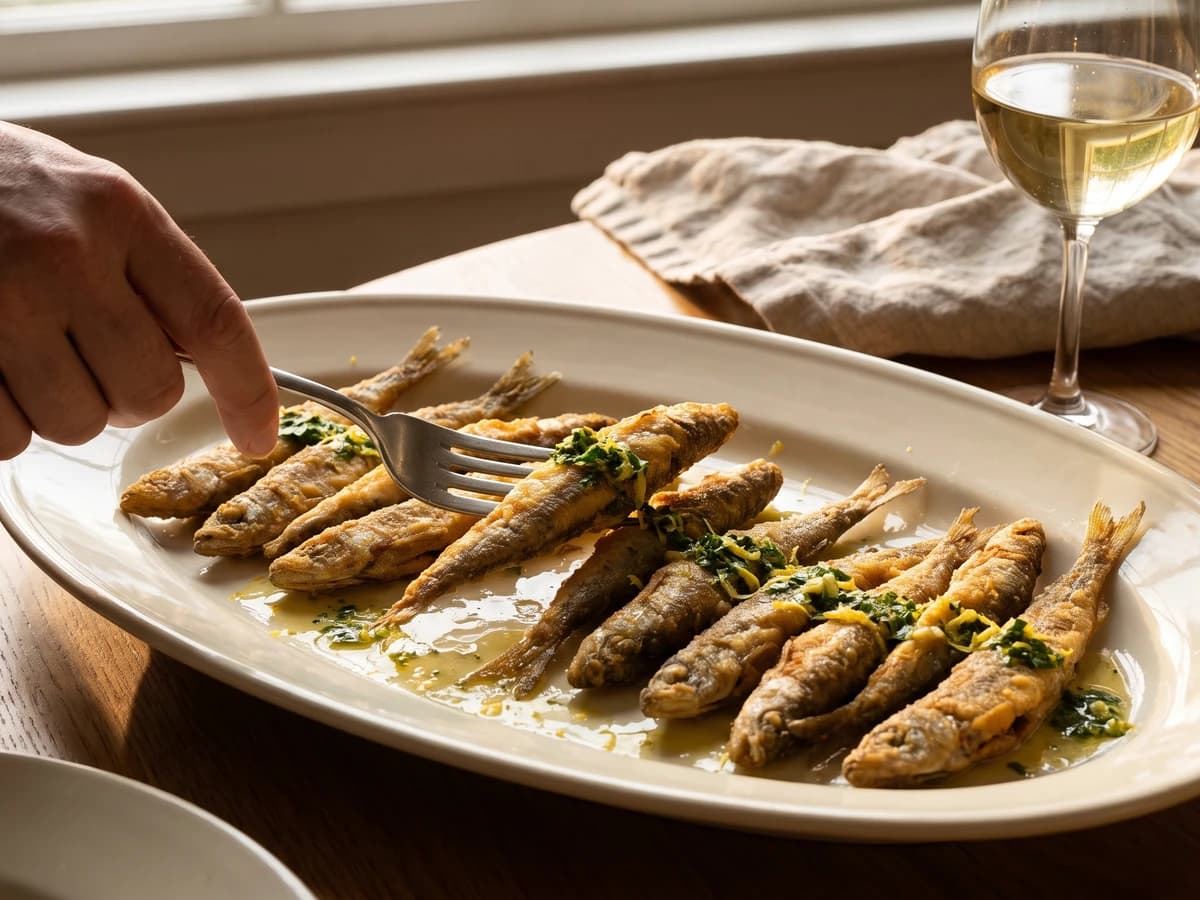
Éperlans à l’Anglaise turns small fish into a lesson in disciplined coating: boned smelts under a close, crisp crumb, pan-fried in clarified butter and finished with bright, half-melted maître d’hôtel butter.

Chef Juliette
Tiny smelts, shallot, mushrooms, white wine, gratin sauce, and fine bread raspings meet a fierce oven, where the fish must turn tender in the same breath the buttered crust bronzes.