
Chef Juliette
John Dory (St. Pierre)
John Dory has the delicacy of sole and the firmness of turbot. A light flouring, a quick butter sauté, and nut-brown beurre noisette show exactly why looks never mattered.
A cooking platform built around craft, culture, and the stories behind what we eat.

Created by Chef Juliette
Based on No. 1303, Large Cold Joints of Mutton, from Le Guide Culinaire (1907) by Auguste Escoffier
Grosses pièces froides de mouton teach the cold-table art of restraint: chill the roast well, remove every firm seam of fat, and carve thinly across the grain before arranging it without fuss.
Grosses pièces froides de mouton (large cold joints of mutton) teach one true thing: cold meat must be carved thinly across the grain. Chilling firms the muscle and solidifies the fat, so a careless cut that seemed harmless at supper becomes coarse and waxy at luncheon. Trim with judgment, carve cleanly, and mutton's deep roast flavor needs no disguise.
The original entry assumed a great joint left from service, a cold room, a practiced carver, and enough hands to arrange a grand platter. It sends the cook to Cold Beef for the same plain handling, then makes its own instruction admirably brief: keep the dishing simple, and treat garnish as optional. There is no saucier's work here, no stockpot, and no salamander. At home, a 1⅓-pound cooked joint, one sharp knife, and an oval platter serve four generously. The ornamental architecture is brigade scaffolding and goes; careful trimming and carving are the dish, so they stay.
One cook, one stove, one evening, though tonight the stove gets the evening off. The step that matters is finding the grain before the first slice. Once you see its direction, turn the joint and cut squarely across it.
Grosses pièces froides de mouton belong to the French cuisine bourgeoise luncheon table, where a substantial roast returned cold in careful slices rather than being hidden inside another preparation. The joint traveled naturally from the household dining room to buffet service, where aspic borders and complicated garnishes could gather around it. The classical correction remains refreshingly plain: handle it like cold beef, keep the arrangement simple, and remember that garnish was never the point.
Quantity
1 joint, about 1⅓ pounds (600 g)
thoroughly chilled
Quantity
¼ teaspoon (1.25 ml / 1.5 g)
only if the cold meat needs it
| Ingredient | Quantity |
|---|---|
| boneless cooked roast mutton jointthoroughly chilled | 1 joint, about 1⅓ pounds (600 g) |
| fine sea salt (optional)only if the cold meat needs it | ¼ teaspoon (1.25 ml / 1.5 g) |
Set the chilled joint on a large board and remove any wrapping, string, or netting. Pat away surface moisture without rubbing off the browned roast crust. The meat must be cold and firm through the centre before carving; a warm joint bends under the knife and releases ragged, thick slices.
Lift away the thick exterior fat and any hard seams with the tip of the knife, following the shape of the meat so you preserve as much browned crust as possible. Mutton fat that was succulent when warm becomes firm and waxy when cold. Leave only the thinnest soft covering where removing it would tear the lean.
Study the cut face and find the long lines of muscle fibre. Turn the joint so the knife will cross those lines at a right angle. A leg usually gives a clear grain; shoulder changes direction between muscles, so rotate the meat as each section reveals itself. This small attention is what makes a cold slice tender.
Using long, smooth strokes, carve slices about ⅛ inch (3 mm) thick. Do not saw or press downward. If the slices fray, stop. Ça se rattrape: chill the joint for 20 minutes, hone the blade, and turn the meat until you are squarely across the grain. Keep any ragged first slices for the bottom of the platter, where they will support the neat ones.
Taste one slice while it is cold. Add the fine salt only if the original roast seasoning now seems muted. Lay the slices on an oval platter in two loose, overlapping rows, allowing each slice to remain visible rather than building a mound. Place the broadest slices through the centre and tuck smaller end pieces beneath them. No molded aspic, carved vegetables, or decorative border is required; the source makes garnish optional, and the simple hand wins here.
Cover the platter and keep it chilled until 20 to 30 minutes before serving, then let the meat lose its refrigerator chill while remaining distinctly cool. For a picnic, transport it over ice packs and uncover it only at the table. Do not leave cooked mutton at room temperature for more than 2 hours, or 1 hour in very hot weather. À table!
1 serving (about 145g)
Culinary guides, cultural storytelling, and the editorial depth that makes cooking meaningful.
Discover Culinary ExplorerChef Juliette
John Dory has the delicacy of sole and the firmness of turbot. A light flouring, a quick butter sauté, and nut-brown beurre noisette show exactly why looks never mattered.

Chef Juliette
Fresh haddock proves its delicacy in the meunière pan: a fine flour crust, moist pearly flakes, and beurre noisette sharpened with lemon and parsley, ready from one skillet in half an hour.
Chef Juliette
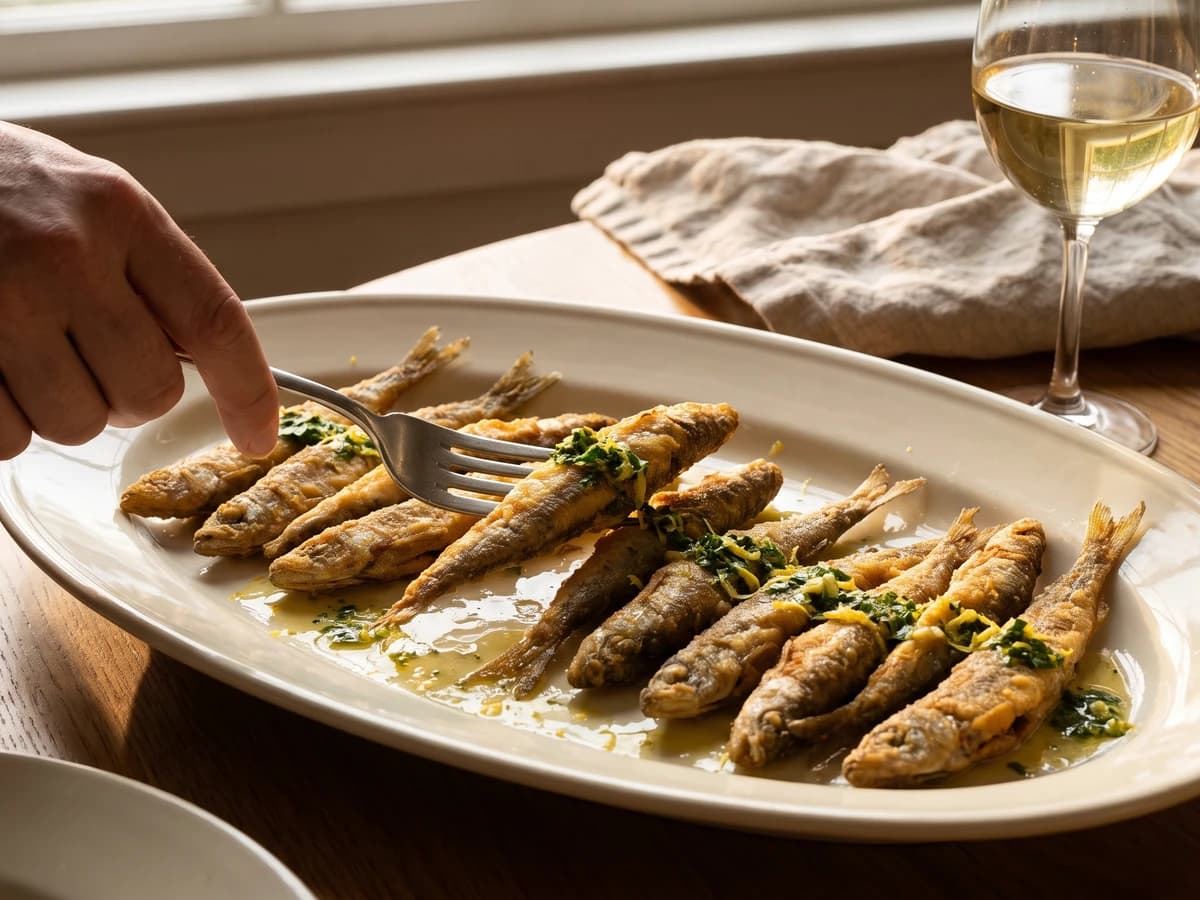
Éperlans à l’Anglaise turns small fish into a lesson in disciplined coating: boned smelts under a close, crisp crumb, pan-fried in clarified butter and finished with bright, half-melted maître d’hôtel butter.

Chef Juliette
Tiny smelts, shallot, mushrooms, white wine, gratin sauce, and fine bread raspings meet a fierce oven, where the fish must turn tender in the same breath the buttered crust bronzes.