
Chef Juliette
John Dory (St. Pierre)
John Dory has the delicacy of sole and the firmness of turbot. A light flouring, a quick butter sauté, and nut-brown beurre noisette show exactly why looks never mattered.
A cooking platform built around craft, culture, and the stories behind what we eat.
Created by Chef Juliette
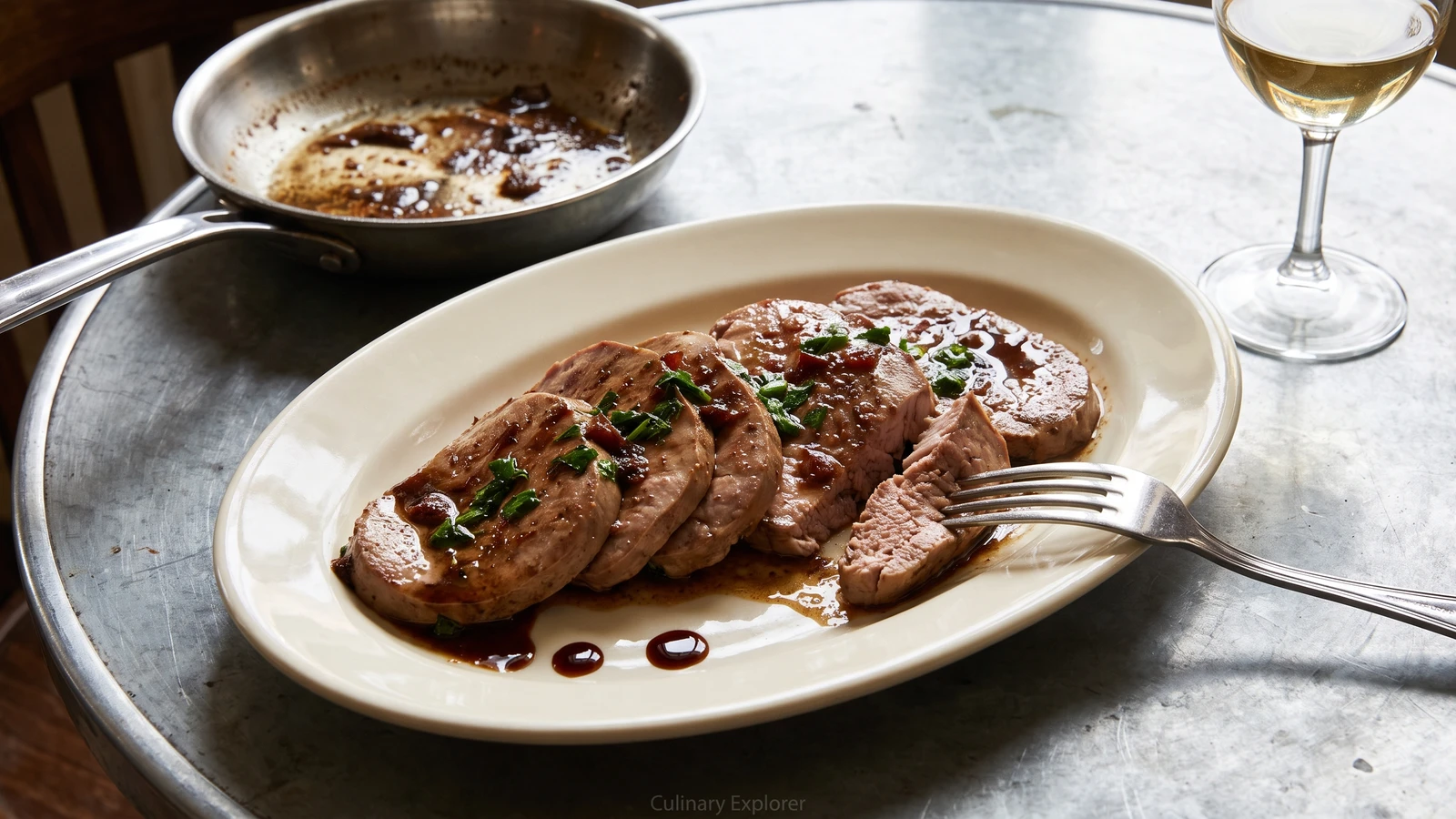
Based on No. 1291, Cervelle au Beurre Noir, from Le Guide Culinaire (1907) by Auguste Escoffier
Cervelle au beurre noir teaches the narrow line between deeply browned and burned: tender calf's brain, dark butter, parsley pluches, and vinegar brought together in one swift, generous finish.
Cervelle au beurre noir teaches one exact thing: butter can be carried much farther than timidity allows, but not one second beyond nuttiness into acrid smoke. The brains are mild, tender, and almost custard-soft. The dark butter gives them depth, while the final drops of vinegar cut cleanly through their richness.
The old entry begins at slicing because it assumed a prep cook had already soaked, peeled, and gently poached the brains. It needed no saucier, perpetual stockpot, or salamander; its brigade scaffolding was simply that handoff. At home, I spell out the hidden preparation, keep the source's full two ounces of butter for four rich portions, and lift the pan from the flame before adding vinegar. The retained heat gives the same fierce deglaze without throwing hot acid toward your hand.
The handoff can go. The sequence cannot: slice, season, darken the butter, cast in the parsley pluches, pour, then flash the vinegar through the emptied pan. One cook, one stove, one evening. Watch the butter above all: dark chestnut, nearly black at the first milk solids, and still sweet-smelling.
Cervelle au beurre noir belongs to France's tripier and bourgeois table, with a durable public home in the bistros of Paris, where carefully prepared offal was served plainly and without disguise. The preparation moved from household offal cookery into the codified classical kitchen and back again, retaining the same brief finish of butter, herb, and vinegar. Beurre noir never means butter burned to soot; it is butter taken to a very dark nut-brown, then sharpened in the hot pan before bitterness develops.
Quantity
2 (about 1⅓ lb / 600 g)
fully thawed if frozen
Quantity
2 quarts (1.9 L / 1.9 kg), plus more for soaking
Quantity
1½ teaspoons (7.5 ml / 9 g)
divided
Quantity
¼ teaspoon (1.25 ml / 0.6 g)
Quantity
¼ cup (2 oz / 57 g)
Quantity
1 generous pinch (about 2 teaspoons / 10 ml / 1 g)
finely shredded
Quantity
½ teaspoon (2.5 ml / 2.5 g)
| Ingredient | Quantity |
|---|---|
| legally inspected calf brainsfully thawed if frozen | 2 (about 1⅓ lb / 600 g) |
| cold water | 2 quarts (1.9 L / 1.9 kg), plus more for soaking |
| fine sea saltdivided | 1½ teaspoons (7.5 ml / 9 g) |
| freshly ground black pepper | ¼ teaspoon (1.25 ml / 0.6 g) |
| unsalted butter | ¼ cup (2 oz / 57 g) |
| flat-leaf parsley pluchesfinely shredded | 1 generous pinch (about 2 teaspoons / 10 ml / 1 g) |
| wine vinegar | ½ teaspoon (2.5 ml / 2.5 g) |
Set the brains in a nonreactive bowl, cover them generously with very cold water, and refrigerate for 45 minutes, changing the water twice as it clouds. Drain, then use the point of a small knife and your fingers to lift away the thin outer membrane and any visible blood vessels without crushing the lobes. If a brain separates along its natural seam, carry on; it will be sliced later, and nothing is lost. Discard the soaking water and clean the bowl, sink, knife, and your hands thoroughly.
Lay the cleaned brains in a 3-quart saucepan and add the 2 quarts of cold water with 1 teaspoon of the salt. Bring the water slowly to 180°F (82°C), then hold it between 175°F and 185°F (79°C and 85°C) for 12 to 15 minutes. It must barely tremble, never boil, until the brains are opaque and their centers reach at least 160°F (71°C). If the water begins rolling, pull the pan aside and lower the heat at once; a boil breaks the lobes and toughens their delicate surface. Lift them out with a skimmer and let them settle for 5 minutes.
Warm an oval serving platter. Cut the poached brains crosswise into slices about ½ inch (1.25 cm) thick and arrange them in a loose overlapping layer, handling them with a thin spatula because they remain fragile. Season evenly with the pepper and as much of the remaining salt as they need. Keep the platter near the stove while you make the finish; beurre noir waits for nobody.
Melt the butter in a light-colored 10-inch skillet over medium heat. Swirl as its white foam subsides and the milk solids pass from gold to hazelnut, then to dark chestnut with the first flecks nearly black. The aroma must remain toasted and sweet. Pull the pan from the heat immediately, cast in the parsley pluches for two or three seconds, and pour the butter evenly over the sliced brains. If the butter smells acrid or the solids turn soot-black, don't hide it with vinegar. Ça se rattrape: leave the brains where they are, wipe out the skillet, and begin again with fresh butter.
Keep the emptied skillet off the flame and add the wine vinegar carefully; the retained heat will make it spit and boil at once. Swirl for five seconds, scraping up the last dark butter residue, then pour every sharp drop over the brains. This preserves the source's order while replacing its burning pan with a safer home equivalent. Serve immediately, while the beurre noir still gleams and pools around the slices. À table!
1 serving (about 150g)
Culinary guides, cultural storytelling, and the editorial depth that makes cooking meaningful.
Discover Culinary ExplorerChef Juliette
John Dory has the delicacy of sole and the firmness of turbot. A light flouring, a quick butter sauté, and nut-brown beurre noisette show exactly why looks never mattered.

Chef Juliette
Fresh haddock proves its delicacy in the meunière pan: a fine flour crust, moist pearly flakes, and beurre noisette sharpened with lemon and parsley, ready from one skillet in half an hour.
Chef Juliette
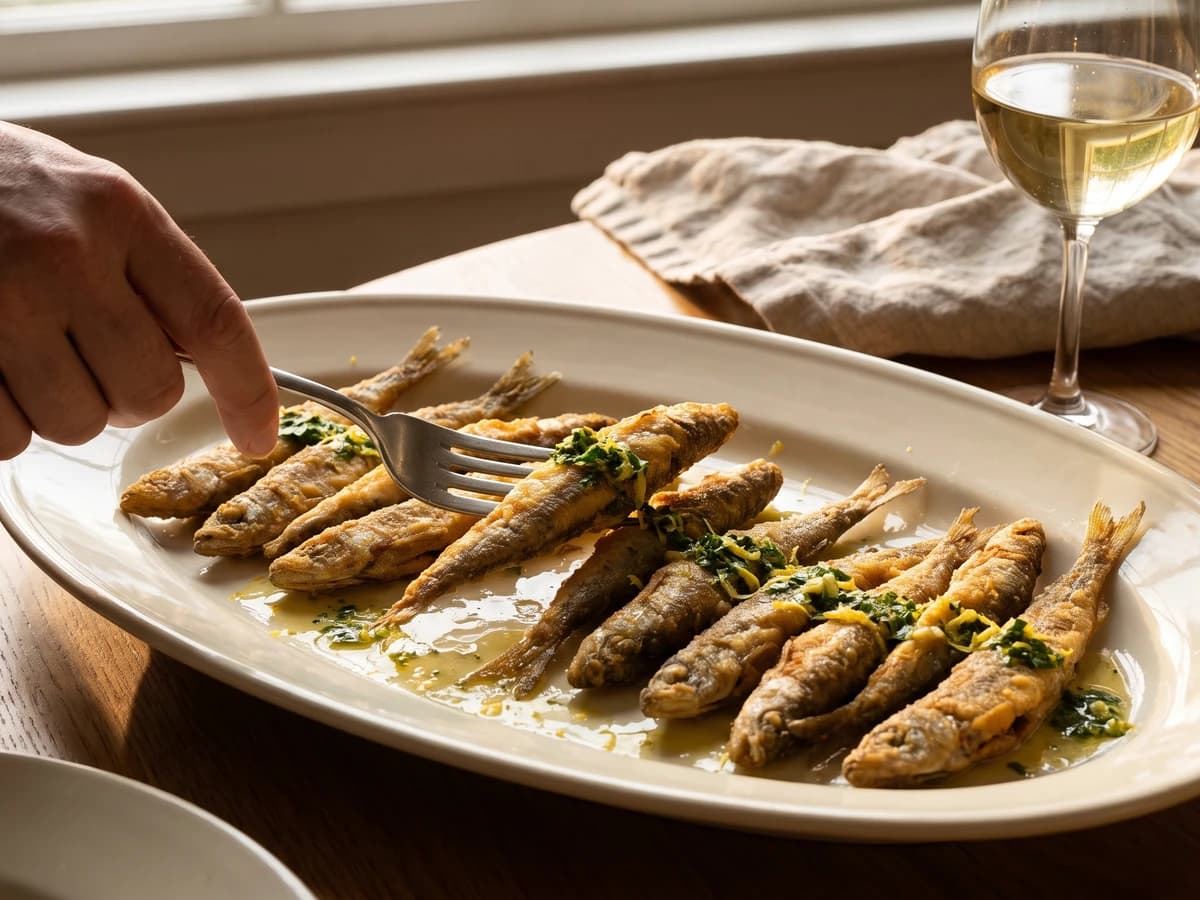
Éperlans à l’Anglaise turns small fish into a lesson in disciplined coating: boned smelts under a close, crisp crumb, pan-fried in clarified butter and finished with bright, half-melted maître d’hôtel butter.

Chef Juliette
Tiny smelts, shallot, mushrooms, white wine, gratin sauce, and fine bread raspings meet a fierce oven, where the fish must turn tender in the same breath the buttered crust bronzes.