
Chef Juliette
John Dory (St. Pierre)
John Dory has the delicacy of sole and the firmness of turbot. A light flouring, a quick butter sauté, and nut-brown beurre noisette show exactly why looks never mattered.
A cooking platform built around craft, culture, and the stories behind what we eat.
Created by Chef Juliette
Based on No. 1272, Tendrons de Veau, from Le Guide Culinaire (1907) by Auguste Escoffier
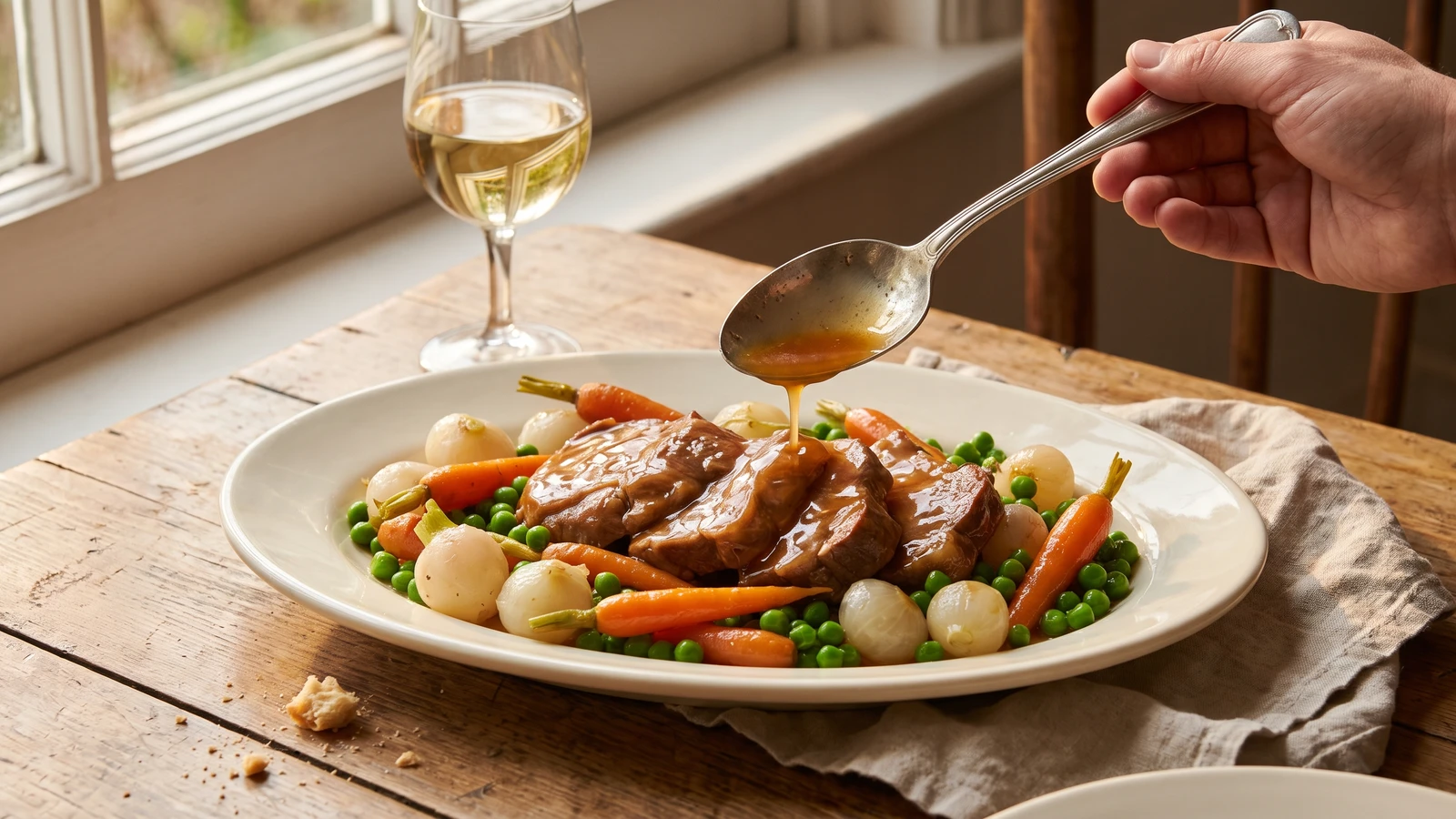
Tendrons de veau turn a modest, cartilage-tipped cut into a butter-glossed braise. Reduce the stock in stages, baste faithfully, and the meat becomes tender while its sauce builds its own lacquer.
Tendrons de Veau (braised cartilage-tipped veal breast) teach the central truth of white braising: stock is added in stages, not all at once. The first small additions reduce to a glaze that coats the meat. Drown the pot at the start and you make broth, not the protective lacquer that keeps this modest cut succulent.
The classical formula assumed a saucier free to baste, a veal stockpot never off the fire, and a salamander to set the final glaze. At home, use a shallow lidded casserole, gelatin-rich stock kept hot in a small saucepan, a serving spoon, and the domestic broiler for the last flash of heat. A slim skewer replaces the braising needle, and the quantity is cut to four servings. Those are brigade scaffolding. The staged reductions and faithful basting are the dish, so they stay. One cook, one stove, one evening.
The reward is veal with softly yielding cartilage, its surface lacquered in butter and concentrated stock, surrounded by spring vegetables bright enough to keep the whole plate lively. Let each of the first two additions of stock reach a sticky glaze before the next goes in. That is the step that decides everything.
Tendrons de veau belong to cuisine bourgeoise and the Parisian classical repertoire, where the cartilage-tipped ends of veal breast were valued for the body they gave a sauce and sent to gentle moist cooking rather than the roasting pan. Grand kitchens codified three paths for the cut: white braising, butter stewing, or an ordinary veal sauté, while home tables commonly paired it with young vegetables or noodles. White describes the veal, not a pale sauce; brown veal stock and butter remain entirely proper.
Quantity
4, about 3 lb (1.35 kg) total, for Braising of White Meats (No. 248)
cut across the ribs into 1½-inch (4 cm) pieces
Quantity
2 teaspoons (10 ml / 12 g)
divided
Quantity
½ teaspoon (2.5 ml / 1 g)
Quantity
5 tablespoons (75 ml / 70 g)
divided
Quantity
1 medium, about 1 cup (240 ml / 150 g)
sliced
Quantity
1 medium, about ⅔ cup (160 ml / 100 g)
sliced
Quantity
1
Quantity
4 cups (960 ml / 960 g)
unsalted or low-sodium
Quantity
1½ teaspoons (7.5 ml / 5 g)
use only if the stock does not set when chilled
Quantity
12, about 8 oz (225 g)
scrubbed and trimmed
Quantity
6, about 10 oz (285 g)
peeled and quartered
Quantity
12, about 6 oz (170 g)
peeled
Quantity
1 cup (240 ml / 145 g)
| Ingredient | Quantity |
|---|---|
| veal breast tendronscut across the ribs into 1½-inch (4 cm) pieces | 4, about 3 lb (1.35 kg) total, for Braising of White Meats (No. 248) |
| fine sea saltdivided | 2 teaspoons (10 ml / 12 g) |
| freshly ground white or black pepper | ½ teaspoon (2.5 ml / 1 g) |
| unsalted butterdivided | 5 tablespoons (75 ml / 70 g) |
| yellow onionsliced | 1 medium, about 1 cup (240 ml / 150 g) |
| carrotsliced | 1 medium, about ⅔ cup (160 ml / 100 g) |
| bouquet garni of parsley stems, thyme, and bay leaf | 1 |
| gelatin-rich brown veal stockunsalted or low-sodium | 4 cups (960 ml / 960 g) |
| unflavored powdered gelatin (optional)use only if the stock does not set when chilled | 1½ teaspoons (7.5 ml / 5 g) |
| baby carrotsscrubbed and trimmed | 12, about 8 oz (225 g) |
| small spring turnipspeeled and quartered | 6, about 10 oz (285 g) |
| pearl onionspeeled | 12, about 6 oz (170 g) |
| fresh or frozen peas | 1 cup (240 ml / 145 g) |
Heat the oven to 325°F (165°C). The governing method is Braising of White Meats (No. 248), scaled here for four servings. Warm the veal stock in a saucepan and keep it just below a simmer. If the cold stock does not set softly like jelly, first sprinkle the optional gelatin over it, wait 5 minutes, then warm it gently until dissolved. Dry the tendrons thoroughly and season them with 1½ teaspoons of the salt and all the pepper.
Melt 3 tablespoons of the butter in a shallow heavy casserole over medium heat. When the foam subsides, raidir the tendrons, meaning gently firm and color them, working in batches if necessary. Give each face a light blonde-gold crust, not the dark sear of a beef stew, about 3 minutes per side. Transfer the pieces to a plate. If the butter begins to brown before the veal colors, lower the heat and add a small piece of the measured butter.
Add the sliced onion and carrot to the casserole and cook for 4 minutes, stirring, until softened without deep browning. Lay the tendrons over the aromatics and tuck in the bouquet garni. Add ½ cup of the hot stock, bring it to a gentle simmer, and cover with the lid slightly ajar. Baste as the stock reduces for 6 to 8 minutes, until it becomes glossy and nearly clings to the meat. Repeat with another ½ cup of stock. Only after the second addition has reached a glaze should you add 2 more cups, enough to come roughly halfway up the tendrons.
Cover the casserole and place it in the oven. Braise for 75 to 95 minutes, turning the tendrons and spooning the liquor over them every 20 minutes. They are ready when a slim skewer enters the thick flesh easily and passes through the cartilage with only gentle resistance. Do not cook them until they collapse. If the liquid reduces too quickly or the glaze catches at the edges, add a spoonful of hot water and lower the oven slightly. Ça se rattrape. The frequent basting is not brigade ceremony; it is the dish, and it keeps the veal coated and succulent.
About 20 minutes before the tendrons are ready, melt 1 tablespoon of the butter in the saucepan. Add the baby carrots, turnips, pearl onions, the remaining 1 cup stock, and ¼ teaspoon salt. Cover and simmer gently for 10 to 12 minutes. Uncover, add the peas, and cook for another 4 to 6 minutes, rolling the vegetables through the pan until tender and coated in a butter-bright glaze. If the liquor disappears before the roots are tender, add a spoonful of water and cover them for 3 minutes rather than letting the butter scorch.
Lift the tendrons onto a broiler-safe dish and cover loosely. Discard the bouquet garni, then strain the braising liquid into a clean saucepan and skim away excess fat. Boil steadily until the sauce will napper, or coat, the back of a spoon. Remove it from the heat and whisk in the final tablespoon of cold butter. If the sauce looks greasy instead of glossy, whisk in a teaspoon of cold water off the heat until it comes back together. Taste before adding the remaining salt, since the stock has concentrated.
Heat the broiler. Brush the tendrons generously with the reduced sauce and place them beneath the heat for 30 to 60 seconds, just until the glaze sets to a clear amber lacquer. Brush once more and repeat briefly. This domestic broiler replaces the salamander, and it needs your full attention because a glossy glaze becomes scorched sugar quickly. Arrange the spring vegetables around the tendrons, spoon the remaining sauce over and beneath them, and serve at once. À table!
1 serving (about 425g)
Culinary guides, cultural storytelling, and the editorial depth that makes cooking meaningful.
Discover Culinary ExplorerChef Juliette
John Dory has the delicacy of sole and the firmness of turbot. A light flouring, a quick butter sauté, and nut-brown beurre noisette show exactly why looks never mattered.

Chef Juliette
Fresh haddock proves its delicacy in the meunière pan: a fine flour crust, moist pearly flakes, and beurre noisette sharpened with lemon and parsley, ready from one skillet in half an hour.
Chef Juliette
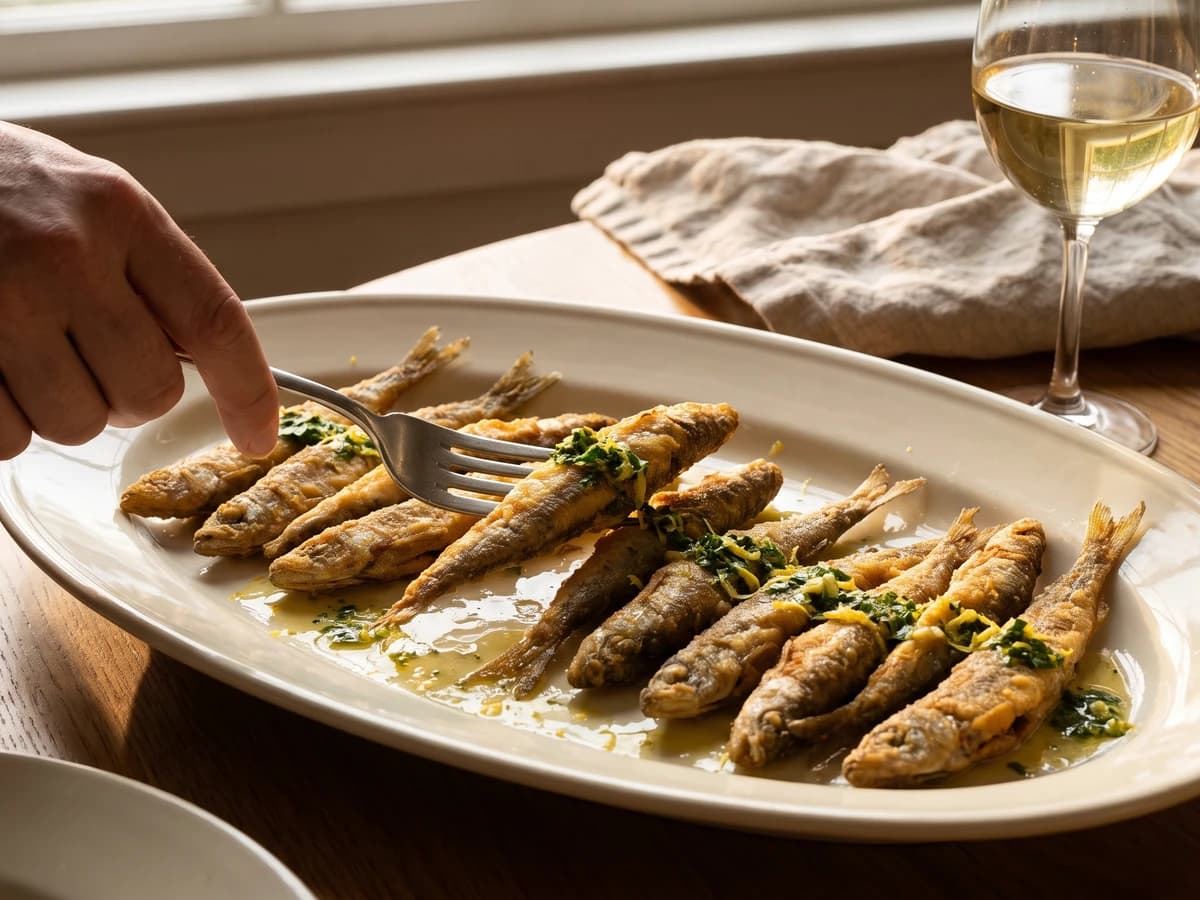
Éperlans à l’Anglaise turns small fish into a lesson in disciplined coating: boned smelts under a close, crisp crumb, pan-fried in clarified butter and finished with bright, half-melted maître d’hôtel butter.

Chef Juliette
Tiny smelts, shallot, mushrooms, white wine, gratin sauce, and fine bread raspings meet a fierce oven, where the fish must turn tender in the same breath the buttered crust bronzes.