
Chef Juliette
John Dory (St. Pierre)
John Dory has the delicacy of sole and the firmness of turbot. A light flouring, a quick butter sauté, and nut-brown beurre noisette show exactly why looks never mattered.
A cooking platform built around craft, culture, and the stories behind what we eat.
Created by Chef Juliette
Based on No. 1245, Ris de Veau à la Suédoise, from Le Guide Culinaire (1907) by Auguste Escoffier
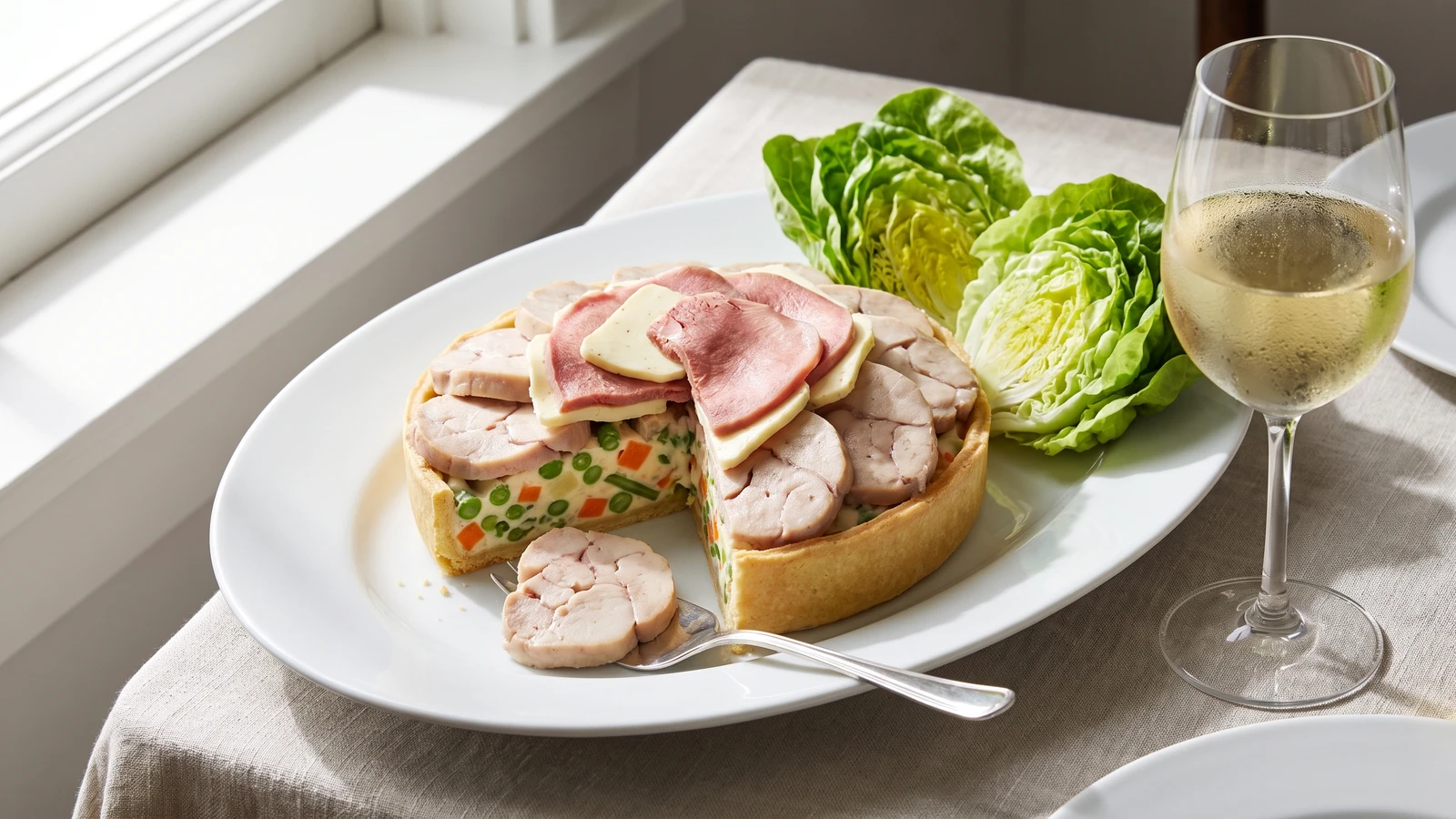
A pale pastry crust filled with mayonnaise-bound vegetables and crowned with chilled sweetbread, horseradish butter, and tongue: the composed cold entrée that rewards patience, clean slicing, and exact seasoning.
Ris de Veau à la Suédoise (cold veal sweetbreads with horseradish butter and tongue) teaches the discipline of a composed cold entrée: every element must be fully cold, cleanly cut, and seasoned for the temperature at which it will be eaten. The one true thing to know before you touch a pan is that warm sweetbread cannot be sliced into regular collops. Poach it gently, press it, chill it hard, and the crown almost builds itself.
The original entry assumed a pâtissier to bake a pale crust in a flawn ring and a garde-manger to poach, press, slice, and assemble the cold elements. It needed neither a saucier's reduction nor a salamander, but it did rely on the same brigade abundance: separate hands and long stretches in the cold room. At home, a 20 cm tart ring, baking beans, a small saucepan, and a weighted board do the work. The division of labor is scaffolding and goes; the pale crust made ahead, mayonnaise-bound salad, horseradish butter, and matching rounds of sweetbread and tongue are the dish and stay. The quantity is scaled to four, so one cook can manage it without turning the kitchen into a parade ground.
The finished Suédoise is cool, pale, and precise rather than timid: crisp pastry, creamy vegetable salad, tender sweetbread, sharp horseradish, rosy tongue, and an opened lettuce heart. The decisive step is pressing the sweetbread until it is thoroughly cold and firm. Rush that, and no knife can save the geometry.
Ris de Veau à la Suédoise belongs to the Parisian classical cold-table repertoire, where geographical names often served as codes for garnishes rather than claims that a dish came directly from a household in that country. The designation à la Suédoise points to the canon's northern association of horseradish and preserved tongue, arranged by the garde-manger in a pale pastry crust with mayonnaise-bound vegetables. It is therefore not a Swedish national preparation: its structure and presentation are French, while its name signals the flavors the French repertoire associated with Sweden.
Quantity
1 pair (about 1¼ pounds / 570 g)
Quantity
2 tablespoons (30 ml / 30 g)
Quantity
1 tablespoon plus 1 teaspoon (20 ml / 24 g)
divided
Quantity
1⅔ cups (400 ml / 200 g), plus 2 tablespoons (30 ml / 16 g) for rolling
Quantity
7 tablespoons plus 1 teaspoon (110 ml / 105 g)
7 tablespoons chilled and diced; 1 teaspoon softened
Quantity
3 tablespoons (45 ml / 45 g), plus a few drops if needed
Quantity
1
Quantity
1 cup (240 ml / 150 g)
peeled and cut into 5 mm dice
Quantity
⅔ cup (160 ml / 100 g)
peeled and cut into 5 mm dice
Quantity
½ cup (120 ml / 75 g)
peeled and cut into 5 mm dice
Quantity
½ cup (120 ml / 70 g)
cut into 5 mm pieces
Quantity
½ cup (120 ml / 70 g)
Quantity
1
Quantity
2 teaspoons (10 ml / 10 g)
Quantity
1 tablespoon (15 ml / 15 g)
Quantity
⅔ cup (160 ml / 145 g)
sunflower or grapeseed
Quantity
¼ teaspoon (1 ml / 0.5 g)
divided
Quantity
6 tablespoons (90 ml / 85 g)
softened
Quantity
3 tablespoons (45 ml / 30 g)
finely grated
Quantity
About 14 thin slices (7 ounces / 200 g)
Quantity
1 small
washed and dried
| Ingredient | Quantity |
|---|---|
| veal sweetbreads | 1 pair (about 1¼ pounds / 570 g) |
| fresh lemon juice | 2 tablespoons (30 ml / 30 g) |
| fine sea saltdivided | 1 tablespoon plus 1 teaspoon (20 ml / 24 g) |
| all-purpose flour | 1⅔ cups (400 ml / 200 g), plus 2 tablespoons (30 ml / 16 g) for rolling |
| unsalted butter for the pastry and ring7 tablespoons chilled and diced; 1 teaspoon softened | 7 tablespoons plus 1 teaspoon (110 ml / 105 g) |
| ice water | 3 tablespoons (45 ml / 45 g), plus a few drops if needed |
| large egg white | 1 |
| waxy potatopeeled and cut into 5 mm dice | 1 cup (240 ml / 150 g) |
| carrotpeeled and cut into 5 mm dice | ⅔ cup (160 ml / 100 g) |
| turnippeeled and cut into 5 mm dice | ½ cup (120 ml / 75 g) |
| green beanscut into 5 mm pieces | ½ cup (120 ml / 70 g) |
| frozen petits pois | ½ cup (120 ml / 70 g) |
| pasteurized large egg yolk | 1 |
| Dijon mustard | 2 teaspoons (10 ml / 10 g) |
| white wine vinegar | 1 tablespoon (15 ml / 15 g) |
| neutral oilsunflower or grapeseed | ⅔ cup (160 ml / 145 g) |
| ground white pepperdivided | ¼ teaspoon (1 ml / 0.5 g) |
| unsalted butter for the horseradish buttersoftened | 6 tablespoons (90 ml / 85 g) |
| fresh horseradishfinely grated | 3 tablespoons (45 ml / 30 g) |
| cooked cured veal or beef tongue | About 14 thin slices (7 ounces / 200 g) |
| butter lettuce heartwashed and dried | 1 small |
Put the sweetbreads in a nonreactive bowl, cover generously with cold water, and refrigerate for 2 hours, changing the water twice. The water should become nearly clear. This draws away blood and gives the finished collops their clean ivory color; keep the bowl cold throughout, because soaking on the counter is neither useful nor safe.
While the sweetbreads soak, mix the flour with ½ teaspoon of the salt. Rub in the 7 tablespoons of chilled butter until the mixture resembles coarse crumbs with a few small flat pieces remaining. Add the ice water and gather the dough with a fork, adding only a few extra drops if dry flour remains. Press it into a disc without kneading, wrap, and refrigerate for 45 minutes. A restrained hand keeps the crust crisp; overworked dough shrinks and becomes tough.
Drain the sweetbreads and place them in a saucepan. Cover by 2.5 cm with fresh cold water, then add the lemon juice and 2 teaspoons of the salt. Bring up slowly until the liquid barely trembles and poach without coloration for 12 to 15 minutes, turning once, until the centers reach 160°F (71°C). Transfer them immediately to ice water. When cool enough to handle, pull away the loose outer membrane and any obvious tubes without digging into the lobes. Lay the sweetbreads between two small trays, weight the top with about 2 pounds (900 g), and refrigerate for at least 3 hours. If they still feel soft when unwrapped, don't force the knife through them. Press and chill for another hour. Ça se rattrape.
Heat the oven to 350°F (175°C). Butter a 20 cm flan ring or loose-bottomed tart tin and set it on a baking sheet. Roll the dough about 3 mm thick, line the ring with a base and a low, even rim, and reserve the trimmings. Dock the base, chill it for 20 minutes, then line with parchment and fill with baking beans. Bake for 18 minutes, remove the paper and weights, and bake for another 6 to 8 minutes, only until dry and pale blond. Brush the inside lightly with egg white and return it to the oven for 2 minutes to seal it against the salad. If a crack appears, press a scrap of raw dough over it while the shell is warm and bake for 3 minutes more. Cool completely before unmolding.
Bring a saucepan of water to a boil and season it with 1 teaspoon of the remaining salt. Cook the potato, carrot, and turnip separately until tender but still holding sharp edges, about 4 to 7 minutes depending on the vegetable. Cook the beans until bright and just tender, then the petits pois for 1 minute. Refresh each vegetable in ice water, drain thoroughly, and spread everything on a clean towel until cold and dry. Wet vegetables loosen mayonnaise and soften the pastry, so give them time to shed every drop.
Whisk the egg yolk with the Dijon mustard, white wine vinegar, ¼ teaspoon salt, and half the white pepper. Add the oil by drops at first, whisking until the emulsion takes, then continue in a thin steady thread until the mayonnaise is thick and glossy. If it separates, stop pouring. Put 1 teaspoon of cold water in a clean bowl and whisk in the broken mayonnaise one spoonful at a time until it comes back together. Season firmly enough to taste lively when cold, then refrigerate.
Beat the softened butter with the grated horseradish, the remaining white pepper, and a pinch of salt. Slice the thoroughly chilled sweetbreads across the lobes into regular collops about 5 mm thick. Trim them with a 4 cm cutter or a small sharp knife if necessary, then cut the tongue into pieces of exactly the same size. Spread each sweetbread collop with a thin, complete layer of horseradish butter and cover it with a matching slice of tongue. Keep the layered collops cold while you fill the crust.
Fold the cold vegetables with enough mayonnaise to make them cohere without burying their colors. Spoon the salad into the pale crust and level it gently. Arrange the sweetbread and tongue collops in an overlapping crown around the edge, keeping the rosy tongue uppermost, or build them into a compact turban if the crust is deep enough. Set the lettuce heart in the middle and open its leaves slightly with your fingers. Serve cool within 30 minutes of assembly, while the crust remains crisp. À table!
1 serving (about 460g)
Culinary guides, cultural storytelling, and the editorial depth that makes cooking meaningful.
Discover Culinary ExplorerChef Juliette
John Dory has the delicacy of sole and the firmness of turbot. A light flouring, a quick butter sauté, and nut-brown beurre noisette show exactly why looks never mattered.

Chef Juliette
Fresh haddock proves its delicacy in the meunière pan: a fine flour crust, moist pearly flakes, and beurre noisette sharpened with lemon and parsley, ready from one skillet in half an hour.
Chef Juliette
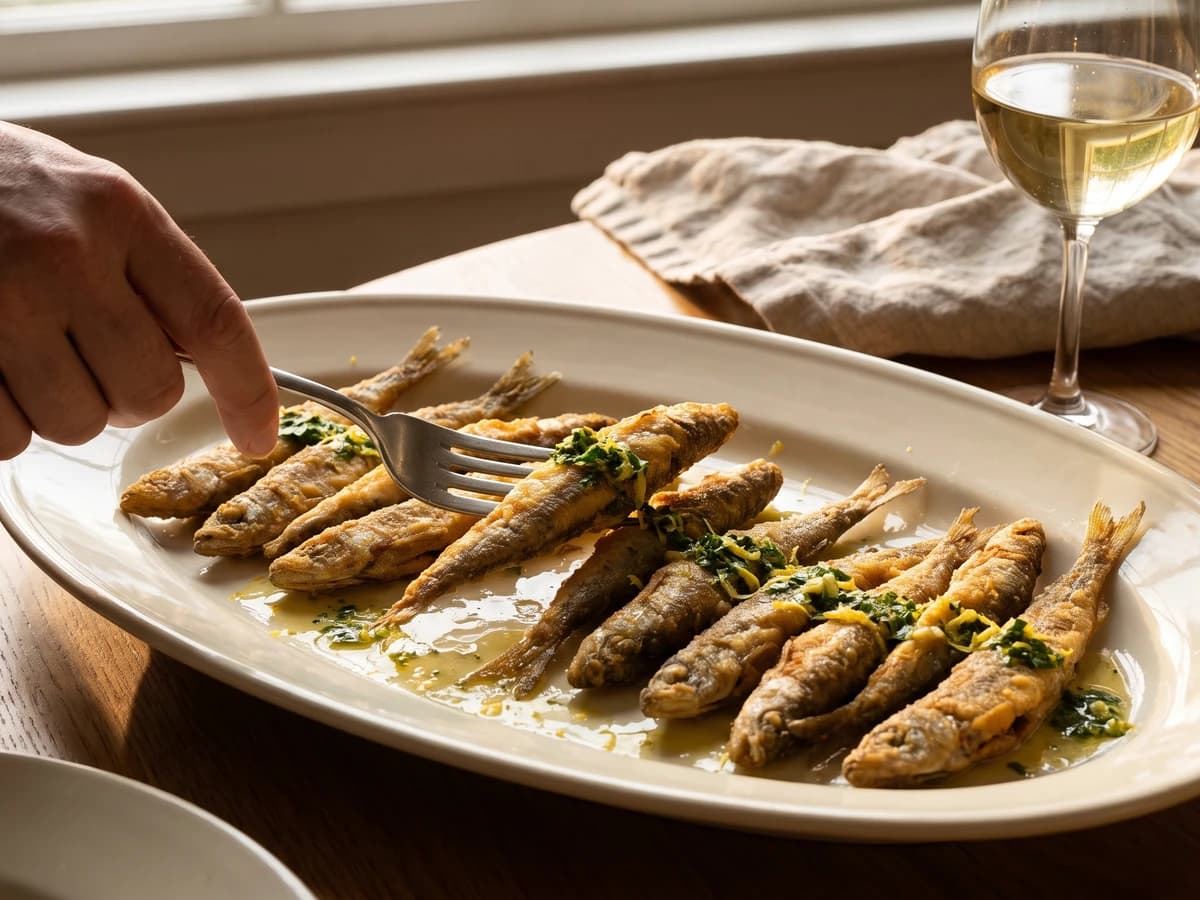
Éperlans à l’Anglaise turns small fish into a lesson in disciplined coating: boned smelts under a close, crisp crumb, pan-fried in clarified butter and finished with bright, half-melted maître d’hôtel butter.

Chef Juliette
Tiny smelts, shallot, mushrooms, white wine, gratin sauce, and fine bread raspings meet a fierce oven, where the fish must turn tender in the same breath the buttered crust bronzes.