
Chef Juliette
John Dory (St. Pierre)
John Dory has the delicacy of sole and the firmness of turbot. A light flouring, a quick butter sauté, and nut-brown beurre noisette show exactly why looks never mattered.
A cooking platform built around craft, culture, and the stories behind what we eat.

Created by Chef Juliette
Based on No. 1241, Pâté Chaud de Ris de Veau, from Le Guide Culinaire (1907) by Auguste Escoffier
Pâté chaud de ris de veau turns pastry into architecture: a burnished dome around chicken forcemeat, sliced sweetbread, mushrooms, truffle, and stiff Allemande, cut in generous wedges while hot.
Pâté Chaud de Ris de Veau (hot raised sweetbread pie) teaches enclosure. The pastry must hold its height, the chicken forcemeat must protect it from the moist garnish, and the Allemande must bind sweetbread, mushroom, and truffle without running when the first wedge is cut. The one true thing to know before touching a pan is simple: a hot pie is assembled cold.
The old entry assumed chicken forcemeat and stiff Allemande already waiting, a saucier on staff, stock never off the fire, and a pâtissier who could line moulds all afternoon. Here, a food processor makes the forcemeat, one saucepan handles the mushrooms and sauce in sequence, and a straight-sided Charlotte mould gives four generous main-course wedges. The stated 1½ pounds of short paste and the ⅔-inch forcemeat lining remain, because those proportions support the raised pie.
Hand-pounding the chicken, passing it repeatedly through a drum sieve, and reaching for a fancy pastry cutter are brigade scaffolding. They can go. The cold filling, reduced Allemande, even forcemeat lining, hard seal, and central slit are the dish itself, and every one stays. One cook, one stove, one evening. Keep the garnish cold and the Allemande stiff before they meet the pastry. That is the step that decides the pie.
Pâté chaud de ris de veau belongs to the grand Parisian service table, where pâtissiers and sauciers joined raised pastry, delicate offal, fine forcemeat, and liaison-thickened sauce in one architectural main course. Its form grew from the pâtissier and traiteur tradition of hot pies, then entered the classical canon as a showpiece whose crust served as both cooking vessel and edible casing. The useful correction is in the name: pâté here means the pie itself, not a cold spread, and ris de veau means veal sweetbread, the thymus or pancreas rather than bread.
Quantity
3⅓ cups (790 ml / 400 g)
Quantity
14 tablespoons (210 ml / 200 g)
cubed
Quantity
1 teaspoon (5 ml / 6 g)
Quantity
⅓ cup (80 ml / 80 g)
Quantity
2 tablespoons (30 ml / 16 g)
Quantity
10 ounces (285 g)
Quantity
2 teaspoons (10 ml / 12 g)
Quantity
4 ounces (115 g)
thinly sliced
Quantity
1 tablespoon (15 ml / 14 g)
Quantity
3 tablespoons (45 ml / 45 g)
Quantity
¾ cup (180 ml / 180 g)
Quantity
1½ tablespoons (22 ml / 21 g)
Quantity
2 tablespoons (30 ml / 16 g)
Quantity
3 tablespoons (45 ml / 45 g)
divided
Quantity
1
Quantity
1 teaspoon (5 ml / 5 g)
Quantity
½ ounce (15 g)
drained if preserved and thinly sliced
Quantity
1 pound (450 g)
very cold and cubed
Quantity
2
Quantity
¾ cup (180 ml / 180 g)
very cold
Quantity
1¼ teaspoons (6 ml / 8 g)
Quantity
¼ teaspoon (1.25 ml / 0.5 g)
Quantity
1 tablespoon (15 ml / 14 g)
Quantity
1
Quantity
1 tablespoon (15 ml / 15 g)
Quantity
to taste
| Ingredient | Quantity |
|---|---|
| all-purpose flour, for the short paste | 3⅓ cups (790 ml / 400 g) |
| cold unsalted butter, for the short pastecubed | 14 tablespoons (210 ml / 200 g) |
| fine sea salt, for the short paste | 1 teaspoon (5 ml / 6 g) |
| ice water | ⅓ cup (80 ml / 80 g) |
| all-purpose flour, for dredging | 2 tablespoons (30 ml / 16 g) |
| veal sweetbreads | 10 ounces (285 g) |
| fine sea salt, for soaking and poaching | 2 teaspoons (10 ml / 12 g) |
| white button mushroomsthinly sliced | 4 ounces (115 g) |
| unsalted butter, for the mushrooms | 1 tablespoon (15 ml / 14 g) |
| water, for the mushroom essence | 3 tablespoons (45 ml / 45 g) |
| good unsalted chicken stock | ¾ cup (180 ml / 180 g) |
| unsalted butter, for the Allemande | 1½ tablespoons (22 ml / 21 g) |
| all-purpose flour, for the Allemande | 2 tablespoons (30 ml / 16 g) |
| heavy cream, for the Allemandedivided | 3 tablespoons (45 ml / 45 g) |
| large egg yolk | 1 |
| fresh lemon juice | 1 teaspoon (5 ml / 5 g) |
| black truffle, fresh or whole preserveddrained if preserved and thinly sliced | ½ ounce (15 g) |
| boneless, skinless chicken breastvery cold and cubed | 1 pound (450 g) |
| large egg whites | 2 |
| heavy cream, for the chicken forcemeatvery cold | ¾ cup (180 ml / 180 g) |
| fine sea salt, for the chicken forcemeat | 1¼ teaspoons (6 ml / 8 g) |
| ground white pepper | ¼ teaspoon (1.25 ml / 0.5 g) |
| softened unsalted butter, for the mould | 1 tablespoon (15 ml / 14 g) |
| large egg, for Gilding | 1 |
| water, for Gilding | 1 tablespoon (15 ml / 15 g) |
| fine sea salt and ground white pepper | to taste |
Place the sweetbreads in a bowl of very cold water with half the poaching salt. Soak for 1 hour, changing the water twice, until the lobes look pale and the water remains nearly clear. This draws out blood and gives the finished sweetbread its clean, delicate flavour.
Mix the flour and salt, then rub in the cold butter until the mixture resembles coarse crumbs with a few flat flakes remaining. Add the ice water gradually and press the dough together without kneading. It should be firm enough to hold a tall mould, not soft like tart dough. Flatten it into a disc, wrap, and chill for at least 45 minutes. This produces about 1½ pounds of short paste, preserving the quantity specified for the raised crust.
Put the drained sweetbreads in a saucepan, cover with fresh cold water, and add the remaining poaching salt. Bring the water slowly to a bare tremble and poach for 5 minutes, never letting it boil hard. Drain, cool briefly under cold water, then remove the outer membrane, fat, and any coarse tubes while the lobes are still warm. Place between two small trays, add a weight of about 2 pounds, and chill for 30 minutes. Slice the pressed sweetbreads about ⅓ inch (8 mm) thick.
Melt the mushroom butter in a small covered saucepan. Add the sliced mushrooms, water, and a pinch of salt, then cook gently for 5 minutes without browning. Drain the mushrooms well and reserve their fragrant liquid. Return that liquid to the pan and reduce it to 2 tablespoons (30 ml / 30 g). This is the mushroom essence that gives the Allemande its proper accent. Spread the mushrooms on a plate and chill them.
Simmer the chicken stock until reduced to ½ cup (120 ml / 120 g), then combine it with the mushroom essence. In a clean saucepan, melt the Allemande butter, stir in the flour, and cook this pale roux for 2 minutes without letting it colour. Whisk in the hot stock little by little, then simmer gently until the sauce is smooth, reduced, and stiff enough to leave a clear track behind the spoon. Whisk the yolk with 2 tablespoons of the cream, temper it with a spoonful of hot sauce, and stir the liaison back into the pan over very low heat. Do not boil. Add the lemon juice, salt, and white pepper. If the yolk begins to catch, pull the pan from the heat and whisk in the reserved tablespoon of cold cream, then strain it. Ça se rattrape. Press parchment directly against the sauce and chill until firm.
Chill the food processor bowl and blade. Process the cold chicken with the salt and white pepper until smooth and tacky, then add the egg whites and process again. With the machine running, pour in the cold cream in a thin stream, stopping as soon as the forcemeat is glossy, thick, and completely combined. Poach a teaspoon in barely simmering water and cut it open to test the texture and seasoning. If the forcemeat looks greasy or loose, stop and chill it for 15 minutes before pulsing again briefly. Don't add more cream while it is warm.
Heat the oven to 400°F (200°C), with a rack in the lower third. Butter a straight-sided 6-inch (15 cm) Charlotte mould about 3 inches (7.5 cm) deep. Reserve one quarter of the paste for the lid and leaves. Roll the remainder on a lightly dredged surface into a Galette, a large round of paste, about ⅓ inch (8 mm) thick. Dust it lightly, fold it loosely in half without pressing, and draw the two ends gently toward the centre to make a soft skullcap. Lower it into the mould and unfold it against the bottom and sides, pressing carefully without making pleats. Trim the paste to ½ inch (1.25 cm) above the rim. If a crack appears, patch it with a thin piece of trimming and press the join smooth. Ça se rattrape.
Spread chicken forcemeat evenly over the bottom and sides of the lined mould to a thickness of ⅔ inch (1.7 cm), using the back of a damp spoon to keep the layer smooth. Toss the cold sweetbread slices, mushrooms, and truffle gently with the cold, stiff Allemande, then pack this garnish into the centre without pressing hard enough to crush the slices. Cover it completely with the remaining forcemeat and smooth the surface. Every component must be cold before it touches the pastry. Warm sauce softens the crust and loosens the forcemeat, while cold layers remain distinct when the pie is cut.
Roll the reserved paste to the same thickness and cut a lid slightly wider than the mould. Moisten the projecting rim with water, lay on the lid, and press firmly all around. Pinch the rim from inside and outside to make a tight seal. Cut leaves from the trimmings with a paring knife, replacing the old fancy cutter, and rib them with the back of the knife before laying them on the cover. Beat the egg with the water and Gild the pastry evenly. Cut a central slit about ½ inch (1.25 cm) long so moisture can escape.
Bake for 45 to 50 minutes, until the pie is a deep, even gold and an instant-read thermometer passed through the central slit reaches 165°F (74°C). If the pastry colours before the centre is ready, cover the dome loosely with foil and continue baking. Rest in the mould for 8 minutes, invert onto a board, then use a second board to turn the pie upright onto a platter lined with a clean folded napkin. Let it settle for another 10 minutes before cutting generous wedges. The crust should stand cleanly, the forcemeat should frame the garnish, and the Allemande should gleam without running. À table!
1 serving (about 480g)
Culinary guides, cultural storytelling, and the editorial depth that makes cooking meaningful.
Discover Culinary ExplorerChef Juliette
John Dory has the delicacy of sole and the firmness of turbot. A light flouring, a quick butter sauté, and nut-brown beurre noisette show exactly why looks never mattered.

Chef Juliette
Fresh haddock proves its delicacy in the meunière pan: a fine flour crust, moist pearly flakes, and beurre noisette sharpened with lemon and parsley, ready from one skillet in half an hour.
Chef Juliette
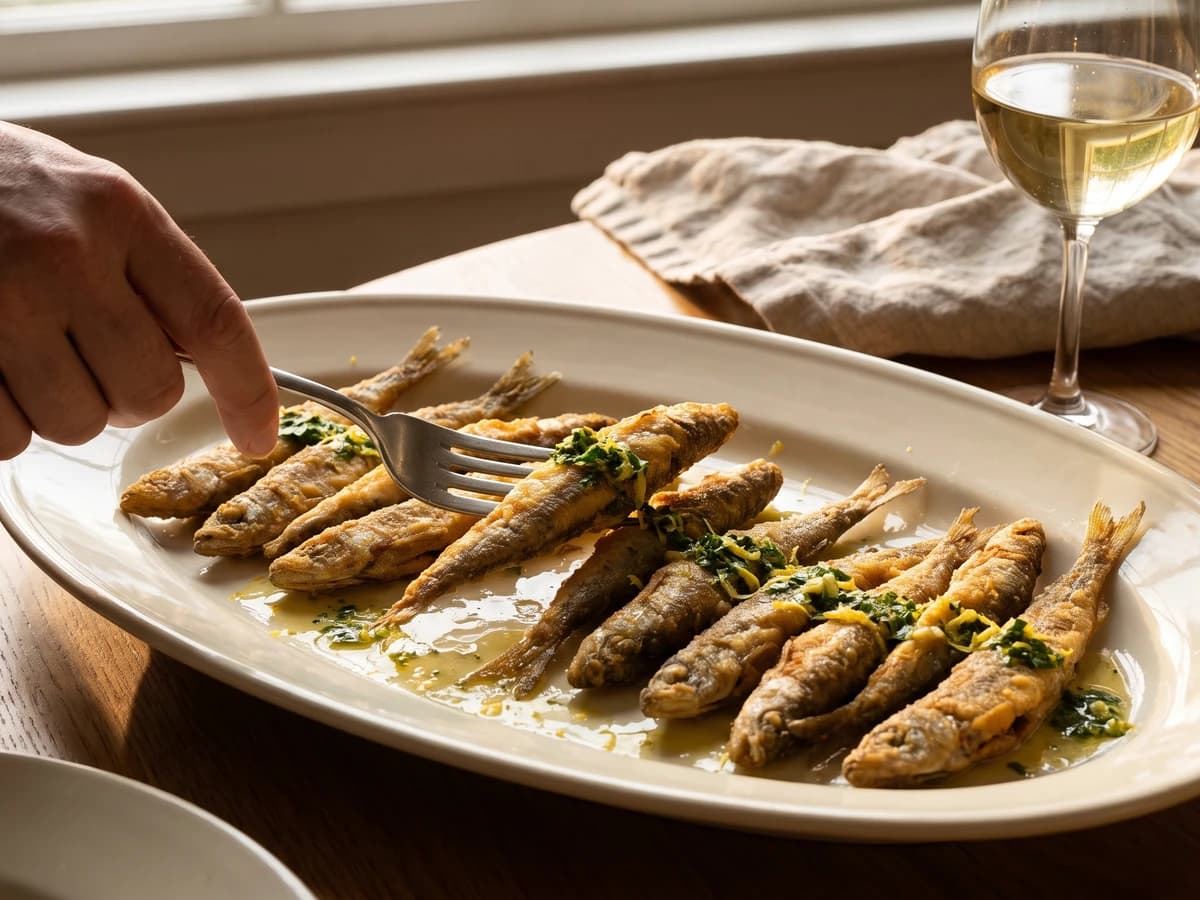
Éperlans à l’Anglaise turns small fish into a lesson in disciplined coating: boned smelts under a close, crisp crumb, pan-fried in clarified butter and finished with bright, half-melted maître d’hôtel butter.

Chef Juliette
Tiny smelts, shallot, mushrooms, white wine, gratin sauce, and fine bread raspings meet a fierce oven, where the fish must turn tender in the same breath the buttered crust bronzes.