
Chef Juliette
John Dory (St. Pierre)
John Dory has the delicacy of sole and the firmness of turbot. A light flouring, a quick butter sauté, and nut-brown beurre noisette show exactly why looks never mattered.
A cooking platform built around craft, culture, and the stories behind what we eat.
Created by Chef Juliette
Based on No. 1178, Hachis de Bœuf à l’Américaine, from Le Guide Culinaire (1907) by Auguste Escoffier
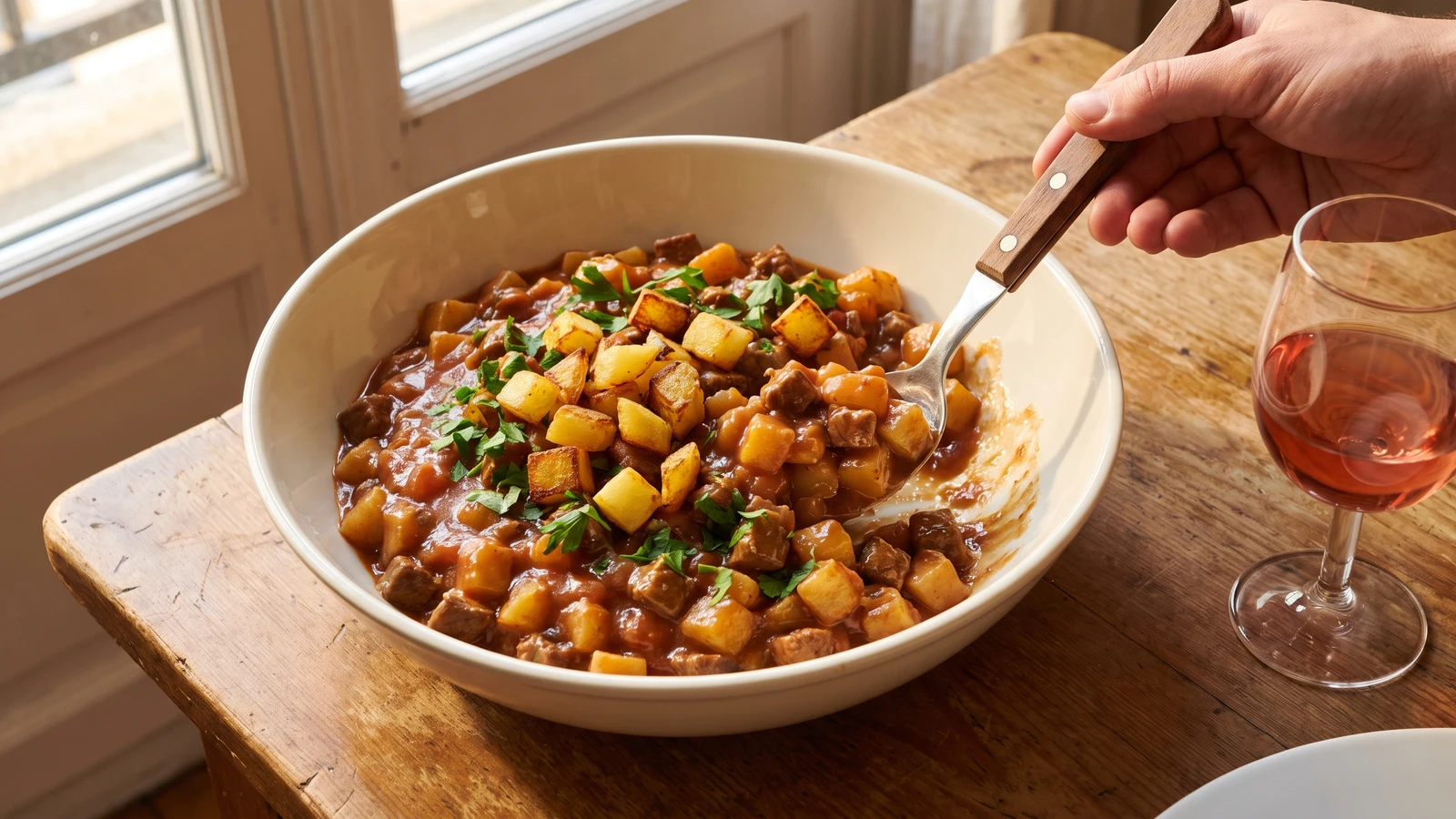
Hachis de Bœuf à l’Américaine turns yesterday’s roast into tonight’s supper, binding tender beef and potatoes with tomato and veal gravy, then crowning the bowl with crisp butter-fried dice.
Hachis de Bœuf à l’Américaine (beef hash with tomato gravy and crisp potatoes) teaches one of the canon’s most useful disciplines: leftovers are not reheated carelessly, they are rebuilt. The one true thing to know before touching the pan is this: warm the cooked beef gently and never let its sauce boil. A boil tightens meat that has already given all the tenderness it has to give.
The original assumed a saucier on staff, a stockpot never off the fire, and a fry station ready to send out potatoes on command. Your honest equivalents are prepared reduced veal gravy, plain tomato sauce, one skillet, and one saucepan. A salamander has no work here because the crown is fried, not gratinéed. The separate stations and formal timbale are brigade scaffolding, so this version uses a warmed serving bowl and scales the equal-weight beef-and-potato ratio to four servings. The ratio, the division of the potatoes into tender binding and crisp garnish, and the gentle warming are the dish itself, so they stay.
The finished hachis should be loosely coherent, not wet, with distinct cubes of beef and tender potato held by a glossy rust-brown sauce. Crisp potatoes land only at the last moment, followed by parsley and nothing fussy. Keep that saucepan below a simmer, and the hachis stays tender, generous, and entirely itself. One cook, one stove, one evening.
Hachis de bœuf belongs to the French bourgeois table’s cuisine de desserte (the cookery of leftovers), where yesterday’s roast returned in a new form rather than appearing twice unchanged. This à l’Américaine version passed through professional service kitchens as a French reading of American hash: equal dice of cooked beef and potatoes, bound with tomato and reduced veal gravy, with half the potatoes held crisp for the crown. It is not hachis Parmentier; there is no mashed-potato cover or oven gratin, only a warmed timbale and potatoes fried at the last moment.
Quantity
about 4 cups (600 g)
chilled and cut into 1/3-inch dice
Quantity
about 4 cups (600 g)
peeled and cut into 1/3-inch dice
Quantity
5 tablespoons (75 ml / 70 g)
divided
Quantity
3 tablespoons (45 ml / 50 g)
Quantity
4 tablespoons (60 ml / 65 g)
prepared from veal demi-glace
Quantity
1 teaspoon (5 ml / 6 g)
divided
Quantity
1/2 teaspoon (2.5 ml / 1 g)
divided
Quantity
1 tablespoon (15 ml / 4 g)
freshly chopped
| Ingredient | Quantity |
|---|---|
| cooked roast beefchilled and cut into 1/3-inch dice | about 4 cups (600 g) |
| waxy potatoespeeled and cut into 1/3-inch dice | about 4 cups (600 g) |
| unsalted butterdivided | 5 tablespoons (75 ml / 70 g) |
| plain smooth tomato sauce | 3 tablespoons (45 ml / 50 g) |
| reduced veal gravyprepared from veal demi-glace | 4 tablespoons (60 ml / 65 g) |
| fine saltdivided | 1 teaspoon (5 ml / 6 g) |
| freshly ground black pepperdivided | 1/2 teaspoon (2.5 ml / 1 g) |
| flat-leaf parsleyfreshly chopped | 1 tablespoon (15 ml / 4 g) |
Cut the cold cooked beef into even 1/3-inch dice, trimming away any hard gristle or heavy seams of fat. Cut the peeled potatoes to the same size, then blot them completely dry. Weigh both after trimming: you want 600 g of each. That equal weight is not decorative arithmetic; half the potato gives the hachis its body and half provides the crisp contrast. Keep the beef cold while the potatoes cook.
Melt 4 tablespoons of the butter in a 12-inch heavy skillet over medium-low heat. When the foam subsides, add all the dry potato dice, 3/4 teaspoon of the salt, and 1/4 teaspoon of the pepper. Toss until every piece gleams with butter, then cook for 12 to 15 minutes, turning every few minutes, until the centers are tender and the edges are lightly golden. Keep the heat measured. If the butter blackens before the potatoes soften, transfer them to a plate, wipe the bitter milk solids from the pan, and return the potatoes with enough reserved butter to restore a thin coat. Ça se rattrape.
Transfer half the tender potatoes, about 2 cups or 300 g, to a heavy saucepan and add the diced beef. Leave the other half in the skillet, add the remaining butter, and raise the heat to medium. Fry for another 5 to 7 minutes, turning rather than stirring constantly, until the potatoes are crisp and deeply butter-gold on several faces. Taste one and add a pinch of the remaining seasoning if needed, then hold them uncovered so their crust stays crisp.
Add the tomato sauce and reduced veal gravy to the saucepan containing the beef and tender potatoes. Fold gently with a broad spatula until the sauce lightly coats and coheres the dice without crushing them. Set the pan over the lowest heat and warm for 6 to 8 minutes, folding only once or twice, until thoroughly hot, about 165°F or 74°C for refrigerated leftovers. The sauce may quiver at the edge but must never bubble. If it begins to boil, pull the pan from the heat at once, let it settle for a minute, then return it to the lowest flame. Ça se rattrape. If the binding is too tight, loosen it with a teaspoon of hot water; if it is loose, lift out the solids, reduce the liquid alone briefly, and fold everything back together.
Warm a deep heatproof serving bowl with hot water, then empty and dry it thoroughly. Taste the hachis and correct the remaining salt and pepper with care because the reduced veal gravy already carries seasoning. Spoon the mixture into the warm bowl, preserving its distinct dice, and distribute every crisp potato over the top. Finish with the freshly chopped parsley and serve immediately, before the crown has time to soften. À table!
1 serving (about 320g)
Culinary guides, cultural storytelling, and the editorial depth that makes cooking meaningful.
Discover Culinary ExplorerChef Juliette
John Dory has the delicacy of sole and the firmness of turbot. A light flouring, a quick butter sauté, and nut-brown beurre noisette show exactly why looks never mattered.

Chef Juliette
Fresh haddock proves its delicacy in the meunière pan: a fine flour crust, moist pearly flakes, and beurre noisette sharpened with lemon and parsley, ready from one skillet in half an hour.
Chef Juliette
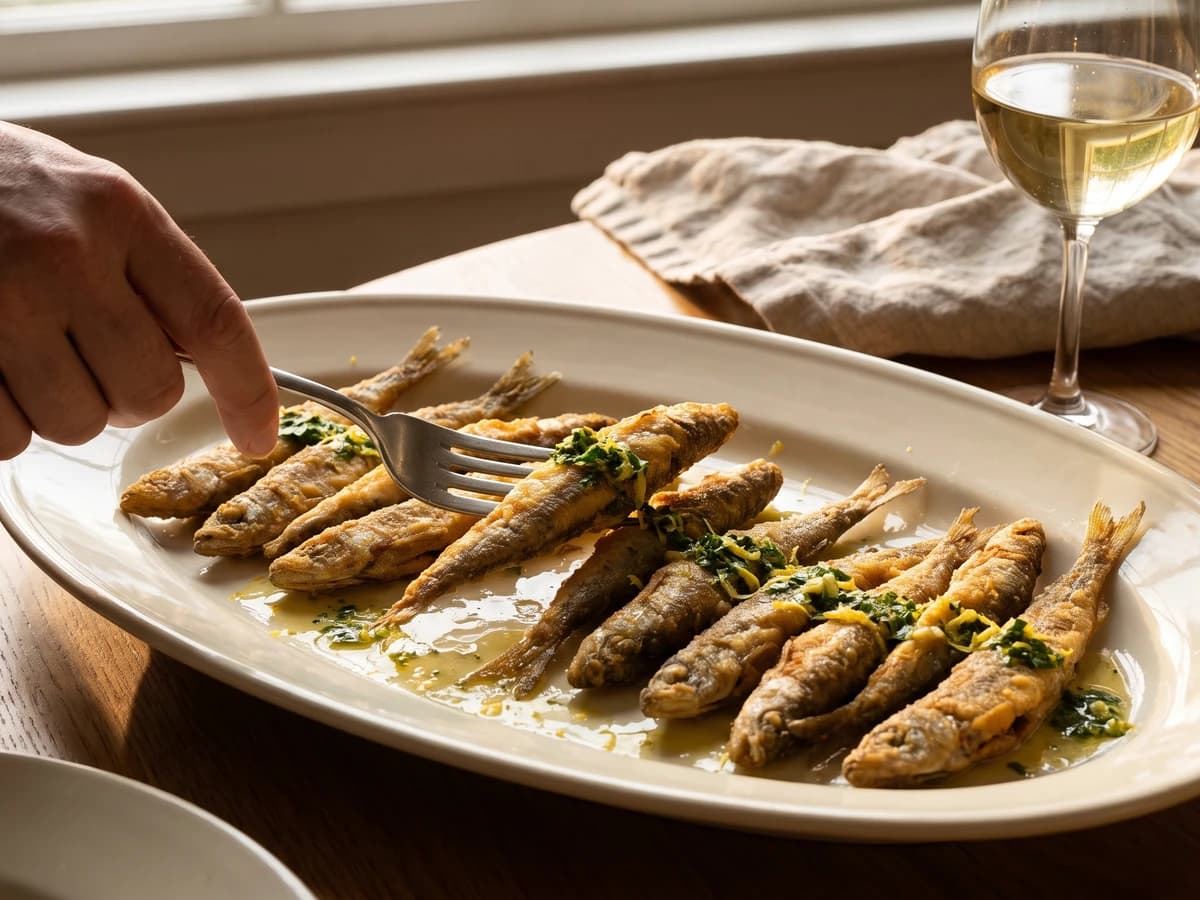
Éperlans à l’Anglaise turns small fish into a lesson in disciplined coating: boned smelts under a close, crisp crumb, pan-fried in clarified butter and finished with bright, half-melted maître d’hôtel butter.

Chef Juliette
Tiny smelts, shallot, mushrooms, white wine, gratin sauce, and fine bread raspings meet a fierce oven, where the fish must turn tender in the same breath the buttered crust bronzes.