
Chef Juliette
John Dory (St. Pierre)
John Dory has the delicacy of sole and the firmness of turbot. A light flouring, a quick butter sauté, and nut-brown beurre noisette show exactly why looks never mattered.
A cooking platform built around craft, culture, and the stories behind what we eat.
Created by Chef Juliette
Based on No. 1156, Langue de Bœuf aux Fèves, from Le Guide Culinaire (1907) by Auguste Escoffier
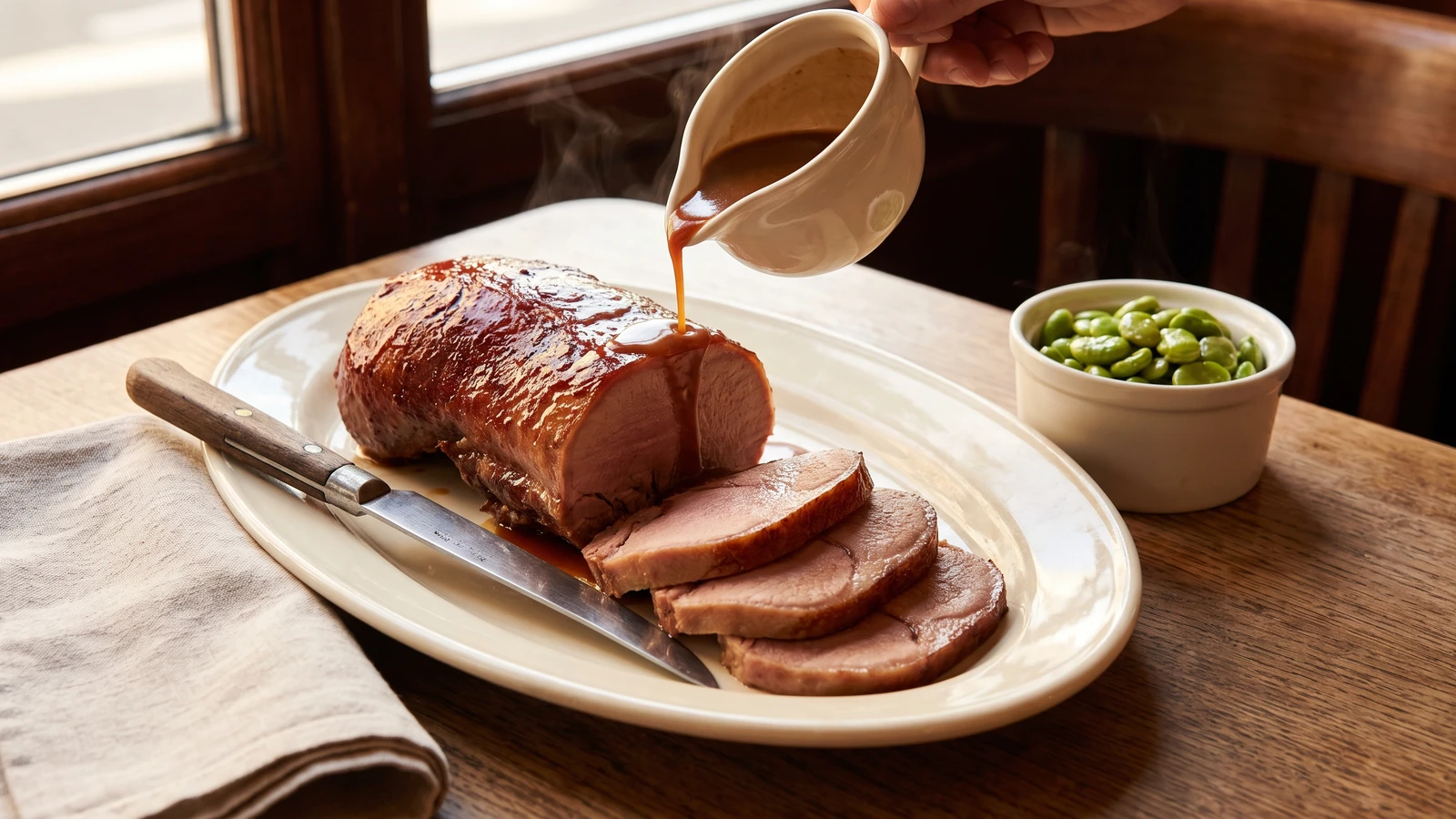
Salted ox tongue poached at the gentlest tremble, peeled warm and glazed to a bronze sheen, with tender broad beans bound in butter and savory, and Madeira sauce passed separately.
Langue de Bœuf aux Fèves (salted ox tongue with broad beans) teaches one stern, useful thing: a tongue must poach at a tremble, never a boil. Its dense muscle softens through long, quiet heat. A rolling pot tightens the outside and muddies the liquor before the center becomes tender.
The original kitchen assumed a salted tongue ready from the larder, a stock never off the fire, a saucier on staff for the Madeira sauce, and a salamander to set the glaze. Your honest equivalents are a three-day refrigerator salting, good unsalted beef stock, a small saucepan, and the broiler. The tongue is sized for four, the Madeira sauce fills one sauce boat, and the glaze comes from one cup of reduced stock rather than a vat of meat glaze. One cook, one stove, one evening, once the unattended curing is done.
The separate brigade hands are scaffolding and can go. The salting, gentle poach, warm peeling, glossy glaze, skinned beans cooked with savory and bound in real butter, and Madeira sauce offered apart are the dish and must stay. Before you set the pot on the stove, remember this: the poaching liquor should barely move. That quiet pot decides everything.
Langue de bœuf aux fèves belongs to French cuisine bourgeoise and the grand Parisian dining room rather than to a single province. Salted tongue moved from the economical household pot into classical service through glazing, a spring timbale of carefully skinned broad beans, and Madeira sauce presented separately. The name aux fèves is easily misunderstood: the beans do not braise with the tongue, and keeping them apart preserves their green freshness against the dark, savory sauce.
Quantity
1, about 3 pounds (1.3 kg)
Quantity
1½ tablespoons (22 ml / 26 g)
for curing
Quantity
14 cups (3.3 L / 3.3 kg), or enough to cover the tongue
Quantity
1 medium (about 7 oz / 200 g)
peeled and halved
Quantity
1 large (about 4 oz / 120 g)
cut into large pieces
Quantity
1 stalk (about 2 oz / 60 g)
cut into large pieces
Quantity
2 cloves
lightly crushed
Quantity
1
Quantity
1 teaspoon (5 ml / 3 g)
Quantity
2½ cups (600 ml / 600 g)
divided: 1½ cups for the sauce and 1 cup for the glaze
Quantity
5 tablespoons (75 ml / 70 g)
divided: 2 tablespoons for the sauce and 3 tablespoons for the broad beans
Quantity
1 tablespoon (15 ml / 8 g)
Quantity
½ cup (120 ml / 120 g)
Quantity
4 cups (950 ml / 600 g), from about 4 pounds (1.8 kg) pods
skins removed as directed
Quantity
10 cups (2.4 L / 2.4 kg)
for blanching and cooking the broad beans
Quantity
1 tablespoon (15 ml / 18 g)
for the broad-bean water
Quantity
2 sprigs
Quantity
as needed
for final seasoning
| Ingredient | Quantity |
|---|---|
| fresh ox tongue | 1, about 3 pounds (1.3 kg) |
| fine sea saltfor curing | 1½ tablespoons (22 ml / 26 g) |
| cold water | 14 cups (3.3 L / 3.3 kg), or enough to cover the tongue |
| yellow onionpeeled and halved | 1 medium (about 7 oz / 200 g) |
| carrotcut into large pieces | 1 large (about 4 oz / 120 g) |
| celerycut into large pieces | 1 stalk (about 2 oz / 60 g) |
| garliclightly crushed | 2 cloves |
| bouquet garni of parsley stems, thyme, and bay leaf | 1 |
| black peppercorns | 1 teaspoon (5 ml / 3 g) |
| unsalted or very low-sodium gelatin-rich beef stockdivided: 1½ cups for the sauce and 1 cup for the glaze | 2½ cups (600 ml / 600 g) |
| unsalted butterdivided: 2 tablespoons for the sauce and 3 tablespoons for the broad beans | 5 tablespoons (75 ml / 70 g) |
| plain flour | 1 tablespoon (15 ml / 8 g) |
| dry or medium-dry Madeira | ½ cup (120 ml / 120 g) |
| freshly shelled broad beansskins removed as directed | 4 cups (950 ml / 600 g), from about 4 pounds (1.8 kg) pods |
| waterfor blanching and cooking the broad beans | 10 cups (2.4 L / 2.4 kg) |
| fine sea saltfor the broad-bean water | 1 tablespoon (15 ml / 18 g) |
| fresh savory | 2 sprigs |
| fine sea saltfor final seasoning | as needed |
Dry the tongue and rub the curing salt evenly over every surface, working it into the thicker root end. Set it in a snug nonreactive dish, cover, and refrigerate for three days, turning it each day through the brine it releases. Keep it properly cold throughout. When you are ready to cook, rinse the tongue thoroughly under cold water and pat it dry.
Put the tongue in a tall stockpot with the measured cold water, onion, carrot, celery, garlic, bouquet garni, and peppercorns. Bring it up slowly over medium heat, skimming the grey foam as it rises. As soon as small bubbles gather at the edge, lower the heat, partially cover, and hold the liquid between 185 and 195°F (85 and 90°C) for 3 to 3½ hours. Add a little hot water if the tongue rises above the surface. It is ready when a thin skewer enters the thickest part with the resistance of room-temperature butter. If the pot breaks into a rolling boil, pull it off the heat, lower the burner, and add a ladle of cold water before continuing. Ça se rattrape. A brief boil has not ruined dinner, but quiet heat must take over.
Lift the tongue onto a board and let it cool only until your hands can manage it, about 10 minutes. Strain the poaching liquor, discard the aromatics, and return enough liquor to the pot to hold the peeled tongue later. Slit the coarse outer skin along the underside and pull it away in broad sheets, then trim away the rough root, excess fat, and any small pieces of cartilage. If the skin clings stubbornly, return the tongue to the hot liquor for 15 minutes and try again; resistance means it needs more cooking, not more force. Keep the peeled tongue warm in the strained liquor over the lowest heat.
Melt 1 tablespoon of the butter in a small saucepan, stir in the flour, and cook the roux over medium-low heat for 2 to 3 minutes, until it smells lightly toasted and takes the color of a plain biscuit. Whisk in 1½ cups of the beef stock a little at a time, making each addition smooth before adding the next. Simmer gently for about 15 minutes, skimming if needed, then add the Madeira and cook for 4 to 5 minutes more, until the sauce reaches nappé, a coating consistency that leaves a clear trail across the back of a spoon. Take it off the heat and whisk in the remaining 1 tablespoon butter. If it is lumpy, strain it. If too thick, loosen it with stock; if too thin, simmer a little longer. Taste for salt, then keep the sauce warm without boiling it.
Bring the measured bean water to a boil. Blanch the shelled broad beans for 45 to 60 seconds, lift them out with a sieve, and let them cool just enough to handle. Pinch each bean from its pale outer skin. Return the water to a boil with the salt and savory, add the skinned beans, and cook gently for 3 to 5 minutes, until tender but still intact. Reserve 2 tablespoons of their cooking water, drain the beans thoroughly, and discard the savory. Return the beans to the dry warm pot with the remaining 3 tablespoons butter and shake them gently over low heat until the butter clings as a glossy coating. If the butter sits in a puddle, add a teaspoon of the reserved water and toss again; if the beans begin to split, stop the heat and fold them carefully instead.
Heat the broiler with a rack about 6 inches (15 cm) below it. Boil the remaining 1 cup beef stock in a small wide pan until only about 3 tablespoons remain and the reduction coats a spoon. Lift the tongue from its liquor, dry it well, and set it in a broiler-safe dish. Brush it generously with the reduction, broil for 1 to 2 minutes, then brush and rotate it. Repeat until the surface is burnished and glossy. Watch closely because the glaze darkens quickly; if an edge colors too fast, move the dish lower and loosen the remaining glaze with a spoonful of stock.
Rest the glazed tongue for 5 minutes, then cut it crosswise into slices about ¼ inch (6 mm) thick and overlap them on a warm oval platter. Brush over any remaining glaze. Spoon the broad beans into a warmed timbale or serving bowl and pour the Madeira sauce into a sauce boat. Send both separately, exactly as the preparation intends, so each guest can take the green, buttered beans and dark sauce in their own proportion. À table!
1 serving (about 485g)
Culinary guides, cultural storytelling, and the editorial depth that makes cooking meaningful.
Discover Culinary ExplorerChef Juliette
John Dory has the delicacy of sole and the firmness of turbot. A light flouring, a quick butter sauté, and nut-brown beurre noisette show exactly why looks never mattered.

Chef Juliette
Fresh haddock proves its delicacy in the meunière pan: a fine flour crust, moist pearly flakes, and beurre noisette sharpened with lemon and parsley, ready from one skillet in half an hour.

Chef Juliette
Éperlans à l’Anglaise turns small fish into a lesson in disciplined coating: boned smelts under a close, crisp crumb, pan-fried in clarified butter and finished with bright, half-melted maître d’hôtel butter.

Chef Juliette
Tiny smelts, shallot, mushrooms, white wine, gratin sauce, and fine bread raspings meet a fierce oven, where the fish must turn tender in the same breath the buttered crust bronzes.