
Chef Juliette
John Dory (St. Pierre)
John Dory has the delicacy of sole and the firmness of turbot. A light flouring, a quick butter sauté, and nut-brown beurre noisette show exactly why looks never mattered.
A cooking platform built around craft, culture, and the stories behind what we eat.

Created by Chef Juliette
Based on No. 1153, Langue de Bœuf, from Le Guide Culinaire (1907) by Auguste Escoffier
Langue de Bœuf teaches patience without fuss: brine the tongue, poach it at a bare tremble, peel it while warm, then serve generous slices with sharp, glossy sauce piquante.
Langue de Bœuf (ox tongue) teaches patience in its plainest form. This is a dense working muscle, so the one true thing to know before touching a pan is that fiercer heat cannot replace time. Give it a long, barely trembling poach and it becomes yielding, neatly sliceable, and rich enough to welcome the vinegar bite and cornichons of sauce piquante.
The book assumed a reservoir of reusable brine, a syringe for large cuts, and a saucier with brown stock never off the fire. For one tongue, those are brigade scaffolding: a covered container in the refrigerator replaces the reservoir, a metal skewer and full immersion replace injection, and a compact roux with good low-sodium stock builds the sauce at home. The seven-day cure and slow poach must stay, because they are the dish. Once the tongue is cured, this is one cook, one stove, one evening.
There is only one hurried moment. Lift the cooked tongue from its liquor, wait just until your hands can bear it, then pull away the skin before the meat cools. If it clings, return the tongue to the hot liquor and try again. That warm peel is the step that matters most.
Langue de bœuf belongs to the cuisine bourgeoise of household tables across France, and it sits naturally in Lyon's bouchons, where tongue, tripe, and liver receive the same attention as prime cuts. From the home and charcutier's pot it passed into the grand kitchen, which served it with the garnishes used for beef fillet and sauces such as Madère, tomate, and piquante. Despite that grand service, its cookery remains elemental: salt the dense muscle through, simmer until yielding, and skin it while warm.
Quantity
1 tongue (3 to 3½ lb / 1.4 to 1.6 kg)
loose throat cartilage trimmed
Quantity
8 quarts (7.6 L / 7.6 kg), plus more as needed
divided
Quantity
4 cups (950 ml / 600 g)
peeled and cut into 1-inch pieces
Quantity
3 cups (710 ml / 450 g)
peeled and cut into 1-inch pieces
Quantity
¾ cup (180 ml / 180 g)
Quantity
½ cup (120 ml / 113 g)
divided
Quantity
1 (about ¼ cup / 60 ml / 40 g)
finely minced
Quantity
½ cup (120 ml / 120 g)
Quantity
⅓ cup (80 ml / 80 g)
Quantity
2 tablespoons (30 ml / 16 g)
Quantity
2 cups (480 ml / 480 g)
divided
Quantity
1 cup (240 ml / 240 g)
Quantity
⅓ cup (80 ml / 50 g)
finely diced
Quantity
2 tablespoons (30 ml / 8 g)
roughly chopped
Quantity
Up to 1 teaspoon (5 ml / 6 g)
divided
Quantity
½ teaspoon (2.5 ml / 1 g)
| Ingredient | Quantity |
|---|---|
| fresh ox tongueloose throat cartilage trimmed | 1 tongue (3 to 3½ lb / 1.4 to 1.6 kg) |
| Brineprepared and fully chilled | 2 quarts (1.9 L / 1.9 kg) Brine (No. 172) |
| fresh waterdivided | 8 quarts (7.6 L / 7.6 kg), plus more as needed |
| celeriacpeeled and cut into 1-inch pieces | 4 cups (950 ml / 600 g) |
| floury potatoespeeled and cut into 1-inch pieces | 3 cups (710 ml / 450 g) |
| heavy cream | ¾ cup (180 ml / 180 g) |
| unsalted butterdivided | ½ cup (120 ml / 113 g) |
| large shallotfinely minced | 1 (about ¼ cup / 60 ml / 40 g) |
| dry white wine | ½ cup (120 ml / 120 g) |
| red wine vinegar | ⅓ cup (80 ml / 80 g) |
| all-purpose flour | 2 tablespoons (30 ml / 16 g) |
| low-sodium beef stockdivided | 2 cups (480 ml / 480 g) |
| reserved tongue cooking liquid | 1 cup (240 ml / 240 g) |
| cornichonsfinely diced | ⅓ cup (80 ml / 50 g) |
| flat-leaf parsleyroughly chopped | 2 tablespoons (30 ml / 8 g) |
| fine saltdivided | Up to 1 teaspoon (5 ml / 6 g) |
| freshly ground black pepper | ½ teaspoon (2.5 ml / 1 g) |
Rinse the tongue and cut away loose cartilage or glands at the throat end without carving into the muscle. Lay it on a sturdy board and roll it firmly several times with a clean rolling pin, then prick it on every side with a metal skewer at roughly 1-inch intervals. The punctures let the cure reach the dense flesh evenly.
Set the tongue in a covered nonreactive container and pour over the fully chilled Brine (No. 172). Place a small clean plate over it so every part remains submerged, cover, and refrigerate at 40°F / 4°C or colder for seven days. Turn the tongue once each day and adjust the weight if any part rises above the liquid.
Lift the tongue from the brine and rinse it thoroughly. Submerge it in about 2 quarts of fresh cold water and refrigerate for two hours, changing the water after the first hour. This draws off surface salt without emptying the cure from the centre. Drain and rinse once more.
Place the tongue in a deep pot and cover it by 2 inches with fresh water. Bring the water to a full boil, skim away the grey foam, then immediately lower the heat until the surface barely trembles. Cover partially and cook for 3 to 3½ hours, adding hot water whenever necessary to keep the tongue submerged. It is ready when a skewer passes through the thickest part with almost no resistance. If the pot boils hard, lower the heat and add a cup of cool water. The tongue isn't lost, but it may need more time to relax.
Reserve 1 cup of the cooking liquid for the sauce, then lift the tongue to a board and let it rest for about five minutes. Slit the rough outer skin at the throat end and pull it toward the tip in broad strips. Trim away hard gristle and excessive fat from the base. If the skin clings, return the tongue to the hot liquor for ten minutes, then try again. Hold the peeled tongue whole in a little warm cooking liquid so it stays moist.
During the final forty minutes of poaching, cover the celeriac and potatoes with fresh cold water, season lightly with some of the salt, and simmer for 20 to 25 minutes until completely tender. Drain well, return them to the dry pan for one minute over low heat, then mash or rice them. Warm the cream with 4 tablespoons of the butter and fold it into the vegetables. Season with pepper and only as much additional salt as the purée needs. If it becomes stiff, fold in another spoonful of warm cream; if it is loose, stir it briefly over low heat. Stop mixing once smooth, because potatoes worked too hard turn elastic.
Melt 1 tablespoon of the remaining butter in a saucepan and soften the shallot without browning. Add the wine and vinegar, then boil until reduced to about 3 tablespoons; transfer this sharp reduction to a bowl. Melt another 2 tablespoons of butter in the same pan, stir in the flour, and cook it patiently to a roux brun léger (light brown roux), the colour of a hazelnut shell. Gradually whisk in 1 cup of beef stock and the reserved tongue cooking liquid, provided the liquid tastes pleasantly seasoned. If it is too salty, replace it with another cup of stock. Simmer for 12 to 15 minutes until the sauce reaches nappe, a coating consistency, then stir in the shallot reduction and cornichons. Off the heat, whisk in the final tablespoon of butter and the parsley. If the sauce is thick, loosen it with stock; if thin, reduce it; if lumpy, strain it. If the finishing butter floats, whisk in a teaspoon of cold water away from the heat. Ça se rattrape.
Cut the peeled tongue across the grain into ½-inch slices. Slip the slices into the sauce piquante and warm them at the gentlest simmer for five minutes, turning once so both sides take on the gloss. Spoon the celeriac purée onto a warm serving platter, overlap the tongue generously beside it, and pour the sauce and cornichons over the meat. À table!
1 serving (about 720g)
Culinary guides, cultural storytelling, and the editorial depth that makes cooking meaningful.
Discover Culinary ExplorerChef Juliette
John Dory has the delicacy of sole and the firmness of turbot. A light flouring, a quick butter sauté, and nut-brown beurre noisette show exactly why looks never mattered.

Chef Juliette
Fresh haddock proves its delicacy in the meunière pan: a fine flour crust, moist pearly flakes, and beurre noisette sharpened with lemon and parsley, ready from one skillet in half an hour.
Chef Juliette
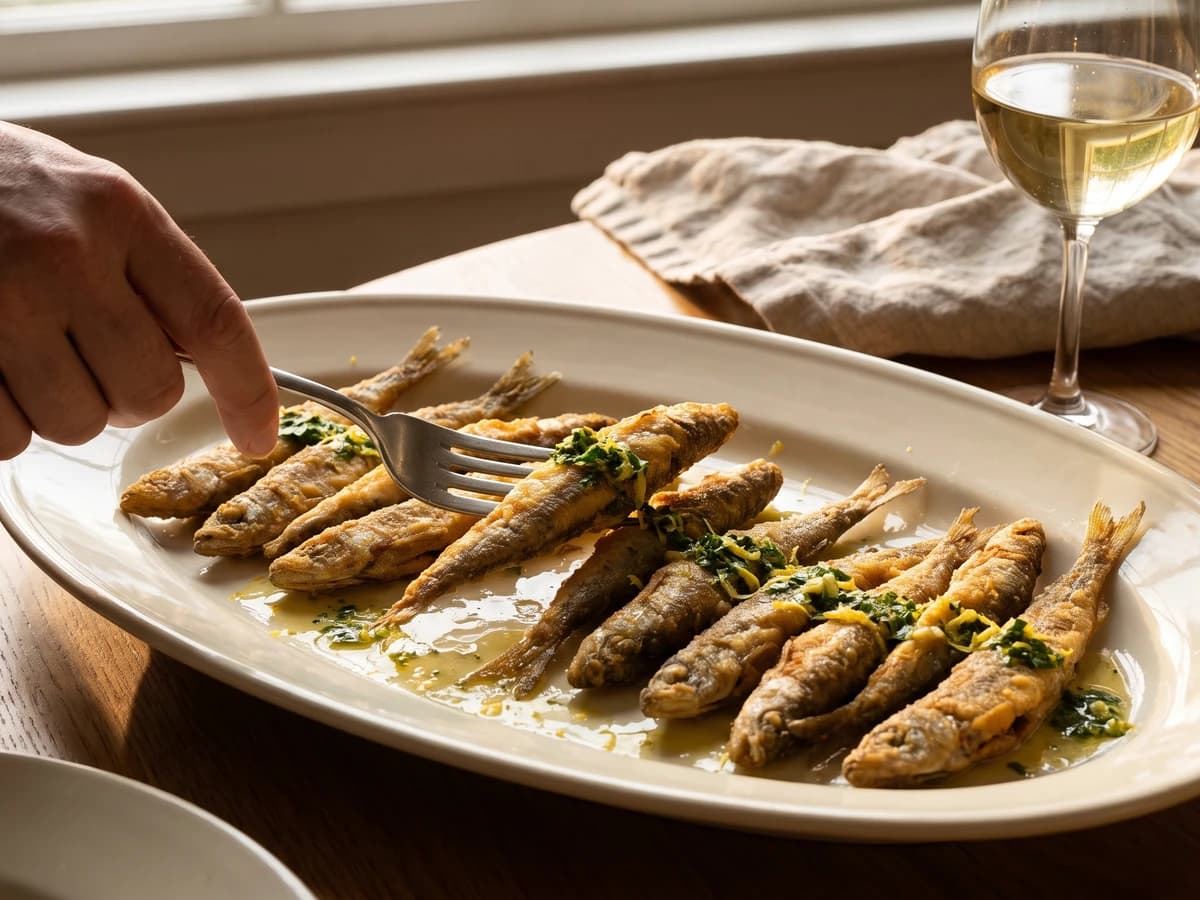
Éperlans à l’Anglaise turns small fish into a lesson in disciplined coating: boned smelts under a close, crisp crumb, pan-fried in clarified butter and finished with bright, half-melted maître d’hôtel butter.

Chef Juliette
Tiny smelts, shallot, mushrooms, white wine, gratin sauce, and fine bread raspings meet a fierce oven, where the fish must turn tender in the same breath the buttered crust bronzes.