
Chef Juliette
John Dory (St. Pierre)
John Dory has the delicacy of sole and the firmness of turbot. A light flouring, a quick butter sauté, and nut-brown beurre noisette show exactly why looks never mattered.
A cooking platform built around craft, culture, and the stories behind what we eat.

Created by Chef Juliette
Based on No. 1132, Tournedos Tyrolienne, from Le Guide Culinaire (1907) by Auguste Escoffier
Four thick tournedos, browned in butter and arranged in a crown, meet a glossy tomato-onion sauce sharpened with garlic and poivrade. The hot pan matters, because pale beef gives the sauce nothing.
Tournedos Tyrolienne (butter-seared beef tenderloin with tomato-onion poivrade sauce) teaches one essential marriage: a deeply browned piece of meat and a built sauce must taste of the same pan. The tenderloin brings tenderness, not much fat or connective tissue, so the crust has to provide its savor. Pale beef cannot be rescued by an elegant sauce.
The original entry fed ten and assumed a saucier had already made the poivrade from a stockpot that never went cold. At home, prepared poivrade sauce remains a finished component, because its peppery depth is part of the dish, not brigade scaffolding to discard. The crown of ten becomes four evenly cut tournedos, and the separate sauce and meat pans meet at the end when the tomato mixture gathers up the beef fond. No salamander belongs here. One cook, one stove, one evening.
The finished plate should be generous rather than fussy: bronze-crusted beef, a loose crown on a warm platter, and tomato-onion sauce gleaming over every piece. Before you touch the pan, dry the tournedos thoroughly. That dry surface and properly hot butter decide the dish.
Tournedos Tyrolienne belongs to the classical dining-room repertoire of Paris, where small beef fillets were paired with named sauces and arranged on platters for several diners. Tyrolienne is a French style name rather than proof of a household recipe from Tyrol; here it denotes the tomato-and-onion preparation strengthened with poivrade, while the crown arrangement reflects formal platter service.
Quantity
4, 5½ to 6 ounces each (155 to 170 g each) and about 1½ inches (4 cm) thick
Quantity
1½ tablespoons (22 ml / 21 g)
Quantity
½ onion (⅓ cup / 55 g)
finely chopped
Quantity
1 tomato (about 1 cup / 200 g after peeling and pressing)
peeled, seeded, pressed, and roughly chopped
Quantity
1 tablespoon (15 ml / 4 g)
finely chopped
Quantity
1 clove (1 teaspoon / 3 g)
crushed
Quantity
1½ tablespoons (22 ml / 22 g)
Quantity
3 tablespoons (45 ml / 42 g)
divided
Quantity
1¼ teaspoons (6 ml / 7 g)
divided
Quantity
¾ teaspoon (4 ml / 2 g)
divided
| Ingredient | Quantity |
|---|---|
| center-cut beef tenderloin tournedos | 4, 5½ to 6 ounces each (155 to 170 g each) and about 1½ inches (4 cm) thick |
| unsalted butter for the sauce | 1½ tablespoons (22 ml / 21 g) |
| small yellow onionfinely chopped | ½ onion (⅓ cup / 55 g) |
| large ripe tomatopeeled, seeded, pressed, and roughly chopped | 1 tomato (about 1 cup / 200 g after peeling and pressing) |
| flat-leaf parsleyfinely chopped | 1 tablespoon (15 ml / 4 g) |
| small garlic clovecrushed | 1 clove (1 teaspoon / 3 g) |
| prepared poivrade sauce | 1½ tablespoons (22 ml / 22 g) |
| unsalted butter for fryingdivided | 3 tablespoons (45 ml / 42 g) |
| fine sea saltdivided | 1¼ teaspoons (6 ml / 7 g) |
| freshly ground black pepperdivided | ¾ teaspoon (4 ml / 2 g) |
Cut a shallow cross in the tomato skin, lower it into boiling water for 20 seconds, then cool and peel it. Halve it across the middle, squeeze out the seeds and loose watery pulp, and roughly chop the flesh. Pressing means removing excess water, not flattening the tomato. Tie each tournedos around its circumference if it is uneven, then pat the meat thoroughly dry. Keep it cool while you begin the sauce.
Melt the sauce butter in a small saucepan over medium-low heat. Add the onion and cook gently for 6 to 8 minutes, stirring often, until soft and translucent without browning. Add the pressed tomato, parsley, garlic, ¼ teaspoon of the salt, and ¼ teaspoon of the pepper. Cook for 8 to 10 minutes, until the tomato has collapsed and its loose water has evaporated. If it catches before the tomato softens, add a teaspoon of water and scrape the pan clean. Ça se rattrape.
Stir the prepared poivrade sauce into the tomato and onion mixture. Bring it to a proper boil and cook for 5 minutes, stirring often, until glossy and cohesive but still loose enough to spoon. Taste and adjust with a little of the remaining salt and pepper. Cover and hold over the gentlest heat while the tournedos cook.
Season the dry tournedos on both sides with the remaining salt and pepper. Heat a large heavy skillet over medium-high heat, then add 2 tablespoons of the frying butter. When it foams vigorously and begins to smell nutty, add the beef with space between the pieces. Sear without disturbing for about 3 minutes, until a dark bronze crust forms and the meat releases willingly. Turn, add the reserved tablespoon of butter, and cook the second side for 2 to 4 minutes. If the butter solids turn black, lift out the beef, wipe the skillet carefully, add the reserved butter, and continue. The dish is not lost.
Transfer the tournedos to a warm plate and rest them loosely covered for 5 to 7 minutes. Pour excess butter from the skillet, leaving the clean brown fond attached to its floor. Spoon the prepared sauce into the skillet and bring it to a brisk simmer for 30 to 60 seconds, scraping up every browned morsel. If the sauce tightens into a paste, loosen it with 1 tablespoon of hot water; if it remains watery, boil it for another minute. It should coat a spoon and fall from it generously.
Remove the strings and arrange the four tournedos in a loose crown on a warmed round platter. Cover each generously with the tomato-onion poivrade sauce, allowing the remainder to pool in the center where everyone can reach it. Serve at once. À table!
1 serving (about 170g)
Culinary guides, cultural storytelling, and the editorial depth that makes cooking meaningful.
Discover Culinary ExplorerChef Juliette
John Dory has the delicacy of sole and the firmness of turbot. A light flouring, a quick butter sauté, and nut-brown beurre noisette show exactly why looks never mattered.

Chef Juliette
Fresh haddock proves its delicacy in the meunière pan: a fine flour crust, moist pearly flakes, and beurre noisette sharpened with lemon and parsley, ready from one skillet in half an hour.
Chef Juliette
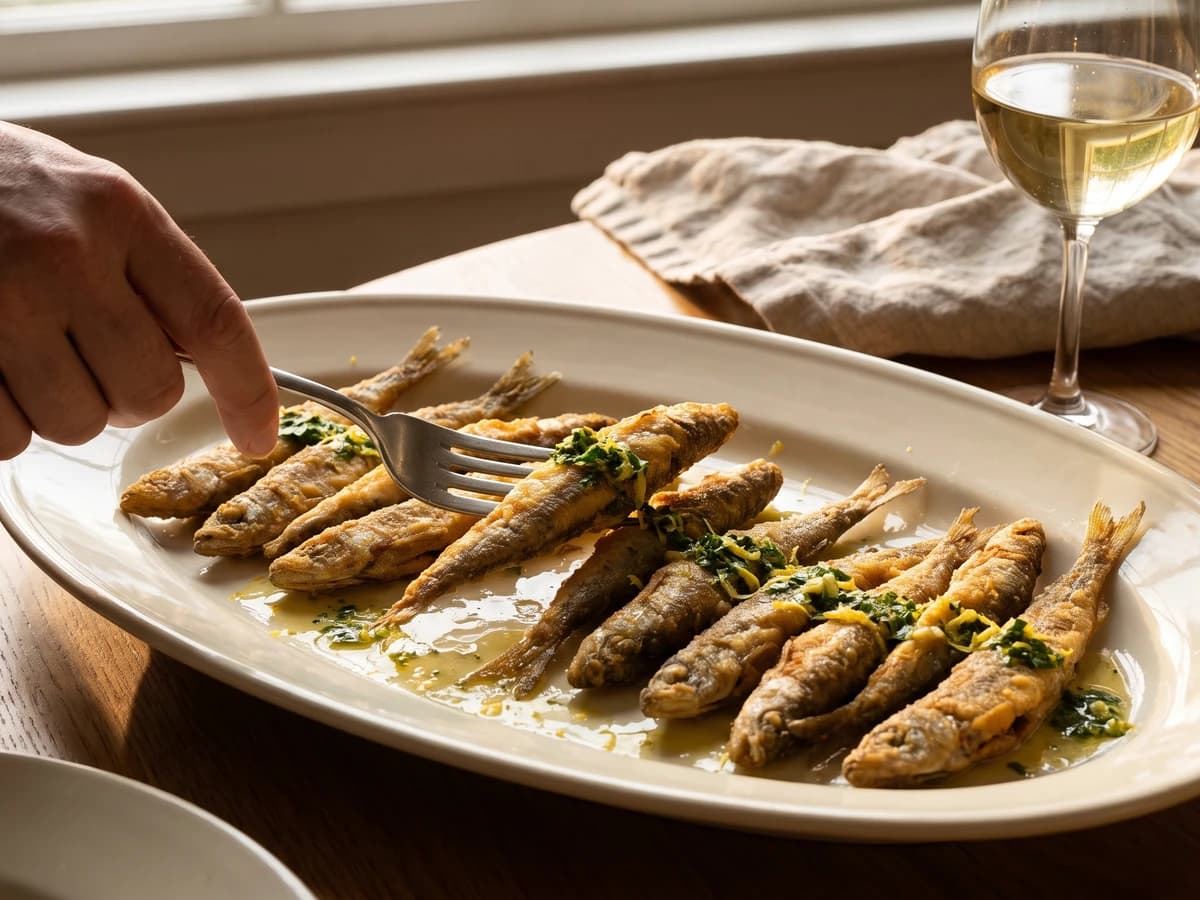
Éperlans à l’Anglaise turns small fish into a lesson in disciplined coating: boned smelts under a close, crisp crumb, pan-fried in clarified butter and finished with bright, half-melted maître d’hôtel butter.

Chef Juliette
Tiny smelts, shallot, mushrooms, white wine, gratin sauce, and fine bread raspings meet a fierce oven, where the fish must turn tender in the same breath the buttered crust bronzes.