
Chef Juliette
John Dory (St. Pierre)
John Dory has the delicacy of sole and the firmness of turbot. A light flouring, a quick butter sauté, and nut-brown beurre noisette show exactly why looks never mattered.
A cooking platform built around craft, culture, and the stories behind what we eat.
Created by Chef Juliette
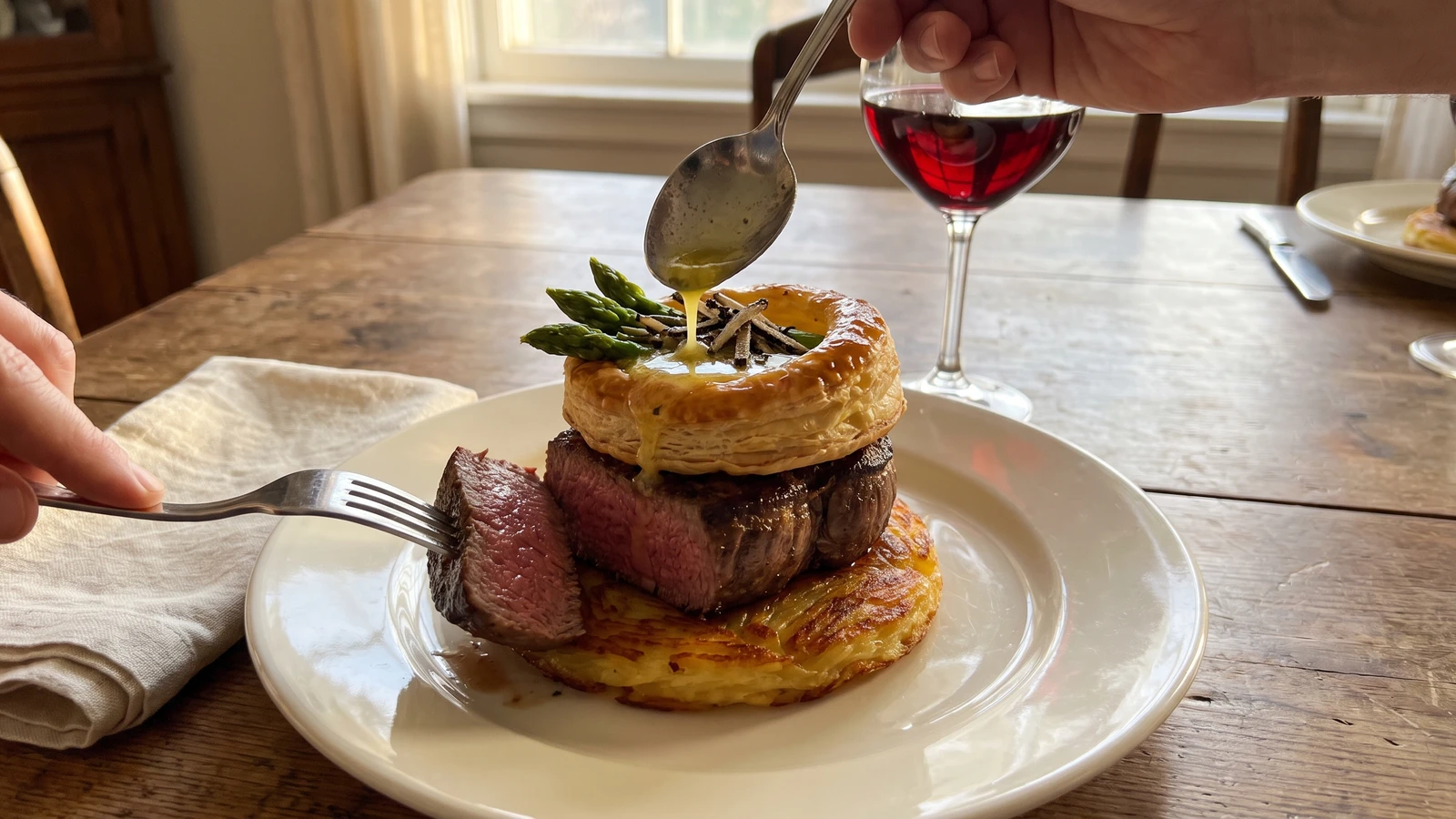
Based on No. 1119, Tournedos Ninon, from Le Guide Culinaire (1907) by Auguste Escoffier
Butter-seared tournedos rise from crisp pommes Anna, crowned with petite puff-pastry cases of asparagus and truffle: a grand composition whose real lesson is timing the lean fillet without fear.
Tournedos Ninon (butter-seared fillet on pommes Anna with asparagus and truffle) teaches orchestration. The one true thing to know before touching a pan is that lean fillet waits for nothing: the potato bases, pastry cases, asparagus, and truffle must all be ready before the beef meets butter. Miss that order and the tournedos overcook while their garniture catches up.
The original entry assumed the infrastructure of a classical brigade: a saucier on staff, stock never off the fire, a salamander, and separate hands at the potato, pastry, and garnish stations. Ninon itself needs neither sauce, stock, nor salamander; its real dependencies are pommes Anna ready for stamping, petites bouchées (small puff-pastry patty cases), trimmed asparagus heads, and truffle cut by another pair of hands. At home, purchased all-butter puff pastry replaces the pastry station, one skillet-sized pommes Anna replaces individual preparations, and the components wait briefly on a baking sheet. Those are brigade scaffolding and can go. Butter-searing, the stamped potato crusts, the pastry cases, and asparagus bound with short truffle julienne are the dish, so they stay.
When it lands, each portion has four distinct pleasures: crisp butter-gold potato, deeply bronzed beef, flaky pastry, and green asparagus carrying the dark perfume of truffle. One cook, one stove, one evening. Have the entire garniture ready, then sear the tournedos; that order is the step that matters most.
Tournedos Ninon belongs to the Parisian grand-kitchen table, where small transverse medallions of beef fillet were distinguished by precisely named garnitures rather than heavy seasoning. Ninon is generally understood as one of the canon’s social-name dedications, commonly linked to the Parisian salonnière Ninon de l’Enclos, not the name of a regional preparation. As the tournedos repertoire passed from professional manuals to bourgeois home tables, this composition retained its identity through structure: pommes Anna below, a pastry case above, and asparagus with truffle inside.
Quantity
1 sheet (8 ounces / 225 g)
thawed but kept cold
Quantity
1
Quantity
1 teaspoon (5 ml / 5 g)
Quantity
5 medium (1½ pounds / 680 g)
peeled
Quantity
8 tablespoons (½ cup / 120 ml / 112 g)
divided
Quantity
4, each 5 ounces (140 g)
about 1½ inches (4 cm) thick and tied around the circumference
Quantity
24 tips (about 1 cup / 240 ml / 115 g)
trimmed to 1¼ inches (3 cm)
Quantity
2 tablespoons (30 ml / 15 g)
cut into fine, short julienne
Quantity
3 tablespoons (45 ml / 42 g)
divided
Quantity
2 teaspoons (10 ml / 12 g)
divided
Quantity
½ teaspoon (2.5 ml / 1 g)
divided
| Ingredient | Quantity |
|---|---|
| all-butter puff pastrythawed but kept cold | 1 sheet (8 ounces / 225 g) |
| large egg yolk | 1 |
| cold water | 1 teaspoon (5 ml / 5 g) |
| Yukon Gold potatoespeeled | 5 medium (1½ pounds / 680 g) |
| clarified butterdivided | 8 tablespoons (½ cup / 120 ml / 112 g) |
| center-cut beef tournedosabout 1½ inches (4 cm) thick and tied around the circumference | 4, each 5 ounces (140 g) |
| asparagus tipstrimmed to 1¼ inches (3 cm) | 24 tips (about 1 cup / 240 ml / 115 g) |
| fresh black trufflecut into fine, short julienne | 2 tablespoons (30 ml / 15 g) |
| unsalted butterdivided | 3 tablespoons (45 ml / 42 g) |
| fine sea saltdivided | 2 teaspoons (10 ml / 12 g) |
| freshly ground black pepperdivided | ½ teaspoon (2.5 ml / 1 g) |
Heat the oven to 425°F (220°C) and line a baking sheet with parchment. Cut eight 2¼-inch (5.5 cm) rounds from the cold puff pastry. Leave four rounds whole for the bases; cut a 1¼-inch (3 cm) opening from the center of each remaining round to make four rings. Whisk the yolk with the cold water, brush the perimeter of each base lightly, and set a ring on top. Brush only the ring, keeping egg wash off the cut edges so the layers can rise. Dock the exposed center of each base with a fork, chill for 10 minutes, then bake for 14 to 17 minutes, until deeply golden and crisp. If a center balloons and fills the cavity, press it down gently with the back of a teaspoon while the pastry is warm. Ça se rattrape. Cool the cases on a rack.
Slice the potatoes on a mandoline into rounds about 1⁄16 inch (1.5 mm) thick. Do not rinse them; their surface starch binds the layers. Coat a 10-inch (25 cm) ovenproof skillet with some of the clarified butter, then arrange the potatoes in tight overlapping circles, seasoning each layer lightly with salt and brushing with clarified butter as you go. Use 4 tablespoons (60 ml / 56 g) clarified butter in all. Press a buttered round of parchment over the surface with a slightly smaller ovenproof pan or lid. Cook over medium heat for 5 minutes, until the lower edge sizzles, then bake for 25 minutes. Remove the weight and parchment and bake for another 8 to 10 minutes, until a knife slips through the center without resistance.
Invert the pommes Anna onto a board or clean baking sheet. Its underside should be a deep, even butter-gold; if it is pale, slide it back into the skillet, browned side up, and cook over medium heat for 3 to 5 minutes. Let it settle for 8 minutes, then use a 2¾-inch (7 cm) fluted round cutter, or one matching the diameter of your tournedos, to stamp four crusts. Press straight down so the layers remain aligned. If a crust separates, pack it back together inside the cutter on parchment, brush it with a little reserved clarified butter, and rewarm it until the starch sets again. The crisp offcuts belong to the cook.
Bring a small saucepan of well-salted water to a boil. Blanch the asparagus tips for 1½ to 2 minutes, until vivid green and tender with a slight resistance at the center. Cool them immediately in cold water, then drain and dry them thoroughly. Cut the truffle julienne-fashion, meaning into fine matchstick rods, then shorten them to about ¾ inch (2 cm). Keep the asparagus and truffle separate until the finish; warm butter carries truffle perfume, prolonged heat drives it away.
Lower the oven to 350°F (180°C). Set the potato crusts and petites bouchées on separate areas of a baking sheet, ready to rewarm. Bring the tournedos out of the cold for about 20 minutes, pat them completely dry, and season all over with the remaining salt and pepper. Place the butter, asparagus, truffle, warm plates, and serving utensils within reach. This is the governing principle of Tournedos Ninon: once the beef touches the pan, there is no more slicing, searching, or arranging.
Heat a 12-inch (30 cm) heavy skillet over medium-high heat. Add 2 tablespoons (30 ml / 28 g) clarified butter; when it shimmers, set in the tournedos with space between them. Sear without moving for 2½ to 3 minutes, until the first side carries a dark Maillard crust, then turn and cook the second side for about 2 minutes. Roll the edges briefly against the pan to color them. For medium-rare, remove the tournedos at 122 to 125°F (50 to 52°C); resting should carry them close to 130°F (54°C). If they are under the mark, return them to the pan for 30 seconds per side. If the butter turns acrid and black before the crust forms, lift out the beef, wipe the pan carefully, add the final tablespoon of clarified butter, and continue. Ça se rattrape. Rest the tournedos loosely covered for 5 to 6 minutes.
As soon as the beef begins resting, put the potato crusts and pastry cases in the oven for 5 minutes. Melt 2 tablespoons (30 ml / 28 g) unsalted butter in a small skillet over medium-low heat and add the dry asparagus tips. Turn them until hot and glossy, about 1 minute. If water gathers in the pan, lift out the asparagus and boil the moisture away before returning it; wet filling softens pastry. Take the pan off the heat, add the remaining tablespoon of butter and the short truffle julienne, then toss gently until the garnish is cohered by a thin, shining coat of butter. Taste for salt.
Set one hot pommes Anna crust in the center of each warm plate and place a rested tournedos squarely on top. Crown each with a petite bouchée, then fill it with six asparagus tips and one quarter of the truffle julienne. Spoon the truffle-scented butter remaining in the pan over the filling, not around the plate; this dish wears its richness at the center. Remove the strings and serve immediately. À table!
1 serving (about 370g)
Culinary guides, cultural storytelling, and the editorial depth that makes cooking meaningful.
Discover Culinary ExplorerChef Juliette
John Dory has the delicacy of sole and the firmness of turbot. A light flouring, a quick butter sauté, and nut-brown beurre noisette show exactly why looks never mattered.

Chef Juliette
Fresh haddock proves its delicacy in the meunière pan: a fine flour crust, moist pearly flakes, and beurre noisette sharpened with lemon and parsley, ready from one skillet in half an hour.
Chef Juliette
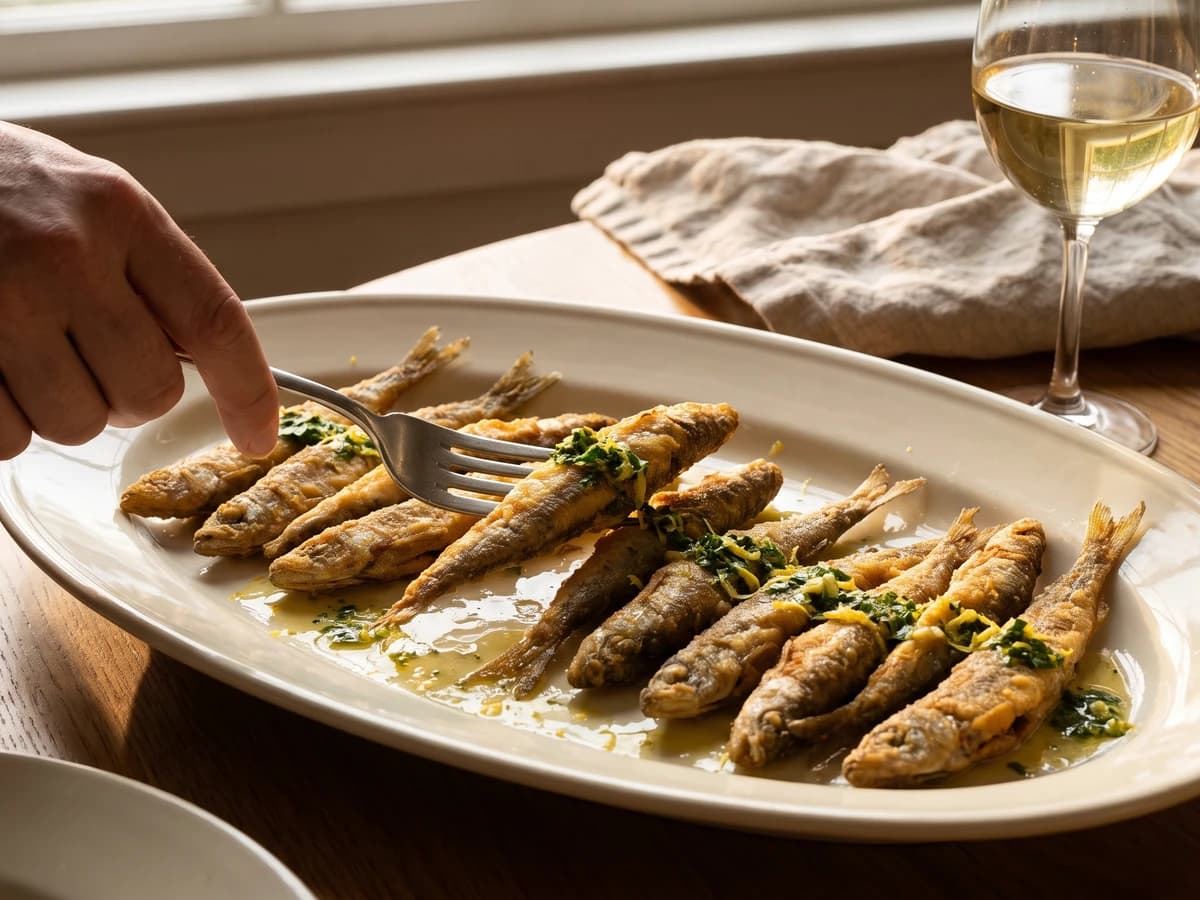
Éperlans à l’Anglaise turns small fish into a lesson in disciplined coating: boned smelts under a close, crisp crumb, pan-fried in clarified butter and finished with bright, half-melted maître d’hôtel butter.

Chef Juliette
Tiny smelts, shallot, mushrooms, white wine, gratin sauce, and fine bread raspings meet a fierce oven, where the fish must turn tender in the same breath the buttered crust bronzes.