
Chef Juliette
John Dory (St. Pierre)
John Dory has the delicacy of sole and the firmness of turbot. A light flouring, a quick butter sauté, and nut-brown beurre noisette show exactly why looks never mattered.
A cooking platform built around craft, culture, and the stories behind what we eat.
Created by Chef Juliette
Based on No. 1118, Tournedos à la Niçoise, from Le Guide Culinaire (1907) by Auguste Escoffier
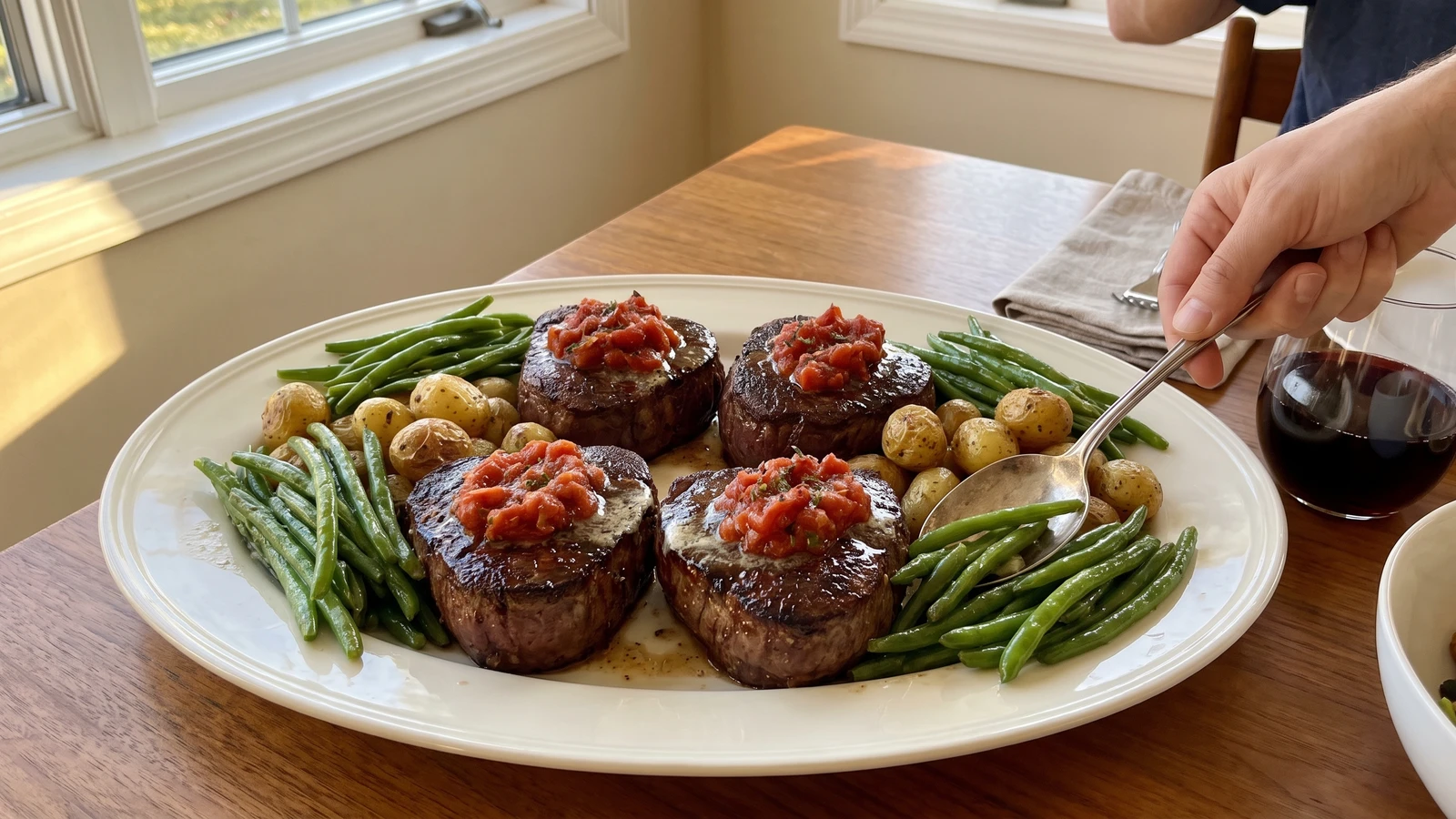
Butter-seared tournedos crowned with garlic-tarragon tomato, then ringed by glossy French beans and golden potatoes: a composed Niçoise platter whose success rests on one thing, a properly hot pan.
Tournedos à la Niçoise (butter-seared fillet with garlic-tarragon tomato, French beans, and potatoes) teaches composure. The pan must be truly hot before the beef enters. A cool pan doesn't brown the tournedos; it steams their surface while their tender centers race toward overdone. That is the one true thing to know before touching a pan.
The original entry assumed a brigade with one hand frying the beef while others kept three garnishes ready for the same instant. Unlike many neighboring formulas, it needs no saucier, stockpot, or salamander. Its scaffolding was labor, so at home we replace simultaneous hands with deliberate order: potatoes first, beans next, tomato ready, beef last. I have scaled the crown to four servings and staged the work, but the dish itself remains untouched: tournedos fried in butter, exactly one half-tablespoon of tomato on each, and alternating heaps of butter-bound beans and butter-cooked potatoes.
The finished platter is handsome without theater, all Maillard bronze, tomato red, bean green, and butter gold. Every component arrives hot because the work was arranged before the beef met the skillet. Dry the tournedos well, heat the pan until the butter's foam begins to fall, then commit. That sear decides the dish.
Tournedos belongs to the vocabulary of the Parisian grand kitchen, where small round cross-cuts of beef fillet were paired with precisely composed garnishes and presented symmetrically. À la Niçoise in this formula is a classical interpretation of Nice rather than a transcript of a household beef dish from the city: tomato and garlic point toward the Côte d'Azur, while butter, tarragon, and crown service reveal the national canon. Olives and anchovies appear in other Niçoise preparations, but not here; this entry fixes the garnish as concassée tomato, French beans, and small potatoes.
Quantity
4 steaks, 5 ounces (140 g) each, about 1¼ pounds (560 g) total
cut 1¼ inches thick and patted dry
Quantity
2 tablespoons (30 ml / 30 g), from 1 medium plum tomato
peeled, pressed, and concassée (roughly chopped)
Quantity
½ small clove
crushed to a paste
Quantity
1 teaspoon (5 ml / 1 g)
finely chopped
Quantity
About 3 cups (8 ounces / 225 g)
trimmed
Quantity
16, about 1 pound (450 g)
peeled and kept whole
Quantity
7 tablespoons (105 ml / 100 g)
divided
Quantity
2 tablespoons (30 ml / 36 g)
divided
Quantity
½ teaspoon (2.5 ml / 1 g)
| Ingredient | Quantity |
|---|---|
| center-cut beef fillet steakscut 1¼ inches thick and patted dry | 4 steaks, 5 ounces (140 g) each, about 1¼ pounds (560 g) total |
| ripe tomato fleshpeeled, pressed, and concassée (roughly chopped) | 2 tablespoons (30 ml / 30 g), from 1 medium plum tomato |
| garliccrushed to a paste | ½ small clove |
| fresh tarragon leavesfinely chopped | 1 teaspoon (5 ml / 1 g) |
| slender French beanstrimmed | About 3 cups (8 ounces / 225 g) |
| small waxy potatoespeeled and kept whole | 16, about 1 pound (450 g) |
| unsalted butterdivided | 7 tablespoons (105 ml / 100 g) |
| fine sea saltdivided | 2 tablespoons (30 ml / 36 g) |
| freshly ground black pepper | ½ teaspoon (2.5 ml / 1 g) |
Bring a small saucepan of water to a boil. Cut a shallow cross in the base of the tomato, lower it into the water for 20 seconds, then cool it under cold water. Peel it, halve it across the middle, and press out the seeds and watery pulp. Concassée means roughly chopped: chop the firm flesh and measure exactly 2 tablespoons (30 ml / 30 g). Prepare the garlic and tarragon, trim the beans, and peel the potatoes. Keep the tournedos cold until about 20 minutes before searing; if any steak has lost its round shape, tie a loop of kitchen twine around its circumference.
Melt 2 tablespoons (30 ml / 28 g) butter in a lidded sauté pan over medium-low heat. Add the potatoes with a good pinch of salt, roll them through the butter, and cover. Cook for 20 to 25 minutes, shaking and turning them every few minutes, until a knife slips easily into their centers. Uncover for the final 5 minutes and raise the heat slightly so their surfaces become patchy gold. If the butter browns before the centers soften, add 1 tablespoon of water, cover again, and lower the heat; the water will cook away, leaving the potatoes in their butter glaze.
While the potatoes cook, bring a saucepan of water to a full boil and season it with about 2 teaspoons of the salt. Add the French beans and boil for 3 to 4 minutes, until tender but still carrying a slight bite. Drain them and cool them briefly in cold water to stop the cooking, then dry them thoroughly. Wet beans dilute butter instead of holding it, so spread them on a clean towel while the remaining components cook.
Melt 1 tablespoon (15 ml / 14 g) butter in a small skillet over medium-low heat. Add the crushed garlic and stir for 15 seconds without letting it color. Add the tomato concassée and toss for 45 to 60 seconds, just until warmed and glossy, then fold in the tarragon with a pinch each of salt and pepper. Lift the pan from the heat and cover it. The tomato must remain a small, spoonable heap, not collapse into sauce; if it releases liquid, lift out the solids, reduce the liquid for a few seconds, and fold them back together.
Warm the serving platter. Pat the tournedos dry once more, then season both sides with salt and pepper. Heat a 12-inch heavy skillet over medium-high heat until properly hot, add 2 tablespoons (30 ml / 28 g) butter, and wait until the vigorous foam begins to subside. Set in the steaks with space between them and leave them untouched for about 3 minutes, until the first faces are deeply browned. Turn them, add the remaining 1 tablespoon (15 ml / 14 g) butter, and baste as they cook for another 2 to 4 minutes. For medium-rare, remove them at 125 to 130°F (52 to 54°C); let them rest uncovered for 5 minutes. If the steaks meet the pan without an immediate hard sizzle, lift them out at once and let the pan recover before returning them. If the butter blackens, pour it off, lower the heat slightly, and begin again with the reserved tablespoon. Ça se rattrape.
While the tournedos rest, melt the final 1 tablespoon (15 ml / 14 g) butter in the dry bean saucepan over medium heat. Add the beans with a pinch of salt and toss for 1 to 2 minutes, until hot and evenly glazed. This is liage au beurre, binding with butter: the butter should cling to the beans rather than sit in a puddle. If it pools, the beans were still damp; raise the heat and toss until the excess moisture cooks away.
Remove any twine and arrange the four tournedos in a close ring at the center of the warmed round platter, forming a crown. Set exactly ½ tablespoon (7.5 ml / about 7.5 g) of the garlic-tarragon tomato in the center of each tournedos. Surround the crown with alternating small heaps of butter-bound French beans and golden potatoes, keeping the pattern generous and distinct. This entry calls for no separate sauce, so do not bury its clean butter sear under one. Carry the platter straight to the table. À table!
1 serving (about 300g)
Culinary guides, cultural storytelling, and the editorial depth that makes cooking meaningful.
Discover Culinary ExplorerChef Juliette
John Dory has the delicacy of sole and the firmness of turbot. A light flouring, a quick butter sauté, and nut-brown beurre noisette show exactly why looks never mattered.

Chef Juliette
Fresh haddock proves its delicacy in the meunière pan: a fine flour crust, moist pearly flakes, and beurre noisette sharpened with lemon and parsley, ready from one skillet in half an hour.
Chef Juliette
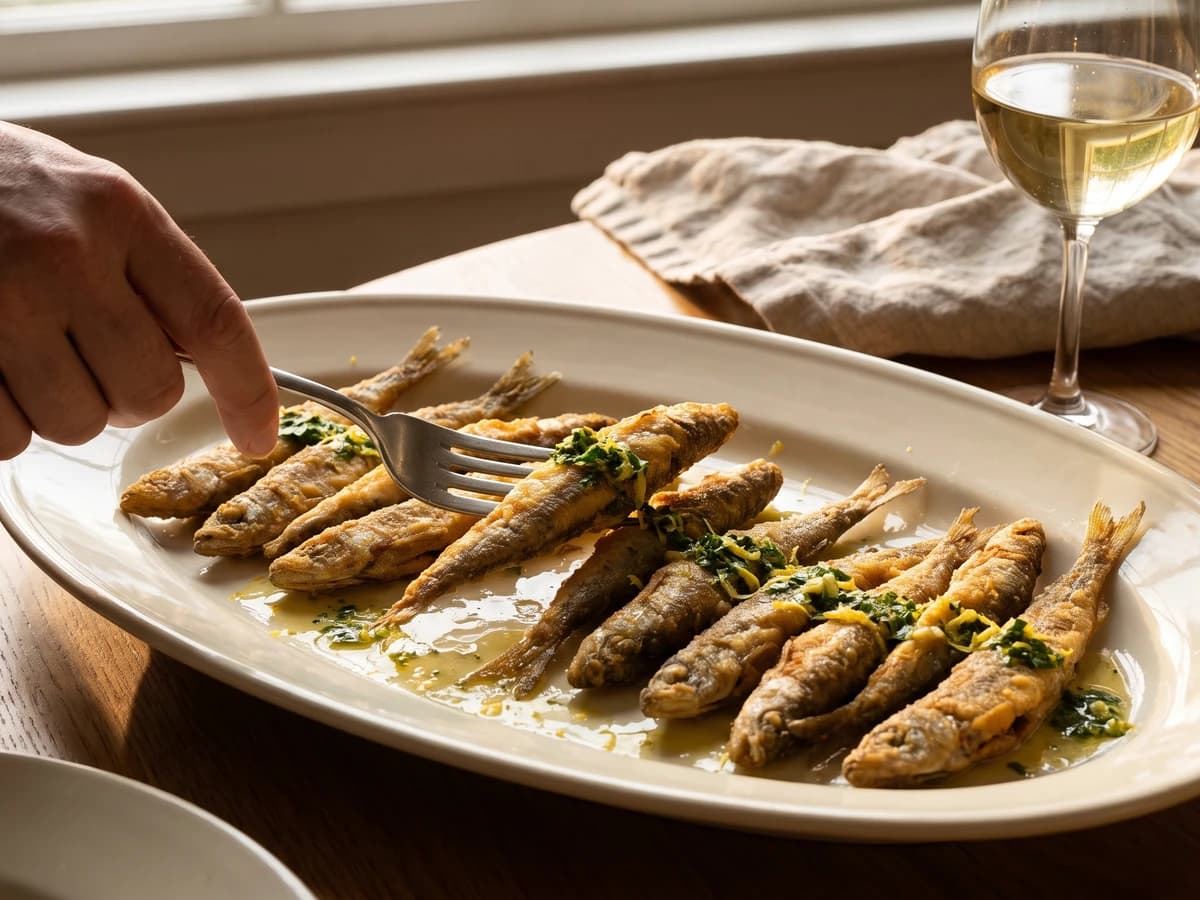
Éperlans à l’Anglaise turns small fish into a lesson in disciplined coating: boned smelts under a close, crisp crumb, pan-fried in clarified butter and finished with bright, half-melted maître d’hôtel butter.

Chef Juliette
Tiny smelts, shallot, mushrooms, white wine, gratin sauce, and fine bread raspings meet a fierce oven, where the fish must turn tender in the same breath the buttered crust bronzes.