
Chef Juliette
John Dory (St. Pierre)
John Dory has the delicacy of sole and the firmness of turbot. A light flouring, a quick butter sauté, and nut-brown beurre noisette show exactly why looks never mattered.
A cooking platform built around craft, culture, and the stories behind what we eat.
Created by Chef Juliette
Based on No. 1114, Tournedos à la Moelle, from Le Guide Culinaire (1907) by Auguste Escoffier
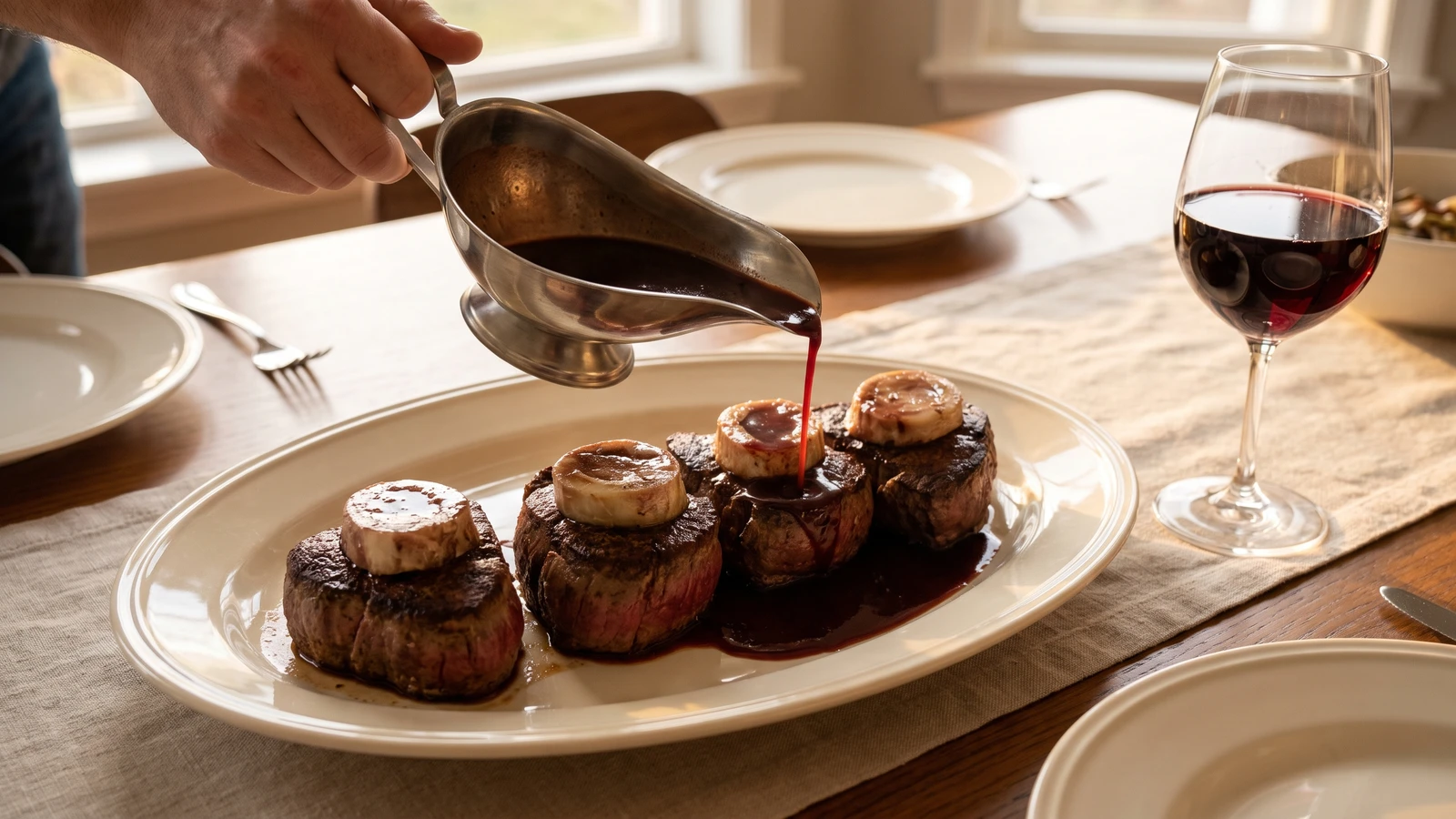
Tournedos à la Moelle puts the whole lesson in the last ten minutes: sear tenderloin hard, poach marrow gently, and bring both to Sauce Bordelaise before the lean beef has time to dry.
Tournedos à la Moelle (grilled beef tenderloin with poached marrow) teaches the discipline of last-minute service. Tenderloin is lean, marrow is quick to melt, and Sauce Bordelaise must already be waiting. Grill hot and fast, then move. The one true thing to know before touching the pan is this: the beef goes on last, because a tournedos that waits becomes a dry one.
The classical entry assumes a grill station, a saucier on staff, stock never off the fire, and a salamander ready to warm the service piece. Your kitchen needs none of that scaffolding. Use Sauce Bordelaise as the finished component the dish names, warm it gently in a small pan, grill four steaks together on a broad cast-iron griddle, and heat the platter with hot water. The brigade crown becomes four generous tournedos, one for each diner. One cook, one stove, one evening.
What cannot go is the intent. The hard grill, the gentle marrow poach, the marrow crown, and Bordelaise round or apart are the dish itself. Have the sauce hot, the marrow sliced and cold, and the platter warm before the grill begins. That mise en place decides whether dinner arrives splendid or tired.
Tournedos à la Moelle belongs to the Parisian grand-kitchen table, where thick rounds from the center of the beef fillet were tied, grilled, and arranged for formal service. Its Sauce Bordelaise points specifically to Bordeaux through red wine, shallot, and the classical affinity between beef and marrow, but the dish itself is not a Bordeaux farmhouse preparation merely because it carries that sauce. The crown arrangement traveled easily to bistros and celebration tables because its grandeur is visual while its method remains direct: grill, poach, sauce, serve.
Quantity
4 steaks, 6 oz / 170 g each and about 1½ inches / 4 cm thick
tied firmly around the circumference
Quantity
4 sections, about 1½ lb / 680 g total and 2 inches / 5 cm long
chosen for wide, intact marrow cylinders
Quantity
1 cup (240 ml / about 240 g)
Quantity
2 tablespoons (30 ml / 28 g)
Quantity
1 tablespoon (15 ml / 18 g)
divided
Quantity
½ teaspoon (2.5 ml / 1 g)
Quantity
as needed
for soaking and poaching
| Ingredient | Quantity |
|---|---|
| center-cut beef tenderloin steaks (tournedos)tied firmly around the circumference | 4 steaks, 6 oz / 170 g each and about 1½ inches / 4 cm thick |
| straight center-cut beef marrow bone sectionschosen for wide, intact marrow cylinders | 4 sections, about 1½ lb / 680 g total and 2 inches / 5 cm long |
| prepared Sauce Bordelaise | 1 cup (240 ml / about 240 g) |
| clarified butter | 2 tablespoons (30 ml / 28 g) |
| fine sea saltdivided | 1 tablespoon (15 ml / 18 g) |
| freshly ground black pepper | ½ teaspoon (2.5 ml / 1 g) |
| cold waterfor soaking and poaching | as needed |
Cover the marrow bones with cold water and soak them in the refrigerator for 2 hours, changing the water once, until the exposed marrow looks pale rather than blood-dark. Run a thin knife around each cylinder and push the marrow gently from the bone. Chill the cylinders for 20 minutes so they firm, then cut four large rounds about ½ inch / 1 cm thick. Keep them cold in fresh water. If a cylinder breaks, don't discard it. Ça se rattrape: gather the largest pieces and poach them together, then spoon a generous mound onto the steak instead of forcing a perfect round.
Put the Sauce Bordelaise in a small saucepan and warm it over low heat until glossy and barely stirring at the edge. Do not boil it. If it reduces too far, loosen it with a teaspoon of hot water; if a butter-finished sauce shows oily streaks, take it off the heat and whisk in a teaspoon of cold water until it comes together. Fill the serving platter and four dinner plates with hot water, let them stand for several minutes, then dry them thoroughly. This replaces the salamander without holding the beef under heat.
Set a wide cast-iron griddle or grill pan over high heat for 5 to 7 minutes. It must be thoroughly heated before the tenderloin arrives, because a modest pan cooks the center before it browns the surface. Meanwhile, bring a saucepan of salted water to just below a simmer for the marrow. Hold it there, with only an occasional tremble at the bottom.
Dry the tournedos thoroughly, tie each around its circumference, and season with about one-third of the salt and all the pepper. Brush both sides lightly with clarified butter. Lay all four on the griddle and listen for an immediate, hard hiss. If there is only a weak sizzle, lift them at once, let the iron recover, blot the meat again, and begin anew. Ça se rattrape. Grill without pressing or shifting for about 3 minutes, turn once, and cook the second side for 2 to 3 minutes. Brown the narrow edges briefly if needed. Remove the steaks at 122 to 125°F / 50 to 52°C for medium-rare, then rest them for 5 minutes. Tenderloin carries little fat, so use the thermometer and don't make it prove its courage.
While the beef rests, season the poaching water with the remaining salt and lower in the marrow rounds. Poach below a simmer for 1½ to 2½ minutes, until the edges turn opaque and the centers quiver while still holding their shape. Lift them carefully with a slotted spoon and drain briefly on a clean towel. If fat begins beading heavily from the surface, remove the marrow at once; it is beginning to melt. Broken pieces still belong on the steak, generously spooned rather than fussed into shape.
Remove the strings and arrange the four tournedos in a close ring on the warmed platter, the crown specified by the dish. Lay one poached marrow round on each steak. Spoon the glossy Sauce Bordelaise around the tournedos without drowning their browned tops, or send the sauce separately in a warmed sauceboat, exactly as the original service allows. Carry it straight to the table. À table!
1 serving (about 215g)
Culinary guides, cultural storytelling, and the editorial depth that makes cooking meaningful.
Discover Culinary ExplorerChef Juliette
John Dory has the delicacy of sole and the firmness of turbot. A light flouring, a quick butter sauté, and nut-brown beurre noisette show exactly why looks never mattered.

Chef Juliette
Fresh haddock proves its delicacy in the meunière pan: a fine flour crust, moist pearly flakes, and beurre noisette sharpened with lemon and parsley, ready from one skillet in half an hour.
Chef Juliette
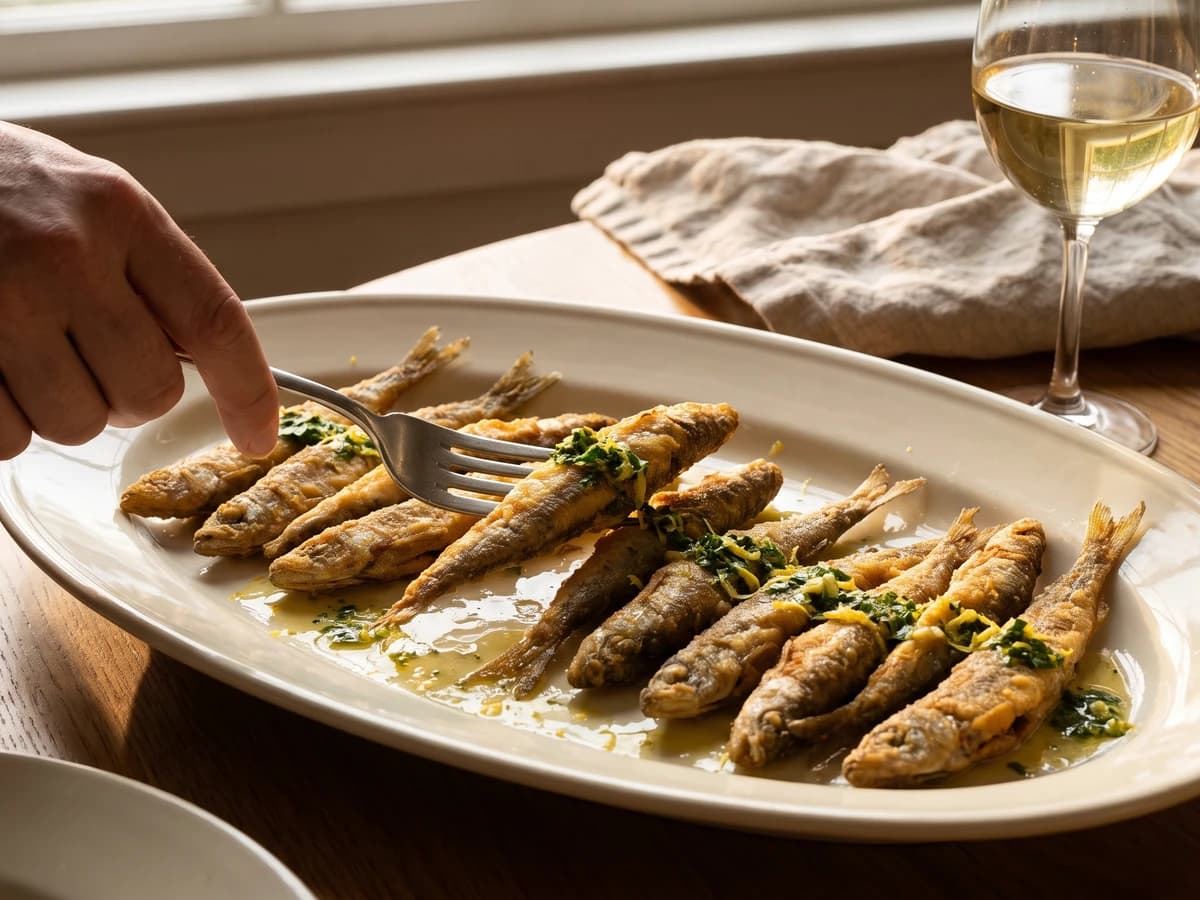
Éperlans à l’Anglaise turns small fish into a lesson in disciplined coating: boned smelts under a close, crisp crumb, pan-fried in clarified butter and finished with bright, half-melted maître d’hôtel butter.

Chef Juliette
Tiny smelts, shallot, mushrooms, white wine, gratin sauce, and fine bread raspings meet a fierce oven, where the fish must turn tender in the same breath the buttered crust bronzes.