
Chef Juliette
John Dory (St. Pierre)
John Dory has the delicacy of sole and the firmness of turbot. A light flouring, a quick butter sauté, and nut-brown beurre noisette show exactly why looks never mattered.
A cooking platform built around craft, culture, and the stories behind what we eat.
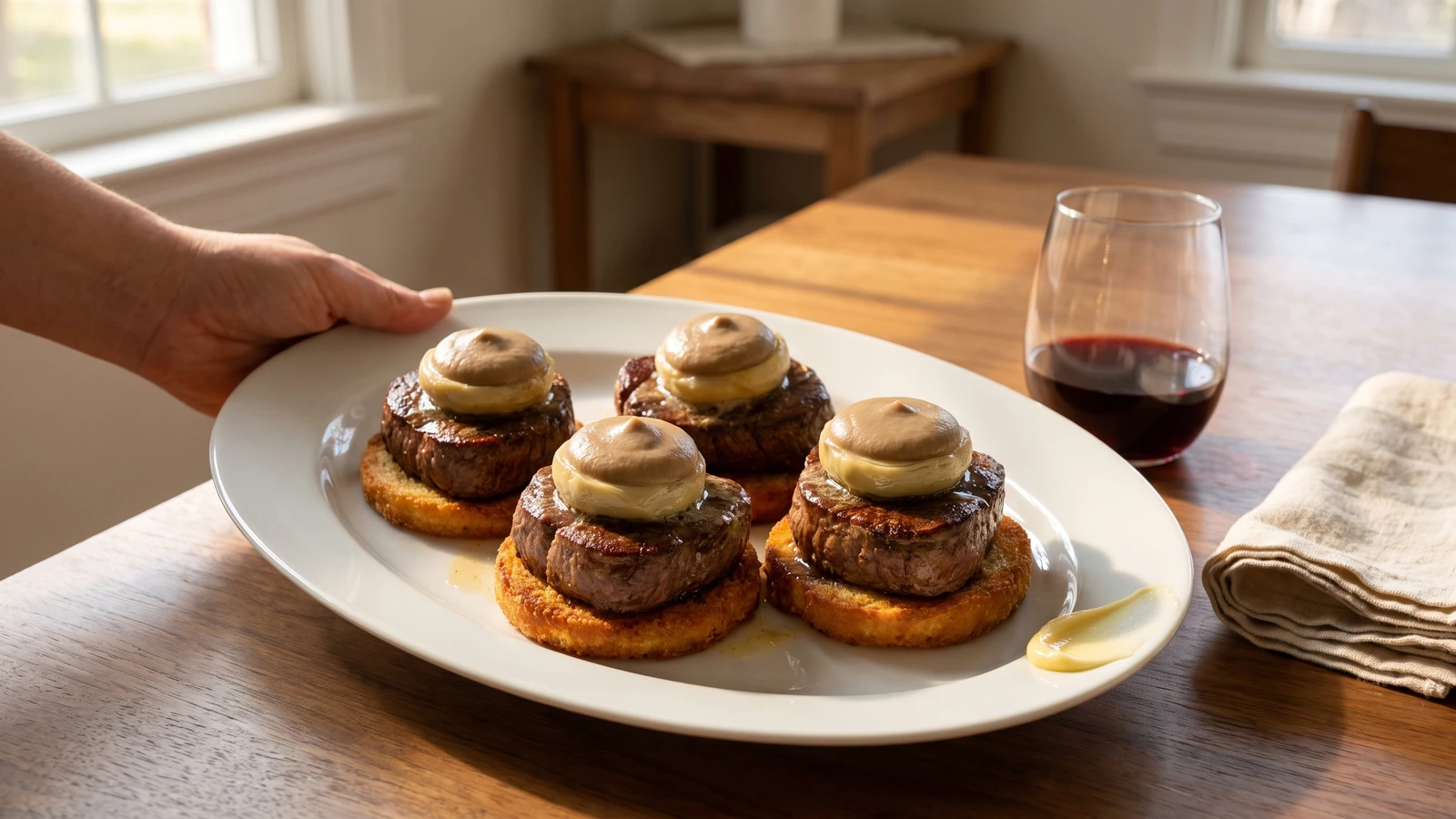
Created by Chef Juliette
Based on No. 1105, Tournedos Marie-Louise, from Le Guide Culinaire (1907) by Auguste Escoffier
Four butter-seared tournedos sit on crisp fried crusts, each crowned with an artichoke bottom and a warm dome of mushroom purée and Soubise. Prepare every garnish first, then let the beef wait for no one.
Tournedos Marie-Louise (butter-seared beef tenderloin on fried bread, crowned with artichoke and mushroom-onion purée) teaches service, not complication. The one true thing to know before touching a pan is this: every garnish must be finished and warm before the beef is seasoned. Soubise (the classical onion purée) gives sweetness and body, but tenderloin gives you a narrow window. Delay dries the lean cut.
The original assumed a saucier on staff, a stockpot never off the fire, a salamander within reach, and enough hands to fry bread while the tournedos cooked. Here the stockpot and salamander sit this one out. Prepare the Soubise ahead, hold the mushroom purée over a small bain-marie, and use one skillet first for the croûtons, then for the beef. The extra hands and holding pans were brigade scaffolding. The butter-fried crusts, artichoke bottoms, and four parts mushroom purée to one part reduced Soubise are the dish, so those stay. One cook, one stove, one evening.
When it lands correctly, the bread edges are crisp, the beef is deeply bronzed and rosy within, and each buttery artichoke carries a warm, earthy dome. Have the platter warm and the piping bag filled before you begin the final sear. That sear, followed by immediate service, decides the dish.
Tournedos Marie-Louise belongs to Parisian grande cuisine, the formal grand-kitchen repertoire in which individual beef medallions were distinguished by carefully composed garnishes and given names fit for a grand menu. Its title matters less than its exact grammar: a tournedos on a butter-fried crust, an artichoke bottom, then mushroom purée enriched with reduced Soubise. As such preparations traveled from grand dining rooms to bourgeois dinner tables, the separate kitchen stations disappeared, but the layered garnish remained the identity of the dish.
Quantity
4, each 5 to 6 ounces (140 to 170 g)
cut about 1½ inches (4 cm) thick
Quantity
1 teaspoon (5 ml / 6 g)
divided
Quantity
½ teaspoon (2.5 ml / 1 g)
Quantity
5 tablespoons (75 ml / 70 g)
divided
Quantity
4 rounds, about 3 inches (7.5 cm) wide and ⅓ inch (8 mm) thick
Quantity
4¼ cups (1 L / 300 g)
thinly sliced
Quantity
4 tablespoons (60 ml / 57 g)
divided
Quantity
2 tablespoons (30 ml / 30 g)
prepared and hot
Quantity
4
well drained and patted dry
Quantity
1 tablespoon (15 ml / 15 g)
| Ingredient | Quantity |
|---|---|
| center-cut beef tenderloin tournedoscut about 1½ inches (4 cm) thick | 4, each 5 to 6 ounces (140 to 170 g) |
| fine saltdivided | 1 teaspoon (5 ml / 6 g) |
| freshly ground black pepper | ½ teaspoon (2.5 ml / 1 g) |
| clarified butterdivided | 5 tablespoons (75 ml / 70 g) |
| pain de mie or firm white bread | 4 rounds, about 3 inches (7.5 cm) wide and ⅓ inch (8 mm) thick |
| button or cremini mushroomsthinly sliced | 4¼ cups (1 L / 300 g) |
| unsalted butterdivided | 4 tablespoons (60 ml / 57 g) |
| very reduced Soubiseprepared and hot | 2 tablespoons (30 ml / 30 g) |
| small cooked artichoke bottomswell drained and patted dry | 4 |
| water | 1 tablespoon (15 ml / 15 g) |
Take the tournedos from the cold about twenty minutes before cooking, pat them completely dry, and tie each around its circumference with kitchen string so it keeps a neat round shape. Do not season yet. Cut four croûtons, meaning the bread rounds, to roughly match the beef. Warm a serving platter in a 200°F (95°C) oven, fit a piping bag with a ½-inch (1.25 cm) plain tip, and set a heatproof bowl over barely simmering water for holding the finished mushroom mixture. Once the beef enters the pan, there should be nothing left to chop, purée, or fetch.
Melt 2 tablespoons (30 ml / 28 g) unsalted butter in a wide skillet over medium-high heat. Add the mushrooms and ¼ teaspoon of the salt, then cook until they release their water, the water evaporates, and the mushrooms begin taking brown colour, about 12 to 15 minutes. Purée them in a small food processor until smooth, then return the purée to the skillet and stir over medium heat until a spoon dragged through it leaves a clean path. Measure ½ cup (120 ml / about 120 g), then fold in the 2 tablespoons (30 ml / 30 g) of very reduced Soubise. This preserves the book's proportion of four parts mushroom purée to one part Soubise. If the mixture slumps instead of holding a mound, return it to the pan and reduce it for another minute or two. Transfer it to the bowl over warm water and cover.
Melt 1 tablespoon (15 ml / 14 g) unsalted butter in a small pan. Set the artichoke bottoms in cup-side up, add the water, and cover. Cook over low heat for 5 to 7 minutes, turning once, until heated through and glazed with butter but still pale. If the butter begins to colour before the artichokes are hot, add a teaspoon of water and lower the heat. Hold them covered in the warm pan.
Heat 3 tablespoons (45 ml / 42 g) clarified butter in the large skillet over medium heat. Lay in the bread rounds and fry until deep butter-gold and crisp at the edges, about 2 minutes per side. Add a little more clarified butter from the pan's edges as the bread drinks it in. Transfer the croûtons to a wire rack, not paper, so their undersides remain crisp, and keep them near the warm platter. Wipe loose crumbs from the skillet before cooking the beef.
Fill the piping bag with the warm mushroom-Soubise mixture before you begin. Season the tournedos with the remaining salt and all the pepper. Heat the remaining 2 tablespoons (30 ml / 28 g) clarified butter in the skillet over medium-high heat until it gleams, then add the beef with space between each piece. Sear without disturbing for about 3 minutes, turn, and cook for another 2 to 3 minutes. Add the remaining 1 tablespoon (15 ml / 14 g) unsalted butter and baste the tournedos for 30 seconds, turning them briefly onto their edges to colour the sides. For medium-rare, remove them at 122 to 125°F (50 to 52°C) and rest for 2 minutes. If the centre is under your target, return the beef to the pan in 30-second turns. Ça se rattrape. Once it reaches the right temperature, get it out of the pan and do not hold it in the oven.
Arrange the four croûtons in a loose crown on the warmed platter and set one tournedos squarely on each. Remove the strings. Place an artichoke bottom cup-side up on every tournedos, then pipe the warm mushroom-Soubise mixture into a smooth dome inside each bottom. Brush the artichokes lightly with the butter left in their pan. Bring the platter straight to the table while the bread is crisp and the beef is rosy. À table!
1 serving (about 230g)
Culinary guides, cultural storytelling, and the editorial depth that makes cooking meaningful.
Discover Culinary ExplorerChef Juliette
John Dory has the delicacy of sole and the firmness of turbot. A light flouring, a quick butter sauté, and nut-brown beurre noisette show exactly why looks never mattered.

Chef Juliette
Fresh haddock proves its delicacy in the meunière pan: a fine flour crust, moist pearly flakes, and beurre noisette sharpened with lemon and parsley, ready from one skillet in half an hour.
Chef Juliette
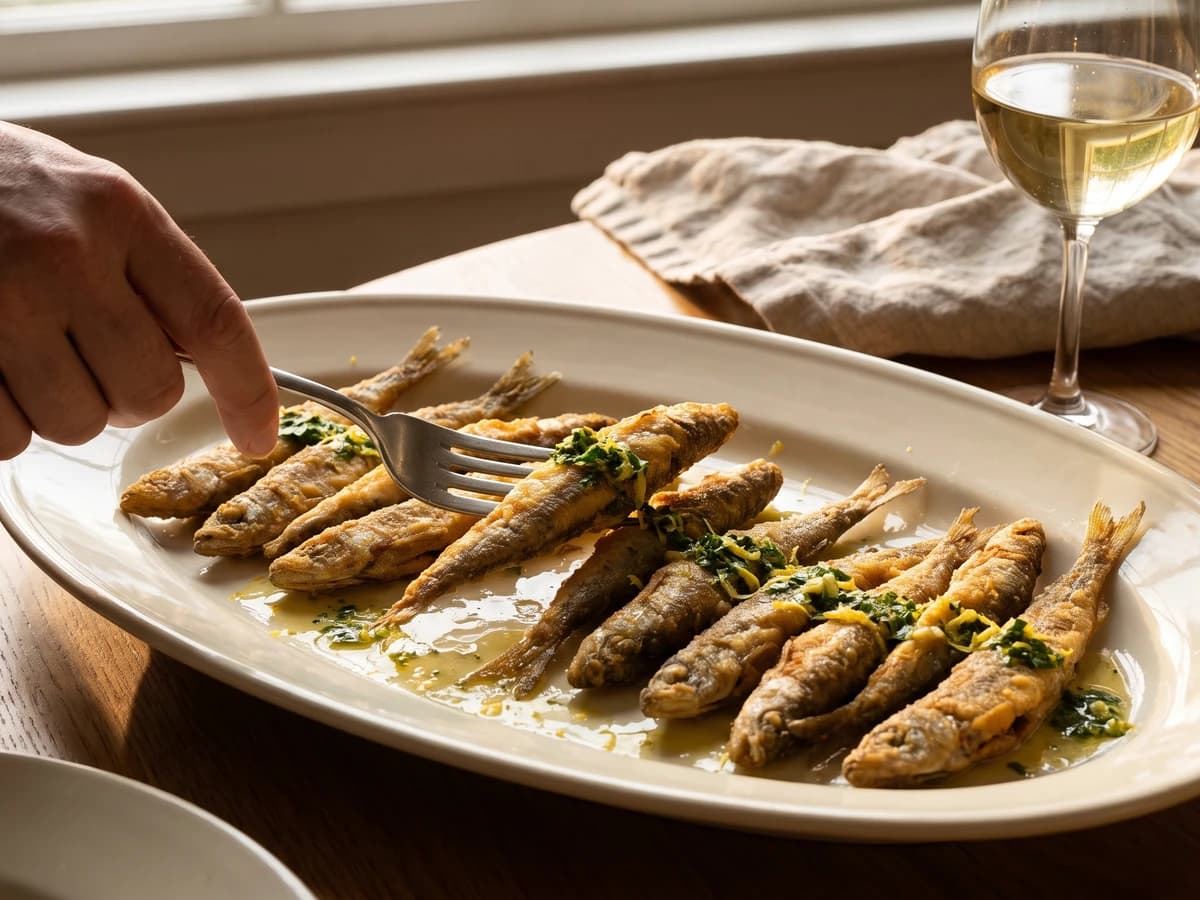
Éperlans à l’Anglaise turns small fish into a lesson in disciplined coating: boned smelts under a close, crisp crumb, pan-fried in clarified butter and finished with bright, half-melted maître d’hôtel butter.

Chef Juliette
Tiny smelts, shallot, mushrooms, white wine, gratin sauce, and fine bread raspings meet a fierce oven, where the fish must turn tender in the same breath the buttered crust bronzes.