
Chef Juliette
John Dory (St. Pierre)
John Dory has the delicacy of sole and the firmness of turbot. A light flouring, a quick butter sauté, and nut-brown beurre noisette show exactly why looks never mattered.
A cooking platform built around craft, culture, and the stories behind what we eat.

Created by Chef Juliette
Based on No. 1062, Filet de Bœuf Montmorency, from Le Guide Culinaire (1907) by Auguste Escoffier
A butter-poëled fillet, rosy within and glazed outside, served with the sauce that defines Montmorency: Madeira, cherries, red-currant jelly, fresh horseradish, and every drop of the beef's poëling liquor.
Filet de Bœuf Montmorency (butter-roasted beef fillet with cherry Madeira sauce) teaches one stern, useful lesson: the sauce is not an accessory. Madeira must carry the savory liquor of the meat, then cherries, red-currant jelly, and fresh horseradish must meet without turning the plate into dessert. Before touching a pan, know this: preserve the poëling liquor, because without it Montmorency is merely sweetness beside beef.
The original assumed a larding needle, Poëlings (No. 250) as daily kitchen grammar, brown stock never off the fire, a saucier to tend the reduction, and a salamander waiting to glaze the fillet. At home, the butcher or a slim boning knife replaces the larding needle, gelatin-rich stock supplies the sauce foundation, and the broiler gives the final glaze. We keep the internal larding, butter cookery, poëling liquor, and the book's exact half-pint proportion of fruit, jelly, and horseradish. Those are the dish. Brigade quantities and separate hands are scaffolding, so they go. One cook, one stove, one evening.
The finished fillet is deeply bronzed and rosy at its heart, with a lacquered surface and a garnet sauce that tastes first of beef and Madeira, then tart fruit, then the clean warmth of horseradish. When the roast comes out, recover the poëling liquor before anything else; marrying that liquor to the Madeira reduction is the step that decides the dish.
Montmorency lies in the Île-de-France north of Paris, where orchards became celebrated for small, tart red cherries. Classical dining rooms turned the place-name into culinary shorthand: Montmorency on a savory dish announces cherries, commonly balanced here by red-currant jelly and horseradish in Madeira sauce. This is not a rustic beef preparation belonging to the town itself, but formal French nomenclature carried to the home feast table, with poëling liquor keeping the fruit firmly anchored to the roast.
Quantity
1 roast (2 lb / 900 g)
silver skin removed
Quantity
2 oz (55 g)
cut into 4 long narrow batons
Quantity
1½ teaspoons (7.5 ml / 9 g)
Quantity
1 teaspoon (5 ml / 2 g)
Quantity
1 home-scale Poëlings (No. 250) preparation, scaled for one 2 lb (900 g) beef fillet
Quantity
¾ cup (180 ml / 180 g)
Quantity
1½ cups (360 ml / 360 g)
Quantity
1½ tablespoons (22 ml / 30 g)
Quantity
1 tablespoon (15 ml / 8 g)
finely grated, then chopped
Quantity
15 cherries (about 2 tablespoons / 25 g)
Quantity
1 cup (240 ml / 240 g)
for soaking the cherries
| Ingredient | Quantity |
|---|---|
| center-cut beef tenderloin roastsilver skin removed | 1 roast (2 lb / 900 g) |
| chilled unsmoked pork back fatcut into 4 long narrow batons | 2 oz (55 g) |
| fine sea salt | 1½ teaspoons (7.5 ml / 9 g) |
| freshly ground black pepper | 1 teaspoon (5 ml / 2 g) |
| Poëlings | 1 home-scale Poëlings (No. 250) preparation, scaled for one 2 lb (900 g) beef fillet |
| medium-dry Madeira | ¾ cup (180 ml / 180 g) |
| unsalted gelatin-rich brown veal or beef stock | 1½ cups (360 ml / 360 g) |
| red-currant jelly | 1½ tablespoons (22 ml / 30 g) |
| fresh horseradishfinely grated, then chopped | 1 tablespoon (15 ml / 8 g) |
| moderately sweetened dried tart cherries | 15 cherries (about 2 tablespoons / 25 g) |
| tepid waterfor soaking the cherries | 1 cup (240 ml / 240 g) |
Chill the back-fat batons until firm enough to handle, about 15 minutes. Season the beef with the salt and pepper. Working from both cut ends with a slim boning knife held parallel to the board, make four narrow lengthwise pockets through the fillet and slide a fat baton into each. If a baton buckles, chill it again rather than widening the pocket; if one emerges through the side, trim it flush and begin another channel nearby. Tie the fillet at 1½-inch (4 cm) intervals so it cooks as one even cylinder.
Combine the Madeira and brown stock in a small heavy saucepan. Bring them to a lively simmer, then reduce steadily until 1 cup minus 1 tablespoon (225 ml) remains, about 25 minutes. The bubbles will become slower and the liquid will lightly coat a spoon, but it should not yet resemble syrup. Keep this base warm over the lowest heat. The original kitchen reached for finished Madeira sauce; this small reduction is its honest home equivalent, made while the fillet cooks.
Heat the oven to 325°F (165°C). Set the larded fillet into the prepared Poëlings (No. 250) and follow that preparation as written, using a covered heavy vessel just large enough to hold the meat. Add no liquid while the beef cooks. This is poëling, butter-rich roasting over its aromatic foundation, not braising; moisture added now would wash away the distinction. Begin checking after 25 minutes and uncover as directed so the surface colors, removing the fillet at 118 to 120°F (48 to 49°C) for a rosy medium-rare after glazing and resting, usually 30 to 40 minutes. If the vegetables threaten to scorch before the beef is ready, lower the oven by 25°F (15°C) and baste with the butter already in the vessel, never stock.
Transfer the fillet to a rack and rest it loosely covered. Complete the prepared Poëlings (No. 250) through its finished poëling liquor exactly as directed in its own entry. Do not discard that liquor or substitute plain stock now; it contains the joined savor of beef, butter, and the poëling aromatics. Reserve 1 tablespoon (15 ml) for glazing, then measure ¼ cup (60 ml) into the Madeira reduction. The sauce base now measures about ½ imperial pint (285 ml), the exact half-scale needed for the book's proportions.
While the beef rests, cover the cherries with the tepid water for 7 to 8 minutes, precisely as the source directs. Drain them thoroughly just before they enter the sauce. Grate the fresh horseradish finely, then chop it once more with a knife so it disperses without fibrous strands. Don't soak the cherries early; they should plump and soften at their edges, not collapse.
Preheat the broiler fully. Boil the reserved tablespoon of poëling liquor in the smallest saucepan until it becomes glossy and lightly syrupy, then brush it over the fillet. Set the meat about 4 inches (10 cm) beneath the broiler for 30 to 60 seconds, rotating once, until the surface takes a dark bronze lacquer. This is the home salamander. Watch without looking away. If the glaze begins to catch, remove the meat immediately; a second brush of warm liquor restores the sheen, and no guest needs to hear the story.
Bring the Madeira reduction and poëling liquor to a bare simmer. Whisk in the red-currant jelly until no streaks remain, then add the drained cherries and finely grated horseradish. Warm them gently for 1 to 2 minutes without a hard boil, which would split the cherries and drive away the horseradish's clean bite. The sauce is ready when it naps the back of a spoon in a glossy layer. If it remains thin, lift out the cherries and reduce the liquid alone; if it tightens too far, loosen it with a spoonful of unsalted stock. Return the cherries once the texture is right. Ça se rattrape.
Let the glazed fillet settle until it has rested for 12 to 15 minutes in total, then remove the strings and cut it crosswise into thick slices. Arrange the slices on a warmed long platter, overlapping them only enough to show their rosy centers and lacquered rims. Taste the sauce for salt, then send it to the table separately in a warmed sauceboat, cherries distributed through it. Each guest spoons it over the beef at the table, just as the entry intends. À table!
1 serving (about 250g)
Culinary guides, cultural storytelling, and the editorial depth that makes cooking meaningful.
Discover Culinary ExplorerChef Juliette
John Dory has the delicacy of sole and the firmness of turbot. A light flouring, a quick butter sauté, and nut-brown beurre noisette show exactly why looks never mattered.

Chef Juliette
Fresh haddock proves its delicacy in the meunière pan: a fine flour crust, moist pearly flakes, and beurre noisette sharpened with lemon and parsley, ready from one skillet in half an hour.
Chef Juliette
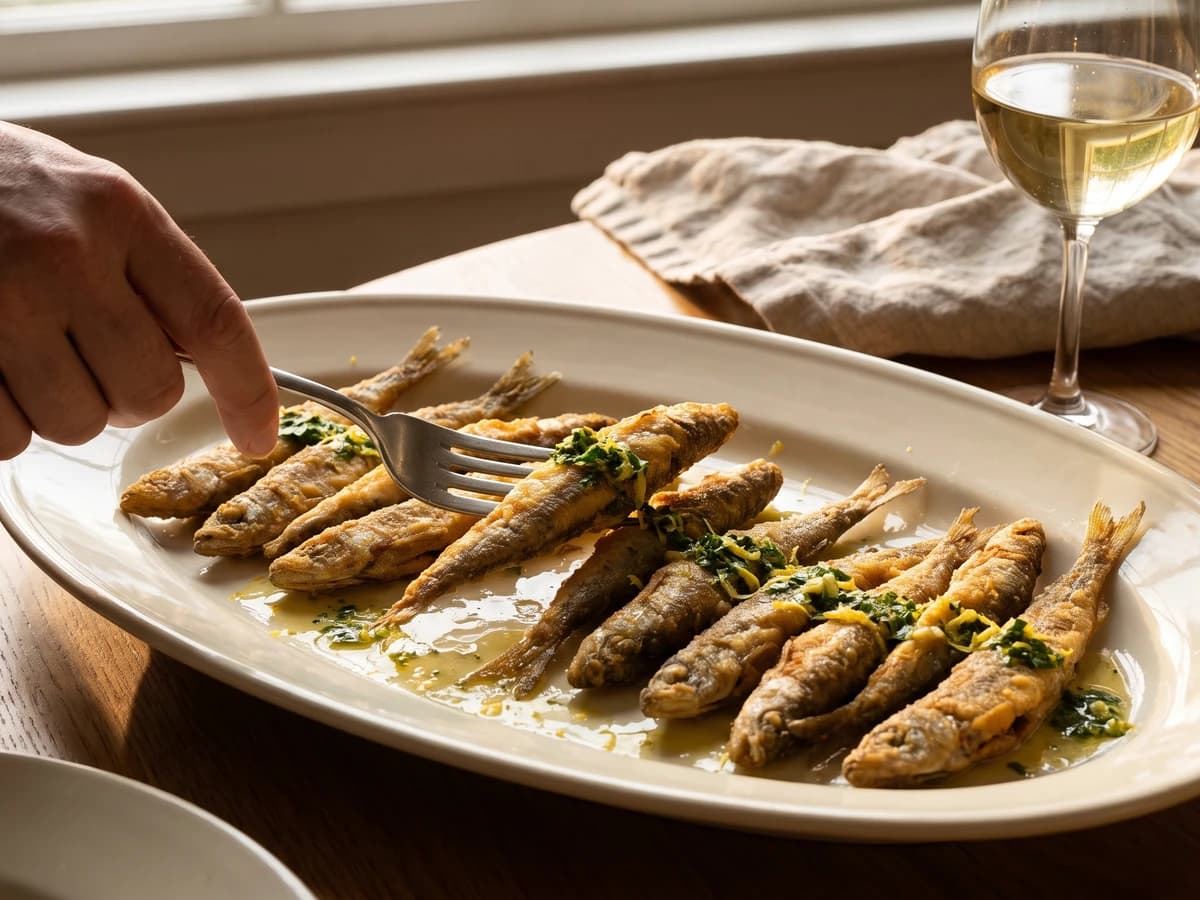
Éperlans à l’Anglaise turns small fish into a lesson in disciplined coating: boned smelts under a close, crisp crumb, pan-fried in clarified butter and finished with bright, half-melted maître d’hôtel butter.

Chef Juliette
Tiny smelts, shallot, mushrooms, white wine, gratin sauce, and fine bread raspings meet a fierce oven, where the fish must turn tender in the same breath the buttered crust bronzes.