
Chef Juliette
John Dory (St. Pierre)
John Dory has the delicacy of sole and the firmness of turbot. A light flouring, a quick butter sauté, and nut-brown beurre noisette show exactly why looks never mattered.
A cooking platform built around craft, culture, and the stories behind what we eat.

Created by Chef Juliette
Based on No. 1054, Filet de Bœuf Godard, from Le Guide Culinaire (1907) by Auguste Escoffier
Butter-poëled beef, truffled quenelles, lamb sweetbreads, mushrooms, and the grandeur of the Godard garnish, brought to one platter with a Madeira sauce reduced from the fillet's own cooking liquor.
Filet de Bœuf Godard (beef fillet with the Godard garnish) teaches composition. The quenelles, sweetbreads, mushrooms, offal, truffles, and glazed fillet may look like separate feats, but one thing holds them together: the sauce must carry the concentrated savour of the beef's own butter-rich cooking liquor. Without that, the garnish is merely an expensive crowd.
The original assumed a larding needle, a saucier on staff, a stock never off the fire, a salamander for glazing, and enough hands to turn every mushroom into geometry. Tonight, a narrow boning knife replaces the needle, concentrated unsalted veal stock replaces the perpetual stockpot, and the upper heat of your oven replaces the salamander. Decorative knife waste and brigade quantities are scaffolding, so they go. Alternating bacon and tongue inside the fillet, Poëlings (No. 250), truffled quenelles, glazed sweetbreads, and the reduced cooking-liquor sauce are the dish, so they stay. One cook, one stove, one evening.
The finished platter should look generous rather than fussy: a bronzed whole fillet, distinct little heaps of garnish, pale quenelles against black truffle, and mahogany sauce shining over everything without drowning it. Protect the cooking liquor when the beef leaves its pan. That is the step that decides the dish.
Filet de Bœuf Godard belongs to the Parisian grand-kitchen repertoire rather than to a regional farmhouse table; Godard names a complete composed garnish of quenelles, mushrooms, sweetbreads, poultry offal, tongue, and truffles. Through generations of written kitchen practice, it traveled from banquet service into ambitious bourgeois celebration cooking, where a whole decorated fillet could command the table. Its sauce is not an unrelated brown gravy: its identity comes from combining Godard sauce with the strained, degreased, and reduced poëling liquor of the beef.
Quantity
1 roast, 2 lb (900 g)
trimmed and tied
Quantity
2 oz (55 g)
chilled and cut into 4 long slim batons
Quantity
2½ oz (70 g)
chilled and divided into 4 long batons and 4 thin lozenges
Quantity
1 home-scaled quantity Poëlings (No. 250), prepared for a 2 lb (900 g) beef fillet
retain its strained and degreased cooking liquor
Quantity
12, about 7 oz (200 g)
stems removed and caps trimmed into even domes
Quantity
2 small truffles, about 1½ oz (40 g)
fresh or good preserved
Quantity
3½ oz (100 g)
finely diced
Quantity
1¼ oz (35 g)
finely diced
Quantity
¼ cup (60 ml / 20 g)
Quantity
2 tablespoons (30 ml / 31 g)
Quantity
1
Quantity
2 tablespoons (30 ml / 30 g)
Quantity
8 oz (225 g)
blanched, pressed, and trimmed
Quantity
4 oz (115 g)
drained; use the same weight of additional prepared lamb sweetbreads if unavailable
Quantity
2 tablespoons (30 ml / 16 g)
Quantity
7 tablespoons (105 ml / 98 g)
divided
Quantity
1½ cups (360 ml / 360 g)
divided
Quantity
½ cup (120 ml / 120 g)
Quantity
1 teaspoon (5 ml / 5 g)
Quantity
2 tablespoons (30 ml / 30 g)
Quantity
2 teaspoons (10 ml / 12 g)
divided
Quantity
1 teaspoon (5 ml / 2 g)
divided
Quantity
¼ teaspoon (1 ml / 0.5 g)
| Ingredient | Quantity |
|---|---|
| center-cut beef tenderloin roasttrimmed and tied | 1 roast, 2 lb (900 g) |
| unsmoked baconchilled and cut into 4 long slim batons | 2 oz (55 g) |
| cooked salted ox tonguechilled and divided into 4 long batons and 4 thin lozenges | 2½ oz (70 g) |
| Poëlings (No. 250)retain its strained and degreased cooking liquor | 1 home-scaled quantity Poëlings (No. 250), prepared for a 2 lb (900 g) beef fillet |
| small button mushroomsstems removed and caps trimmed into even domes | 12, about 7 oz (200 g) |
| whole black trufflesfresh or good preserved | 2 small truffles, about 1½ oz (40 g) |
| very cold veal shoulderfinely diced | 3½ oz (100 g) |
| very cold pork back fatfinely diced | 1¼ oz (35 g) |
| fresh white breadcrumbs | ¼ cup (60 ml / 20 g) |
| whole milk | 2 tablespoons (30 ml / 31 g) |
| large egg yolk | 1 |
| cold heavy cream | 2 tablespoons (30 ml / 30 g) |
| prepared lamb sweetbreadsblanched, pressed, and trimmed | 8 oz (225 g) |
| prepared cooked cocks' combs and rooster kidneys (optional)drained; use the same weight of additional prepared lamb sweetbreads if unavailable | 4 oz (115 g) |
| plain flour | 2 tablespoons (30 ml / 16 g) |
| unsalted butterdivided | 7 tablespoons (105 ml / 98 g) |
| strong unsalted brown veal stockdivided | 1½ cups (360 ml / 360 g) |
| dry Madeira | ½ cup (120 ml / 120 g) |
| fresh lemon juice | 1 teaspoon (5 ml / 5 g) |
| reserved truffle packing liquid (optional) | 2 tablespoons (30 ml / 30 g) |
| fine saltdivided | 2 teaspoons (10 ml / 12 g) |
| freshly ground black pepperdivided | 1 teaspoon (5 ml / 2 g) |
| ground white pepper | ¼ teaspoon (1 ml / 0.5 g) |
Keep the veal, pork fat, cream, and food-processor bowl thoroughly cold. Shape 8 small olive-like pieces from the truffles and cut 4 thin lozenges for the decorated quenelles; mince every trimming and reserve it for the forcemeat. Finely chop enough mushroom stems to make 2 tablespoons (30 ml / 20 g). Full decorative turning of the mushroom caps was brigade scaffolding; trimming them into neat, evenly sized domes preserves the cooking and the appearance without throwing half the mushrooms away.
Chill the bacon and tongue batons until firm. Push a clean metal skewer lengthwise through the cold fillet to begin 8 narrow, evenly spaced channels, then widen each gently with a slim boning knife. Slide in alternating batons of bacon and salted tongue, 4 of each, keeping them buried inside the meat. Season the outside with 1 teaspoon (5 ml / 6 g) salt and half the black pepper, then retie the fillet firmly. If a channel tears, bring the meat back together with an extra loop of string. It will roast perfectly well.
Soak the breadcrumbs in the milk for 5 minutes, then squeeze gently. Process the cold veal, pork fat, soaked crumbs, egg yolk, cream, ½ teaspoon (2.5 ml / 3 g) salt, and white pepper in short pulses until cohesive and smooth. Do not let the mixture grow warm. If it becomes loose or greasy, stop and chill the bowl over ice for 15 minutes; ça se rattrape. Fold in the chopped mushroom stems and minced truffle by hand. Fry a teaspoonful, taste it, and correct the seasoning before covering and chilling the forcemeat.
Melt 2 tablespoons (30 ml / 28 g) butter in a wide pan. Add the mushroom caps, lemon juice, and ¼ cup (60 ml / 60 g) water, cover, and cook gently for 5 to 7 minutes until tender but still shapely. Lift them out and reserve their cooking liquor. Dust the prepared sweetbreads lightly with the flour, shaking off every excess, then brown them in another 2 tablespoons (30 ml / 28 g) butter. Add ¼ cup (60 ml / 60 g) veal stock and roll the sweetbreads through the reducing liquid until glazed. Warm the prepared cocks' combs and rooster kidneys in the same glaze, or glaze the additional sweetbreads if using the home substitution. Hold everything covered over the gentlest heat.
Cook the larded fillet according to Poëlings (No. 250), using a heavy covered vessel only just large enough to contain it. Do not add liquid while the beef itself cooks; poëling is butter cooking over aromatics, not braising. Begin checking the centre early and remove the fillet when it reaches 115 to 118°F (46 to 48°C), since glazing will finish it. Cover loosely and rest it. Complete the referenced preparation, then retain every drop of its strained, thoroughly degreased cooking liquor.
Boil the Madeira in a small saucepan until reduced by half. Add the reserved mushroom liquor, optional truffle liquid, remaining veal stock, and all the cooking liquor furnished by Poëlings (No. 250). Reduce steadily until the sauce is mahogany-dark and nappant, meaning it coats the back of a spoon in a clear glossy layer. Strain it, skim every trace of surface grease, and whisk in the remaining 3 tablespoons (45 ml / 42 g) cold butter off the heat. If the sauce separates, put 1 tablespoon of cool stock in a clean pan and whisk the broken sauce into it gradually. Ça se rattrape. Reserve about ⅓ cup (80 ml / 80 g) for glazing and coating the garnishes; keep the rest warm for the sauceboat.
Bring a wide pan of salted water to the barest tremble. With a coffee spoon, shape 8 small quenelles from the cold forcemeat; use 2 tablespoons to form 4 larger oval quenelles. Slip them into the water and poach without boiling until resilient, cooked through, and at least 160°F (71°C) at the centre, about 7 minutes for the small quenelles and 9 to 11 minutes for the large. If the water boils and the edges begin to roughen, pull the pan off the heat and let them finish in the hot water. Drain carefully. Set one tongue lozenge and one truffle lozenge on each large quenelle, fixing them with a dot of sauce.
Heat the upper oven to 475°F (245°C), or set the broiler to moderate. Remove the string from the rested fillet, brush it with the reserved sauce, and expose it to the upper heat for 1 to 3 minutes, just until the glaze clings and shines. Watch it without wandering. Set the whole fillet on a warm long platter. Arrange separate small heaps of the mushroom caps, small quenelles, glazed sweetbreads, cocks' combs and rooster kidneys, and olive-shaped truffles around it. Place the 4 decorated oval quenelles at the two ends and two sides. Spoon only enough sauce over the garnishes to make them gleam, then send the remaining Godard sauce separately in a warm sauceboat. Carve the fillet at the table. À table!
1 serving (about 445g)
Culinary guides, cultural storytelling, and the editorial depth that makes cooking meaningful.
Discover Culinary ExplorerChef Juliette
John Dory has the delicacy of sole and the firmness of turbot. A light flouring, a quick butter sauté, and nut-brown beurre noisette show exactly why looks never mattered.

Chef Juliette
Fresh haddock proves its delicacy in the meunière pan: a fine flour crust, moist pearly flakes, and beurre noisette sharpened with lemon and parsley, ready from one skillet in half an hour.
Chef Juliette
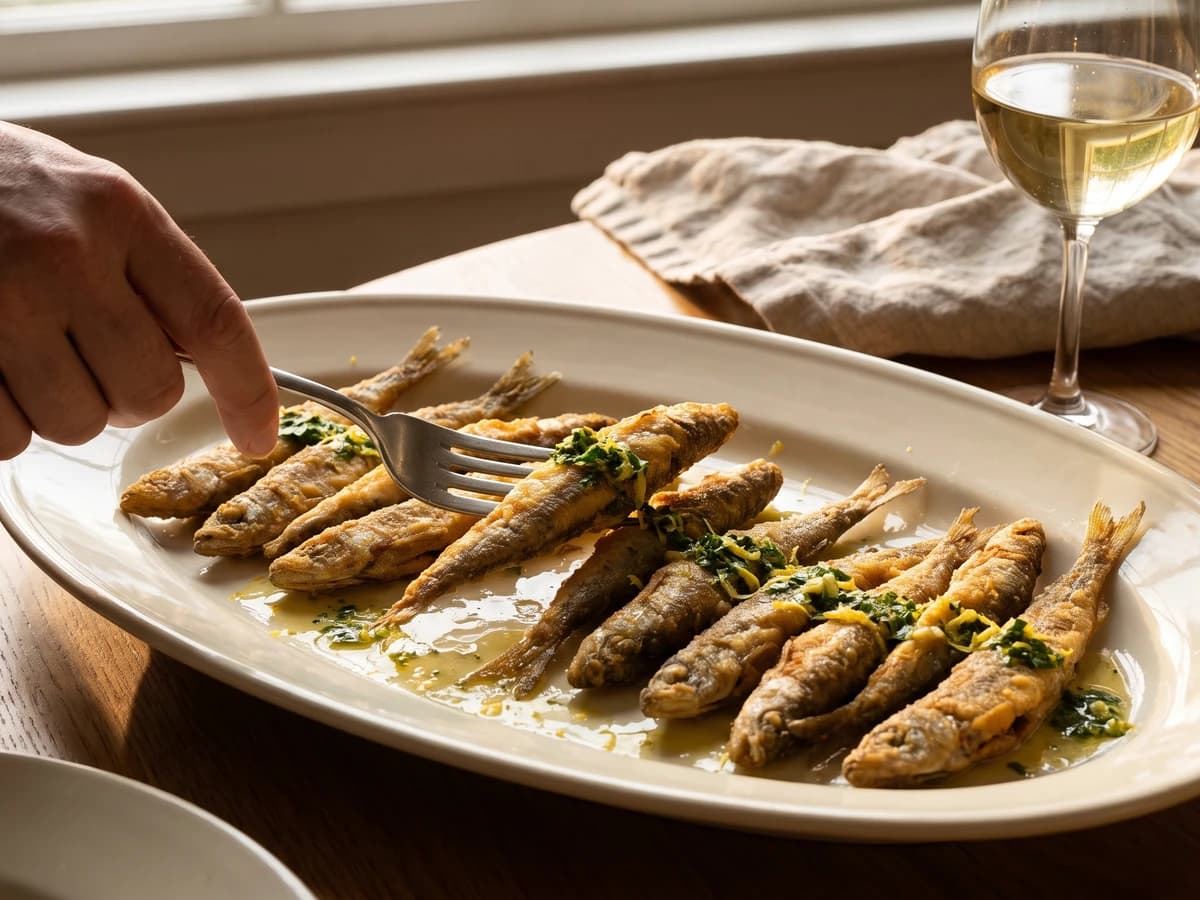
Éperlans à l’Anglaise turns small fish into a lesson in disciplined coating: boned smelts under a close, crisp crumb, pan-fried in clarified butter and finished with bright, half-melted maître d’hôtel butter.

Chef Juliette
Tiny smelts, shallot, mushrooms, white wine, gratin sauce, and fine bread raspings meet a fierce oven, where the fish must turn tender in the same breath the buttered crust bronzes.