
Chef Juliette
John Dory (St. Pierre)
John Dory has the delicacy of sole and the firmness of turbot. A light flouring, a quick butter sauté, and nut-brown beurre noisette show exactly why looks never mattered.
A cooking platform built around craft, culture, and the stories behind what we eat.
Created by Chef Juliette
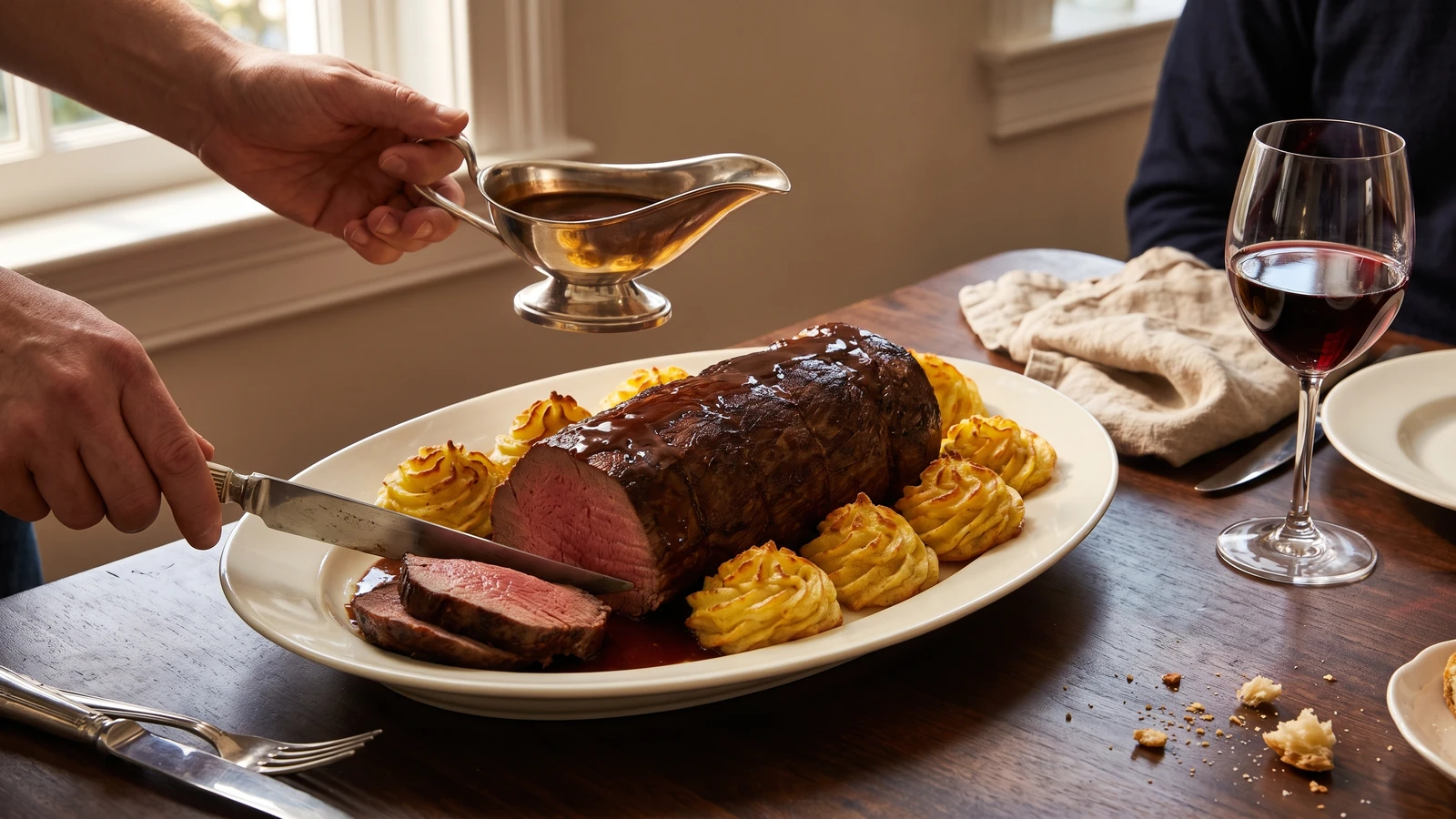
Based on No. 1051, Filet de Bœuf Duchesse, from Le Guide Culinaire (1907) by Auguste Escoffier
A butter-poëled fillet framed by crisp-edged pommes Duchesse and served with Madeira half-glaze, a dinner-party lesson in keeping tender beef, dry potato, and glossy sauce in step.
Filet de Bœuf Duchesse (butter-poëled beef fillet encircled with piped yolk-and-butter potatoes) teaches coordination, not complication. The one true thing to know before touching a pan is that the potato purée must be dry before enrichment. Wet purée slumps from the piping bag; dry purée holds its ridges, takes colour, and waits proudly beside the rosy fillet.
The original table assumed a larding needle, a saucier at the reduction, brown stock never off the fire, and a salamander ready at service. Here a narrow metal skewer and chopstick carry chilled back fat through the fillet, a measured stock reduction stands in for the perpetual half-glaze, and the home broiler colours the potatoes while the beef rests. The referenced Poëlings (No. 250) remains whole, scaled to one fillet; the rest is ordered for one cook, one stove, one evening.
The thick Matignon casing, extra pork wrapping, and buttered paper behind the current poëling method are scaffolding and can go. Internal larding, butter poëling, dry pommes Duchesse, demi-glace au Madère (Madeira half-glaze), and the last-moment glaze are the dish, so they stay. Dry the potatoes until a pale film forms on the pot before adding butter and yolks; that is the step that decides the plate.
Filet de Bœuf Duchesse belongs to the Parisian grand-kitchen repertoire, where a named garnish identified a complete presentation as clearly as the cut of meat. Pommes Duchesse passed easily into bourgeois Sunday cooking because enriched potato could be shaped ahead and coloured at service; duchesse is a garnish name in the classical system, not a claim that the dish comes from a French duchy. Madeira in the separately passed half-glaze reflects the canon's fondness for fortified wines in reductions, while the plate remains plainly legible: fillet, potato, sauce.
Quantity
1 roast, 1¾ pounds (800 g)
trimmed
Quantity
2 ounces (55 g)
cut into 8 slim batons and chilled firm
Quantity
1 home-scale application Poëlings (No. 250), sufficient for the beef fillet
Quantity
1 tablespoon plus 2 teaspoons (25 ml / 30 g)
divided
Quantity
1 teaspoon (5 ml / 2 g)
divided
Quantity
2 pounds (900 g)
peeled and quartered evenly
Quantity
6 tablespoons (90 ml / 85 g)
softened
Quantity
4
Quantity
⅛ teaspoon (0.6 ml / 0.25 g)
Quantity
1
beaten until loose, for brushing
Quantity
3 cups (720 ml / 720 g)
Quantity
1 teaspoon (5 ml / 3 g)
use only if the stock lacks body
Quantity
½ cup (120 ml / 120 g)
Quantity
1 tablespoon (15 ml / 14 g)
cubed
| Ingredient | Quantity |
|---|---|
| center-cut beef tenderloin roasttrimmed | 1 roast, 1¾ pounds (800 g) |
| unsmoked pork back fatcut into 8 slim batons and chilled firm | 2 ounces (55 g) |
| Poëlings | 1 home-scale application Poëlings (No. 250), sufficient for the beef fillet |
| fine sea saltdivided | 1 tablespoon plus 2 teaspoons (25 ml / 30 g) |
| freshly ground black pepperdivided | 1 teaspoon (5 ml / 2 g) |
| russet potatoespeeled and quartered evenly | 2 pounds (900 g) |
| unsalted butter for the pommes Duchessesoftened | 6 tablespoons (90 ml / 85 g) |
| large egg yolks | 4 |
| freshly grated nutmeg | ⅛ teaspoon (0.6 ml / 0.25 g) |
| large eggbeaten until loose, for brushing | 1 |
| unsalted brown veal or beef stock | 3 cups (720 ml / 720 g) |
| powdered unflavored gelatin (optional)use only if the stock lacks body | 1 teaspoon (5 ml / 3 g) |
| dry Madeira | ½ cup (120 ml / 120 g) |
| cold unsalted butter for the saucecubed | 1 tablespoon (15 ml / 14 g) |
Keep the beef and back fat cold. Working from each cut end, pass a narrow metal skewer lengthwise into the fillet to make four evenly spaced channels, stopping around the middle. Push one firm baton of back fat into each channel with the blunt end of a chopstick, then repeat from the opposite end. Tie the fillet at 1½-inch intervals so its thickness remains even. Season it with 1 teaspoon of the salt and ½ teaspoon of the pepper, then leave it out for 30 to 40 minutes while you begin the potatoes and sauce foundation.
If the stock does not set softly when cold, bloom the gelatin in 2 tablespoons of the measured cold stock for 5 minutes. Bring the remaining stock to a lively simmer in a wide saucepan and reduce it to about 1¼ cups (300 ml), skimming away any grey foam but keeping every bit of clean brown flavour. Whisk in the bloomed gelatin, if using, and hold the reduction over the gentlest heat. This measured reduction is the home equivalent of the brown stock and half-glaze a saucier once kept ready.
Cover the potatoes with cold water by an inch and add 1 tablespoon of the salt. Bring to a boil, lower to a steady simmer, and cook for 18 to 22 minutes, until a knife passes through without resistance. Drain thoroughly, return them to the hot pot, and shake them over low heat for 2 to 3 minutes. Stop only when the surfaces look floury and a pale starch film appears on the pot. Water is the enemy here; this drying is what lets pommes Duchesse hold their ridges.
Pass the hot potatoes through a ricer or food mill into the dry pot. Fold in the softened butter, the remaining 1 teaspoon salt, the remaining ½ teaspoon pepper, and the nutmeg without beating. Let the purée cool for 2 minutes, then work in the yolks one at a time until smooth and firm. Spoon it into a piping bag fitted with a large star tip and test one rosette on a parchment-lined sheet. If it slumps, the mixture is too warm: scrape it back into the bag and chill for 10 minutes. If it is too stiff to pipe, work in 1 teaspoon of the beaten egg. Ça se rattrape. Pipe 12 generous rosettes, then brush their ridges lightly with the remaining egg.
Set up the home-scale Poëlings (No. 250) exactly as that preparation directs, using a lidded casserole only a little larger than the fillet. Cook the beef unmoistened as prescribed and begin checking its centre after 25 minutes. Insert an instant-read thermometer through one cut end: remove the fillet at 120 to 122°F (49 to 50°C) for a rosy medium-rare after resting, or at 128°F (53°C) for medium. Rest it loosely tented for 15 to 20 minutes. Do not glaze it yet; the glaze belongs to the last moment.
While the beef rests, heat the oven to 425°F (220°C). Bake the pommes Duchesse for 10 to 14 minutes, until set and pale gold, then place them under the broiler for 30 to 90 seconds to colour their ridged edges. Watch without wandering; the difference between burnished and burnt is one conversation. If one side colours first, rotate the sheet rather than leaving the potatoes under longer.
Bring the reduced stock back to a simmer, add the Madeira, and reduce until about 1 cup (240 ml) remains and the demi-glace au Madère coats the back of a spoon in a clear, glossy layer. Taste before adding salt because reduction concentrates it. Take the pan off the heat and whisk in the cold butter a few cubes at a time. If the butter separates into an oily rim, whisk in 1 teaspoon of cold water away from the heat. Ça se rattrape. If the sauce is thin, reduce it a little longer; if it has tightened too far, loosen it with a spoonful of stock.
Warm a long serving platter and a sauceboat. Brush the rested fillet with a thin, shining coat of the hot demi-glace au Madère, then set it whole along the platter and surround it closely with the browned pommes Duchesse. Pour the remaining sauce into the sauceboat and send it separately, as the dish requires. Present the fillet whole, then carve it across the grain into eight thick slices at the table. À table!
1 serving (about 500g)
Culinary guides, cultural storytelling, and the editorial depth that makes cooking meaningful.
Discover Culinary ExplorerChef Juliette
John Dory has the delicacy of sole and the firmness of turbot. A light flouring, a quick butter sauté, and nut-brown beurre noisette show exactly why looks never mattered.

Chef Juliette
Fresh haddock proves its delicacy in the meunière pan: a fine flour crust, moist pearly flakes, and beurre noisette sharpened with lemon and parsley, ready from one skillet in half an hour.
Chef Juliette
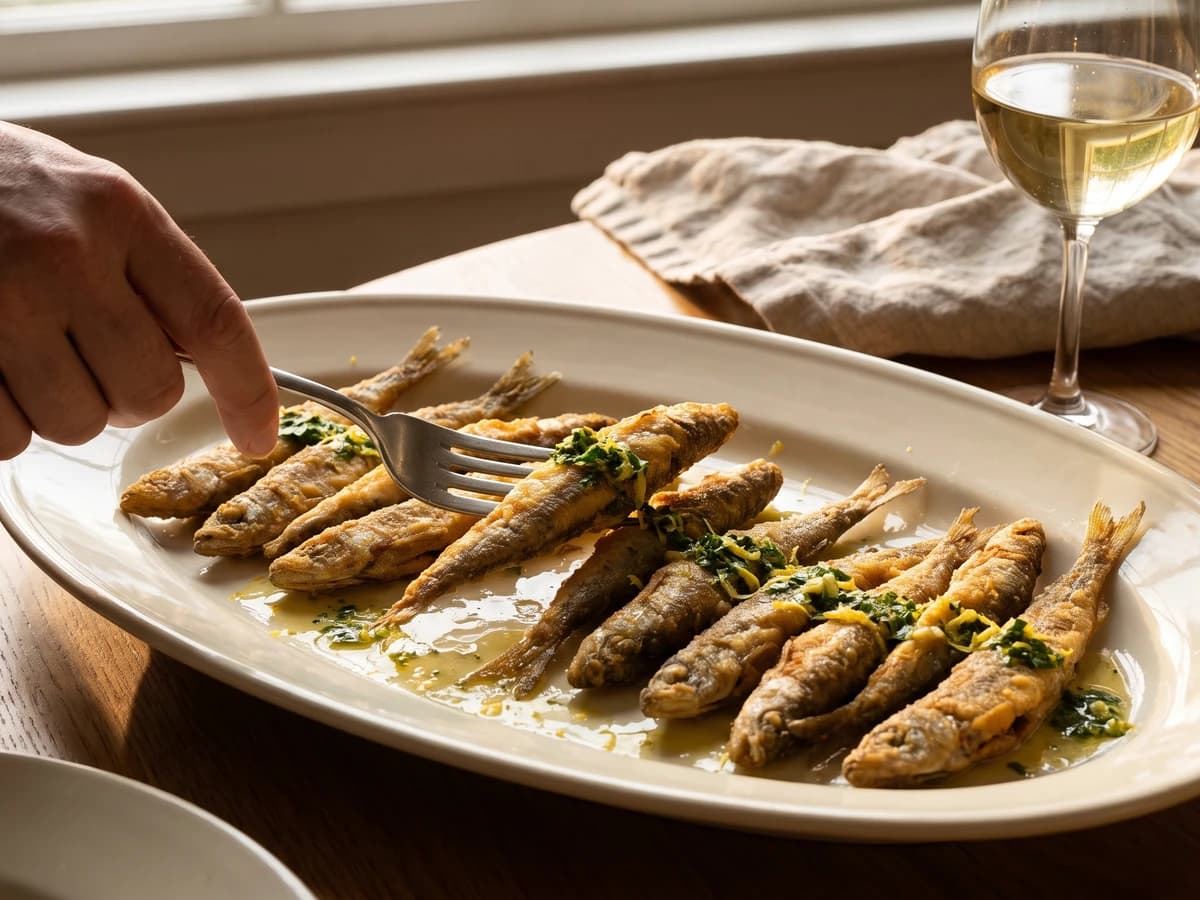
Éperlans à l’Anglaise turns small fish into a lesson in disciplined coating: boned smelts under a close, crisp crumb, pan-fried in clarified butter and finished with bright, half-melted maître d’hôtel butter.

Chef Juliette
Tiny smelts, shallot, mushrooms, white wine, gratin sauce, and fine bread raspings meet a fierce oven, where the fish must turn tender in the same breath the buttered crust bronzes.