
Chef Juliette
John Dory (St. Pierre)
John Dory has the delicacy of sole and the firmness of turbot. A light flouring, a quick butter sauté, and nut-brown beurre noisette show exactly why looks never mattered.
A cooking platform built around craft, culture, and the stories behind what we eat.

Created by Chef Juliette
Based on No. 1035d, Rouget à la Niçoise, from Le Guide Culinaire (1907) by Auguste Escoffier
Whole red mullet meets fierce heat, then a glossy Niçoise garnish of reduced tomato, garlic, anchovy, and black olives. The lesson is restraint: bronze the skin, keep the flesh pearly, and let the coast do the rest.
Rouget à la Niçoise (grilled red mullet with tomato, anchovy, garlic, and black olives) teaches a useful division of labor: cook the fish with restraint, then let the garnish declare where you are. Red mullet is small, rich, and delicate. The one true thing is that it must meet fierce heat with thoroughly dry skin, or it clings to the grill before it has time to bronze.
The original entry assumed a grill station already fluent in small fish and a saucier holding the garnish from Sole à la Niçoise. At home, make the tomato garnish first in one wide pan, hold it barely warm, then give your full attention to the rouget. The quantities become four whole fish, and the brigade's separate stations and holding time disappear. That is scaffolding. Direct heat, reduced tomato, garlic, anchovy, and black olives stay, because they are the dish. One cook, one stove, one evening.
Done properly, the rouget arrives ruby and gold, its flesh pearly beside the bone, with a glossy stripe of tomato and dark olives across the top. Dry the fish inside and out, oil the fish rather than drowning the grill, and don't force the first turn. That release from the grate is the step that decides everything.
Rouget à la Niçoise belongs to Nice and the Mediterranean coast, where red mullet's sea-sweet flesh meets the local pantry of olive oil, ripe tomato, garlic, anchovy, and small black olives. The original instruction sends the cook to Sole à la Niçoise for the garnish, a revealing piece of classical kitchen grammar: one regional preparation could pass intact from sole to rouget while each fish retained its proper cooking method. Here à la niçoise does not mean a loose handful of salad ingredients; it means a hot, reduced tomato garnish sharpened with anchovy and olives.
Quantity
4, 8 to 10 ounces (225 to 280 g) each
scaled, gutted, and fins trimmed
Quantity
6 medium, about 1½ pounds (680 g)
Quantity
5 tablespoons (75 ml / 68 g)
divided
Quantity
2 cloves, about 2 teaspoons (10 ml / 6 g)
finely minced
Quantity
20, about ½ cup (120 ml / 70 g)
pitted
Quantity
8, about 1 ounce (28 g)
drained and blotted dry
Quantity
1½ teaspoons (7.5 ml / 9 g)
divided
Quantity
½ teaspoon (2.5 ml / 1 g)
divided
| Ingredient | Quantity |
|---|---|
| whole red mullet (rouget barbet)scaled, gutted, and fins trimmed | 4, 8 to 10 ounces (225 to 280 g) each |
| ripe plum tomatoes | 6 medium, about 1½ pounds (680 g) |
| extra-virgin olive oildivided | 5 tablespoons (75 ml / 68 g) |
| garlicfinely minced | 2 cloves, about 2 teaspoons (10 ml / 6 g) |
| small black Niçoise olivespitted | 20, about ½ cup (120 ml / 70 g) |
| oil-packed anchovy filletsdrained and blotted dry | 8, about 1 ounce (28 g) |
| fine sea saltdivided | 1½ teaspoons (7.5 ml / 9 g) |
| freshly ground black pepperdivided | ½ teaspoon (2.5 ml / 1 g) |
Score a shallow cross in the base of each tomato. Lower them into boiling water for 20 to 30 seconds, just until the skins loosen, then move them into cold water. Peel, halve them crosswise, press out the watery seed pockets, and cut the flesh into ½-inch pieces. Keep the pieces irregular enough to remain visible after cooking; this garnish should have body, not the smoothness of a sauce.
Warm 3 tablespoons (45 ml / 41 g) of the olive oil in a wide sauté pan over medium-low heat. Add the garlic and cook for about 20 seconds, until fragrant but still pale. Add the tomatoes, ½ teaspoon (2.5 ml / 3 g) of the salt, and ¼ teaspoon (1.25 ml / 0.5 g) of the pepper. Bring to a lively simmer, then reduce the heat and cook uncovered for 15 to 18 minutes, stirring occasionally, until the tomato is glossy and spoonable with no watery moat around it. Hold it over the lowest heat while the fish cooks.
Heat an outdoor grill or heavy cast-iron grill pan to medium-high, about 450°F (230°C), and scrub the grate clean. For the honest indoor equivalent, place an oven rack about 4 inches (10 cm) below a fully heated broiler and set an oiled wire rack over a sheet pan. The heat must be ready before the fish is seasoned, because salted fish left waiting sheds moisture.
Blot each rouget thoroughly, including the cavity and the folds behind the head. Rub the fish with the remaining 2 tablespoons (30 ml / 27 g) olive oil, then season inside and out with the remaining 1 teaspoon (5 ml / 6 g) salt and ¼ teaspoon (1.25 ml / 0.5 g) pepper. Oil the fish, not the whole grill. A thin film protects the skin without feeding flare-ups.
Lay the rouget across the hot grate and leave them untouched for 4 to 5 minutes. Slide a thin fish spatula underneath; when the skin has bronzed properly, it will release. Turn carefully and grill the second side for 3 to 4 minutes, until the flesh is opaque beside the backbone and reaches 145°F (63°C) at its thickest point. Under the broiler, cook for the same approximate time, turning once. If the skin clings, don't tear it loose. Give it another 30 to 60 seconds. If it still tears, turn with two spatulas and serve that side downward; the flesh is unharmed and the garnish knows how to keep a confidence.
Fold the black olives into the tomato garnish and warm them for 2 minutes. Taste before adding anything, because both olives and anchovies bring salt. Set the rouget on a warm oval platter, spoon a generous stripe of tomato and olives along each fish while leaving some bronzed skin visible, then lay two anchovy fillets over each one. Bring it straight to the table. À table!
1 serving (about 260g)
Culinary guides, cultural storytelling, and the editorial depth that makes cooking meaningful.
Discover Culinary ExplorerChef Juliette
John Dory has the delicacy of sole and the firmness of turbot. A light flouring, a quick butter sauté, and nut-brown beurre noisette show exactly why looks never mattered.

Chef Juliette
Fresh haddock proves its delicacy in the meunière pan: a fine flour crust, moist pearly flakes, and beurre noisette sharpened with lemon and parsley, ready from one skillet in half an hour.
Chef Juliette
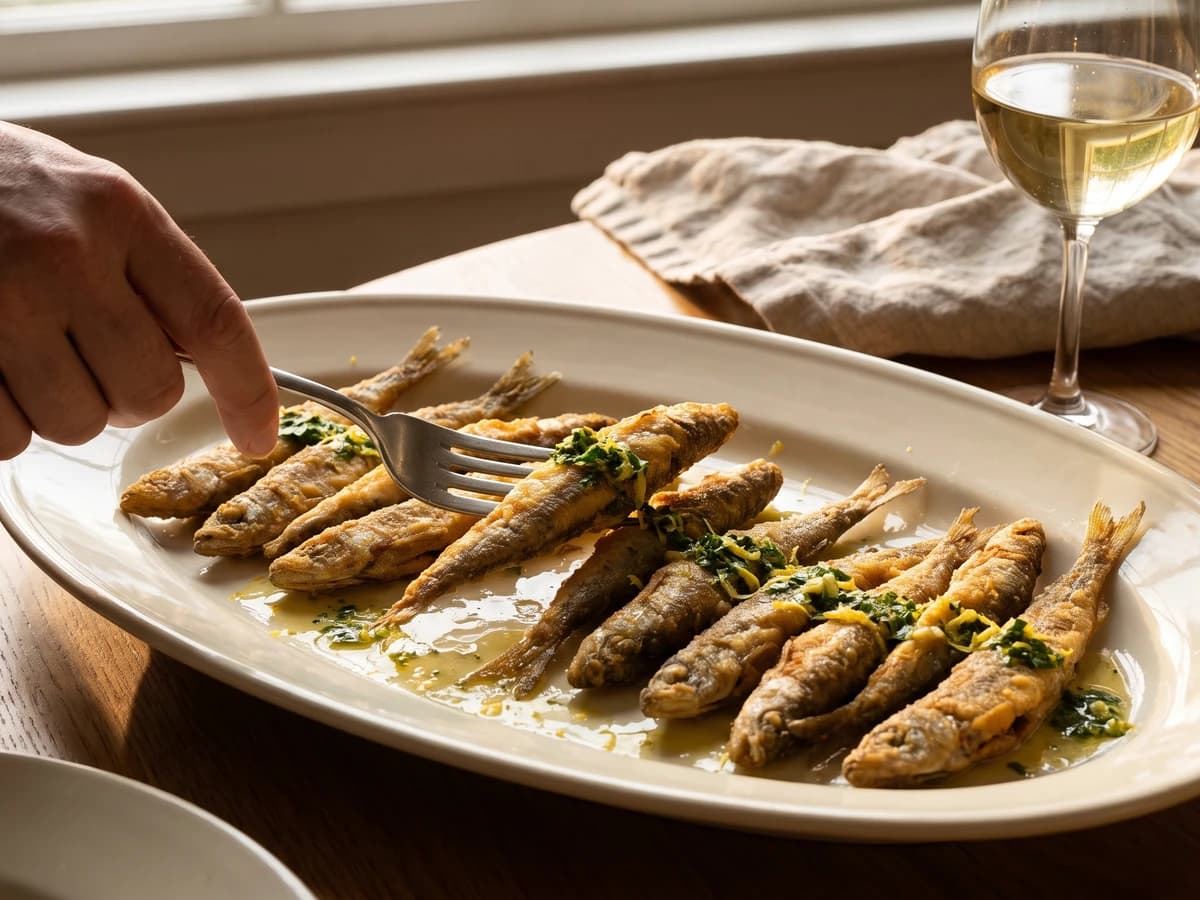
Éperlans à l’Anglaise turns small fish into a lesson in disciplined coating: boned smelts under a close, crisp crumb, pan-fried in clarified butter and finished with bright, half-melted maître d’hôtel butter.

Chef Juliette
Tiny smelts, shallot, mushrooms, white wine, gratin sauce, and fine bread raspings meet a fierce oven, where the fish must turn tender in the same breath the buttered crust bronzes.