
Chef Takumi
Awamori Mizuwari (泡盛水割り, awamori with water)
Awamori mizuwari is not a trick of the bar. It is three parts awamori, seven parts cold water, and enough patience to let the black-kōji aroma open.
A cooking platform built around craft, culture, and the stories behind what we eat.
Created by
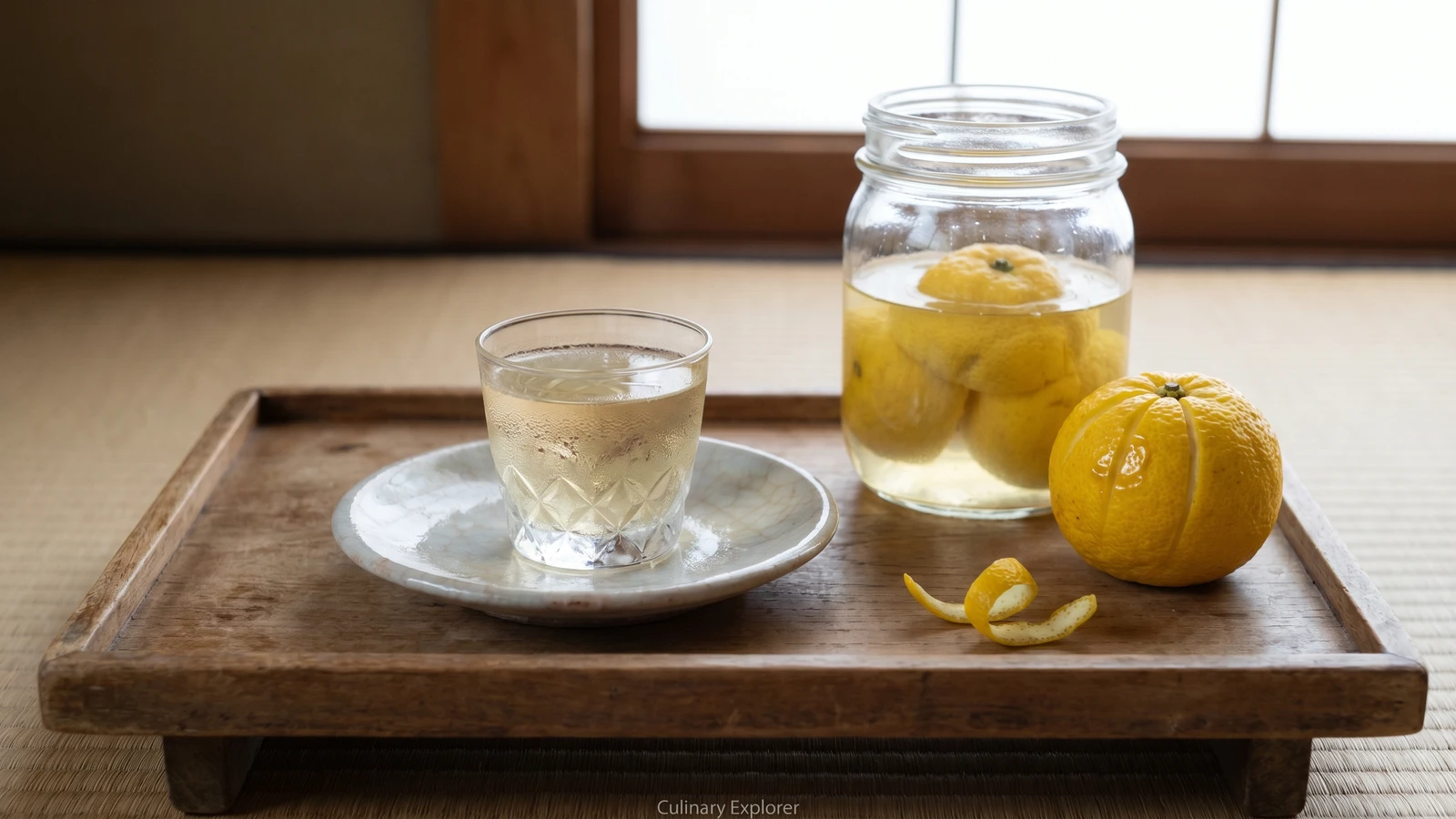
Yuzushu asks for almost no technique: winter yuzu at its prime, clean shochu, rock sugar, and patience. The peel does the perfuming, so keep it with the fruit.
Yuzu belongs to the cold months. The skin turns yellow, the perfume sharpens, and one fruit can scent a room before you have done anything clever to it. That is the first secret of yuzushu: choose yuzu at 旬 (shun), at its prime, and don't ask the jar to repair a tired fruit.
This is not a difficult drink to make. It is fruit, sugar, and shochu resting together until the alcohol pulls fragrance from the peel and brightness from the flesh. The rock sugar dissolves slowly, which matters because a quiet extraction gives you a cleaner liqueur than a rush of fine sugar sitting at the bottom like wet sand. Even here, the method has manners.
Leave the peel on. That is the detail that decides the drink. The juice gives tartness, but the peel carries the yuzu's high winter scent, the part you recognize before you taste it. After six weeks, strain it before bitterness begins to crowd the perfume. Pour it small, chilled or over one clean cube of ice, and let it be itself: honmono, unhidden, and very good at making a cold evening behave.
Yuzushu belongs to the wider Japanese practice of kajitsushu, homemade fruit liqueurs made by steeping seasonal fruit with sugar in a strong neutral spirit. The best-known model is umeshu, but citrus versions became common wherever yuzu was grown, especially in western Japan and Shikoku, where winter yuzu is an important crop. Modern home recipes often use 35 percent white liquor or shochu because its strength extracts aroma cleanly and preserves the fruit safely during the long steep.
Quantity
8 to 10 (about 700g)
Quantity
500g
Quantity
1.8 liters
Quantity
as needed
for sterilizing the jar
| Ingredient | Quantity |
|---|---|
| whole ripe yuzu | 8 to 10 (about 700g) |
| rock sugar (kōri-zatō) | 500g |
| shochu or white liquor, 35% ABV | 1.8 liters |
| boiling waterfor sterilizing the jar | as needed |
Rinse a 3-liter glass jar, then pour boiling water through it and let it air-dry completely. The jar must be dry before the fruit goes in, because stray water weakens the alcohol and gives spoilage an easier invitation. We are making a liqueur, not asking trouble to join us.
Wash the yuzu gently under running water and wipe each fruit dry with a clean towel. Pick out any fruit with soft spots, mold, or a tired skin. The peel is staying in the jar, so it must be clean, bright, and fragrant.
With a small knife, make three or four shallow cuts through the peel of each yuzu, just enough to open the skin without cutting the fruit apart. This gives the shochu a path into the peel and flesh while keeping the fruit whole, so the liqueur extracts slowly and stays clear.
Put half the yuzu in the jar, scatter over half the rock sugar, then repeat with the remaining yuzu and sugar. Pour in the shochu until everything is covered. The fruit may float at first. That is ordinary. The alcohol is doing the quiet work now.
Seal the jar and keep it in a cool, dark place for six weeks. Turn the jar gently every few days for the first two weeks, just enough to wet the fruit and help the rock sugar dissolve. Don't shake it hard. Bruised fruit and broken pith make a rougher drink.
After six weeks, strain out the yuzu and pass the liqueur through a fine cloth or coffee filter if you want it clear. Removing the fruit now keeps the bright peel perfume from turning bitter. Bottle it, then let it rest another week before drinking if you can bear the restraint.
Serve yuzushu chilled in small cups, over one large ice cube, or lengthened with cold soda water. Keep the pour modest. This is a fragrant winter drink, not a bucket with manners painted on.
1 serving (about 31g)
Culinary guides, cultural storytelling, and the editorial depth that makes cooking meaningful.
Discover Culinary ExplorerChef Takumi
Awamori mizuwari is not a trick of the bar. It is three parts awamori, seven parts cold water, and enough patience to let the black-kōji aroma open.

Chef Takumi
Hot awamori asks for one small discipline: pour the hot water first, then the spirit. Do that, and the glass turns round, fragrant, and calmer than its strength suggests.

Chef Takumi
Bancha is the honest daily cup: late-season leaves, hot water, a short steep, and a clean amber-green liquor that asks for no ceremony to be good.

Chef Takumi
Whole black soybeans, roasted until their skins split, make a clear amber tea with a roasted sweetness and no caffeine. Drink it plain, then eat the softened beans while they still hold their warmth.