
Chef Lupita
Arroz a la Oaxaqueña
Oaxaca's red rice, stained with tomato and fried in lard, steamed with carrots, ejotes, black beans, and epazote. The side that anchors a Oaxacan family meal and earns its place beside the main.
A cooking platform built around craft, culture, and the stories behind what we eat.
Created by
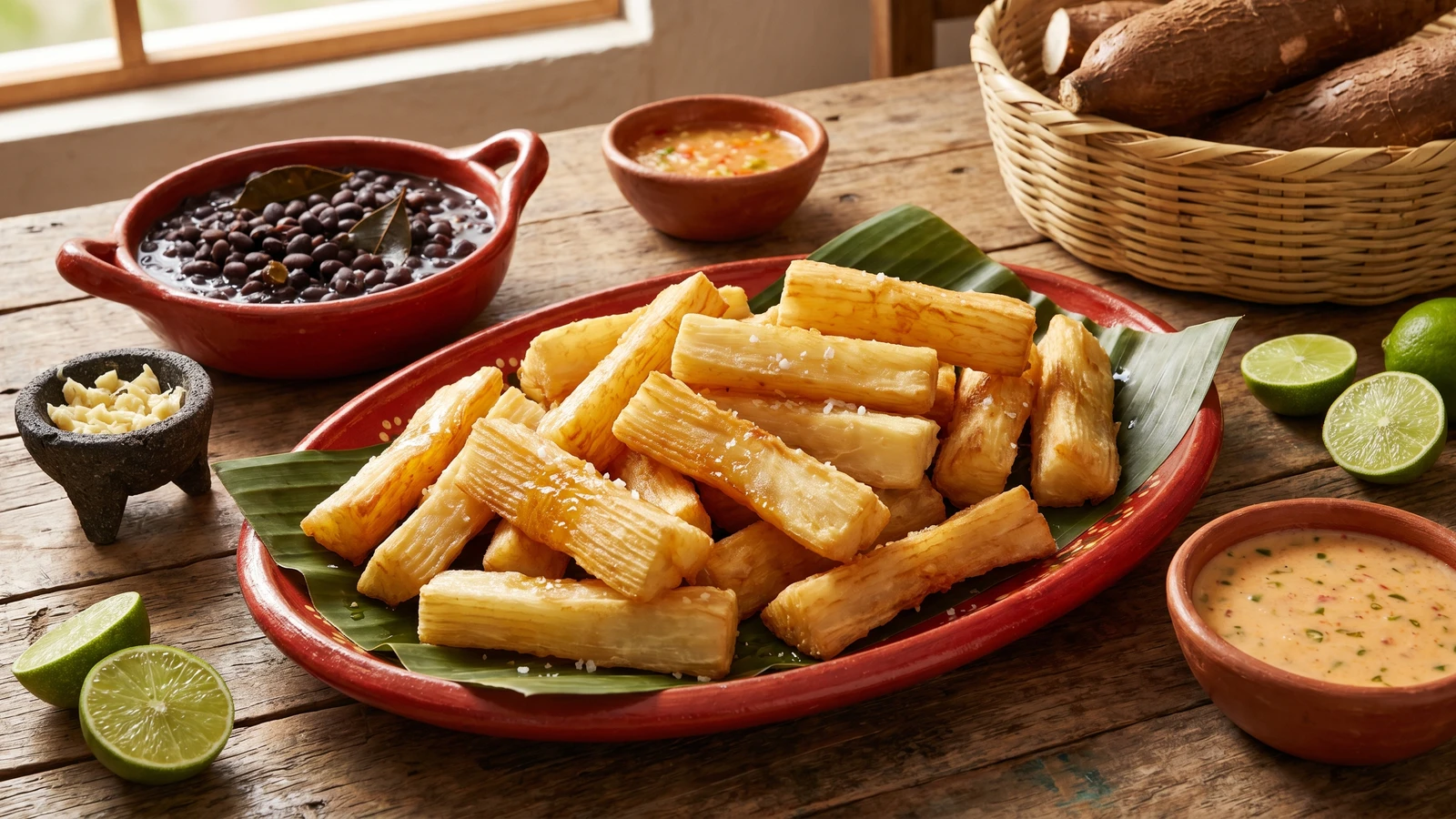
Veracruz's Los Tuxtlas yuca, parboiled with garlic and bay, fried in lard or coconut oil, then served with lime and a sharp achiote-garlic vinegar mojo.
Veracruz, especially Los Tuxtlas and the coastal kitchens tied to the Sotavento, is where this yuca belongs in Mexico. The tuber grows well in that humid volcanic country, the same land that gives you plantain, malanga, hoja santa, and black beans cooked with a patience city people pretend they don't have.
Yuca frita is not a garnish. It is a diasporic starch on Mexican soil, part of the Afro-Mexicano pantry that came through ports, labor routes, and coastal kitchens. The method is practical: boil it first so the center turns creamy, dry it, then fry it in pork lard or coconut oil until the outside goes gold. Vegetable oil is what people use when they forgot flavor has memory.
The jarocho touch here is the ajo, achiote, vinegar, lime, and chile serrano in the mojo. It cuts the richness and wakes up the yuca without pretending this is Cuba or Cartagena. Veracruz is Veracruz. Cada estado, su propia cocina.
Yuca, also called cassava or manioc, was domesticated in South America thousands of years before it traveled through Caribbean and Gulf trade routes into coastal Mexico. In Veracruz, the tuber became part of the Afro-Mexicano and Afro-Caribbean food register connected to the port of Veracruz, sugar work, cattle routes, and the humid growing zones of Los Tuxtlas. Fried yuca in the state sits beside plantain and malanga as evidence that Mexican food history is not only corn and chile, but also African Atlantic movement on Mexican land.
Quantity
2 pounds
peeled and cut into 3-inch batons
Quantity
2 quarts
Quantity
1 tablespoon, plus more for finishing
Quantity
2
Quantity
4
2 crushed and 2 finely minced
Quantity
1/2 teaspoon
Quantity
1/3 cup
Quantity
1/4 cup, plus lime halves for serving
Quantity
1
finely chopped
Quantity
1/2 teaspoon
Quantity
2 cups
for frying
| Ingredient | Quantity |
|---|---|
| fresh yucapeeled and cut into 3-inch batons | 2 pounds |
| water | 2 quarts |
| kosher salt | 1 tablespoon, plus more for finishing |
| bay leaves | 2 |
| garlic cloves2 crushed and 2 finely minced | 4 |
| achiote paste | 1/2 teaspoon |
| white vinegar | 1/3 cup |
| fresh lime juice | 1/4 cup, plus lime halves for serving |
| fresh chile serranofinely chopped | 1 |
| dried Mexican oregano, preferably Veracruz oregano | 1/2 teaspoon |
| pork lard or unrefined coconut oilfor frying | 2 cups |
Peel the yuca deeply, past the brown skin and the thin purple layer underneath. Cut it into thick batons and remove the woody cord from the center when you see it. That cord never softens. Leave it in and somebody at the table will know you rushed.
Put the yuca in a pot with the water, one tablespoon salt, bay leaves, and the two crushed garlic cloves. Bring to a steady simmer and cook 20 to 25 minutes, until the pieces are tender at the center but not falling apart. The surface should look slightly open and starchy. That is what will crisp later.
Drain the yuca well and spread it on a clean towel or wire rack for at least 10 minutes. Dry yuca fries clean. Wet yuca spits in hot fat and browns unevenly. No me vengas con atajos.
In a small clay bowl, mash the achiote paste with the vinegar until smooth. Stir in the lime juice, two finely minced garlic cloves, chile serrano, and Mexican oregano. This is a Veracruz table mojo: sharp, garlicky, stained lightly with achiote. It is not Cuban sauce wearing a jarocho hat.
Heat the lard or coconut oil in a heavy skillet to 350F. Fry the yuca in batches, turning once or twice, until the outside turns deep gold and the edges feel crisp against the spoon, about 4 to 6 minutes per batch. Do not crowd the pan. Crowding drops the heat and gives you greasy yuca.
Lift the yuca onto a rack or brown paper and salt it while the fat still glistens on the surface. Serve immediately with lime halves and the garlic-vinegar mojo on the side. The inside should be creamy, the outside crisp enough to answer back under your teeth. Así se hace y punto.
1 serving (about 200g)
Culinary guides, cultural storytelling, and the editorial depth that makes cooking meaningful.
Discover Culinary ExplorerChef Lupita
Oaxaca's red rice, stained with tomato and fried in lard, steamed with carrots, ejotes, black beans, and epazote. The side that anchors a Oaxacan family meal and earns its place beside the main.

Chef Lupita
Sinaloa's home-cook white rice topped with cold cubes of cream cheese that soften into the warm grain, finished with crema and a sprinkle of chiltepin at the table. The trick that makes a side dish feel like a small luxury.

Chef Lupita
Sonora's white rice, toasted in butter and steamed with sweet corn and tender peas. The clean, quiet partner to a plate of carne asada, not the red rice of central Mexico.

Chef Lupita
Yucatán's white rice with sweet corn kernels, toasted in lard with garlic and onion. The quiet base that holds up against the peninsula's bold achiote-stained stews.