
Chef Lupita
Arroz a la Oaxaqueña
Oaxaca's red rice, stained with tomato and fried in lard, steamed with carrots, ejotes, black beans, and epazote. The side that anchors a Oaxacan family meal and earns its place beside the main.
A cooking platform built around craft, culture, and the stories behind what we eat.
Created by
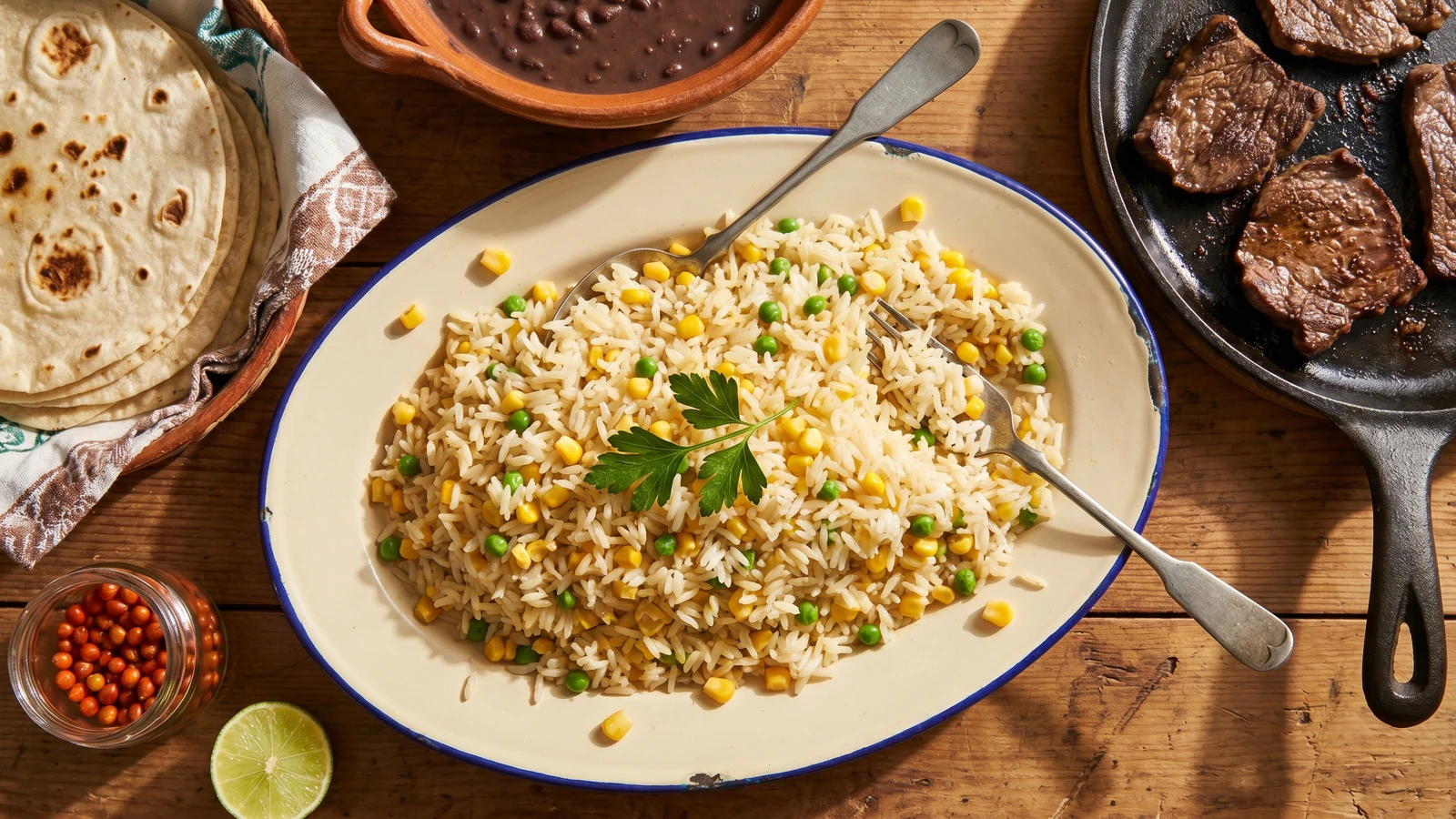
Sonora's white rice, toasted in butter and steamed with sweet corn and tender peas. The clean, quiet partner to a plate of carne asada, not the red rice of central Mexico.
This is a Sonoran rice. Not the red arroz of central Mexico, not the green arroz of Veracruz. White, buttery, studded with corn and peas, and built to sit next to a plate of carne asada without competing with it. Cada estado, su propia cocina, and in the north the rice steps aside so the grilled meat can be the main event.
Sonora is cattle country and wheat country. The cooking up here is plainer than what you find in the south, and that plainness is the point. You toast the rice in butter, not in lard, not in tomato puree. The butter gives the grain a clean nutty edge and a slight gloss. The chicken broth carries it. The corn and peas are sweet and bright against the savory base. That is the whole architecture. No me vengas con atajos, no instant rice, no bouillon cubes if you can help it. A pot of good homemade caldo de pollo makes the difference between a serviceable side and one that disappears off the platter before you can serve yourself seconds.
My mother was from Jalisco and she made arroz rojo every Sunday. But when I was in Hermosillo collecting recipes from senoras who had grown up cooking for ranch families, I watched them make this white rice over and over, always with the same patience: rinse the grain, toast it slowly, add the broth hot, never lift the lid. One cook in Magdalena de Kino told me her mother used to say that arroz blanco is the easiest dish in the kitchen to ruin because there is nothing to hide behind. She was right. The rice is exactly as good as the attention you paid it. Saber cocinar es saber vivir.
Rice arrived in Mexico through the Manila Galleon trade in the late 16th century, sailing from the Philippines into Acapulco, and it spread north along the colonial supply routes into the missions and ranching settlements of what is now Sonora. The northwestern preference for white rice over the tomato-based arroz rojo of central Mexico reflects the region's pastoral economy: wheat, dairy, and cattle anchored the Sonoran table, and butter-based cooking became the practical norm in a place where lard was reserved for frijoles and tortillas de harina. The addition of corn and peas to white rice became standard in Sonora and Sinaloa by the mid-20th century as canned and frozen vegetables reached northern kitchens, but home cooks who lived near the farms always preferred fresh elote shucked the same morning.
Quantity
2 cups
Quantity
3 tablespoons
Quantity
1 tablespoon
Quantity
1/4 medium
finely diced
Quantity
2
finely minced
Quantity
3 1/2 cups
hot
Quantity
1 cup (from about 2 ears)
Quantity
3/4 cup
or frozen, thawed
Quantity
1 1/2 teaspoons, plus more to taste
Quantity
1 sprig
| Ingredient | Quantity |
|---|---|
| long-grain white rice | 2 cups |
| unsalted butter | 3 tablespoons |
| neutral oil | 1 tablespoon |
| white onionfinely diced | 1/4 medium |
| garlic clovesfinely minced | 2 |
| chicken brothhot | 3 1/2 cups |
| fresh corn kernels | 1 cup (from about 2 ears) |
| fresh shelled peasor frozen, thawed | 3/4 cup |
| kosher salt | 1 1/2 teaspoons, plus more to taste |
| fresh flat-leaf parsley (optional) | 1 sprig |
Place the rice in a fine-mesh strainer and rinse under cold running water, agitating with your fingers, until the water runs almost clear. This pulls off the surface starch that turns Sonoran rice gummy. You want each grain separate when this is done. Drain well and shake off the excess water.
Melt the butter with the neutral oil in a heavy 3-quart pot over medium heat. The oil keeps the butter from burning. Add the drained rice and stir constantly for four to five minutes. The grains will turn from translucent to chalky white and then a faint pale gold at the edges. The kitchen will smell like toasted nuts. This is the Sonora step. In the north we toast rice in butter, not lard, not tomato. La mantequilla es el sabor de esta receta.
Push the rice to the edges of the pot and add the onion and garlic to the center. Cook for one minute, stirring, until the onion turns translucent and the garlic releases its smell. Do not brown the garlic. Burned garlic in arroz blanco is bitter for the whole pot and there is no fixing it.
Pour in the hot chicken broth. Hot, not cold. Cold broth stops the toast in its tracks and the rice steams instead of finishing. Add the corn kernels, the peas, the salt, and the parsley sprig. Stir once to settle everything in an even layer. Stir once and only once. From here on, leave it alone.
Bring to a strong simmer over medium-high heat until you see the surface dimple with bubbles. Reduce heat to low, cover tightly, and cook for 18 to 20 minutes. Do not lift the lid. The steam trapped inside is doing the work. You will hear the pot quiet down as the liquid finishes. That silence is your signal.
Pull the pot off the heat and let it sit, covered, for 10 minutes. The rice needs this rest to settle and the steam needs to redistribute. Skip this step and the bottom is wet while the top is dry. Asi se hace y punto.
Remove the parsley sprig. Fluff the rice gently with a fork, lifting from the bottom so the corn and peas stay intact. Taste for salt. Serve in a wide enamelware platter or a shallow ceramic dish alongside carne asada, beans, and flour tortillas. This is the side dish that lets the grilled meat be the star, which is exactly what it is built to do.
1 serving (about 260g)
Culinary guides, cultural storytelling, and the editorial depth that makes cooking meaningful.
Discover Culinary ExplorerChef Lupita
Oaxaca's red rice, stained with tomato and fried in lard, steamed with carrots, ejotes, black beans, and epazote. The side that anchors a Oaxacan family meal and earns its place beside the main.

Chef Lupita
Sinaloa's home-cook white rice topped with cold cubes of cream cheese that soften into the warm grain, finished with crema and a sprinkle of chiltepin at the table. The trick that makes a side dish feel like a small luxury.

Chef Lupita
Yucatán's white rice with sweet corn kernels, toasted in lard with garlic and onion. The quiet base that holds up against the peninsula's bold achiote-stained stews.

Chef Lupita
Veracruz white rice steamed with a whole hoja santa leaf laid across the top, the anise-and-pepper perfume of the leaf settling directly into the grains. The rice that belongs next to chichilo and coastal pescados.