
Chef Lupita
Arroz a la Oaxaqueña
Oaxaca's red rice, stained with tomato and fried in lard, steamed with carrots, ejotes, black beans, and epazote. The side that anchors a Oaxacan family meal and earns its place beside the main.
A cooking platform built around craft, culture, and the stories behind what we eat.
Created by
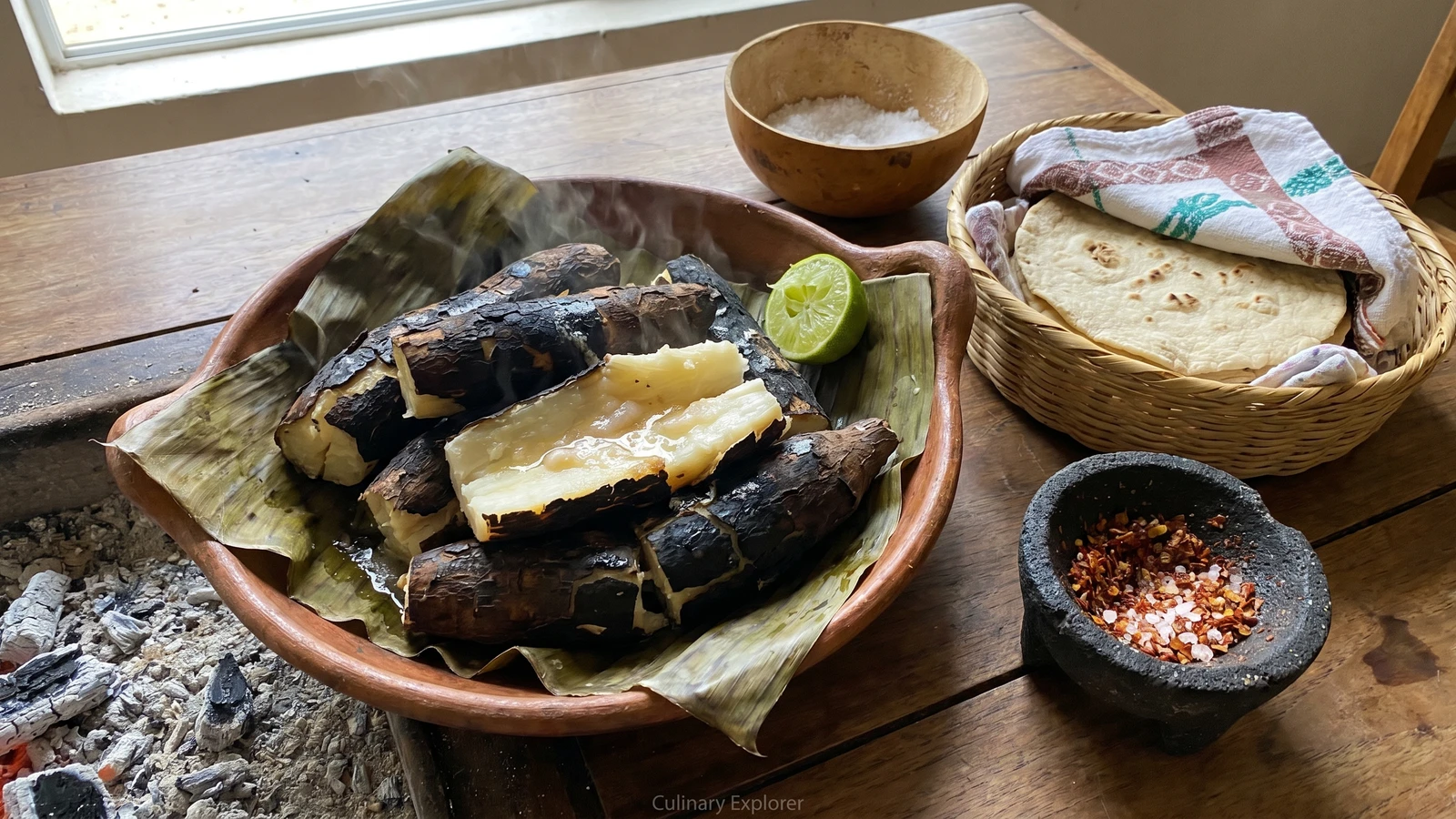
Tabasco's Chontal lowland yuca, buried in clean wood ash and embers until the skin chars, the flesh opens creamy, and the table needs only chile amashito, lime, and salt.
Tabasco, especially the Chontalpa lowlands around Nacajuca, Jalpa de Méndez, and the wet country toward Centla, knows yuca because the land is humid, generous, and stubborn. This is not a northern grill vegetable. This is a tuber cooked under ash, the way women cooked before every kitchen had a stove and every recipe pretended it needed a pan.
The technique is rescoldo: embers below, clean ash around, heat held steady until the skin blackens and the flesh inside turns white, soft, and almost buttery. The yuca must be sweet yuca, not bitter cassava meant for processing. You don't play with cassava. You cook it completely, you split it open, and you remove the tough center fiber. Así se hace y punto.
What makes this tabasqueña is what sits beside it: chile amashito crushed with sal de grano, lime or naranja agria, a little manteca de cerdo if the meal calls for richness, and hoja de plátano on the table. In the markets of Villahermosa, the señoras will sell you those small green chiles with no speech, just a look that says you should already know what they are for. Pregúntale a las señoras del mercado.
My mother did not cook yuca this way. She was from Jalisco. I learned it in Tabasco from women who knew how to make a full meal from the milpa, the river, the patio, and the fire. La cocina no es decoración, es trabajo. This dish proves it with ash under your fingernails.
Yuca, or cassava, was cultivated in the Maya lowlands long before European contact and remained important in humid regions like Tabasco where maize and root crops shared the same household economy. Rescoldo cooking, burying food in embers and ash, predates metal cookware and survives across rural Mexico in tortillas, squash, tubers, and meats cooked directly in the fire bed. Among Yokot'an, also called Chontal Maya, communities of Tabasco, yuca belongs to the same lowland pantry as plantain, cacao, chile amashito, chipilín, and river fish, a cuisine shaped by water and heat, not by the dry comal culture of the north.
Quantity
3 pounds
unpeeled, scrubbed very well
Quantity
2 tablespoons
divided
Quantity
2 tablespoons
melted, for finishing
Quantity
2 limes or 1 naranja agria
halved, for serving
Quantity
8 to 12
stemmed
Quantity
1 teaspoon
Quantity
1 small
Quantity
1 tablespoon
Quantity
2 tablespoons
Quantity
1
rinsed and softened over the fire, for serving
| Ingredient | Quantity |
|---|---|
| fresh sweet yuca rootsunpeeled, scrubbed very well | 3 pounds |
| kosher saltdivided | 2 tablespoons |
| manteca de cerdomelted, for finishing | 2 tablespoons |
| limes or naranja agriahalved, for serving | 2 limes or 1 naranja agria |
| fresh chile amashitostemmed | 8 to 12 |
| sal de grano | 1 teaspoon |
| garlic clove | 1 small |
| fresh lime juice | 1 tablespoon |
| warm water | 2 tablespoons |
| hoja de plátanorinsed and softened over the fire, for serving | 1 |
Buy fresh sweet yuca roots that feel heavy, firm, and clean at the cut ends. The flesh should be white, never gray, black-streaked, or sour-smelling. Do not use bitter cassava for this recipe. Bitter cassava belongs to processed preparations handled by people who know that work. For rescoldo, you want sweet yuca and you cook it all the way through.
Scrub the unpeeled yuca under running water until no dirt clings to the skin. Leave the peel on. That peel protects the flesh from the ash and gives you the charred shell you need. Rub the roots with 1 tablespoon kosher salt while they are still damp. Let them sit while you build the fire.
Build a hardwood fire and let it burn down until you have a deep bed of glowing embers and pale gray ash. Do not use charcoal briquettes with lighter fluid. Do not use painted wood. The yuca will taste like whatever you burn, so burn clean wood. Si no respetas el fuego, no respetas la comida.
Rake a shallow hollow into the ash. Lay the yuca directly on the hot ash, then cover it with 2 to 3 inches of ash and embers. You are not grilling the surface. You are surrounding the tuber with steady heat. Cook for 35 minutes, then turn each root with tongs and cover again.
Roast 25 to 40 minutes more, depending on thickness. The skin should be blackened and cracked, and a thin knife should slide into the thickest part without resistance. If the center feels hard, bury it again. Cassava must be fully cooked. No me vengas con atajos.
While the yuca cooks, crush the chile amashito, sal de grano, and garlic in a molcajete until rough and juicy. Add the lime juice and warm water and stir. This is not a smooth salsa. It should bite. Chile amashito is small, green, and serious, the Tabasco chile that teaches careless cooks to pay attention.
Lift the yuca from the ash and brush off the loose ash with a clean towel. Split each root lengthwise while hot. Pull away the charred skin and remove the tough woody fiber from the center. The flesh should be white, tender, and dry-creamy, not wet like boiled yuca.
Lay the pieces on the softened hoja de plátano. Brush lightly with melted manteca de cerdo, sprinkle with the remaining salt, and serve with lime or naranja agria and the chile amashito molcajete on the side. The lard is not decoration. La manteca es el sabor, especially when it touches hot yuca and disappears into the cracks.
1 serving (about 170g)
Culinary guides, cultural storytelling, and the editorial depth that makes cooking meaningful.
Discover Culinary ExplorerChef Lupita
Oaxaca's red rice, stained with tomato and fried in lard, steamed with carrots, ejotes, black beans, and epazote. The side that anchors a Oaxacan family meal and earns its place beside the main.

Chef Lupita
Sinaloa's home-cook white rice topped with cold cubes of cream cheese that soften into the warm grain, finished with crema and a sprinkle of chiltepin at the table. The trick that makes a side dish feel like a small luxury.

Chef Lupita
Sonora's white rice, toasted in butter and steamed with sweet corn and tender peas. The clean, quiet partner to a plate of carne asada, not the red rice of central Mexico.

Chef Lupita
Yucatán's white rice with sweet corn kernels, toasted in lard with garlic and onion. The quiet base that holds up against the peninsula's bold achiote-stained stews.