Chef Joost
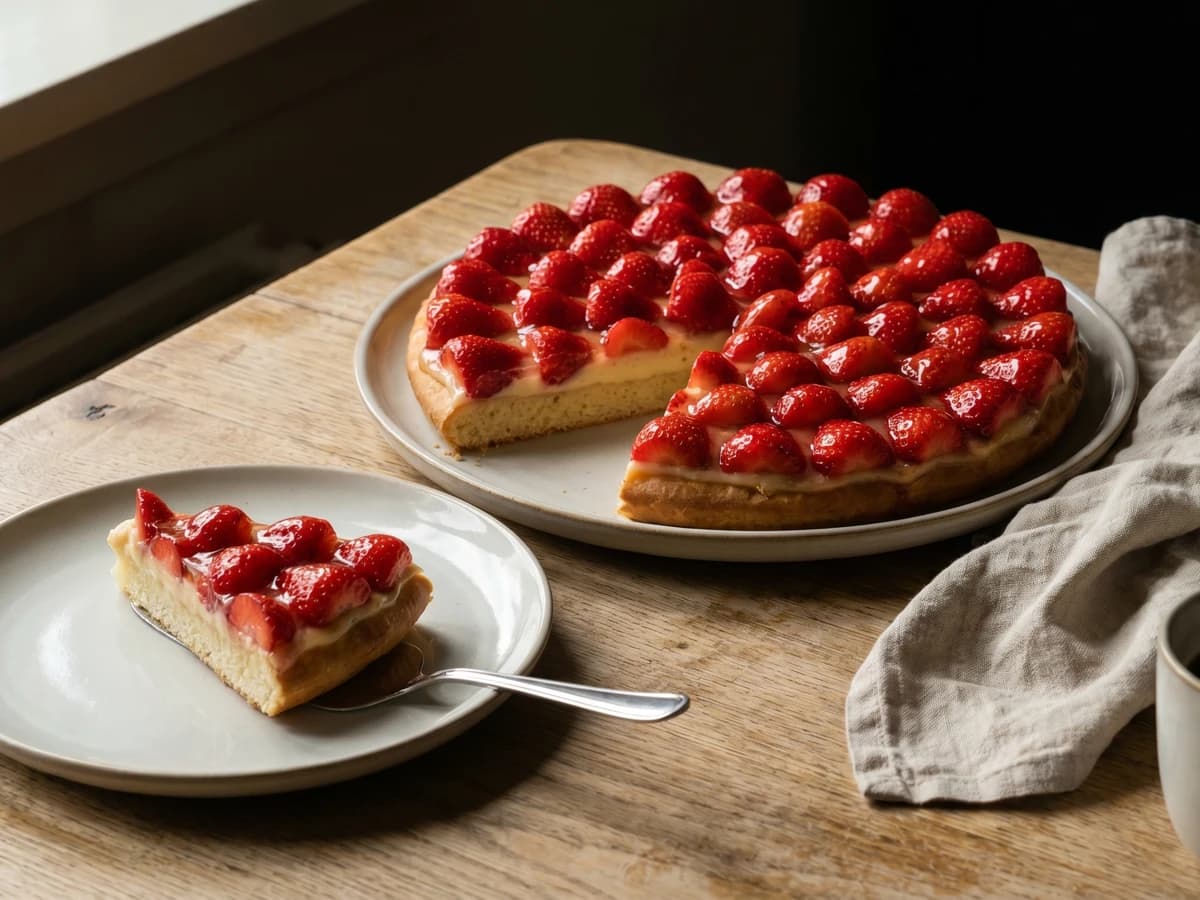
Aardbeienvlaai (Limburg Strawberry Vlaai)
The summer vlaai that politely breaks Limburg's baked-fruit rule: soft gistdeeg, cool pastry cream, and strawberries left fresh because June knows better than the oven.
A cooking platform built around craft, culture, and the stories behind what we eat.

Created by
Weesp hides its whole address inside these almond mops: sugared rounds with crisp bronze edges, chewy hearts, and just enough bitter almond to remind you that small towns keep serious secrets.
Some towns announce themselves with towers, harbours, and municipal confidence. Weesp, sitting on the Vecht just east of Amsterdam, does something better: it gives you a cookie small enough to disappear in two bites and stubborn enough to carry the town's name for centuries. That is good manners. Also good strategy.
The name already tells you almost everything, if you let it. Weesper means from Weesp, and mop, before modern Dutch made it a joke, was also an old baking word for a small, solid cake or biscuit. So no, these are not jokes from Weesp, though the misunderstanding has kept generations of schoolchildren entertained. They are almond-paste rounds, rolled in sugar, baked until the edges bronze and the middle stays soft, the sort of thing a town sends into the world instead of a speech.
But let me tell you a secret. The Dutch coffee table has always been more ambitious than outsiders notice. Almonds do not grow in Noord-Holland; sugar was once dear; bitter almond is a perfume from the merchant cupboard. Yet here they are, made domestic, modest, and entirely at home beside a small cup of coffee. History and cookery, they cannot be separated, even when the history is wearing a sugar crust.
What I want from you is restraint. Use real amandelspijs, Dutch almond paste, not marzipan. Add the egg slowly, chill the roll until it behaves, and pull the cookies from the oven while the centres still look a little pale. Hou het altijd simpel. A Weespermop should be crisp at the rim, chewy at the heart, and quiet enough that you take a second before admitting the first one has gone.
Weespermoppen belong to Weesp, the fortified town on the Vecht in Noord-Holland, where local bakers have long sold these almond-paste biscuits as a town specialty. The word mop is an older Dutch term for a small, firm cake or biscuit, so the name points to both place and form rather than to the modern meaning of joke. Their use of amandelspijs, sugar, egg, and bitter almond places them in the broader Dutch pastry tradition in which imported almonds became ordinary in festive and coffee-table baking.
Quantity
400g
room temperature
Quantity
1 large
beaten
Quantity
1 teaspoon
finely grated
Quantity
2 to 3 drops
Quantity
1/4 teaspoon
Quantity
60g
for rolling
| Ingredient | Quantity |
|---|---|
| amandelspijs (Dutch almond paste)room temperature | 400g |
| eggbeaten | 1 large |
| lemon zestfinely grated | 1 teaspoon |
| bitter almond extract | 2 to 3 drops |
| fine salt | 1/4 teaspoon |
| coarse sugarfor rolling | 60g |
Break the amandelspijs into a bowl and work it with a spoon or your hands until it softens. Add the beaten egg a little at a time, mixing until the paste becomes smooth and pliable but not wet. You may not need every last spoonful of egg; almond paste varies, and the bowl gets a vote.
Mix in the lemon zest, bitter almond extract, and salt. The bitter almond is there to sharpen the almond, not to announce itself from across the room, so use drops, not enthusiasm. The finished dough should hold together when pressed and leave your hands lightly oily from the almonds.
Divide the dough in two and roll each half into a log about 4 centimetres wide. Wrap the logs and chill them for at least 45 minutes, until firm. This cold rest is not fussiness; it gives you round slices and keeps the cookies from spreading into little almond puddles.
Heat the oven to 200C, or 180C fan, and line a baking tray with parchment. Roll each chilled log in the coarse sugar, pressing gently so the crystals cling, then cut into slices about 1.5 centimetres thick. Set them on the tray with a little space between them.
Bake for 10 to 12 minutes, until the rims are light bronze and the centres are still pale and soft-looking. Do not wait for the whole cookie to turn golden or you will have made almond paving stones, which Weesp has not requested. Let them cool on the tray for five minutes, then move them to a rack to set.
1 serving (about 22g)
Culinary guides, cultural storytelling, and the editorial depth that makes cooking meaningful.
Discover Culinary ExplorerChef Joost
The summer vlaai that politely breaks Limburg's baked-fruit rule: soft gistdeeg, cool pastry cream, and strawberries left fresh because June knows better than the oven.

Chef Joost
A Limburg vlaai is not a pie trying to be grand. It is a thin yeast-dough round, fruit-bright and generous, made for birthdays, coffee, and second slices.

Chef Joost
The December bakery counter made small: cold leafed pastry wrapped around lemon-scented amandelspijs, brushed gold, and scattered with almonds so one person gets the whole holiday in both hands.

Chef Joost
A thin Amsterdam cookie carrying a cog ship in its name: caramelized butter dough, almond nougatine, and a 1934 contest that turned municipal pride into something for coffee.