Chef Lesia
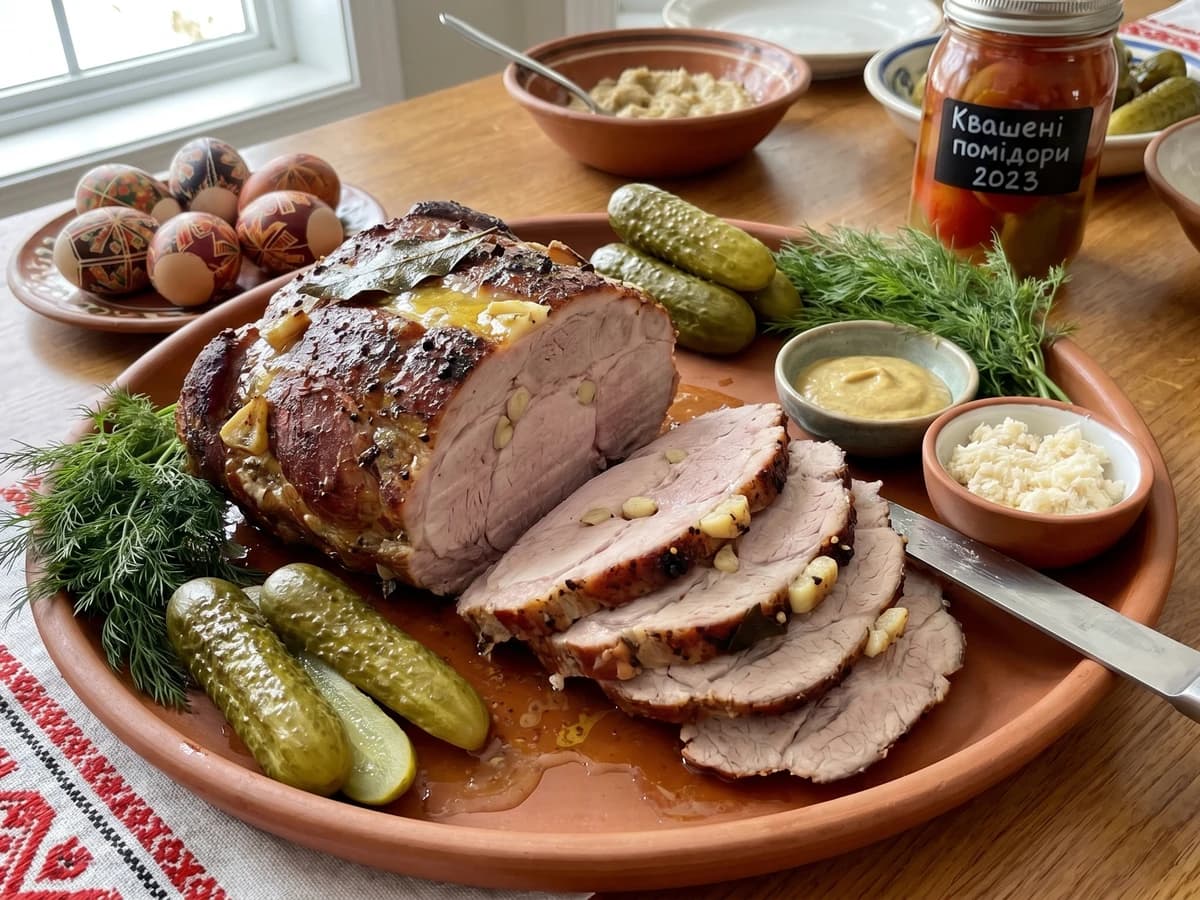
Buzhenyna (буженина, garlic-studded roast pork)
A whole pork neck takes garlic into little knife pockets, roasts until the crust goes dark and fragrant, then rests overnight so every cold slice tastes better than shop ham.
A cooking platform built around craft, culture, and the stories behind what we eat.

Created by
The Azov goby dries into amber: stiff, salty, sweet at the bone, a fish you tear by hand on a summer table and eat slowly.
The arresting thing is the color. Fresh goby is plain little fish, all blunt head and sand-colored skin, then salt and moving air turn it amber, stiff-backed, almost translucent at the fins. You don't dress this dish up. You tear it open with your fingers, pull the flesh away in strips, and let the salt make you thirsty.
This belongs to the Azov shore, to Berdiansk and the market stalls where dried fish hangs in bunches like weather. It is picnic food, train food, budget food, the thing uncles pretend they bought for everyone and then guard with one elbow. My father would say, "don't rush the fish, it has to learn the air," and that is the whole method: salt first, then patience, then a clean breeze.
The one why that decides the dish is drying after a full cure. Salt makes the fish safe and seasons it to the bone; the air changes the texture, tightening the flesh until it tears cleanly instead of crumbling. Use small fish, keep flies away, and don't dry in damp heat. This is simple food, not careless food.
Berdiansk goby from the Sea of Azov is listed by the Slow Food Ark of Taste as a regional product tied to the old fishing culture of Ukraine's southeastern coast. Goby became especially important around Azov market towns because it was cheap, abundant, and easy to preserve with salt and wind before refrigeration. The tradition sits in the same southern preservation logic as brined tomatoes, whole watermelons, and stuffed aubergines in the litnya kuhnia, the summer kitchen.
Quantity
2 kg
10 to 15 cm long
Quantity
220g
about 11 percent of the fish weight
Quantity
1 teaspoon
Quantity
2
Quantity
to serve
Quantity
to serve
| Ingredient | Quantity |
|---|---|
| very fresh small Azov goby or other small firm white fish10 to 15 cm long | 2 kg |
| coarse sea saltabout 11 percent of the fish weight | 220g |
| black peppercorns (optional) | 1 teaspoon |
| bay leaves (optional) | 2 |
| rye bread (optional) | to serve |
| cold cucumbers or fermented tomatoes (optional) | to serve |
If your fish is wild-caught or you don't know its handling history, freeze it first at -20C for at least 7 days, then thaw in the fridge. This is the modern caution I won't argue with. Salt and air do their work later, but parasites are handled by cold.
Rinse the gobies quickly under cold water and pat them dry. Fish under 12 cm can be cured whole, as they often are on the Azov shore; larger ones should be slit along the belly and gutted so the salt reaches the center cleanly. Pull out the gills if they smell bitter. The fish should smell of cold water, not mud.
Scatter a thick layer of salt in a non-reactive container, lay in the fish belly-side down, and salt between every layer. Add peppercorns and bay if you like, but quietly; this is fish and salt first. Set a plate on top with a small weight, cover, and refrigerate until the flesh firms and brine rises around it, usually 24 to 36 hours for small gobies.
Lift the fish from the brine, rinse off the surface salt, then soak in cold water for 30 to 60 minutes depending on how salty you like it. Taste a tiny bit from the thickest fish after soaking. It should be firmly seasoned, not burning your tongue.
Pat the fish very dry and lay it on a rack in the fridge, uncovered, until the skin feels tacky instead of wet. That tacky surface is what catches the air properly. Aunt Nadia would have written, "until it sounds right," and here the sound is your finger lifting from the skin with a little stick.
Thread kitchen string or skewers through the eyes or tail ends and hang the fish in a cool, shaded, well-ventilated place protected from insects. A screened balcony, a cool shed, or a fan blowing gently across a covered rack all work. Dry until the fish is stiff, amber at the fins, and bends only a little before it resists, usually 3 to 7 days depending on size, air, and weather.
Wrap the dried gobies loosely in parchment and refrigerate overnight so the salt settles through the flesh. To eat, crack the fish open with your hands, peel away the skin, and pull the flesh into strips. Serve with rye bread, cucumbers, fermented tomatoes, and enough napkins for eight guests or one hungry Ukrainian.
1 serving (about 115g)
Culinary guides, cultural storytelling, and the editorial depth that makes cooking meaningful.
Discover Culinary ExplorerChef Lesia
A whole pork neck takes garlic into little knife pockets, roasts until the crust goes dark and fragrant, then rests overnight so every cold slice tastes better than shop ham.

Chef Lesia
Small Azov gobies go into tomato bright as market cloth and come out soft enough that the bones give up. This is Mariupol food: cheap, red, generous, and better tomorrow.

Chef Lesia
The first sound is the meat against the board: flat, sharp, changing as the fibres loosen. Fry the cutlets fast, then let onion gravy do the soft finishing.

Chef Lesia
A heap of tiny silver fish becomes supper by the oldest Odesa trick: clean them, press them together, fry until the edges crackle, and let lemon and dill do the talking.