Chef Lesia
Buzhenyna (буженина, garlic-studded roast pork)
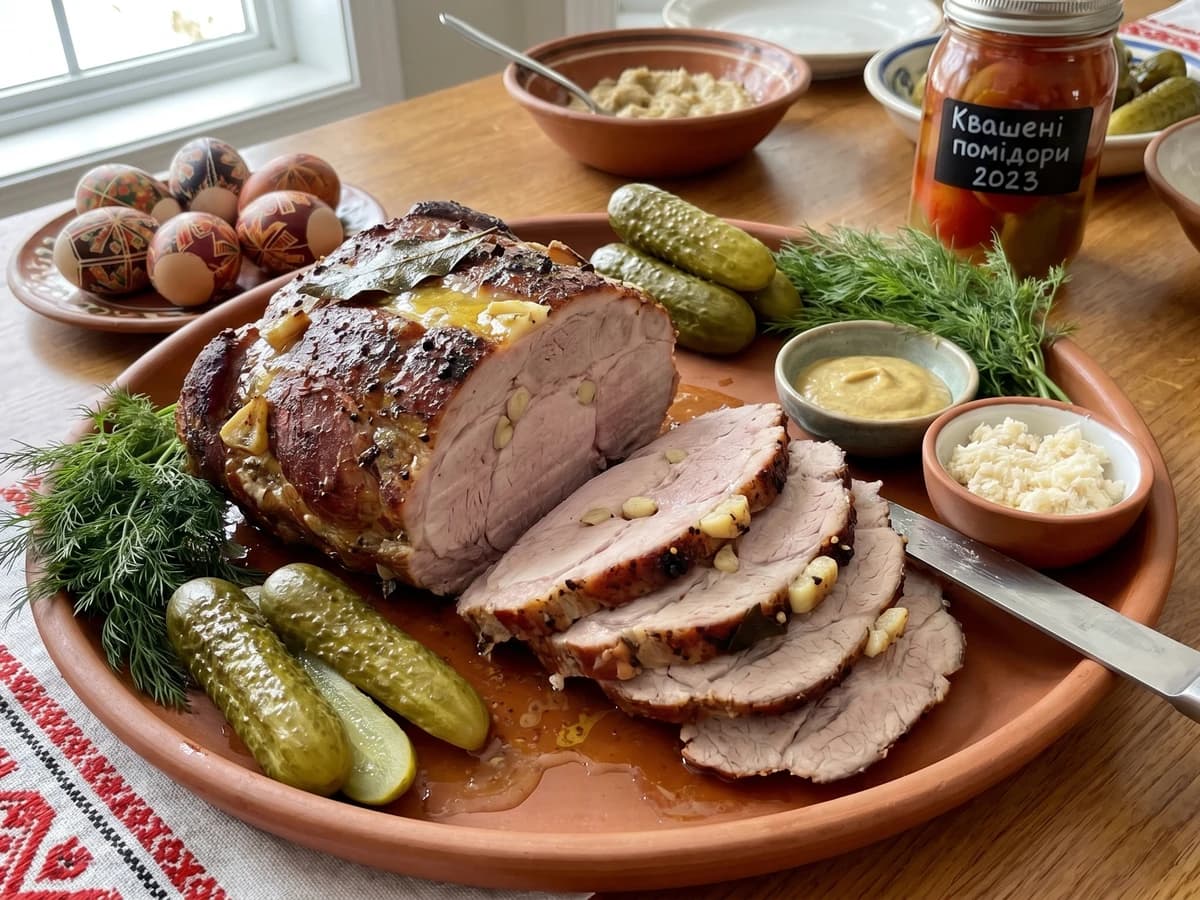
A whole pork neck takes garlic into little knife pockets, roasts until the crust goes dark and fragrant, then rests overnight so every cold slice tastes better than shop ham.
A cooking platform built around craft, culture, and the stories behind what we eat.
Created by
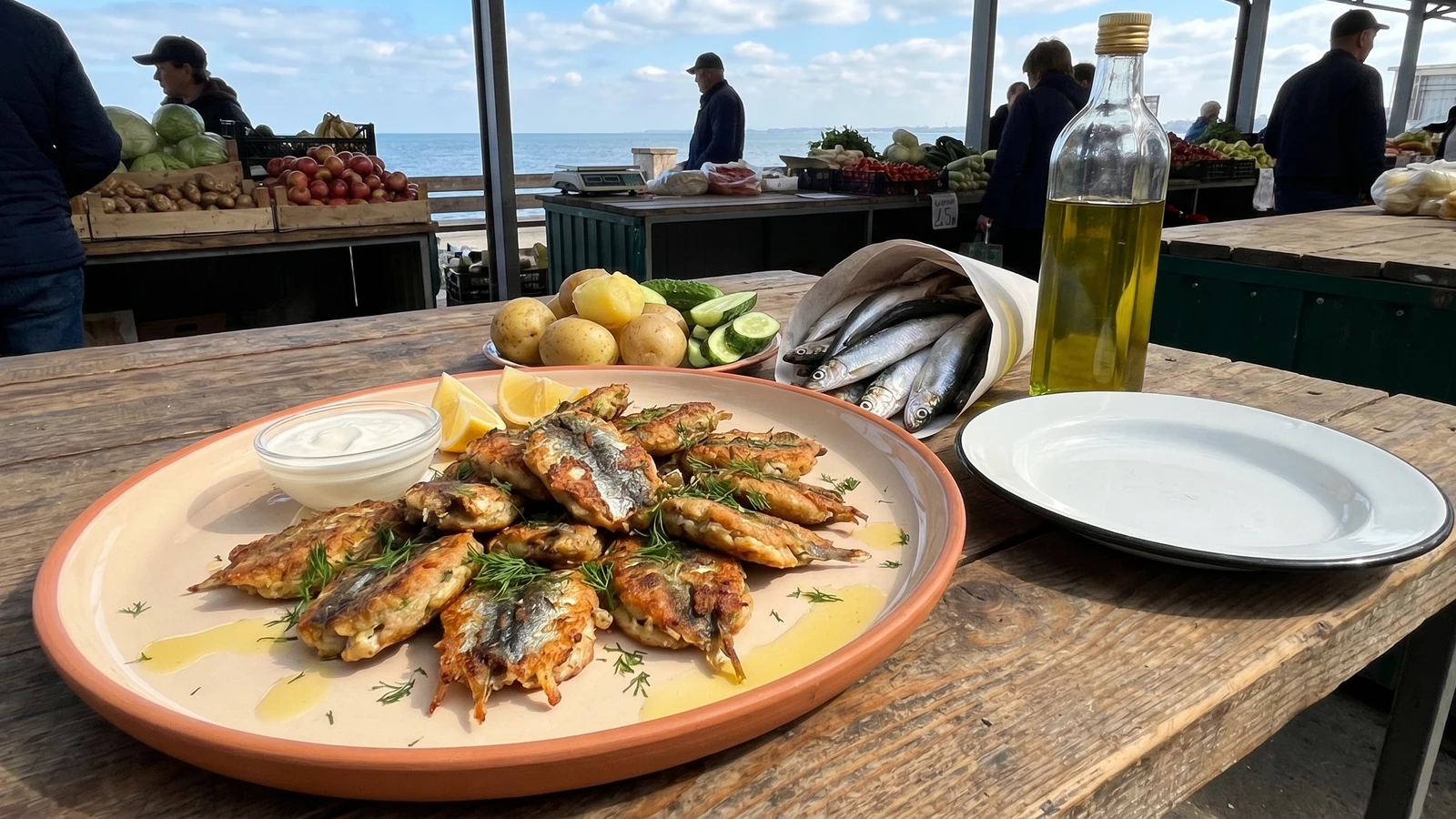
A heap of tiny silver fish becomes supper by the oldest Odesa trick: clean them, press them together, fry until the edges crackle, and let lemon and dill do the talking.
The first thing is the silver. Tyulka arrives in a heap of tiny bright bodies, all glitter and sea smell, and you look at it thinking this cannot possibly become dinner. Then your fingers learn the rhythm: head off, backbone out, two fillets opened like a little book, another, another, until the board is full and the pan is waiting.
Odesa knows what to do with a glut. These bytochky, little cutlets, are not minced smooth like factory fish cakes; they keep the fish visible, pressed into small ragged rounds with onion, egg, a little flour, and enough dill to make the whole thing smell green. The one thing that decides the dish is drying the fish well before it meets the batter. Wet tyulka steams and falls apart. Dry tyulka fries, catches at the edges, and tastes of the Black Sea instead of the bowl.
Aunt Nadia wrote only, "fry until it sounds right," which is deeply annoying and completely correct. At first the pan hisses loudly as moisture escapes; then the sound sharpens, the edges brown, and the smell changes from raw sea to nutty fried fish. That's your moment. Serve them hot or room temperature, with potatoes, cucumbers, smetana if you like, and lemon if the day asks for it.
Tyulka, the tiny Black Sea sprat, has long been a practical fish of Odesa and the southern coast: cheap when the catch was heavy, quick to salt, fry, or press into bytochky for a family meal. Odesa's cooking has always been a port kitchen, shaped by Ukrainian, Jewish, Bulgarian, Greek, and Bessarabian hands, and these cutlets show that city habit of making abundance useful without making it dull.
Quantity
1 kg
heads and backbones removed
Quantity
1 small
very finely grated
Quantity
2
Quantity
3 tablespoons, plus more for dredging
Quantity
2 tablespoons
Quantity
1 small bunch
finely chopped
Quantity
1 teaspoon, plus more to taste
Quantity
1/2 teaspoon
Quantity
for shallow frying
Quantity
to serve
Quantity
to serve
| Ingredient | Quantity |
|---|---|
| fresh tyulka, sprats, or whitebaitheads and backbones removed | 1 kg |
| onionvery finely grated | 1 small |
| eggs | 2 |
| plain flour | 3 tablespoons, plus more for dredging |
| fine breadcrumbs | 2 tablespoons |
| dillfinely chopped | 1 small bunch |
| sea salt | 1 teaspoon, plus more to taste |
| black pepper | 1/2 teaspoon |
| unrefined sunflower oil | for shallow frying |
| lemon wedges (optional) | to serve |
| smetana (optional) | to serve |
Rinse the tyulka quickly in cold water, then pull away the heads and lift out the backbones with your thumb. Open each fish into two small fillets still joined if they allow it. Don't fuss for perfection; these are tiny fish, and the pan forgives a little comedy.
Spread the cleaned fish on a towel or paper towel and pat until the surface feels barely tacky, not wet. This is the step that matters. Wet fish makes a tired cutlet; dry fish catches in the oil and gives you those crisp brown edges.
In a wide bowl, beat the eggs with the grated onion, flour, breadcrumbs, dill, salt, and pepper. Fold in the tyulka gently with your hands so the fish stays visible in the mixture. It should hold together when pressed, but still look like fish, not paste.
Dust your hands with flour and press the mixture into small flat cutlets, each about the width of your palm. Dredge lightly in flour and shake off the extra. They can look ragged. Ragged edges fry beautifully.
Warm a shallow layer of sunflower oil in a wide frying pan until a pinch of flour sizzles at once. Fry the bytochky in batches, giving them space, until the first side is deep golden at the edges and the pan sound changes from wet hiss to sharp crackle. Turn once and cook the second side until firm and browned.
Lift the cutlets onto a rack or paper towel, salt them while the oil still shines, and scatter over more dill. Serve with lemon wedges, boiled potatoes, cucumbers, and smetana if you want the cool against the salty fish.
1 serving (about 185g)
Culinary guides, cultural storytelling, and the editorial depth that makes cooking meaningful.
Discover Culinary ExplorerChef Lesia
A whole pork neck takes garlic into little knife pockets, roasts until the crust goes dark and fragrant, then rests overnight so every cold slice tastes better than shop ham.

Chef Lesia
Small Azov gobies go into tomato bright as market cloth and come out soft enough that the bones give up. This is Mariupol food: cheap, red, generous, and better tomorrow.

Chef Lesia
The first sound is the meat against the board: flat, sharp, changing as the fibres loosen. Fry the cutlets fast, then let onion gravy do the soft finishing.

Chef Lesia
This is the silver spring fish of the Danube Delta, rich enough to perfume your fingers, salted gently until silky, then laid under onion and green sunflower oil.