
Chef Lupita
Arroz a la Oaxaqueña
Oaxaca's red rice, stained with tomato and fried in lard, steamed with carrots, ejotes, black beans, and epazote. The side that anchors a Oaxacan family meal and earns its place beside the main.
A cooking platform built around craft, culture, and the stories behind what we eat.
Created by
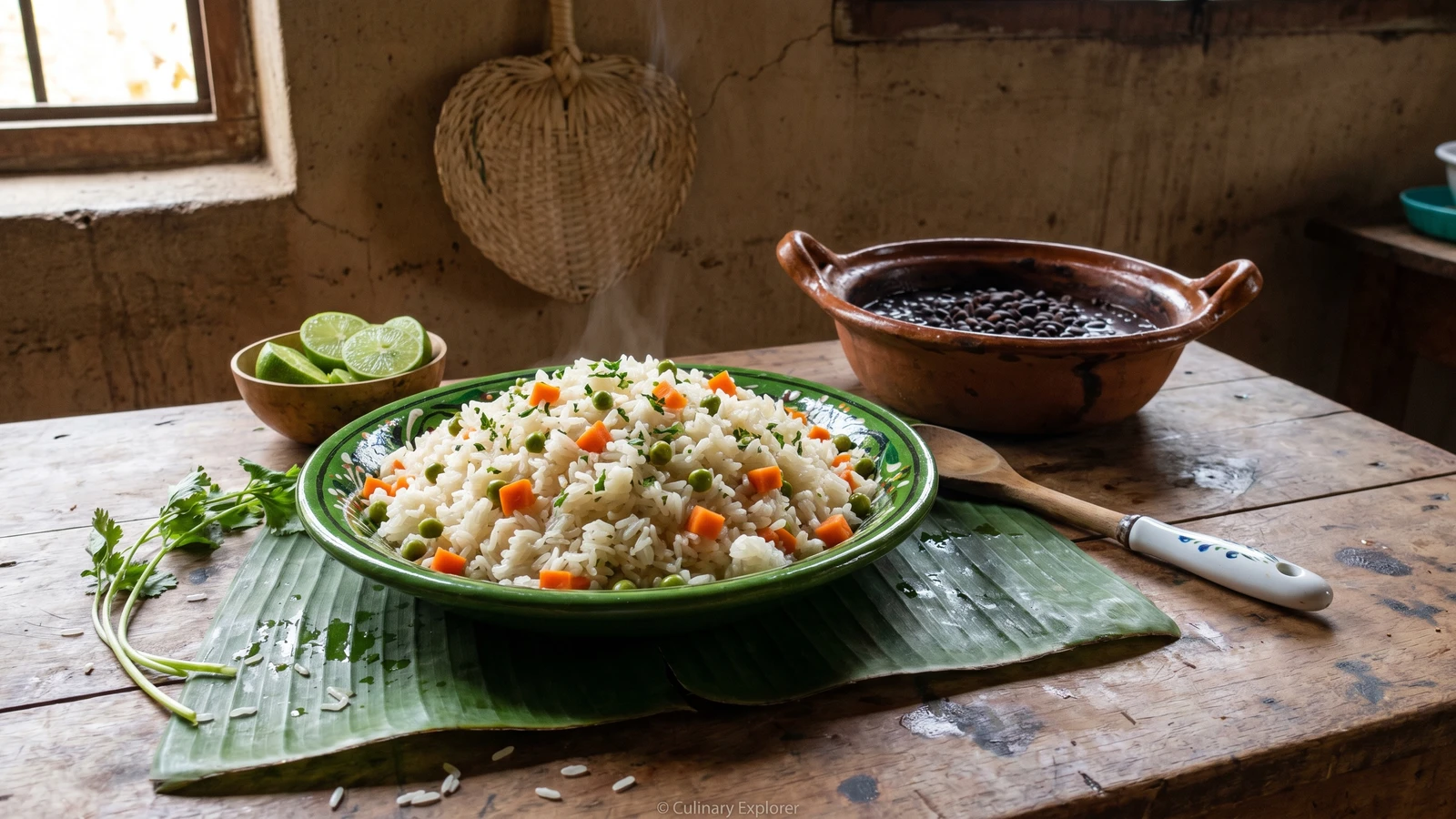
Veracruz's garden rice, white and loose, cooked with carrot, peas, garlic, onion, and perejil. The quiet side dish that knows how to stand beside fish.
Veracruz, especially the port and the humid kitchens of the Sotavento, knows how to put rice beside fish without making noise. This arroz a la Veracruzana is not red rice, and it is not trying to be paella. It is white grain cooked loose, with carrot, peas, garlic, onion, and perejil folded through it like a mercado garden.
I learned versions of this rice from women who served it with huachinango, black beans, fried plantain, and a spoonful of salsa made that morning. The parsley matters here. Veracruz has the Spanish Mediterranean hand in its kitchen, olives and capers in the fish, perejil in the rice, and still the Gulf tells you how to eat it: generous, humid, practical, on a clay plate from Jalapa or a cazuela from Naolinco.
The technique is simple only if you respect it. Wash the rice until the water runs clear. Fry it in a little manteca de cerdo until the grains turn opaque and separate. Add hot broth, cover it, and leave it alone. Stirring rice because you are nervous is how you make paste. No me vengas con atajos. Each grain should stand on its own. Cada estado, su propia cocina.
Rice entered Mexican cooking through Spanish colonial trade, and Veracruz, as the major Gulf port from the 16th century onward, absorbed rice dishes earlier and more deeply than many inland regions. The jardinera style, vegetables cut small and cooked through the grain, reflects Spanish domestic cooking adapted to Mexican markets, where carrot, peas, herbs, and local broths became household staples. In Veracruz, white garden rice often sits beside fish a la veracruzana, black beans, plantains, or yuca, showing the state's Spanish, Indigenous, and African food lines on one table.
Quantity
2 cups
Quantity
3 tablespoons
Quantity
1/2 medium
finely chopped
Quantity
2
finely chopped
Quantity
1 medium
peeled and cut into small dice
Quantity
1/2 cup
Quantity
3 cups
Quantity
1 1/4 teaspoons, plus more to taste
Quantity
1 small
Quantity
1/3 cup
chopped
Quantity
1
cut into halves, for the table
| Ingredient | Quantity |
|---|---|
| long-grain white rice | 2 cups |
| manteca de cerdo (pork lard) | 3 tablespoons |
| white onionfinely chopped | 1/2 medium |
| garlic clovesfinely chopped | 2 |
| carrotpeeled and cut into small dice | 1 medium |
| fresh or frozen peas | 1/2 cup |
| hot chicken broth or vegetable broth | 3 cups |
| kosher salt | 1 1/4 teaspoons, plus more to taste |
| bay leaf | 1 small |
| fresh perejil (flat-leaf parsley)chopped | 1/3 cup |
| lime (optional)cut into halves, for the table | 1 |
Put the rice in a bowl and cover it with cool water. Swirl it with your hand, drain, and repeat four or five times, until the water runs mostly clear. Drain well in a fine-mesh strainer for 10 minutes. This removes loose starch so the grains cook separate, not gummy. A Veracruz cook serving this beside fish wants loose rice, not a white brick.
Melt the manteca de cerdo in a wide heavy pot or cazuela over medium heat. Add the drained rice and stir for 4 to 5 minutes, until the grains turn opaque and start to sound dry against the pot. Do not brown it deeply. This is arroz blanco, not arroz rojo. La manteca es el sabor, and here it also coats each grain so it stays separate.
Add the onion, garlic, and diced carrot. Stir for 2 minutes, just until the onion softens and the garlic smells sweet. The carrot should stay bright. You are building a clean side dish for fish, not a heavy guiso.
Pour in the hot broth all at once. Add the salt, bay leaf, and peas. Stir once, scrape the bottom, and taste the liquid. It should taste slightly saltier than soup because the rice will absorb it. Bring it to a steady simmer.
Cover the pot tightly, lower the heat to the smallest flame, and cook for 15 minutes. Do not lift the lid. Do not stir. The rice is cooking by trapped heat and moisture now. If you open it every three minutes, you are letting the cooking escape. Así se hace y punto.
Turn off the heat and let the covered pot rest for 10 minutes. This rest finishes the center of the grain and lets the surface dry slightly. Remove the bay leaf. Fluff with a fork from the edges toward the center, gently, so you do not crush the rice.
Fold in the chopped perejil just before serving. The green should look fresh against the white rice, orange carrot, and peas. Serve family-style with lime halves on the table, beside huachinango a la veracruzana, black beans, fried plantains, or yuca. Saber cocinar es saber vivir.
1 serving (about 220g)
Culinary guides, cultural storytelling, and the editorial depth that makes cooking meaningful.
Discover Culinary ExplorerChef Lupita
Oaxaca's red rice, stained with tomato and fried in lard, steamed with carrots, ejotes, black beans, and epazote. The side that anchors a Oaxacan family meal and earns its place beside the main.

Chef Lupita
Sinaloa's home-cook white rice topped with cold cubes of cream cheese that soften into the warm grain, finished with crema and a sprinkle of chiltepin at the table. The trick that makes a side dish feel like a small luxury.

Chef Lupita
Sonora's white rice, toasted in butter and steamed with sweet corn and tender peas. The clean, quiet partner to a plate of carne asada, not the red rice of central Mexico.

Chef Lupita
Yucatán's white rice with sweet corn kernels, toasted in lard with garlic and onion. The quiet base that holds up against the peninsula's bold achiote-stained stews.