
Chef Lupita
Arroz a la Oaxaqueña
Oaxaca's red rice, stained with tomato and fried in lard, steamed with carrots, ejotes, black beans, and epazote. The side that anchors a Oaxacan family meal and earns its place beside the main.
A cooking platform built around craft, culture, and the stories behind what we eat.
Created by
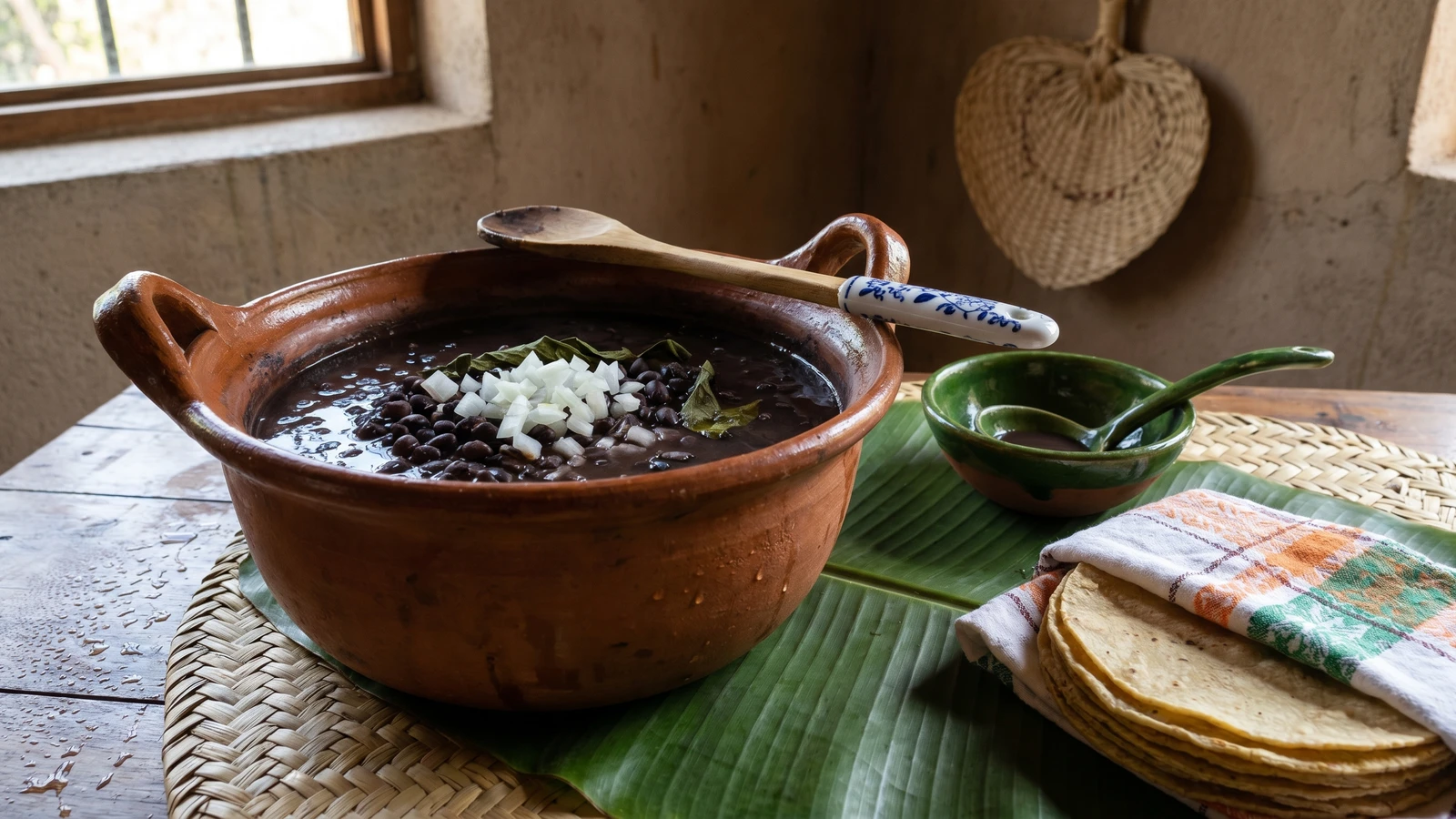
Veracruz's black bean pot, slow-simmered with epazote, white onion, and garlic until the broth turns inky, earthy, and serious enough to anchor rice, plantains, yuca, or tortillas.
Veracruz, from the Sotavento south toward Los Tuxtlas and up through the Gulf kitchens, knows the black bean. Not pinto. Not kidney. Black bean. This is the bean that sits beside arroz blanco, platanos fritos, yuca, eggs, fish, and tortillas in the jarocho house. Cada estado, su propia cocina.
The defining ingredient is epazote, that sharp green herb that smells like the mercado after the rain and makes the bean broth taste deeper than its short ingredient list suggests. Onion, garlic, water, beans, epazote, salt. That is the pot. No tomato. No cumin. No chile powder from a jar. Not all Mexican food is built on heat, and this dish proves it without making a speech.
In Veracruz I learned to watch the broth, not the clock. The women who make this well know when the liquid turns from thin purple to black and glossy, when the skin gives but the bean still holds its shape, when the epazote has perfumed the pot without taking it over. A clay olla helps because it holds heat gently, but a heavy pot will work if you pay attention.
My mother was from Jalisco, so black beans were not her daily bean. But in her notebook she wrote one Veracruz line in the margin: 'epazote late, salt later.' She was right. Saber cocinar es saber vivir.
Black beans have been cultivated in Mesoamerica for thousands of years alongside corn, squash, and chile, and Veracruz's Gulf lowlands made them central to daily cooking because they store well in humid coastal households and pair naturally with plantain, yuca, rice, and fish. Epazote, a native Mexican herb used since pre-Columbian times, remained in bean cookery because its resinous flavor cuts through the earthy broth and because Indigenous cooks valued it in legume preparations long before European fat entered the kitchen. Veracruz's table carries Totonac, Huastec, Spanish, and Afromestiza lines at once: the black bean pot sits beside corn tortillas, Mediterranean rice dishes, and plantains from the Afro-Caribbean Gulf vocabulary.
Quantity
1 pound
picked over and rinsed
Quantity
8 cups, plus more as needed
Quantity
1/2 medium
Quantity
4
peeled and lightly crushed
Quantity
2 large
Quantity
1 tablespoon, plus more to taste
Quantity
2 tablespoons
optional for serving or refrying
Quantity
for serving
Quantity
for serving
| Ingredient | Quantity |
|---|---|
| dried black beanspicked over and rinsed | 1 pound |
| water | 8 cups, plus more as needed |
| white onion | 1/2 medium |
| garlic clovespeeled and lightly crushed | 4 |
| fresh epazote sprigs | 2 large |
| kosher salt | 1 tablespoon, plus more to taste |
| manteca de cerdo (optional)optional for serving or refrying | 2 tablespoons |
| diced white onion (optional) | for serving |
| warm corn tortillas (optional) | for serving |
Spread the black beans on the table and pick through them with your fingers. Remove stones, broken bits, and anything that does not belong in the pot. Rinse them until the water runs clear. This is kitchen work, not decoration. A Veracruz cook does not skip it because one small stone can ruin dinner.
Put the beans in a large bowl and cover with water by at least three inches. Let them soak 8 hours or overnight. In the Gulf heat, keep the bowl in the refrigerator if your kitchen runs warm. Soaking is not weakness. It helps the beans cook evenly and keeps the skins from splitting before the centers soften.
Drain the soaked beans and place them in a clay olla or heavy pot. Add 8 cups fresh water, the white onion, and the crushed garlic. Bring to a gentle simmer over medium heat. Do not add the salt yet. Salt too early can tighten the skins when the beans are old, and you will stand there wondering why they refuse to soften.
Lower the heat so the beans move quietly in the pot. Cover partially and cook for 1 hour, checking every 20 minutes. The beans should stay covered by about one inch of liquid. Add hot water as needed, never cold, because cold water shocks the simmer and slows the cooking. The broth will begin to darken from gray-purple to deep black.
When the beans are mostly tender but still a little firm at the center, add the fresh epazote sprigs. Cook 30 to 45 minutes more. Epazote goes in late because its flavor is sharp and green, and you want it alive in the broth, not boiled into nothing. This is the herb that tells you these are frijoles negros de olla, not anonymous beans.
Add 1 tablespoon kosher salt and simmer 15 minutes more, until the beans are creamy inside and the broth is glossy, dark, and earthy. Taste the broth, not just the bean. It should taste seasoned enough to eat from a spoon. Remove the onion, garlic, and epazote stems if they bother you. I leave them in until serving because they earned their place.
Ladle the beans with plenty of broth into clay bowls. Add diced white onion at the table if you want it. Serve with warm corn tortillas, white rice, platanos fritos, yuca frita, or eggs. If you refry the leftovers tomorrow, use manteca de cerdo. La manteca es el sabor, and in Veracruz nobody needs a lecture about that.
1 serving (about 315g)
Culinary guides, cultural storytelling, and the editorial depth that makes cooking meaningful.
Discover Culinary ExplorerChef Lupita
Oaxaca's red rice, stained with tomato and fried in lard, steamed with carrots, ejotes, black beans, and epazote. The side that anchors a Oaxacan family meal and earns its place beside the main.

Chef Lupita
Sinaloa's home-cook white rice topped with cold cubes of cream cheese that soften into the warm grain, finished with crema and a sprinkle of chiltepin at the table. The trick that makes a side dish feel like a small luxury.

Chef Lupita
Sonora's white rice, toasted in butter and steamed with sweet corn and tender peas. The clean, quiet partner to a plate of carne asada, not the red rice of central Mexico.

Chef Lupita
Yucatán's white rice with sweet corn kernels, toasted in lard with garlic and onion. The quiet base that holds up against the peninsula's bold achiote-stained stews.