
Chef Lupita
Arroz a la Oaxaqueña
Oaxaca's red rice, stained with tomato and fried in lard, steamed with carrots, ejotes, black beans, and epazote. The side that anchors a Oaxacan family meal and earns its place beside the main.
A cooking platform built around craft, culture, and the stories behind what we eat.
Created by
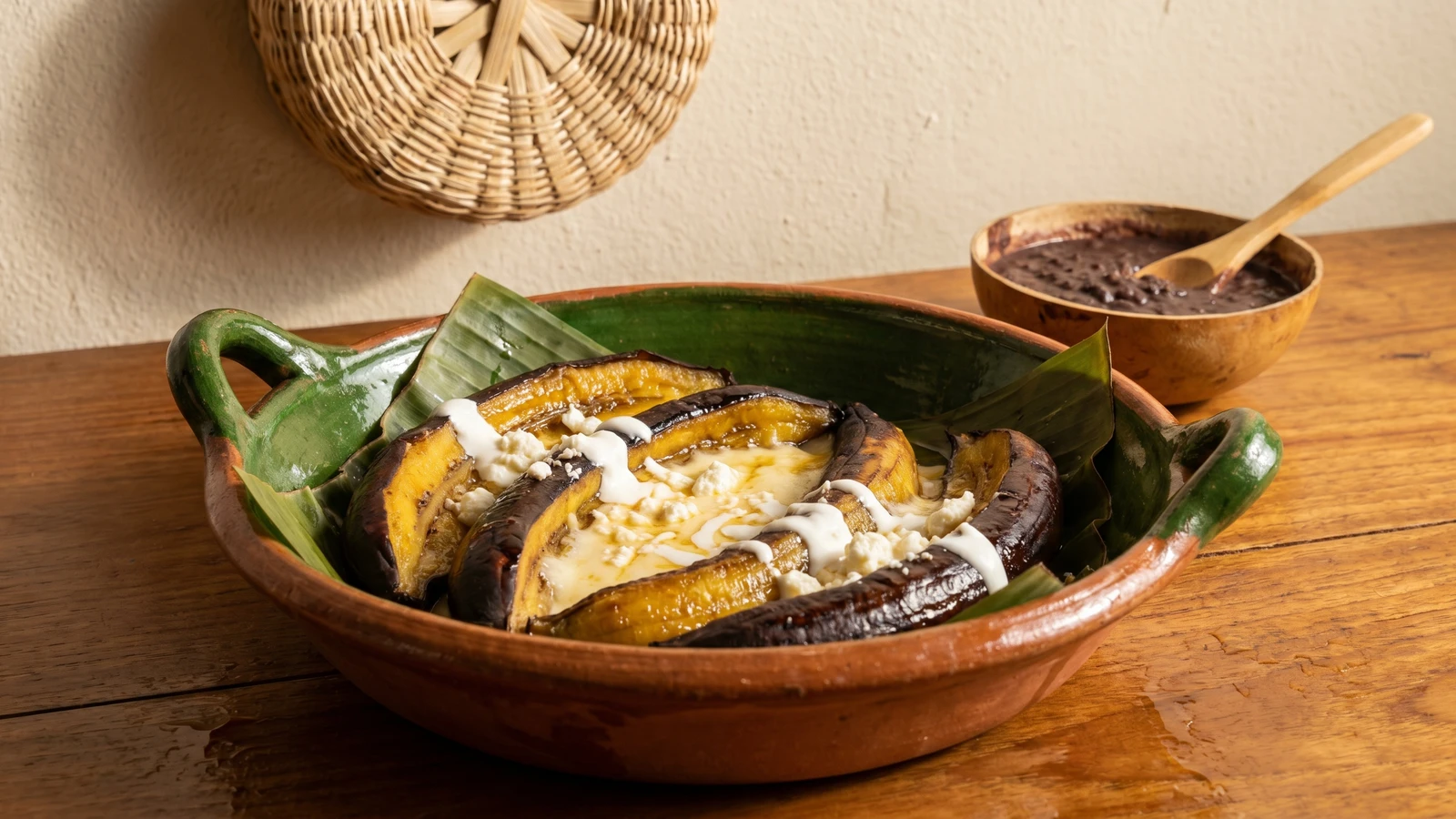
Veracruz's Gulf lowland plantains, baked in the peel until their own sugars collapse, split open with melting queso Chihuahua, crema, and the quiet discipline of a Sotavento kitchen.
Veracruz, especially the Gulf lowlands from the Sotavento down toward Los Tuxtlas, understands plantain better than the highland kitchens that reach first for potato. This is platanos al horno, ripe plantains baked whole in their skins until the flesh collapses into sweetness, then opened and filled with cheese and crema. The black skin is not a mistake. It is the sign that the fruit is ready to work.
This dish lives in the same kitchen vocabulary as yuca, malanga, black beans, and plantains fried in manteca de cerdo. That is the Afromestiza line of southern Veracruz, mixed with Indigenous Gulf ingredients and the Spanish habit of bringing dairy to the table. Cada estado, su propia cocina. In Veracruz, the black bean rules, the plantain belongs on the plate, and not everything needs a chile to prove it is Mexican.
I learned this version from a woman near Tlacotalpan who baked the plantains in a clay dish blackened at the edges and served them beside refried black beans. She used local queso de hebra when she had it. I use queso Chihuahua here because it melts reliably and gives the same clean dairy pull, but understand the compromise. The principle is the same: the fruit must be fully ripe, the cheese must melt, and the crema goes on at the end, not before. Saber cocinar es saber vivir.
Plantains arrived in Mexico through colonial trade routes tied to the Caribbean and the Atlantic world, and Veracruz became one of the states where they took deepest root because of its port, tropical climate, and African presence in the Sotavento. By the 18th and 19th centuries, plantains, yuca, and malanga were common in the Gulf lowland kitchen, especially in areas with Afromestiza communities. Baked ripe plantains with cheese show that Veracruz side dishes are not only chile and corn: they also carry the sweet-savory tropical vocabulary of the Gulf coast.
Quantity
6
left unpeeled, washed and dried
Quantity
1 tablespoon
softened, for greasing the baking dish
Quantity
8 ounces
cut into thick strips or grated
Quantity
1/2 cup
Quantity
1/2 teaspoon
Quantity
1 tablespoon
finely grated, only if the plantains are not fully black
Quantity
2 tablespoons
crumbled for finishing
| Ingredient | Quantity |
|---|---|
| very ripe black-skinned plantainsleft unpeeled, washed and dried | 6 |
| manteca de cerdosoftened, for greasing the baking dish | 1 tablespoon |
| queso Chihuahuacut into thick strips or grated | 8 ounces |
| Mexican crema | 1/2 cup |
| fine sea salt | 1/2 teaspoon |
| piloncillo (optional)finely grated, only if the plantains are not fully black | 1 tablespoon |
| queso fresco (optional)crumbled for finishing | 2 tablespoons |
Use plantains with skins that are mostly black and soft when pressed. Not yellow with a few spots. Black. In Veracruz, a green plantain goes to tostones or soup. A ripe plantain goes sweet, soft, and generous. If yours are still firm, leave them on the counter another two or three days. The market decides the recipe.
Heat the oven to 375F. Rub a clay cazuela, small earthenware baking dish, or heavy ovenproof skillet with the manteca de cerdo. You are not frying here, so you need only enough fat to keep the skins from sticking and to perfume the bottom of the dish. La manteca es el sabor.
Lay the whole unpeeled plantains in the dish with space between them. Bake for 25 to 30 minutes, turning once halfway through, until the skins turn glossy black and the fruit inside feels collapsed and tender. The peel protects the flesh and keeps the sugar from burning. This is why you bake them whole. No me vengas con atajos.
Pull the dish from the oven. With a small knife, make one long slit down each plantain, cutting through the skin and into the flesh without cutting all the way through. Open each one gently like a canoe. Sprinkle the inside with a small pinch of salt. If the plantains were not fully black, add a light dusting of grated piloncillo. If they were ripe enough, they do not need help.
Tuck the queso Chihuahua into the split plantains, dividing it evenly. Return the dish to the oven for 5 to 7 minutes, until the cheese softens and melts into the hot fruit. Queso Chihuahua melts cleanly and gives you the pull you want. In Veracruz markets, some cooks use queso de hebra instead. Use what melts well and tastes like milk, not orange supermarket cheese.
Spoon Mexican crema over the hot plantains just before serving. Add a little crumbled queso fresco if you want a salty finish against the sweet flesh. Serve in the cazuela, family-style, with a spoon for the soft plantain and melted cheese. This is not dessert pretending to be dinner. This is a Gulf side dish, sweet, salty, and practical. Asi se hace y punto.
1 serving (about 230g)
Culinary guides, cultural storytelling, and the editorial depth that makes cooking meaningful.
Discover Culinary ExplorerChef Lupita
Oaxaca's red rice, stained with tomato and fried in lard, steamed with carrots, ejotes, black beans, and epazote. The side that anchors a Oaxacan family meal and earns its place beside the main.

Chef Lupita
Sinaloa's home-cook white rice topped with cold cubes of cream cheese that soften into the warm grain, finished with crema and a sprinkle of chiltepin at the table. The trick that makes a side dish feel like a small luxury.

Chef Lupita
Sonora's white rice, toasted in butter and steamed with sweet corn and tender peas. The clean, quiet partner to a plate of carne asada, not the red rice of central Mexico.

Chef Lupita
Yucatán's white rice with sweet corn kernels, toasted in lard with garlic and onion. The quiet base that holds up against the peninsula's bold achiote-stained stews.