
Chef Takumi
Awamori Mizuwari (泡盛水割り, awamori with water)
Awamori mizuwari is not a trick of the bar. It is three parts awamori, seven parts cold water, and enough patience to let the black-kōji aroma open.
A cooking platform built around craft, culture, and the stories behind what we eat.
Created by
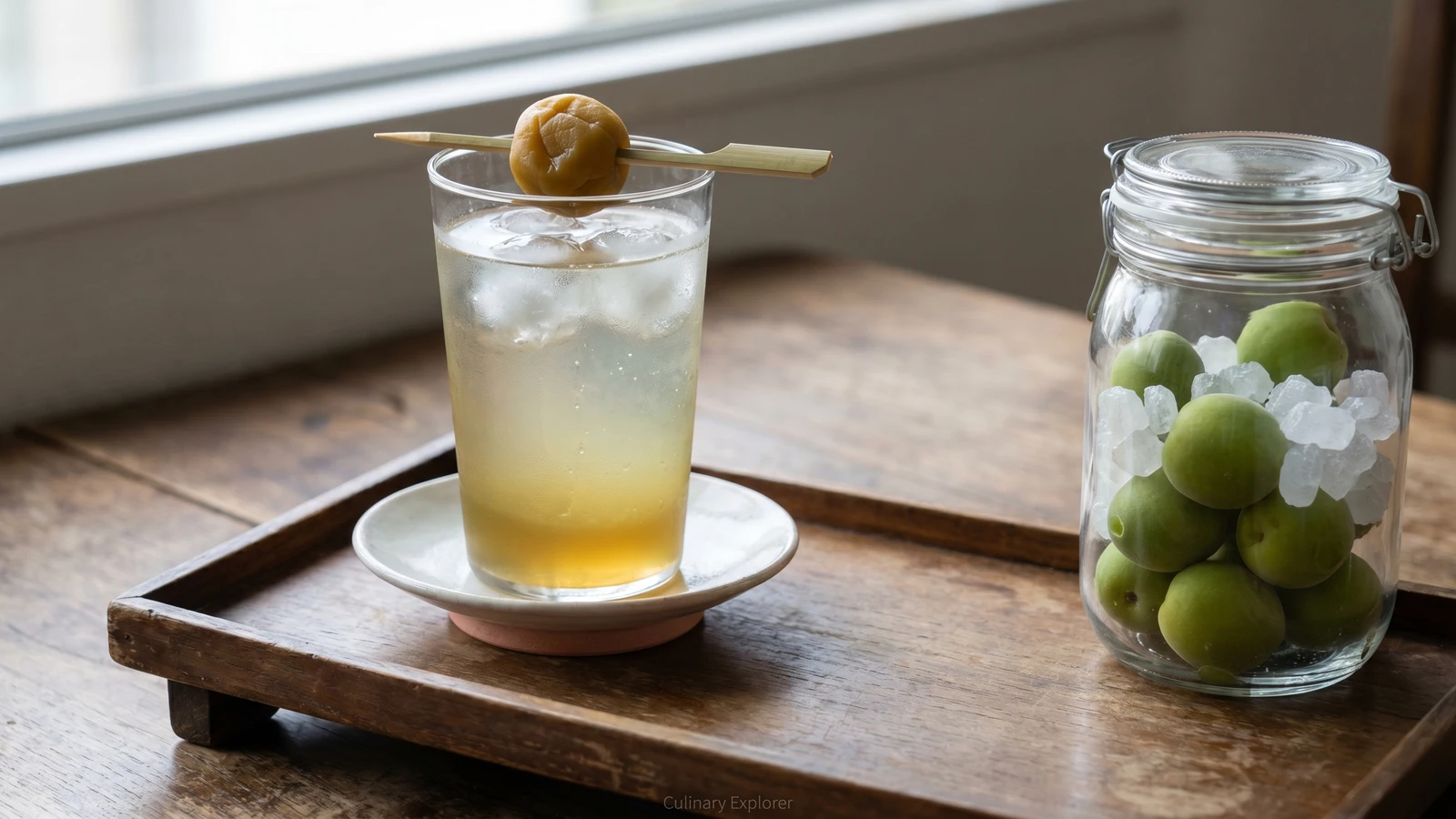
Green ume, rock sugar, a clean jar, and patience. Three quiet weeks pull a bright sour syrup from the fruit, ready for cold soda when summer asks for mercy.
Green ume come to market for a short, bossy season, late May into June, still hard, sour, and bright under the skin. This is their 旬 (shun), the moment they're at their prime, and it doesn't wait politely while we look for a prettier weekend. Buy them firm, green, and unbruised. If they're soft or browned, change the plan. Nothing hidden.
Ume syrup looks like a trick because no cooking begins it. Equal weights of fruit and kōri-zatō, Japanese rock sugar, sit together in a clean jar while the sugar slowly draws the sharp juice out of the ume. That slow melting matters. Rock sugar doesn't flood the jar at once; it coaxes the fruit, and the syrup comes out clear, fragrant, and tart enough to wake up a glass of cold soda.
The one detail that decides it is dryness. Wash the fruit, yes, but then dry it completely and make the jar clean enough to make you feel slightly foolish. Water sitting in the stem end is where mold starts, and mold is not a philosophical problem. It's a reason to begin again. Keep the jar cool and dark, turn it every day, and in three weeks you'll have honmono in a bottle: Japanese summer, sour and sweet, made without fuss.
Ume reached Japan from China by the Nara period, and the eighth-century Man'yōshū contains more poems on ume blossom than on cherry blossom, a sign of how early the tree entered cultivated taste. The early-summer preserving work now called umeshigoto gathers around the short June season, when green fruit is turned into umeboshi, umeshu, and nonalcoholic syrups before the heat settles in. Ume syrup follows the same household logic as umeshu but leaves out the shōchū: sugar alone draws out the fruit's sour juice and perfume.
Quantity
1 kg
unblemished, washed, stems removed, and dried
Quantity
1 kg
Quantity
100 ml
Quantity
4 to 5 parts to 1 part syrup
Quantity
as needed
| Ingredient | Quantity |
|---|---|
| firm green ume (ao-ume)unblemished, washed, stems removed, and dried | 1 kg |
| kōri-zatō (Japanese rock sugar) | 1 kg |
| rice vinegar (komezu) (optional) | 100 ml |
| cold soda water or chilled water (optional) | 4 to 5 parts to 1 part syrup |
| ice cubes (optional) | as needed |
Choose firm green ume with tight skin and no bruises, brown patches, or soft spots. They should smell faintly sharp and green, not sweet like ripe plums. Yellow ume will make a softer, more perfumed syrup, but this bright summer drink belongs to the green fruit.
Rinse the ume gently in cool water, then drain them well. Pick out the little brown stem plug from each fruit with a bamboo skewer or toothpick, then dry every ume with a clean towel and leave them spread out until no moisture remains. The stem end holds water, and water is where mold begins.
Use a 3 to 4 liter glass preserving jar with a tight lid. Wash it well, rinse it with boiling water if the jar can take heat, then let it dry completely. Wipe the inside with food-safe alcohol or shōchū if you have it. The syrup sits for weeks, so cleanliness is part of the recipe, not housekeeping.
Put a layer of rock sugar in the bottom of the jar, add a layer of ume, and continue layering until both are used, finishing with sugar on top. If using rice vinegar, pour it down the inside wall of the jar. The sugar draws juice by osmosis, and the large crystals dissolve slowly enough to keep the extraction steady.
Seal the jar and keep it in a cool, dark place. Once a day, roll and tilt the jar so the forming syrup washes over the fruit and sugar. Don't shake hard. You want to wet the surface evenly, not bruise the ume. After a few days, the bottom will hold clear syrup and the fruit will begin to wrinkle.
Let the jar stand for about 2 to 3 weeks, until most of the sugar has dissolved and the ume look wrinkled and spent. If the lid hisses or the syrup bubbles actively, fermentation has begun. It can be stopped by straining and heating the syrup at once. If you see fuzzy mold or smell rot, discard it and begin again with cleaner fruit and a drier jar.
Strain the syrup through a fine sieve into a saucepan and remove the ume. Heat the syrup gently to about 80 C and hold it there for 5 minutes, skimming any pale foam. Don't boil it hard. A hard boil dulls the ume fragrance and darkens the syrup, while gentle heat is enough to quiet fermentation.
Pour the hot syrup into clean bottles, cool it, and refrigerate. To serve, mix 1 part syrup with 4 or 5 parts cold soda water or chilled water over ice. Taste before adding more syrup. It should be bright and sour first, sweet second.
1 serving (about 310g)
Culinary guides, cultural storytelling, and the editorial depth that makes cooking meaningful.
Discover Culinary ExplorerChef Takumi
Awamori mizuwari is not a trick of the bar. It is three parts awamori, seven parts cold water, and enough patience to let the black-kōji aroma open.

Chef Takumi
Hot awamori asks for one small discipline: pour the hot water first, then the spirit. Do that, and the glass turns round, fragrant, and calmer than its strength suggests.

Chef Takumi
Bancha is the honest daily cup: late-season leaves, hot water, a short steep, and a clean amber-green liquor that asks for no ceremony to be good.

Chef Takumi
Whole black soybeans, roasted until their skins split, make a clear amber tea with a roasted sweetness and no caffeine. Drink it plain, then eat the softened beans while they still hold their warmth.