Chef Lupita
Birria Tacos with Consome
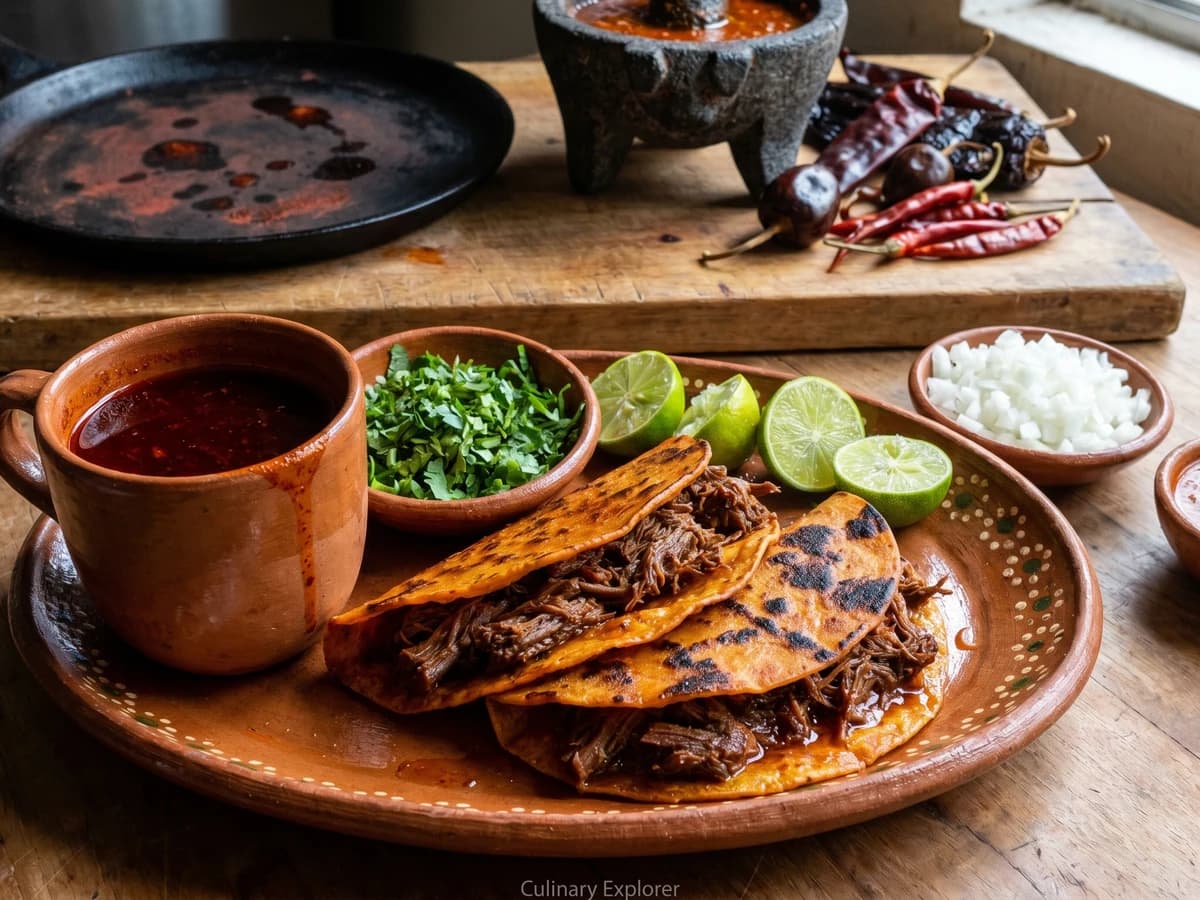
Jalisco's goat birria, born around Cocula and carried into Guadalajara's markets, slow-braised in ancho, guajillo, cascabel, and chile de arbol, then tucked into corn tortillas crisped in its own red fat.
A cooking platform built around craft, culture, and the stories behind what we eat.

Created by
La Paz's meal-portion tostada, smoked marlin sauteed with white onion, tomato, and chile guero, piled on a crisp corn tostada with avocado, crema, and a hard squeeze of lime.
This is from Baja California Sur. La Paz, specifically. The malecon, the boats coming in at dawn, the smokehouses behind the marisquerias where the marlin from the Sea of Cortez gets cold-smoked over mesquite the same morning it is caught. If you have never eaten a marlin tostada at a sidewalk table in La Paz with the wind off the bay coming through the palms, you have not eaten this dish. You have eaten a version of it.
Marlin ahumado is the ingredient. Everything else is supporting it. The fish does not get cured at the table or seasoned heavily. It gets sauteed gently with white onion, ripe tomato, and chile guero, the bright yellow chile that grows in Sudcalifornia and gives the guiso its particular sunny heat. Olives and capers are not Mediterranean affectation. They are how the senoras in La Paz have made it for generations, the legacy of the Mediterranean fishermen who settled the coast and the Spanish trade that ran through the peninsula.
The tostada itself has to be thick and well-fried. A thin tostada turns to mush under the marlin and ruins the entire architecture of the dish. You want something that crunches loudly under your teeth and holds the weight of a full scoop of guiso, a fan of avocado, and a thread of crema without folding. La cocina no es decoracion, es trabajo. This is a tostada you eat over a plate, leaning forward, with napkins.
My mother never made this. It was not from her Jalisco. I learned it from a senora named Olga in a small marisqueria off the malecon in La Paz the first summer I traveled the peninsula with my recorder and notebook. She used a wooden spoon to break up the marlin in the pan and told me, without looking up: 'No me vengas con atajos. La marlin tiene que ser ahumada de aqui.' The marlin has to be smoked from here. Cada estado, su propia cocina.
Smoked marlin entered La Paz's local cuisine in the mid-20th century as a practical response to the sport-fishing boom that brought striped marlin and blue marlin into Baja California Sur's commercial catch in volumes that exceeded what fresh markets could absorb. Cold-smoking over mesquite, a preservation technique adapted from northern Mexican meat traditions, allowed coastal fishing families to extend the catch and gave rise to the marlin tostada as a portable, filling working-class meal. The inclusion of green olives and capers reflects the broader Mediterranean influence on Baja Sur's coastal cooking, traceable to Italian and Spanish fishermen and traders who settled along the Sea of Cortez in the 19th century, leaving culinary fingerprints that distinguish Sudcaliforniano cuisine from the seafood traditions of Sinaloa and Nayarit further south.
Quantity
12 ounces
shredded by hand into small flakes
Quantity
3 tablespoons
Quantity
1 medium
finely diced
Quantity
3
finely chopped
Quantity
3 medium
finely diced
Quantity
2
stemmed, seeded, and finely diced
Quantity
2 tablespoons
pitted and roughly chopped
Quantity
1 tablespoon
drained
Quantity
1 tablespoon, plus more to taste
Quantity
1 teaspoon
crumbled between your fingers
Quantity
to taste
Quantity
to taste
Quantity
6
freshly fried or store-bought
Quantity
1
sliced
Quantity
1/2 cup
Quantity
1
sliced into thin half-moons
Quantity
for serving
Quantity
for serving
| Ingredient | Quantity |
|---|---|
| smoked marlinshredded by hand into small flakes | 12 ounces |
| olive oil | 3 tablespoons |
| white onionfinely diced | 1 medium |
| garlic clovesfinely chopped | 3 |
| Roma tomatoesfinely diced | 3 medium |
| fresh chile guero (yellow chile)stemmed, seeded, and finely diced | 2 |
| green olivespitted and roughly chopped | 2 tablespoons |
| capersdrained | 1 tablespoon |
| fresh lime juice | 1 tablespoon, plus more to taste |
| dried Mexican oreganocrumbled between your fingers | 1 teaspoon |
| kosher salt | to taste |
| black pepper | to taste |
| thick corn tostadasfreshly fried or store-bought | 6 |
| ripe Hass avocadosliced | 1 |
| crema mexicana | 1/2 cup |
| small cucumber (optional)sliced into thin half-moons | 1 |
| salsa de chile de arbol (optional) | for serving |
| lime wedges (optional) | for serving |
Pull the smoked marlin apart by hand into small, irregular flakes. Hand-shredding matters here. A knife crushes the fibers and gives you wet pulp instead of the loose, separate strands that hold the sauce. If your marlin came in a thick block, peel away any dark, oily skin first. That part turns bitter when it hits a hot pan.
Heat the olive oil in a wide skillet over medium. Add the onion with a small pinch of salt and cook for four to five minutes until translucent and just starting to turn gold at the edges. Add the garlic and cook one minute more, stirring, until fragrant. Do not brown the garlic. Burned garlic will follow the dish all the way to the table.
Add the diced tomato and chile guero to the pan. Cook for six to eight minutes, stirring often, until the tomato breaks down into a loose sauce and the liquid mostly cooks off. The chile guero is the chile of Sudcalifornia for this dish: bright, fruity, with mild heat that does not bury the smoke of the marlin. Jalapeno is a compromise, not an upgrade.
Add the shredded marlin, the chopped olives, and the capers. Stir gently to coat every flake in the sofrito. Cook for three or four minutes, just long enough to warm the marlin through and let the smoke fold into the tomato. The fish is already cooked. You are not trying to brown it. You are marrying flavors.
Pull the pan off the heat. Add the lime juice and the crumbled oregano. Taste. Smoked marlin carries its own salt, so go carefully here. Add salt and black pepper only if it needs them. The mixture should be moist but not wet, savory and smoky with a clean lift from the lime. Asi se hace y punto.
Spread a thin layer of crema mexicana across each tostada. Pile the warm marlin guiso generously on top, almost to the edge. La Paz tostadas are not delicate composed plates. They are a meal. Lay two or three slices of avocado over the marlin, fan a few cucumber half-moons on the side, and finish with a small spoonful of salsa de chile de arbol for the people who want it. Serve with lime wedges and eat them with your hands. The tostada will crack at the third bite. That is the dish telling you it is done right.
1 serving (about 315g)
Culinary guides, cultural storytelling, and the editorial depth that makes cooking meaningful.
Discover Culinary ExplorerChef Lupita
Jalisco's goat birria, born around Cocula and carried into Guadalajara's markets, slow-braised in ancho, guajillo, cascabel, and chile de arbol, then tucked into corn tortillas crisped in its own red fat.
Chef Lupita
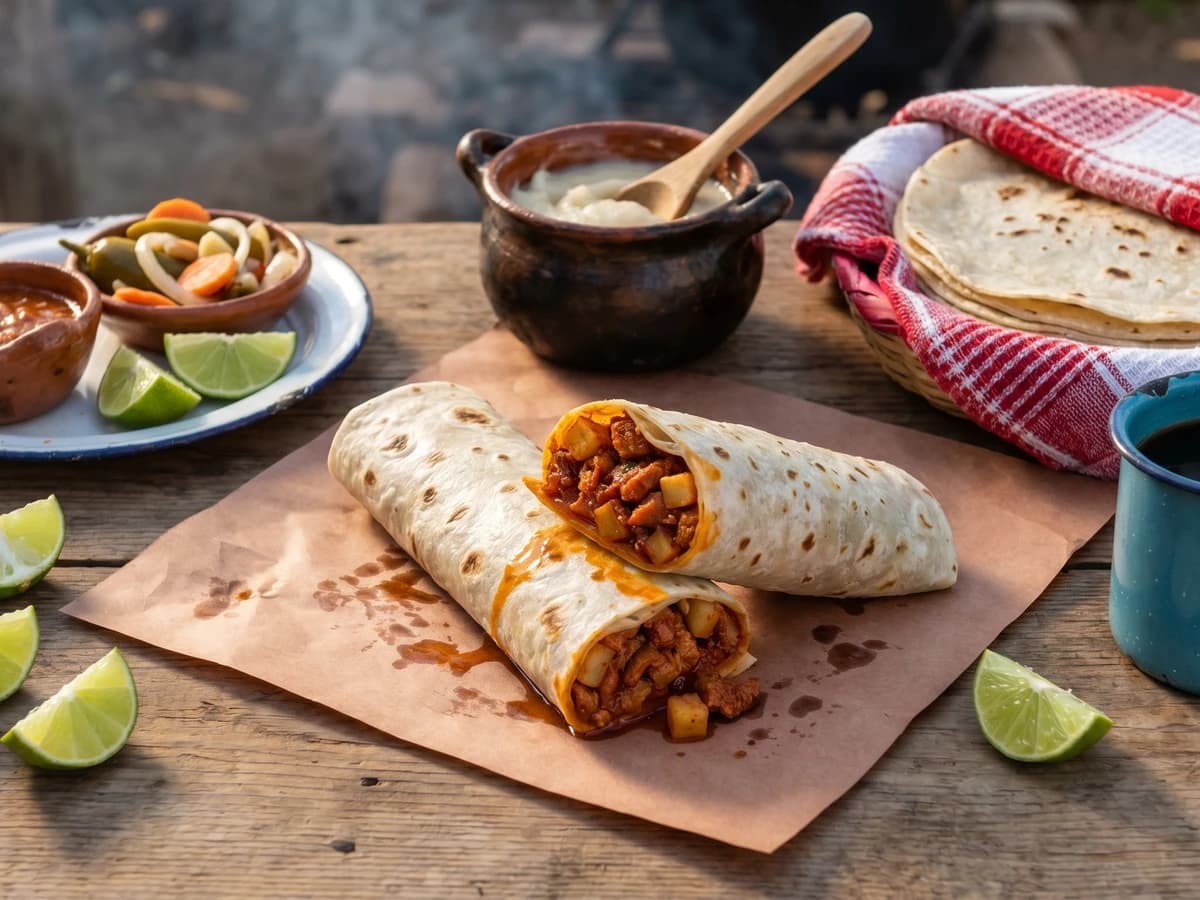
Sonora's working morning burrito: chicharrón de cáscara stewed in chile colorado with diced potato, rolled tight in a paper-thin tortilla sobaquera and eaten standing up at the carreta.
Chef Lupita
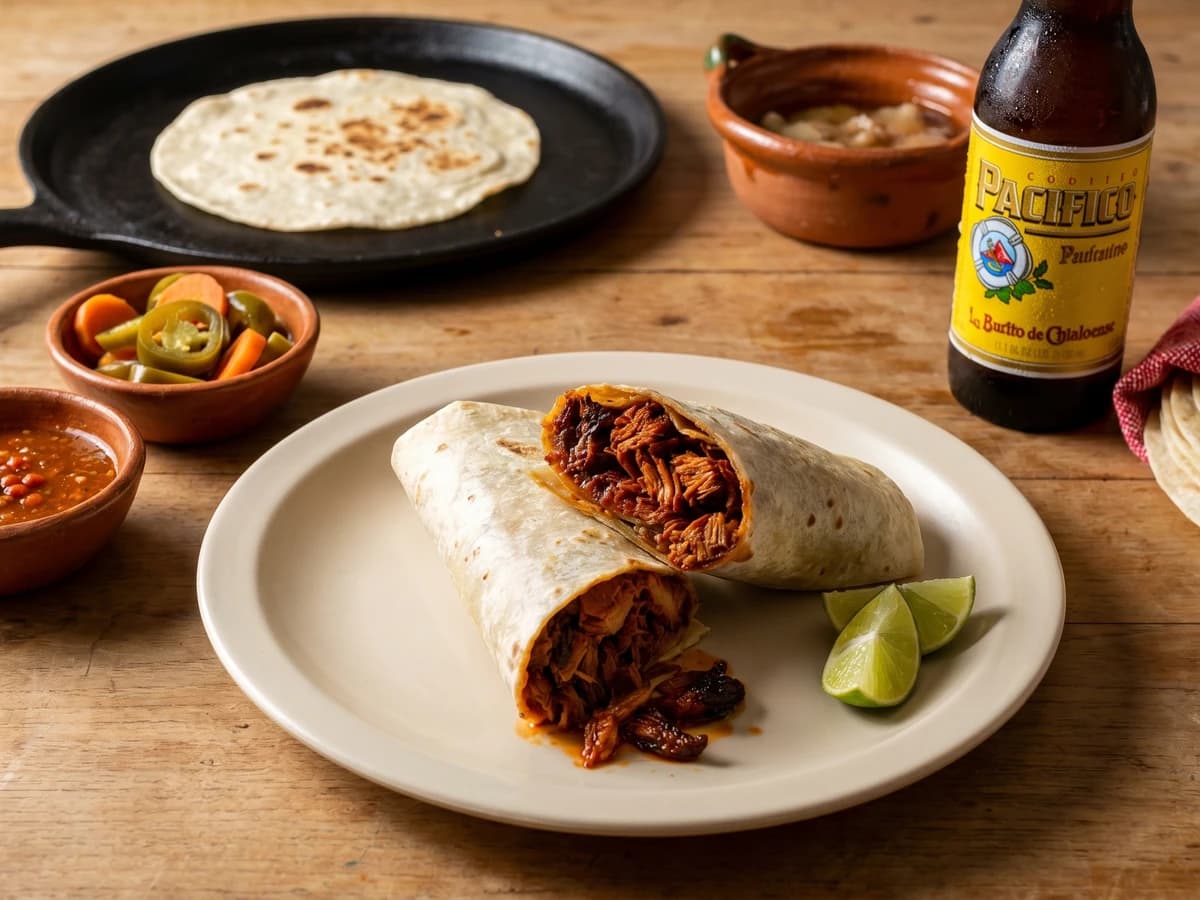
Mocorito's pork chilorio, shredded and confited in lard with chile ancho and pasilla, rolled into a thin handmade flour tortilla. The burrito Sinaloa sends out into the world.
Chef Lupita
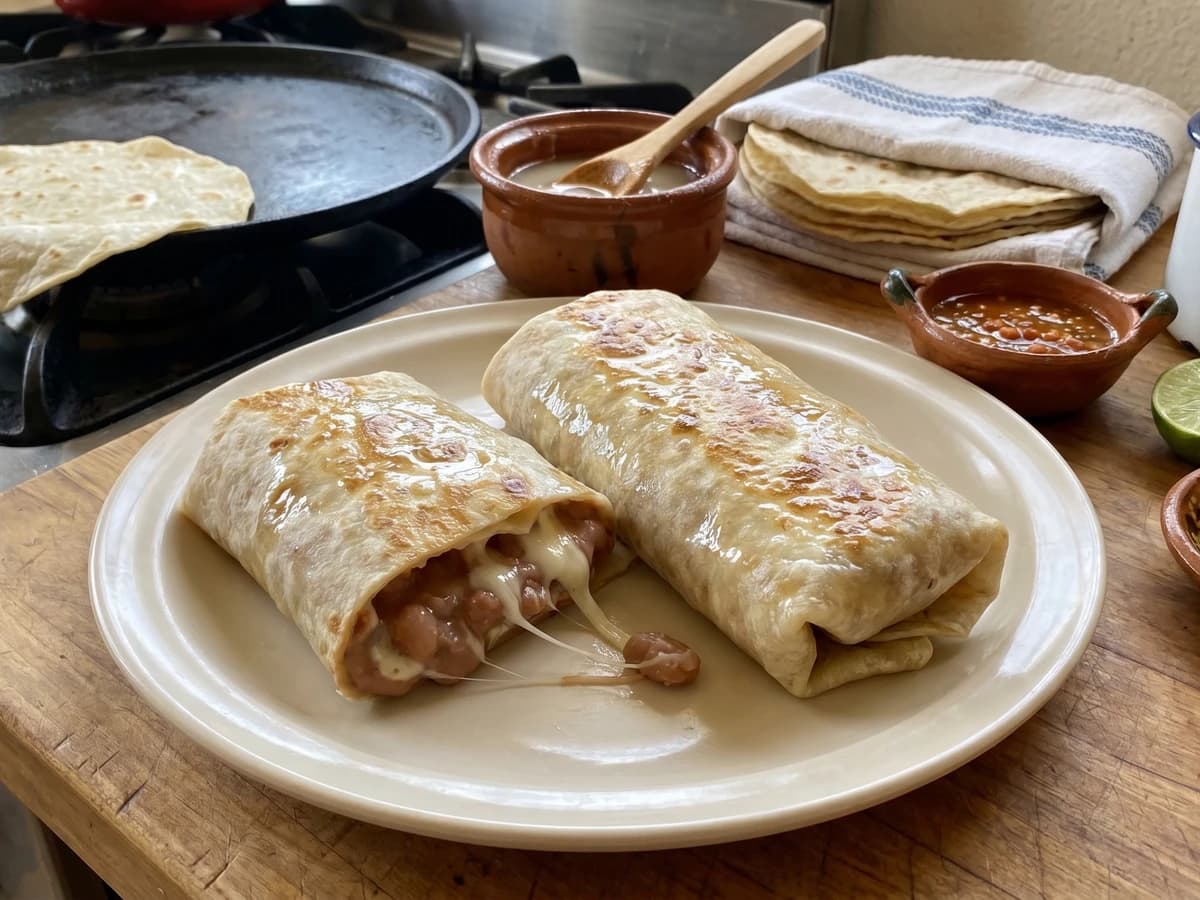
Sonora's morning burrito of mashed pinto frijoles puercos and melted queso asadero, wrapped in a paper-thin sobaquera and seared on the comal until the cheese pulls in long strings.