Chef Lupita
Birria Tacos with Consome
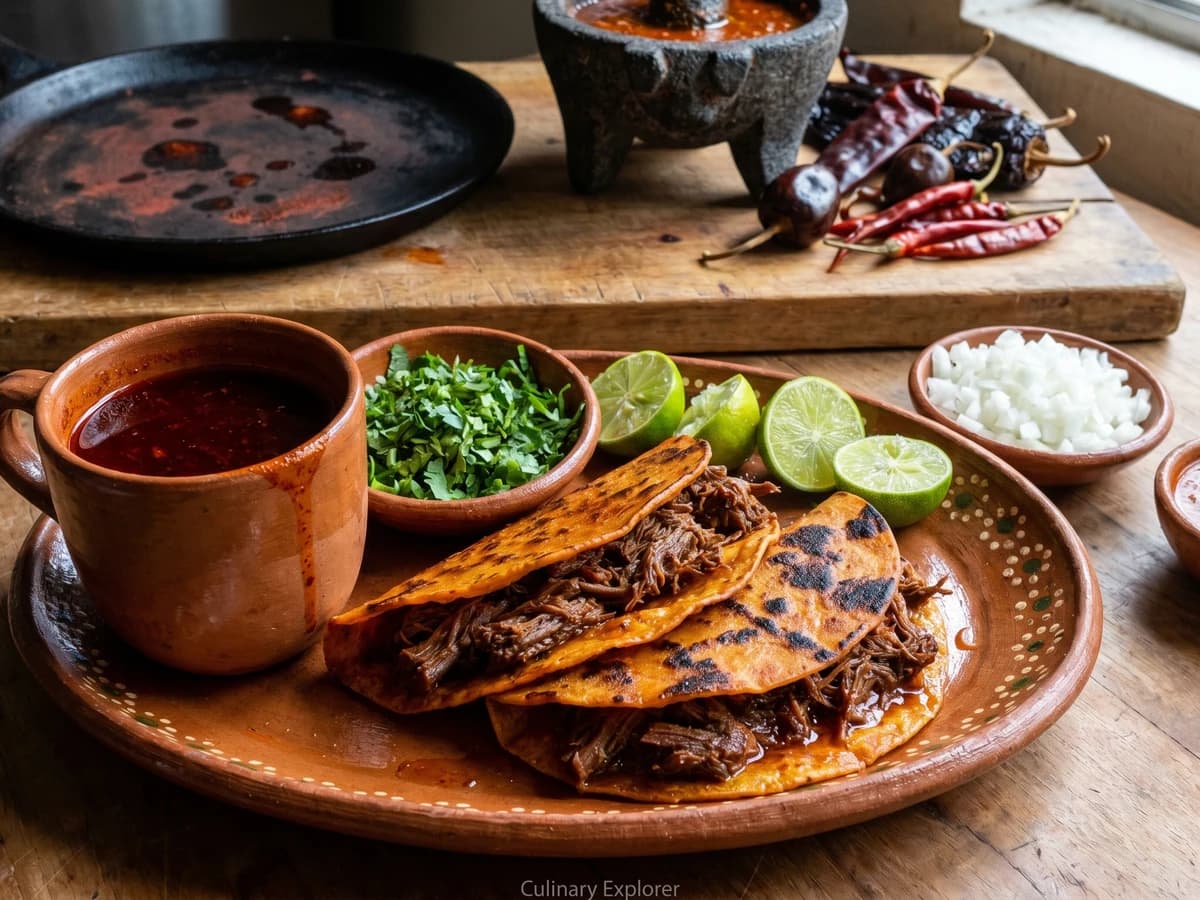
Jalisco's goat birria, born around Cocula and carried into Guadalajara's markets, slow-braised in ancho, guajillo, cascabel, and chile de arbol, then tucked into corn tortillas crisped in its own red fat.
A cooking platform built around craft, culture, and the stories behind what we eat.

Created by
Sonora's morning burrito of mashed pinto frijoles puercos and melted queso asadero, wrapped in a paper-thin sobaquera and seared on the comal until the cheese pulls in long strings.
This burrito is from Sonora. Specifically from the Hermosillo and Magdalena breakfast counters where the carretas open before dawn and the construction crews and ranch hands eat standing up before the sun gets high. It is not from Texas. It is not from California. The flour tortilla is a Noroeste birthright, and the sobaquera, the paper-thin tortilla you can almost see through, is its highest expression.
The filling is two ingredients done correctly: pinto beans cooked slowly with onion, garlic, and chiltepin, then mashed into hot lard until they turn into a glossy paste, and queso asadero or queso Chihuahua melted into the beans while they are still on the comal. Frijoles puercos. Pork beans. The pork is the lard. La manteca es el sabor and there is no version of this burrito worth eating that uses oil instead.
Sonora is wheat country and cattle country. The desert dictates the cuisine. Mesquite is the cooking fuel, flour is the grain, and the cow gives the cheese and the lard. The sobaquera takes its name from sobaco, the armpit, because the tortilla is so large that a Sonoran cook stretches it over her forearm before laying it on the comal. Watch a senora make one and you understand why every other flour tortilla looks small. Cada estado, su propia cocina, and this one belongs to Sonora.
My mother did not make Sonoran burritos. She was from Jalisco and the Noroeste was a place she only read about. But I spent a month in Hermosillo on the third year of the 32-state project, sitting at carretas before sunrise, and I came home with a notebook full of bean recipes and a deep respect for what wheat does to a tortilla when it is rolled by a woman who has been doing it for forty years. Saber cocinar es saber vivir.
The flour tortilla is native to northwestern Mexico, specifically Sonora, Chihuahua, and Coahuila, where Spanish missionaries introduced wheat cultivation in the 17th century and the indigenous Opata, Yaqui, and Mayo peoples adapted the grain to the comal-based cooking they already practiced with corn. The sobaquera, sometimes called tortilla de agua, takes its name from sobaco because the tortilla is stretched across the cook's forearm during shaping. Frijoles puercos, despite the name, contains no pork meat in the Sonoran tradition; the term refers to the generous use of manteca de cerdo, and the dish predates the modern American burrito by at least a century, with documented references in Sonoran ranch cookery from the late 1800s.
Quantity
1 pound
picked over and rinsed
Quantity
1 medium
halved, half left whole and half finely diced
Quantity
4
peeled and smashed
Quantity
2
crumbled (or substitute 1 dried chile de arbol)
Quantity
1 tablespoon, plus more to taste
Quantity
1/2 cup, plus more as needed
Quantity
8 ounces
grated
Quantity
6, 12 to 14 inches across
Quantity
for serving
Quantity
for serving
| Ingredient | Quantity |
|---|---|
| dried pinto beanspicked over and rinsed | 1 pound |
| white onionhalved, half left whole and half finely diced | 1 medium |
| garlic clovespeeled and smashed | 4 |
| dried chile chiltepincrumbled (or substitute 1 dried chile de arbol) | 2 |
| kosher salt | 1 tablespoon, plus more to taste |
| pork lard (manteca de cerdo) | 1/2 cup, plus more as needed |
| queso asadero or queso Chihuahuagrated | 8 ounces |
| sobaqueras (paper-thin Sonoran flour tortillas) | 6, 12 to 14 inches across |
| salsa de chiltepin (optional) | for serving |
| pickled jalapenos and carrots (optional) | for serving |
Place the rinsed beans in a heavy pot and cover with cold water by three inches. Add the onion half left whole, two of the garlic cloves, and the crumbled chiltepin. Bring to a gentle simmer over medium heat. Skim any foam that rises in the first ten minutes. Cover partially and cook at a lazy simmer for two hours, until the beans are completely tender and the broth has turned a deep brick color. Add hot water if the level drops below the beans. Salt only in the last fifteen minutes. Salt early and the skins toughen.
In a wide heavy skillet or cazuela, melt the half cup of lard over medium heat until it shimmers. Add the diced onion and the remaining two garlic cloves, finely chopped. Cook for five to seven minutes, stirring, until the onion turns translucent and the kitchen smells of pork fat and sweet onion. La manteca es el sabor. This is not the moment to substitute oil. Lard is what makes these frijoles puercos.
Drain the cooked beans, reserving two cups of the bean broth. Add the beans to the skillet a ladle at a time, mashing them into the lard with a wooden spoon or a bean masher as you go. Pour in some of the reserved broth as needed to keep the mixture loose. Cook for fifteen to twenty minutes, stirring often, until the beans turn into a thick, glossy paste that pulls away from the sides of the pan. Taste for salt. The beans should be assertive, not shy. They are carrying the burrito.
Heat a dry comal over medium-high. Lay one sobaquera on the comal for about fifteen seconds per side. You want it warm and pliable, not crisped. The sobaquera should bend without cracking. If it cracks, you cooked it too long. These tortillas are paper-thin and translucent enough to read a newspaper through, and they are made for one purpose: to wrap a burrito without falling apart.
Lay the warm sobaquera flat. Spoon a generous line of the hot frijoles puercos across the lower third, leaving two inches of space on each side. Scatter a heavy handful of grated queso asadero across the beans while they are still hot. The cheese melts on contact and forms the long strings that define a Sonoran bean burrito. Fold the bottom edge up over the filling, fold both sides in tight, then roll the burrito away from you into a snug cylinder. Asi se hace y punto.
Return the burrito to the warm comal seam-side down for about thirty seconds, then turn and sear the other side. The sobaquera will pick up a few golden spots and the cheese inside will turn into long melted strings. Serve immediately with salsa de chiltepin and a small dish of pickled jalapenos and carrots. This is a worker's breakfast in Hermosillo. Eat it standing up if you have to. Recetas probadas y garantizadas.
1 serving (about 350g)
Culinary guides, cultural storytelling, and the editorial depth that makes cooking meaningful.
Discover Culinary ExplorerChef Lupita
Jalisco's goat birria, born around Cocula and carried into Guadalajara's markets, slow-braised in ancho, guajillo, cascabel, and chile de arbol, then tucked into corn tortillas crisped in its own red fat.
Chef Lupita
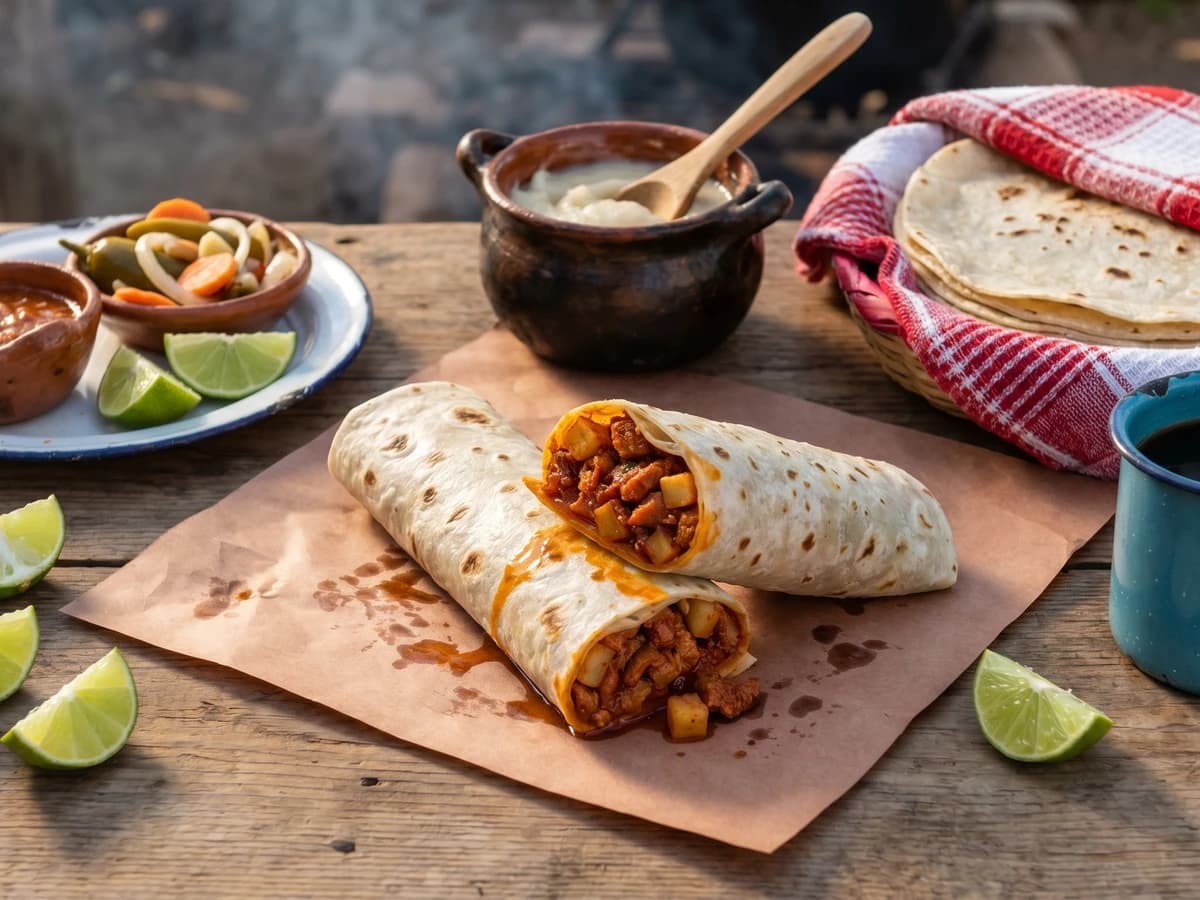
Sonora's working morning burrito: chicharrón de cáscara stewed in chile colorado with diced potato, rolled tight in a paper-thin tortilla sobaquera and eaten standing up at the carreta.
Chef Lupita
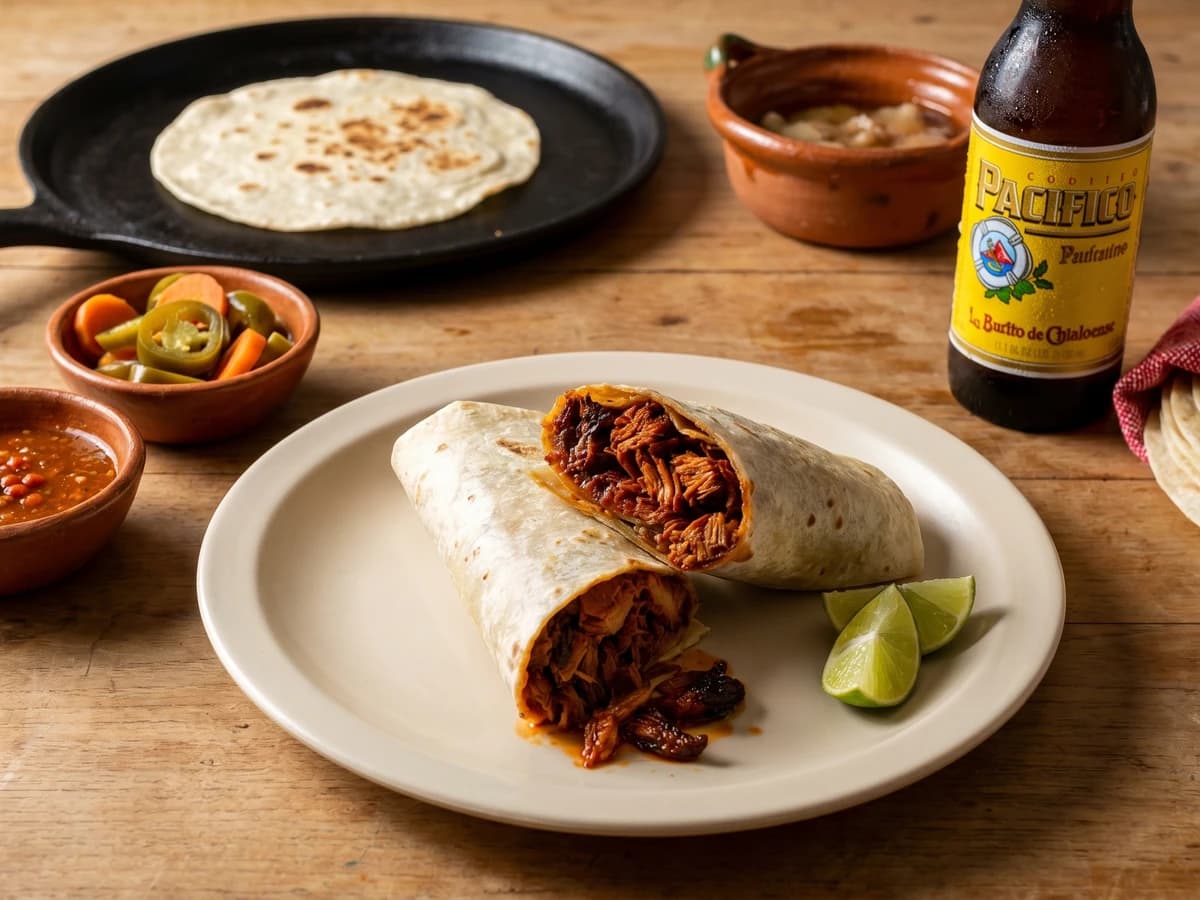
Mocorito's pork chilorio, shredded and confited in lard with chile ancho and pasilla, rolled into a thin handmade flour tortilla. The burrito Sinaloa sends out into the world.

Chef Lupita
Baja California Sur's smoked marlin burrito, sauteed with white onion, tomato, green olives, and capers, then rolled in a paper-thin flour tortilla. The beach lunch of La Paz and Cabo, served on the sand with a cold Pacifico.