Chef Lupita
Birria Tacos with Consome
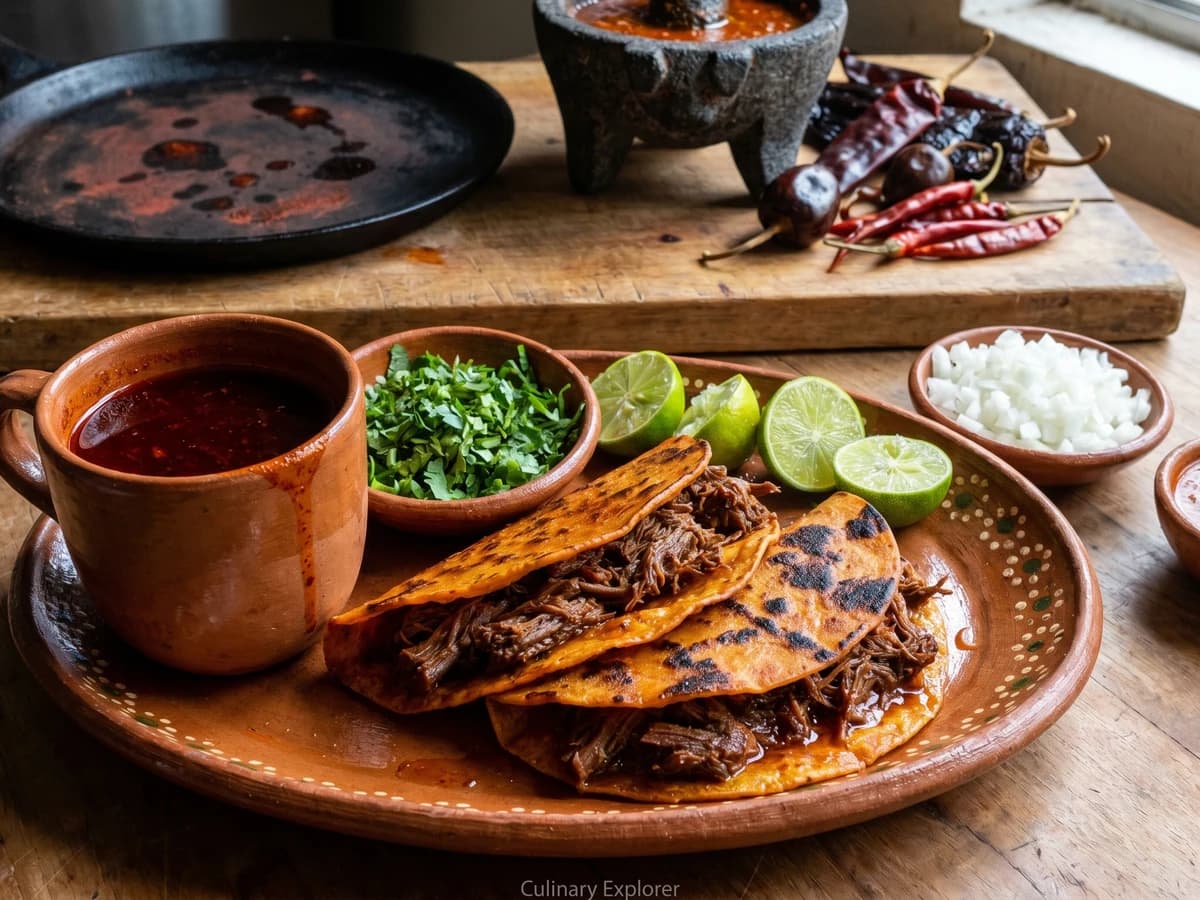
Jalisco's goat birria, born around Cocula and carried into Guadalajara's markets, slow-braised in ancho, guajillo, cascabel, and chile de arbol, then tucked into corn tortillas crisped in its own red fat.
A cooking platform built around craft, culture, and the stories behind what we eat.
Created by
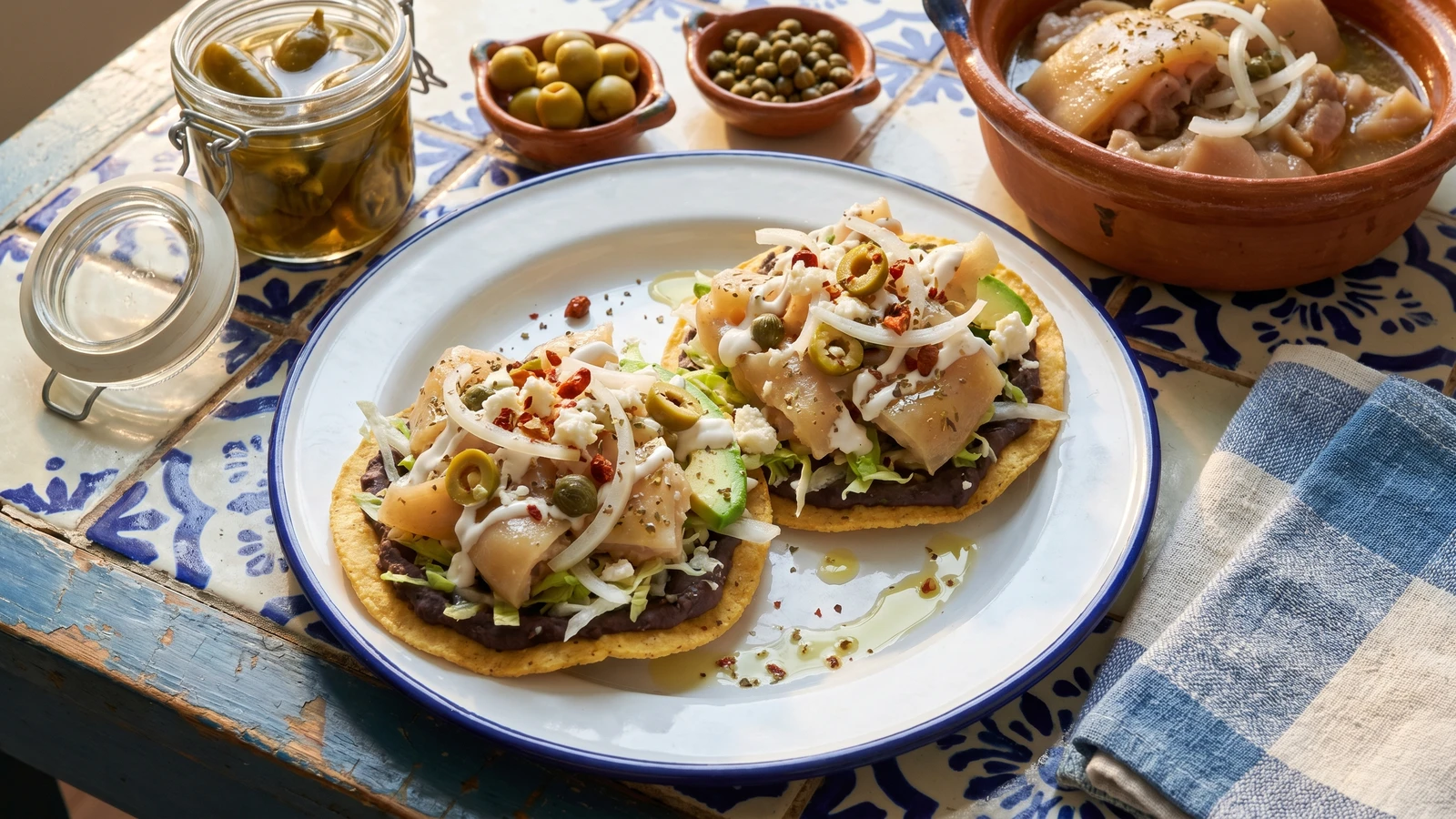
Veracruz's port snack: beef foot simmered until the gelatin gives, then pickled in vinegar, olive oil, olives, and capers, piled cold over black beans on a crisp tostada with lettuce and aguacate.
This is from Veracruz. The port. Not the polished idea of Mexican food that travels abroad, but the antojito you eat standing up at a market stand or under the portales on the malecón while the Gulf works on the afternoon heat. Tostadas de pata is a cold snack, a vinegar snack, and it carries all three roots of this coast on one crisp tortilla: the Indigenous corn, the Spanish escabeche, the African hand that has shaped Veracruz cooking for five hundred years. La Tercera Raíz, on a tostada.
The pata is beef foot. Skin, tendon, cartilage, the gelatin that turns a long simmer into something that sets like a jewel when it cools. You simmer it for hours until it gives, then you pickle it while it's still warm so it drinks the vinegar. And the vinegar is where Veracruz shows its face. Olive oil, olives, capers, oregano, white onion, the brine of jalapeños en escabeche. That olive and that caper did not grow here. They came through this port, and the cooks of Veracruz made them their own. Esto no es comida de un solo México.
The base is frijoles negros. Black beans, refried, dark and soft. Not pinto. In Veracruz the black bean rules the pot, and on a tostada de pata it's the glue that holds the cold pickled meat to the crisp tortilla. Then lechuga, aguacate, queso fresco, a thread of crema, and crushed chiltepín for the ones who want heat. That chiltepín grows wild in the Huasteca to the north. Even the chile has an address.
My mother was from Jalisco, not Veracruz. But she kept a jar of manitas en escabeche in the back of the refrigerator my whole childhood, and she taught me the balance of an escabeche before I ever stood at a stand in the port: enough vinegar to wake it, enough oil to round it, enough oregano that you smell it before you taste it. The pata version I learned later, from a señora selling them three for a handful of pesos near the Mercado Hidalgo in Xalapa. Make it the day before. The gelatin has to set and the vinegar has to find every piece. This one needs to rest. Saber cocinar es saber vivir.
The technique at the heart of this dish, escabeche, is neither originally Mexican nor Spanish. It descends from the medieval Arab 'al-sikbāj,' a vinegar preservation method that entered Iberian cooking during the centuries of Al-Andalus and crossed the Atlantic through the port of Veracruz, founded by Hernán Cortés as the Villa Rica de la Vera Cruz in 1519. That same port was the principal entry point for Mediterranean goods, olives, capers, olive oil, and wine vinegar, and for enslaved Africans, which is why Veracruz cooking is called 'La Tercera Raíz,' the third root, alongside the Indigenous and the Spanish. Pickled feet, whether beef pata or pork manita, belong to a broader colonial economy of whole-animal cookery, in which the collagen-rich extremities most cooks would have discarded were transformed, through long simmering and acid, into a delicacy sold cheaply at markets and ports.
Quantity
2 (about 3 1/2 pounds)
cleaned, split, and cut crosswise into sections
Quantity
1 large
halved
Quantity
1
halved crosswise
Quantity
3
Quantity
4 sprigs
Quantity
1 teaspoon
Quantity
2 tablespoons, plus more to taste
Quantity
1/2 cup
Quantity
1/3 cup
Quantity
1 large
thinly sliced into half-moons
Quantity
1/2 cup, plus 2 tablespoons of their brine
sliced
Quantity
1/2 cup
pitted and halved
Quantity
3 tablespoons
drained
Quantity
1 tablespoon
Quantity
12
fried crisp from hand-pressed corn tortillas
Quantity
2 cups
warm
Quantity
2 cups
finely shredded
Quantity
2
sliced
Quantity
1 cup
crumbled
Quantity
1/2 cup
Quantity
for serving
crushed
| Ingredient | Quantity |
|---|---|
| beef feet (patas de res)cleaned, split, and cut crosswise into sections | 2 (about 3 1/2 pounds) |
| white onionhalved | 1 large |
| head of garlichalved crosswise | 1 |
| bay leaves (hojas de laurel) | 3 |
| fresh thyme and marjoram (hierbas de olor) | 4 sprigs |
| black peppercorns | 1 teaspoon |
| kosher salt | 2 tablespoons, plus more to taste |
| white wine vinegar or apple cider vinegar | 1/2 cup |
| olive oil (aceite de oliva) | 1/3 cup |
| white onionthinly sliced into half-moons | 1 large |
| pickled jalapeños en escabechesliced | 1/2 cup, plus 2 tablespoons of their brine |
| green olives (aceitunas)pitted and halved | 1/2 cup |
| capers (alcaparras)drained | 3 tablespoons |
| dried Mexican oregano | 1 tablespoon |
| corn tostadasfried crisp from hand-pressed corn tortillas | 12 |
| refried black beans (frijoles negros refritos)warm | 2 cups |
| romaine or iceberg lettuce (lechuga)finely shredded | 2 cups |
| ripe avocados (aguacate)sliced | 2 |
| queso frescocrumbled | 1 cup |
| Mexican crema | 1/2 cup |
| dried chiltepín or extra pickled jalapeños (optional)crushed | for serving |
Rinse the pata sections under cold running water and scrub anywhere that needs it. Singe off any stray hair over a flame. Drop the pieces into a pot of boiling water and blanch for ten minutes, then drain and rinse again. The gray scum that rises is exactly what would cloud your escabeche later. Throw it out. You start this dish clean or you don't start it right.
Return the pata to a heavy stockpot and cover with cold water by two inches. Add the halved onion, garlic, bay leaves, the thyme and marjoram, the peppercorns, and the salt. Bring to a gentle simmer, never a hard boil, and cook partially covered for about three hours. You are waiting for the skin and tendon to turn soft and translucent and pull from the bone with no resistance. A pressure cooker does this in fifty minutes and I won't argue with you about it. The collagen needs heat and time, that's all.
Lift the pata out and let it cool until you can handle it. Pull every bit of skin, meat, and soft cartilage off the bones. Discard the bones, the hard loose pieces, and the spent aromatics. Chop everything else into bite-size pieces. Don't rinse away the gelatin clinging to the meat. That is flavor and that is texture, and you worked three hours for it.
While the pata is still warm, put it in a large glass or ceramic bowl. Never metal. Vinegar and metal give you a taste like a coin in your mouth. Add the vinegar, olive oil, sliced onion, the jalapeños and their brine, the olives, capers, and oregano. Season with salt and toss well. Warm meat drinks the vinegar the way cold meat never will. This is the moment the dish becomes Veracruzano. The olive and the caper came through that port. Now they belong to the pata.
Cover and refrigerate at least four hours, better overnight. Two things happen in the cold. The gelatin sets and binds the whole bowl together, and the vinegar and oregano work their way into every piece. This is a make-ahead dish on purpose. It is better the second day than the first. No me vengas con atajos here. The pata has to rest, and so do you. Así se hace y punto.
Taste it cold before you serve. Cold mutes salt and acid both, so what tasted bright last night can taste flat this morning. Add a pinch of salt or a splash more vinegar until it wakes back up. Let the bowl sit out for fifteen minutes to lose the deepest chill. You want it cool, not ice-cold.
Build the tostadas one at a time and only when you're ready to eat. Smear each crisp tostada with warm refried black beans. Pile on a generous spoonful of the cold pata escabeche, letting the onion and olives fall where they may. Tuck shredded lettuce and sliced avocado around and under, crumble queso fresco over the top, and drizzle with crema. Finish with crushed chiltepín for whoever wants the heat. Eat it standing up if you want to do it right.
1 serving (about 450g)
Culinary guides, cultural storytelling, and the editorial depth that makes cooking meaningful.
Discover Culinary ExplorerChef Lupita
Jalisco's goat birria, born around Cocula and carried into Guadalajara's markets, slow-braised in ancho, guajillo, cascabel, and chile de arbol, then tucked into corn tortillas crisped in its own red fat.
Chef Lupita
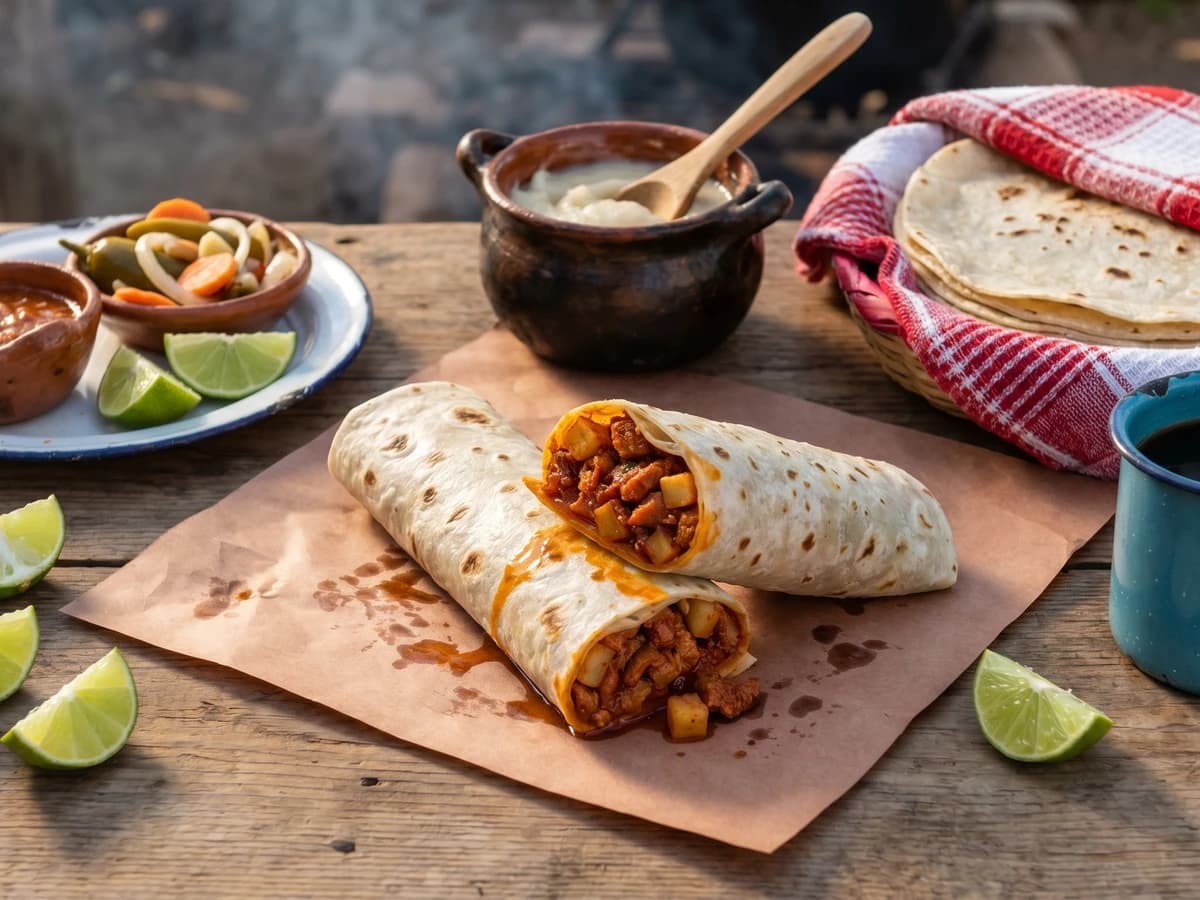
Sonora's working morning burrito: chicharrón de cáscara stewed in chile colorado with diced potato, rolled tight in a paper-thin tortilla sobaquera and eaten standing up at the carreta.
Chef Lupita
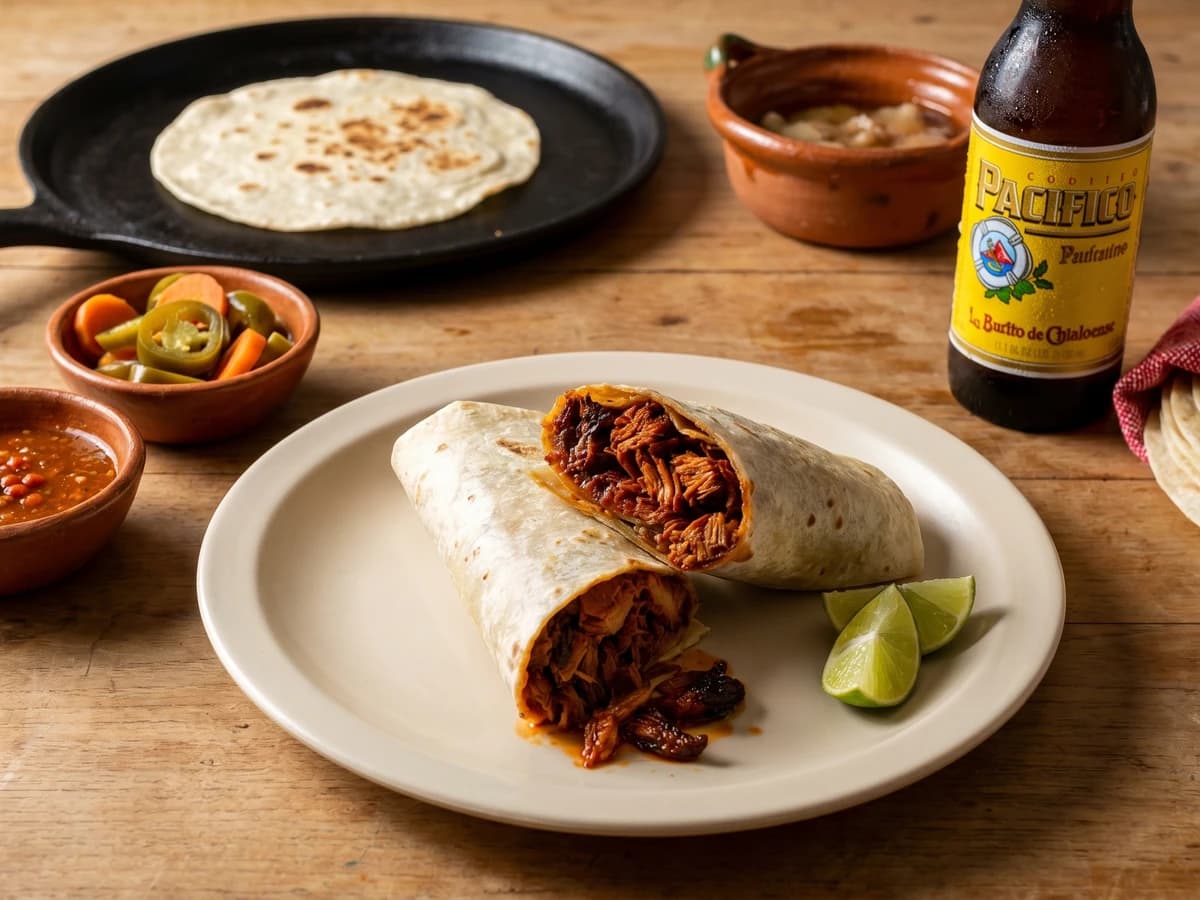
Mocorito's pork chilorio, shredded and confited in lard with chile ancho and pasilla, rolled into a thin handmade flour tortilla. The burrito Sinaloa sends out into the world.
Chef Lupita
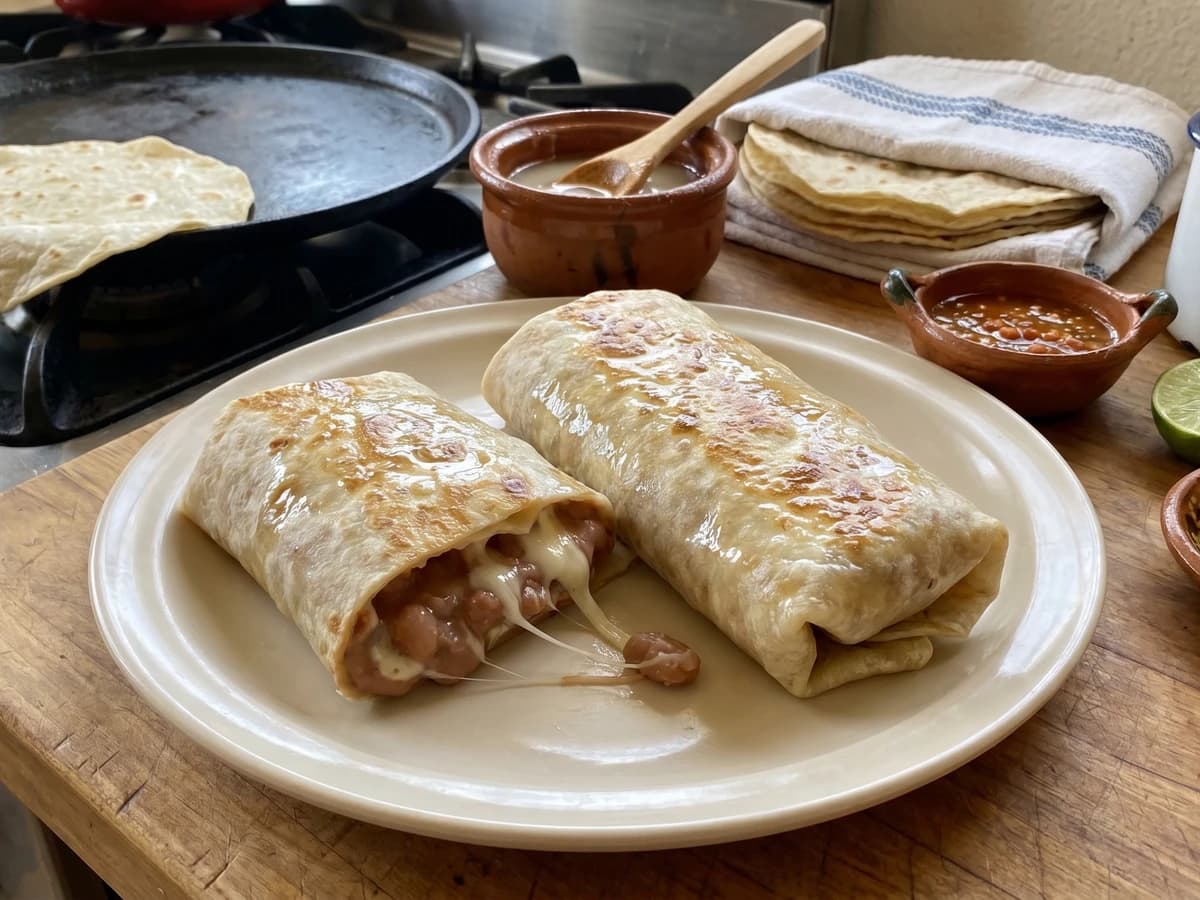
Sonora's morning burrito of mashed pinto frijoles puercos and melted queso asadero, wrapped in a paper-thin sobaquera and seared on the comal until the cheese pulls in long strings.