Chef Lupita
Birria Tacos with Consome
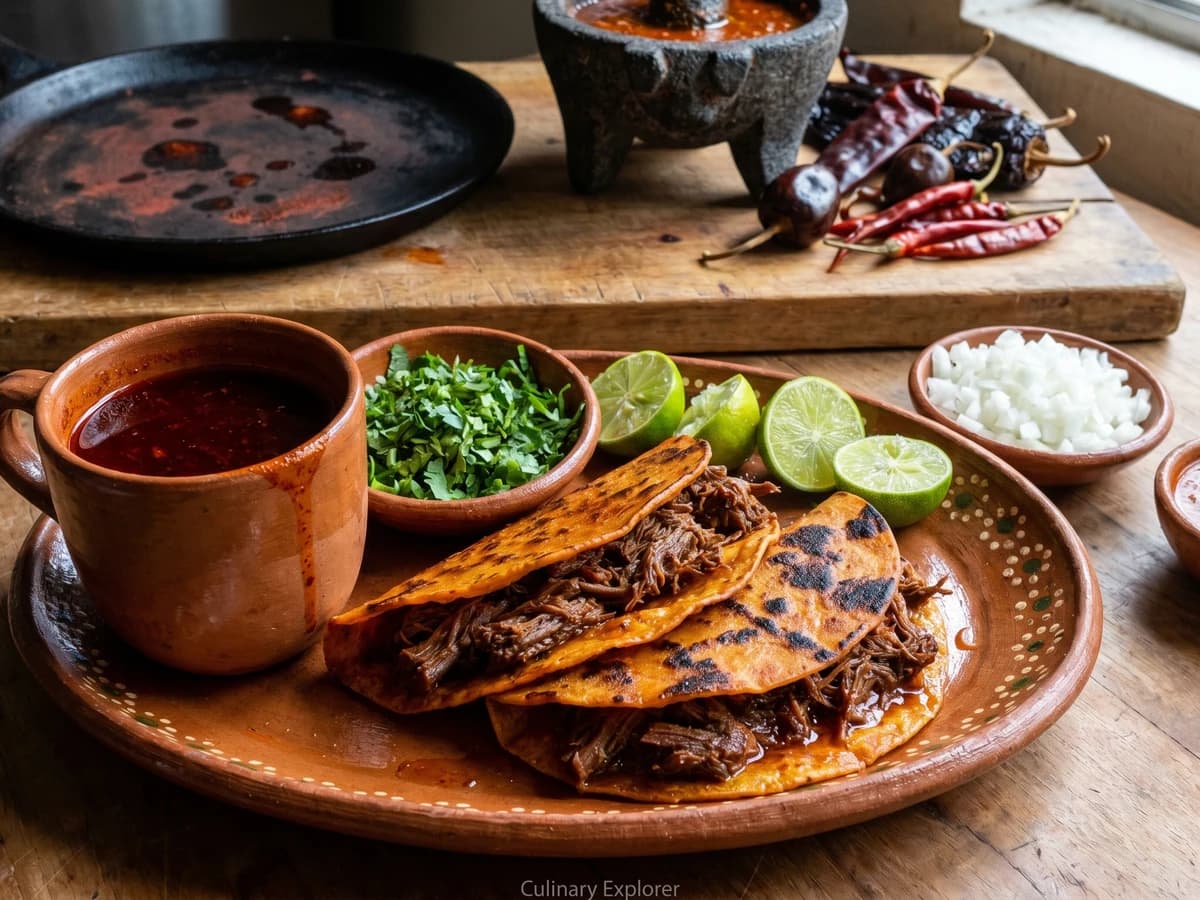
Jalisco's goat birria, born around Cocula and carried into Guadalajara's markets, slow-braised in ancho, guajillo, cascabel, and chile de arbol, then tucked into corn tortillas crisped in its own red fat.
A cooking platform built around craft, culture, and the stories behind what we eat.
Created by
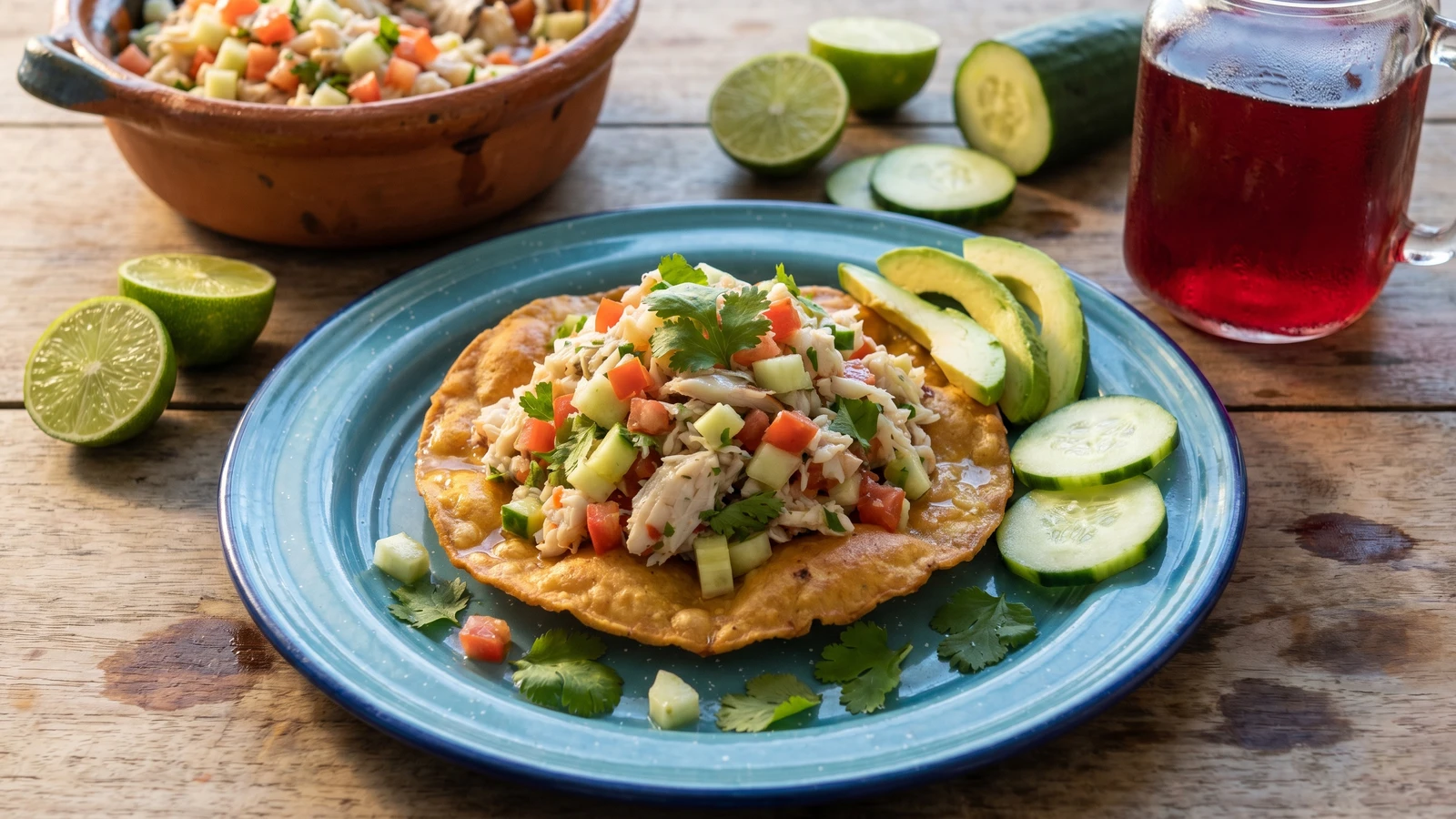
From Tlacotalpan on the Papaloapan river, sweet blue crab dressed with jitomate, onion, cucumber, cilantro, and lime, piled high on a crisp corn tostada. Sotavento cooking at its brightest, with no chile in the bowl to cover the sweet crab.
This is from Tlacotalpan, in the Sotavento of Veracruz, where the Papaloapan river runs wide and slow before it reaches the Gulf. The painted houses, the son jarocho, the jaiba pulled from the river and the lagoons at its mouth. This is not Mexico City seafood dressed up for a restaurant. This is coast cooking, and the crab is the whole point.
Jaiba azul, blue crab. You boil it, you pick it, and you dress it cold with jitomate, white onion, cucumber, cilantro, and lime. No chile in the bowl. That surprises people who think all Veracruz food fights you. It doesn't. The Sotavento knows when to leave a thing alone. The olive oil is the Spanish hand, the lime and the corn tostada are older than the Spanish, and the whole plate is La Tercera Raiz: Indigenous, Spanish, African on one crisp round of fried corn.
I ate these for the first time during the Candelaria, in February, at a stand under the portales while a son jarocho group tuned their jaranas across the plaza. The senora who made them seeded every tomato by hand and rinsed her chopped onion under cold water so it wouldn't bite. When I asked why no chile, she looked at me like I'd asked why the river runs to the sea. 'Para que,' she said. The crab is sweet. You don't cover that.
Two rules and the dish is yours. Buy the crab fresh, never canned, and dress it at the last minute so the tostada stays crisp under the pile. Si no conoces el mercado, no conoces la cocina. Everything here depends on the crab, so start there.
Tlacotalpan, a river port on the Papaloapan, was inscribed as a UNESCO World Heritage Site in 1998 for its colonial street grid and Caribbean-influenced architecture, a legacy of its 19th-century role as a shipping hub between the Gulf and the Mexican interior. Its cuisine belongs to the Sotavento, the broad river basin where Veracruz's African heritage, La Tercera Raiz, runs deepest: the port of Veracruz was the principal point of entry for enslaved Africans in New Spain, and the nearby town of Yanga is named for Gaspar Yanga, who led a rebellion that won one of the first recognized free African settlements in the Americas around 1630. The blue crab (jaiba azul, Callinectes sapidus) is harvested from the estuaries where the Papaloapan meets the Gulf, and fresh-dressed preparations like this one reflect a coastal tradition that treats just-caught shellfish with restraint rather than heavy spicing.
Quantity
3 to 4 pounds
or substitute 1 pound fresh lump crabmeat, picked over
Quantity
2 tablespoons
for boiling
Quantity
1/2
for boiling
Quantity
2
for boiling
Quantity
2
Quantity
3 medium
seeded and finely diced
Quantity
1/2
finely diced and rinsed under cold water
Quantity
1 medium
peeled, seeded, and finely diced
Quantity
1/2 cup
chopped
Quantity
1/3 cup (about 5 limones)
Quantity
2 tablespoons
Quantity
1 teaspoon, plus more to taste
Quantity
1/4 teaspoon
Quantity
12
for frying, or use 12 prepared tostadas
Quantity
1 to 1 1/2 cups
for frying the tostadas
Quantity
1 to 2
sliced
Quantity
for serving
Quantity
for serving
sliced
| Ingredient | Quantity |
|---|---|
| live blue crabs (jaiba azul)or substitute 1 pound fresh lump crabmeat, picked over | 3 to 4 pounds |
| kosher saltfor boiling | 2 tablespoons |
| white onionfor boiling | 1/2 |
| garlic clovesfor boiling | 2 |
| bay leaves | 2 |
| ripe jitomate (Roma or saladet)seeded and finely diced | 3 medium |
| small white onionfinely diced and rinsed under cold water | 1/2 |
| cucumber (pepino)peeled, seeded, and finely diced | 1 medium |
| fresh cilantrochopped | 1/2 cup |
| fresh lime juice | 1/3 cup (about 5 limones) |
| extra virgin olive oil | 2 tablespoons |
| kosher salt | 1 teaspoon, plus more to taste |
| freshly ground black pepper | 1/4 teaspoon |
| corn tortillasfor frying, or use 12 prepared tostadas | 12 |
| neutral oilfor frying the tostadas | 1 to 1 1/2 cups |
| Hass avocado (optional)sliced | 1 to 2 |
| lime halves (optional) | for serving |
| chile chiltepin or chile serrano (optional)sliced | for serving |
Bring a large pot of water to a rolling boil with the salt, the half onion, garlic, and bay leaves. Drop in the live crabs, cover, and cook 12 to 15 minutes, until the shells turn deep red-orange. Lift them out and let them cool until you can handle them. If you bought fresh lump crabmeat instead, skip this and spread the meat on a tray.
Twist off the claws and crack them with a nutcracker. Lift the top shell, clear the gills and the soft insides, and break the body in half. Work the sweet white meat out of the chambers with your fingers or a small fork. Take your time. Then run your fingers through the picked meat twice to catch any shell. One fragment in a tostada and your guest remembers nothing else.
Seed the jitomate before you dice it. The seeds and the jelly carry water, and water turns this salpicon into soup. Dice the tomato, the rinsed onion, and the peeled, seeded cucumber to the same small size, about a quarter inch. Chop the cilantro. Rinsing the diced onion under cold water pulls the raw bite out so it doesn't bully the crab.
In a bowl, fold the crab together with the tomato, onion, cucumber, and cilantro. Add the lime juice, olive oil, salt, and pepper. Fold gently with a spoon. You want the crab to stay in pieces, not mashed into paste. Taste, then adjust the salt and lime until it tastes bright and clean. Let it sit ten minutes so the flavors come together, no longer. The lime is there to lift the crab, not to cure it.
Heat the oil in a heavy skillet over medium-high until a corner of tortilla dropped in sizzles on contact. Fry the tortillas one or two at a time, turning once, until golden and stiff, about a minute per side. Drain on paper or a rack. They should snap, not bend. If you would rather keep it light, toast them dry on a hot comal until rigid, the everyday way for a merienda.
Pile the crab onto the tostadas only when you are ready to eat, never before, or the tostada goes soft under the weight. Lay two or three slices of avocado over each one. Serve with lime halves and, for anyone who wants heat, chiltepin or serrano on the side. This is a Sotavento dish. Bright, cool, generous, and gone in three bites. Recetas probadas y garantizadas.
1 serving (about 255g)
Culinary guides, cultural storytelling, and the editorial depth that makes cooking meaningful.
Discover Culinary ExplorerChef Lupita
Jalisco's goat birria, born around Cocula and carried into Guadalajara's markets, slow-braised in ancho, guajillo, cascabel, and chile de arbol, then tucked into corn tortillas crisped in its own red fat.
Chef Lupita
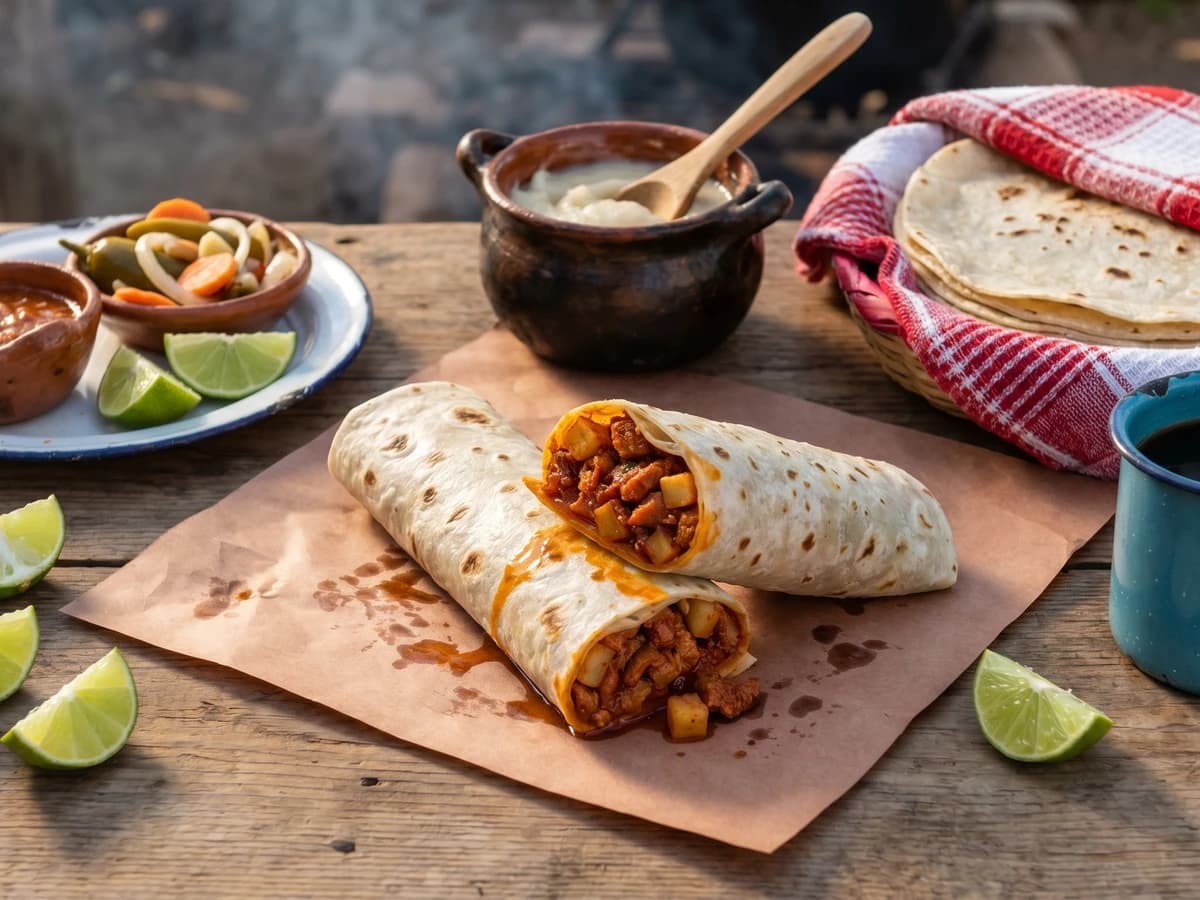
Sonora's working morning burrito: chicharrón de cáscara stewed in chile colorado with diced potato, rolled tight in a paper-thin tortilla sobaquera and eaten standing up at the carreta.
Chef Lupita
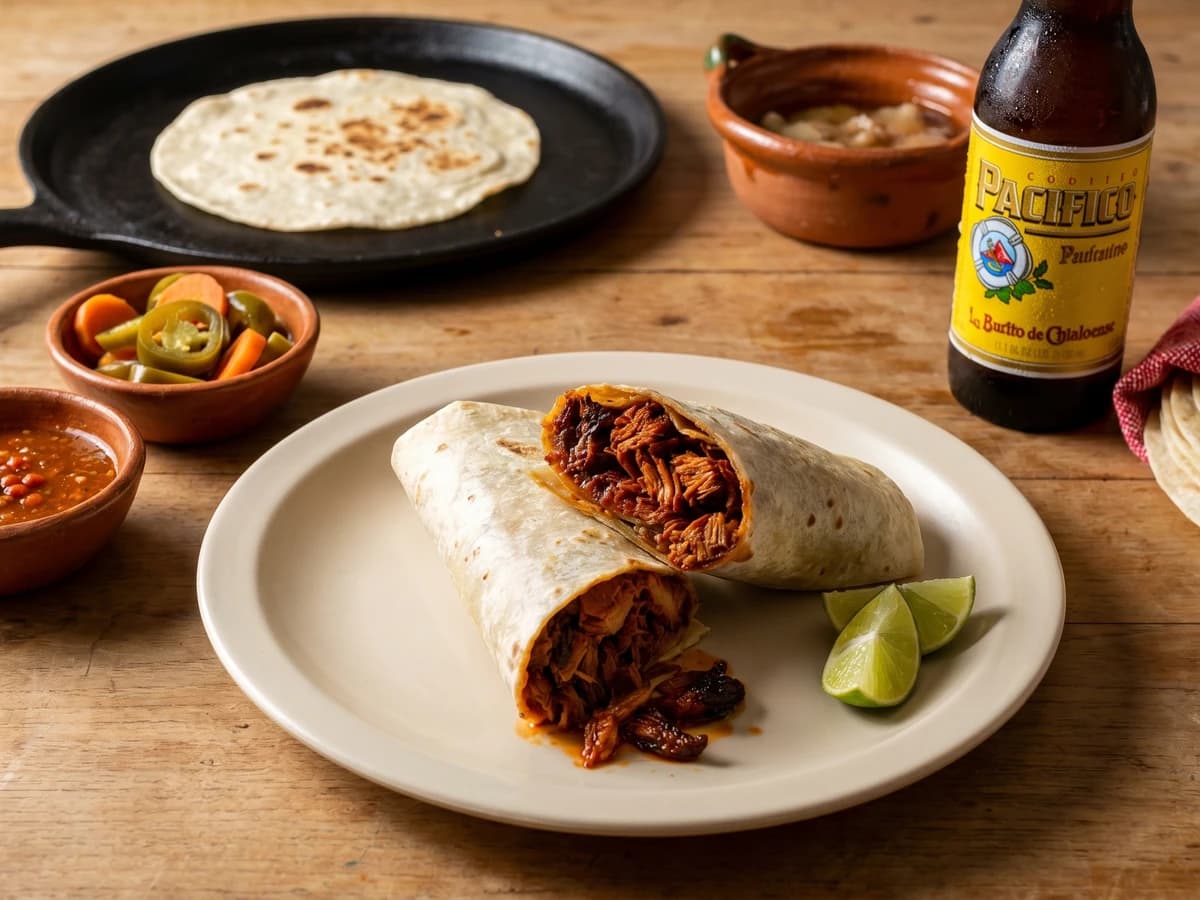
Mocorito's pork chilorio, shredded and confited in lard with chile ancho and pasilla, rolled into a thin handmade flour tortilla. The burrito Sinaloa sends out into the world.
Chef Lupita
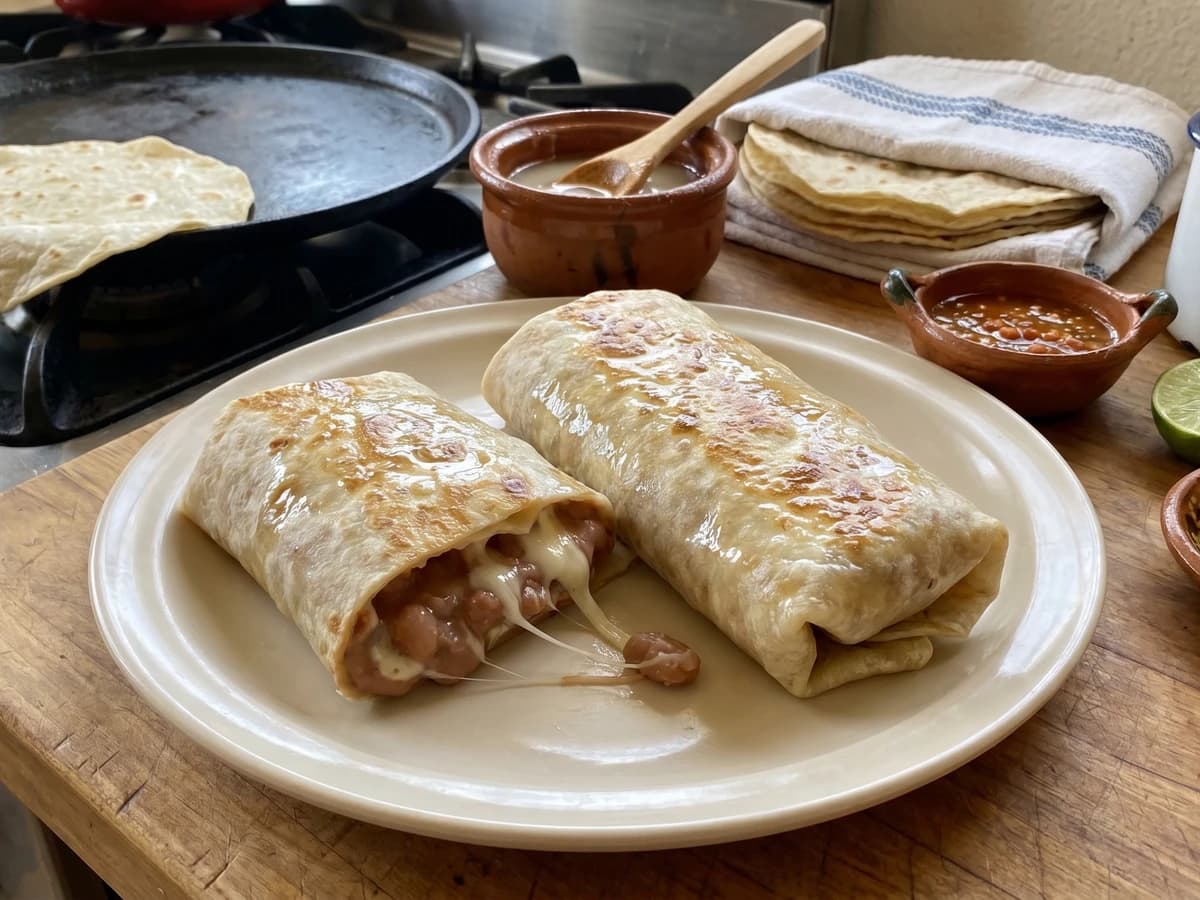
Sonora's morning burrito of mashed pinto frijoles puercos and melted queso asadero, wrapped in a paper-thin sobaquera and seared on the comal until the cheese pulls in long strings.