Chef Lupita
Birria Tacos with Consome
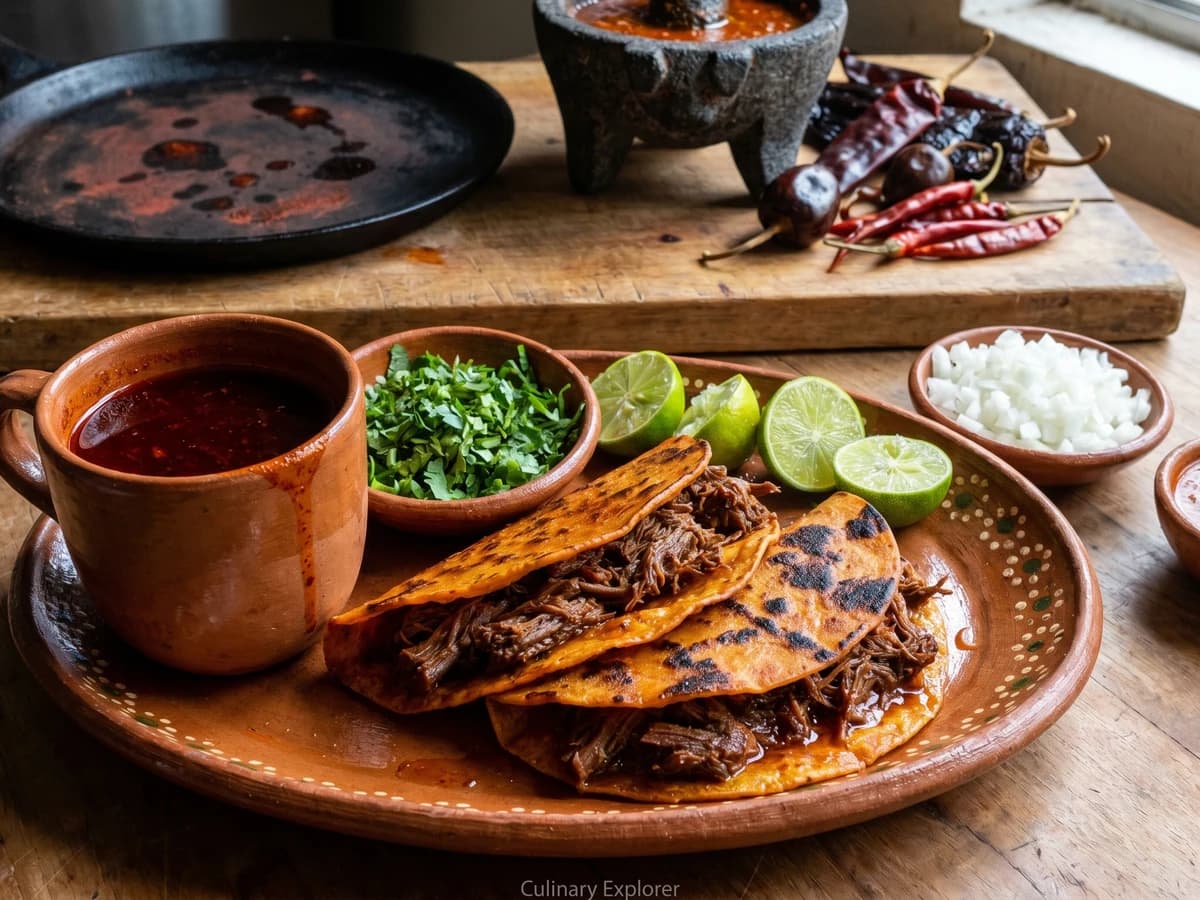
Jalisco's goat birria, born around Cocula and carried into Guadalajara's markets, slow-braised in ancho, guajillo, cascabel, and chile de arbol, then tucked into corn tortillas crisped in its own red fat.
A cooking platform built around craft, culture, and the stories behind what we eat.
Created by
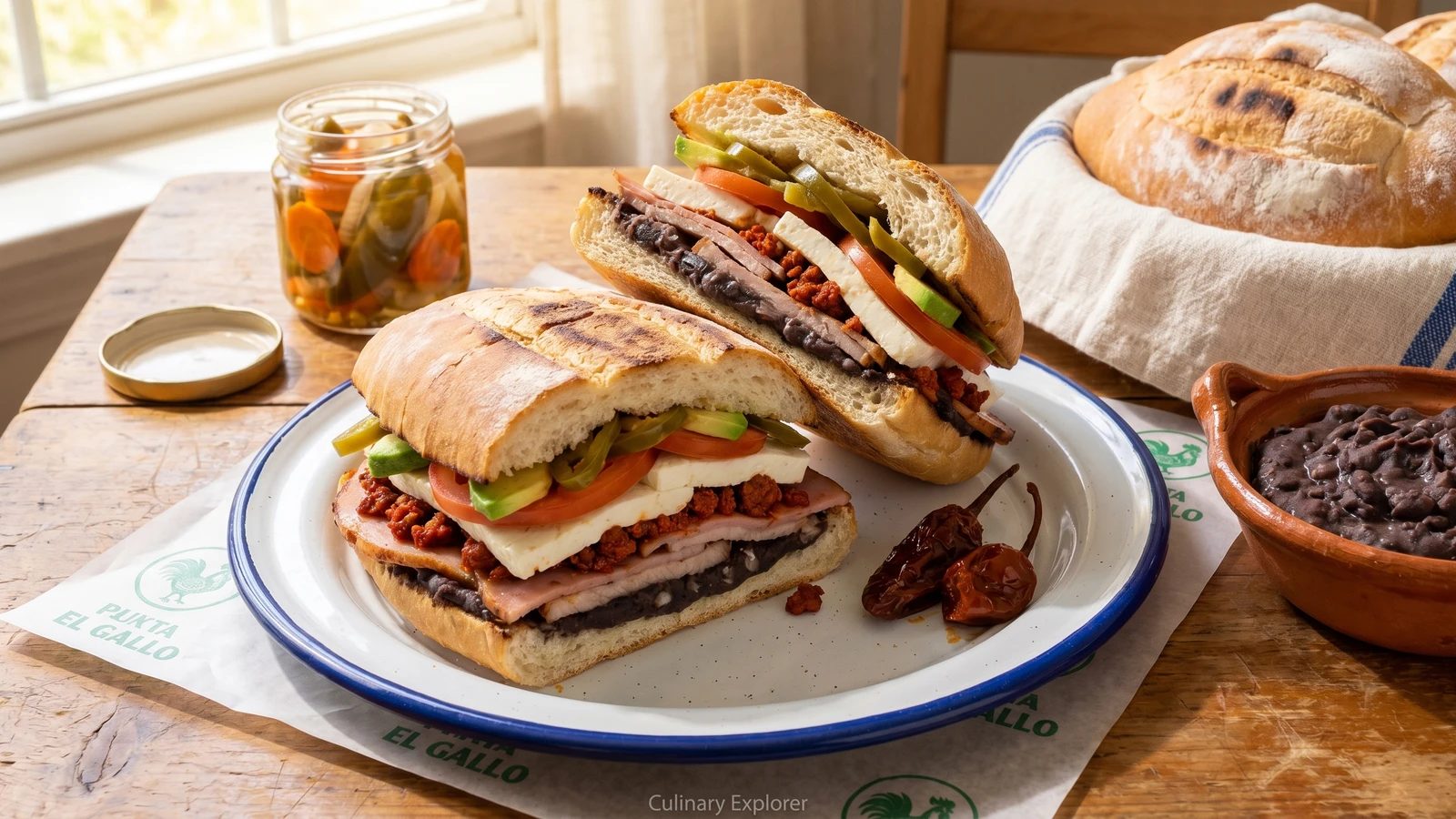
The port of Veracruz on a flour-dusted bolillo: refried black beans, roast pierna, fried chorizo, jamón, queso fresco, chipotle, and pickled jalapeño rajas, layered the way the portales stands on the malecón have built it for generations.
This is the port of Veracruz on a plate. Not a Mexico City torta. Not a northern one built on pinto. This is the torta jarocha, the one the stands under the portales build by the hundreds while the Gulf sits flat and gray behind them. Tortas El Gallo made it famous. The port made it first.
Start with the bread. The bolillo here is dusted in flour, crusty outside and soft in the crumb, and you split it and pull out some of the migajón so the layers fit. Against that bread go the frijoles negros, refried in manteca until they are a thick black paste. Black beans, not pinto. On the Gulf the black bean rules the pot, and it does a job here too: it seals the crumb so the bread does not turn to mush under everything that follows. Then the work of the port shows itself. Pierna, the roast pork leg, sliced thin. Chorizo, fried until the fat runs and the edges crisp. Jamón. Queso fresco. A smear of chipotle on the top crumb, mayonesa, and rajas de jalapeño en escabeche cutting through all that richness with vinegar and heat. Aguacate and jitomate because this is the tropics and they are everywhere.
Look at what is on this bread. Pork and wheat and ham from the Spanish hand. The chile and the bean from the Indigenous kitchen. And the port itself, Veracruz, the door through which the third root came, La Tercera Raíz, the African heritage the rest of Mexico spent centuries pretending it did not have. This torta is jarocho, and the word jarocho was born from that mixing. Esto no es comida de un solo México.
I learned to build this the right way from a man who ran a torta stand near the malecón. He watched me layer it wrong once and took the bolillo out of my hands without a word. The beans go first, against the bread. The mayonesa and chipotle go on the top crumb, never the bottom. The chorizo gets drained or it floods everything. Order is the recipe. No me vengas con atajos. Saber cocinar es saber vivir.
The demonym 'jarocho,' now worn with pride by the people of the port of Veracruz and the surrounding Sotavento, is commonly traced to the colonial-era population of mixed Spanish, Indigenous, and African descent that settled the Veracruz lowlands, an embodiment of what Mexico calls La Tercera Raíz, the third root. Veracruz served as the principal port of entry for enslaved Africans brought into New Spain beginning in the 16th century, and Afro-Mexican peoples were formally recognized in the Mexican constitution only in 2019. The torta spread outward from central Mexico in the late 19th and early 20th centuries, but the port's rendition, built on a flour-dusted bolillo and refried black beans rather than the pinto of the north, became its own regional creation.
Quantity
4
split lengthwise
Quantity
2 cups
with a little of their liquid
Quantity
2 tablespoons
Quantity
1/4
finely chopped
Quantity
1 sprig
Quantity
1/2 pound
casing removed
Quantity
3/4 pound
thinly sliced
Quantity
1/4 pound
thinly sliced
Quantity
6 ounces
sliced
Quantity
4
mashed, plus 1 teaspoon of the adobo
Quantity
1/2 cup
Quantity
1/2 cup
drained and sliced into strips (rajas)
Quantity
1 large
sliced
Quantity
1
sliced
Quantity
for serving
thinly sliced
Quantity
to taste
| Ingredient | Quantity |
|---|---|
| bolillos, flour-dustedsplit lengthwise | 4 |
| cooked black beanswith a little of their liquid | 2 cups |
| manteca de cerdo (pork lard) | 2 tablespoons |
| white onionfinely chopped | 1/4 |
| fresh epazote | 1 sprig |
| fresh Mexican pork chorizocasing removed | 1/2 pound |
| pierna (roast pork leg)thinly sliced | 3/4 pound |
| jamón (ham)thinly sliced | 1/4 pound |
| queso frescosliced | 6 ounces |
| chipotles en adobomashed, plus 1 teaspoon of the adobo | 4 |
| mayonesa | 1/2 cup |
| chiles jalapeños en escabechedrained and sliced into strips (rajas) | 1/2 cup |
| ripe avocado (aguacate Hass)sliced | 1 large |
| ripe tomato (jitomate)sliced | 1 |
| white onion slices (optional)thinly sliced | for serving |
| kosher salt | to taste |
In a heavy skillet or small cazuela, melt the manteca over medium heat. Add the chopped onion and the sprig of epazote and cook until the onion turns translucent, about three minutes. La manteca es el sabor. Add the black beans with a little of their liquid and mash them with a bean masher or the back of a wooden spoon as they cook. Work them into a thick, glossy paste, five to seven minutes. They should hold a line when you drag the spoon across the pan, not run back together. These beans are the foundation. They glue the torta and they keep the bolillo from going soggy. Frijol negro, not pinto. On the Gulf that is not a preference, it is the rule.
Heat a dry skillet over medium. Crumble in the chorizo and fry it, breaking it up with a spoon, until the fat runs red and the edges crisp, six to eight minutes. Tip off the excess fat but do not wipe the pan dry. Wet chorizo floods the torta and no bread survives that. You want crisp, rendered crumbles that still carry a little of their fat, not a puddle.
A torta is built fast and eaten faster, so set your mise before you touch the bread. Mash the chipotles with their teaspoon of adobo into a rough paste. Slice the queso fresco, the avocado, and the tomato. Drain the jalapeños en escabeche and cut them into strips. Warm the pierna and jamón briefly on the comal or in a low oven so they go on the bread warm, not cold from the refrigerator.
Split each bolillo lengthwise and pull out some of the soft migajón from both halves so there is room for what is coming. Lay the cut sides down on a hot comal or plancha for a minute, just until lightly toasted and warm. A toasted crumb holds up under the beans. A raw one surrenders.
Order is the recipe, so follow it. On the bottom half, spread a thick layer of the refried black beans all the way to the edges. On the top half, spread the mayonesa, then smear the mashed chipotle over it. Now layer onto the beans: the warm pierna first, then the jamón, then the chorizo crumbles, then the slices of queso fresco. Lay on the avocado and tomato, add the onion if you like it, and finish with the rajas de jalapeño for vinegar and heat. Press the top half down and close the torta.
If you want it the way the portales stands serve it, set the closed torta on the hot plancha, lay something heavy on top, and press it for a minute a side until the crust crackles and the queso softens. Cut it on the diagonal so the layers show. Eat it now, with a cold agua de jamaica or a Gulf-coast beer. Una torta jarocha no espera. Así se hace y punto.
1 serving (about 455g)
Culinary guides, cultural storytelling, and the editorial depth that makes cooking meaningful.
Discover Culinary ExplorerChef Lupita
Jalisco's goat birria, born around Cocula and carried into Guadalajara's markets, slow-braised in ancho, guajillo, cascabel, and chile de arbol, then tucked into corn tortillas crisped in its own red fat.
Chef Lupita
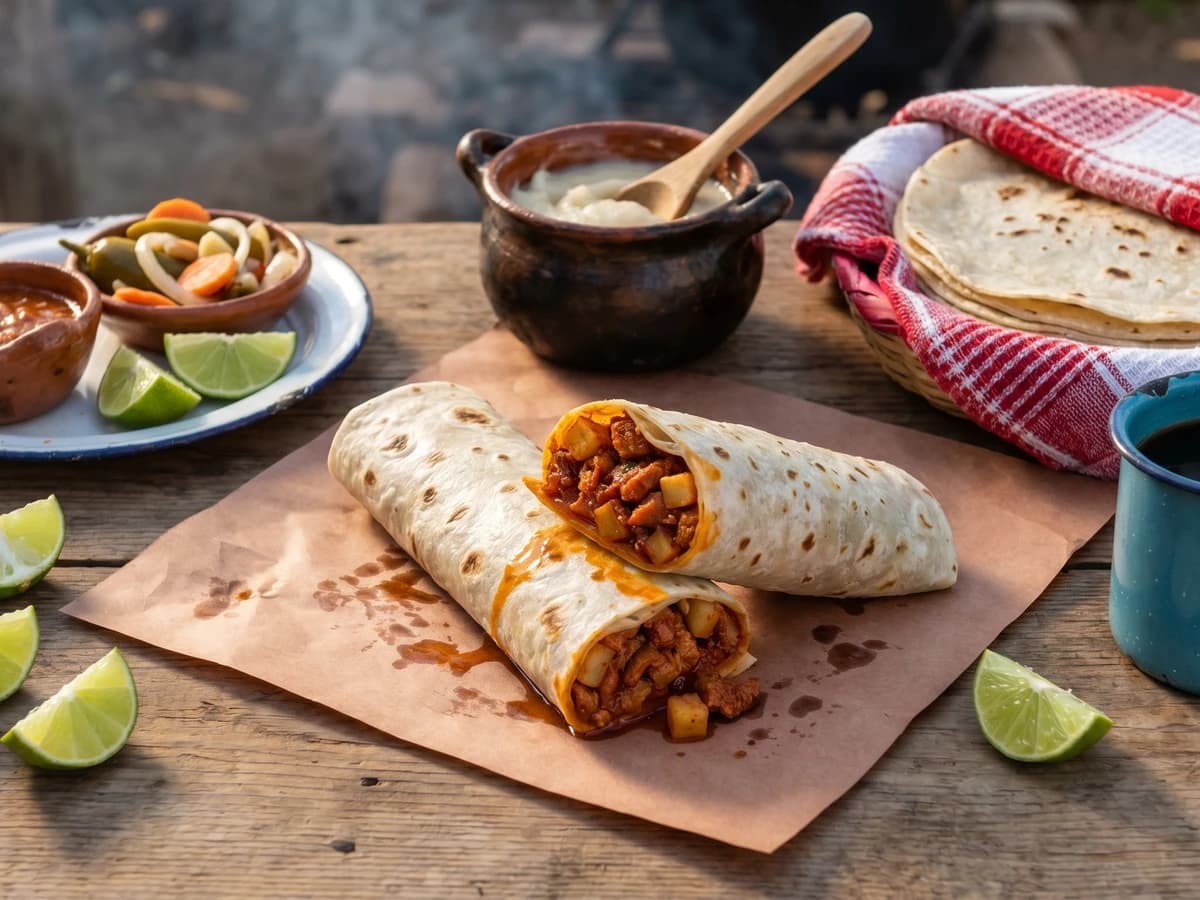
Sonora's working morning burrito: chicharrón de cáscara stewed in chile colorado with diced potato, rolled tight in a paper-thin tortilla sobaquera and eaten standing up at the carreta.
Chef Lupita
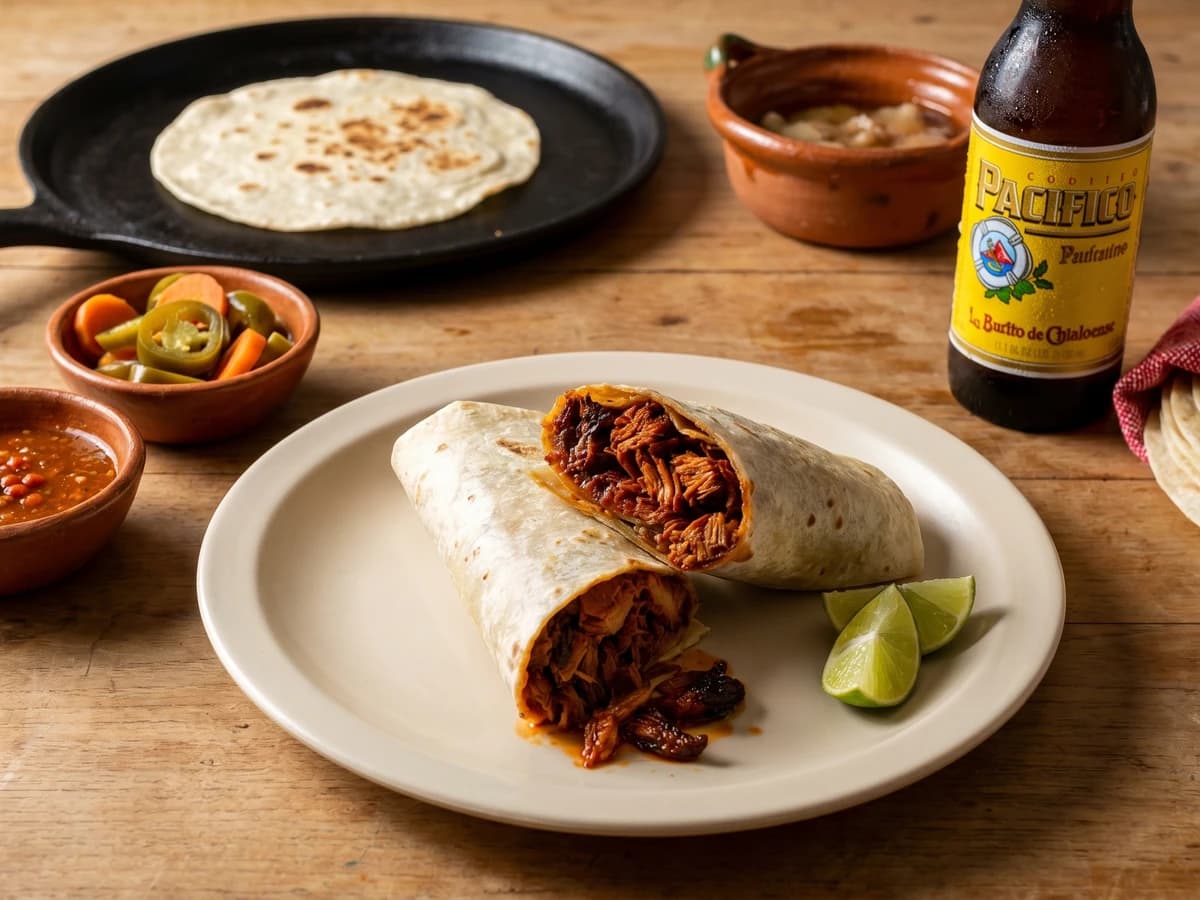
Mocorito's pork chilorio, shredded and confited in lard with chile ancho and pasilla, rolled into a thin handmade flour tortilla. The burrito Sinaloa sends out into the world.
Chef Lupita
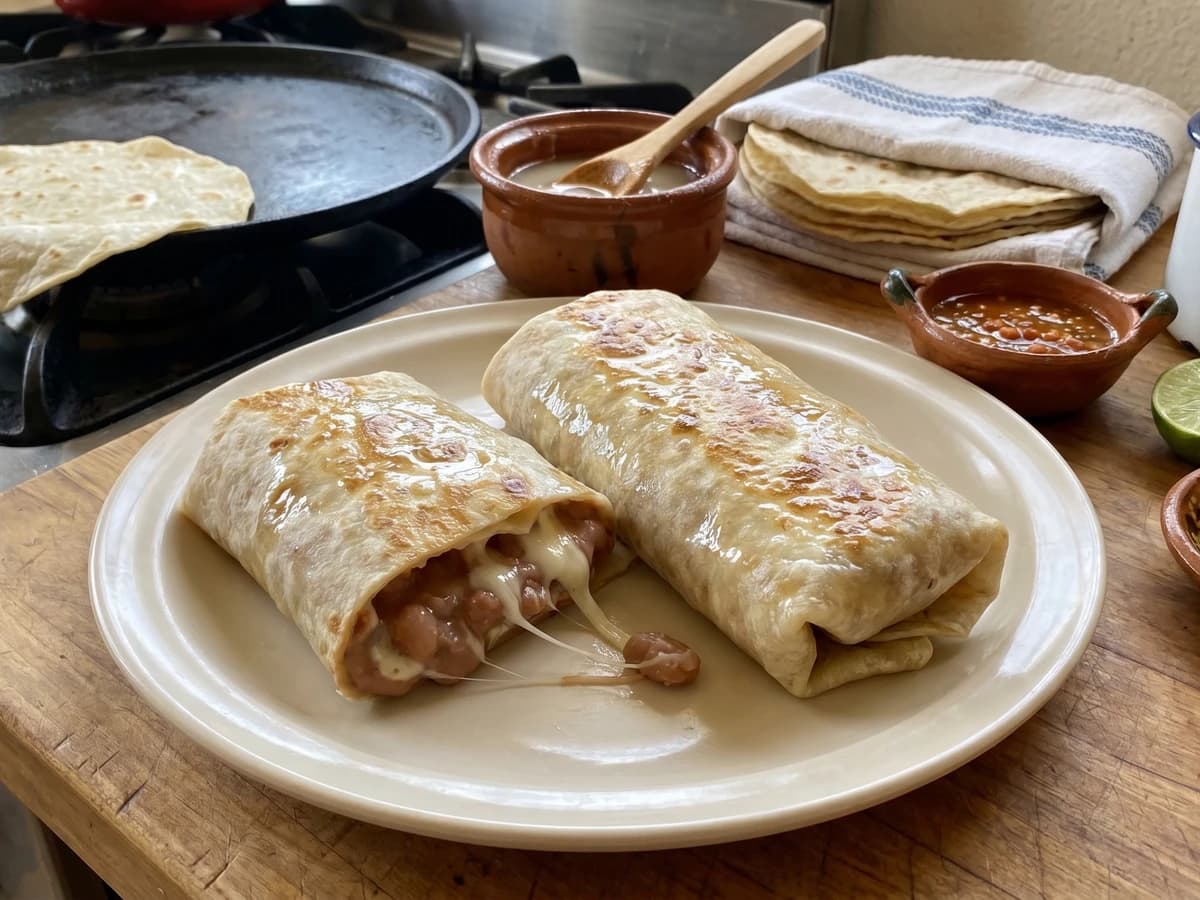
Sonora's morning burrito of mashed pinto frijoles puercos and melted queso asadero, wrapped in a paper-thin sobaquera and seared on the comal until the cheese pulls in long strings.