
Chef Graziella
Zuppa Inglese Emiliana
Layers of silken custard and liqueur-soaked sponge, the jewel-toned dessert that Emilian grandmothers have assembled for generations. This is not English, and it is not soup. It is something far better.
A cooking platform built around craft, culture, and the stories behind what we eat.
Created by
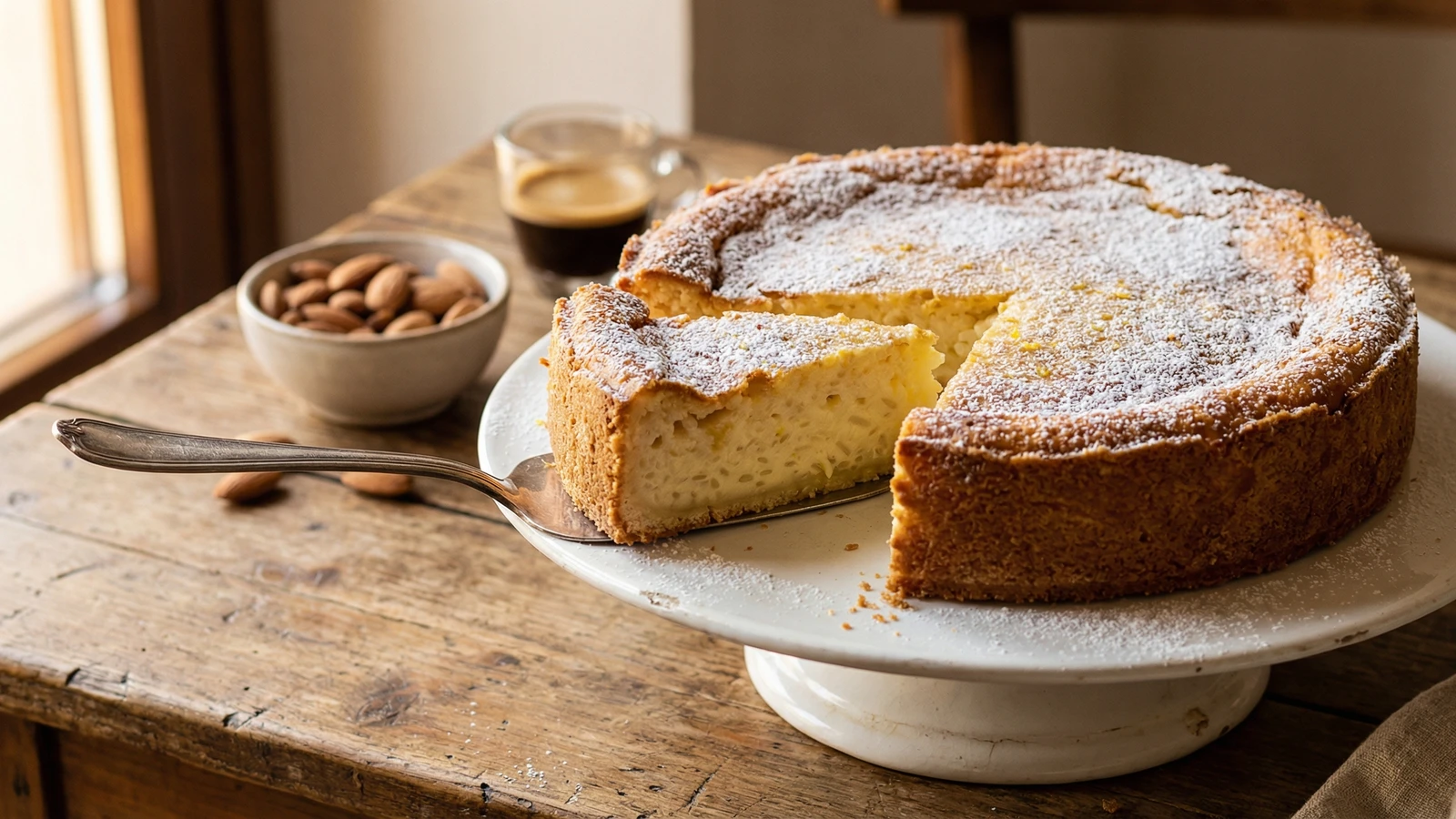
The rice cake of Bologna, where arborio is simmered in milk until it surrenders completely, then baked with eggs, almonds, and lemon into something between pudding and cake.
This is not a cake in the American sense. There is no flour, no leavening, nothing that puffs or rises dramatically. Torta di riso is rice, milk, eggs, and sugar, cooked slowly and baked until the top turns golden and the center remains soft. It is peasant dessert, the kind Bolognese grandmothers have made for generations with ingredients every household kept on hand.
The rice must cook in milk until it has given up all resistance. You are not making risotto. You are making something closer to rice porridge, where each grain has swelled and softened until the mass holds together without effort. This takes patience. There is no shortcut.
Americans want to add things. Chocolate chips. Dried fruit. More sugar. What they do not understand is that restraint creates elegance. The almond extract is measured in drops, not tablespoons. The lemon zest whispers, it does not shout. What you keep out is as significant as what you put in. This truth applies nowhere more than in desserts, where sweetness can overwhelm everything if left unchecked.
Torta di riso appears in Bolognese cookery manuscripts from the 18th century, when rice was a luxury ingredient reserved for special occasions. The dish democratized as rice cultivation expanded in the Po Valley, becoming a standard offering at parish festivals and family celebrations throughout Emilia-Romagna. Each household guards small variations: some add candied citron, others insist on amaretto liqueur rather than extract.
Quantity
1 cup
Quantity
4 cups
Quantity
1 cup
Quantity
1/4 teaspoon
Quantity
1
zest finely grated
Quantity
1 teaspoon
Quantity
4
Quantity
1/3 cup
finely ground
Quantity
2 tablespoons, plus more for pan
softened
Quantity
for pan
Quantity
for dusting
| Ingredient | Quantity |
|---|---|
| arborio rice | 1 cup |
| whole milk | 4 cups |
| granulated sugar | 1 cup |
| fine sea salt | 1/4 teaspoon |
| lemonzest finely grated | 1 |
| pure almond extract | 1 teaspoon |
| large eggs | 4 |
| blanched almondsfinely ground | 1/3 cup |
| unsalted buttersoftened | 2 tablespoons, plus more for pan |
| fine dry breadcrumbs | for pan |
| powdered sugar | for dusting |
Combine the rice, milk, half the sugar, and the salt in a heavy-bottomed saucepan. Set over medium-low heat and bring to a gentle simmer. Cook, stirring frequently with a wooden spoon, until the rice has absorbed nearly all the milk and the grains are completely soft. This takes 35 to 45 minutes. The mixture should be thick and creamy, moving slowly when you stir. Do not rush this. Undercooked rice ruins everything.
Remove the pan from heat. Stir in the butter until melted, then add the lemon zest and almond extract. Transfer to a large bowl and let cool to room temperature, stirring occasionally to release steam. The mixture must cool completely before adding eggs, or you will scramble them.
Position a rack in the center of the oven and heat to 325 degrees Fahrenheit. Generously butter a 9-inch springform pan. Coat the bottom and sides with fine breadcrumbs, tapping out the excess. The breadcrumbs create the characteristic golden crust and prevent sticking.
In a separate bowl, whisk the eggs with the remaining sugar until pale and slightly thickened, about 2 minutes. Fold the egg mixture into the cooled rice along with the ground almonds. The batter will be thick and porridge-like. This is correct.
Pour the batter into the prepared pan and smooth the top with a spatula. Bake until the top is deep golden brown and the center is just set, 55 to 65 minutes. A slight jiggle in the center is acceptable. The cake firms as it cools. Overbaking dries the interior.
Let the cake cool in the pan on a wire rack for 20 minutes. Run a thin knife around the edges before releasing the springform ring. Cool completely to room temperature. The texture improves as it rests. Dust with powdered sugar before serving, passing it through a fine sieve.
1 serving (about 150g)
Culinary guides, cultural storytelling, and the editorial depth that makes cooking meaningful.
Discover Culinary ExplorerChef Graziella
Layers of silken custard and liqueur-soaked sponge, the jewel-toned dessert that Emilian grandmothers have assembled for generations. This is not English, and it is not soup. It is something far better.

Chef Juliette
Five almond preparations, one discipline: remove the skins cleanly, dry every kernel through, then cut, toast, or cloak it in pale caramel without letting its fragrant oils escape.

Chef Juliette
A pastry pantry lesson in one tray: filberts warmed only until their red skins release, rubbed clean, cooled, and chopped into a fragrant mise-en-place for cakes, creams, pralines, and petits fours.

Chef Juliette
The smallest pâtisserie discipline decides whether a cake leaves its mould intact: clarified butter in every corner, followed by the lightest veil of dry flour or fécule.