Chef Lupita
Birria Tacos with Consome
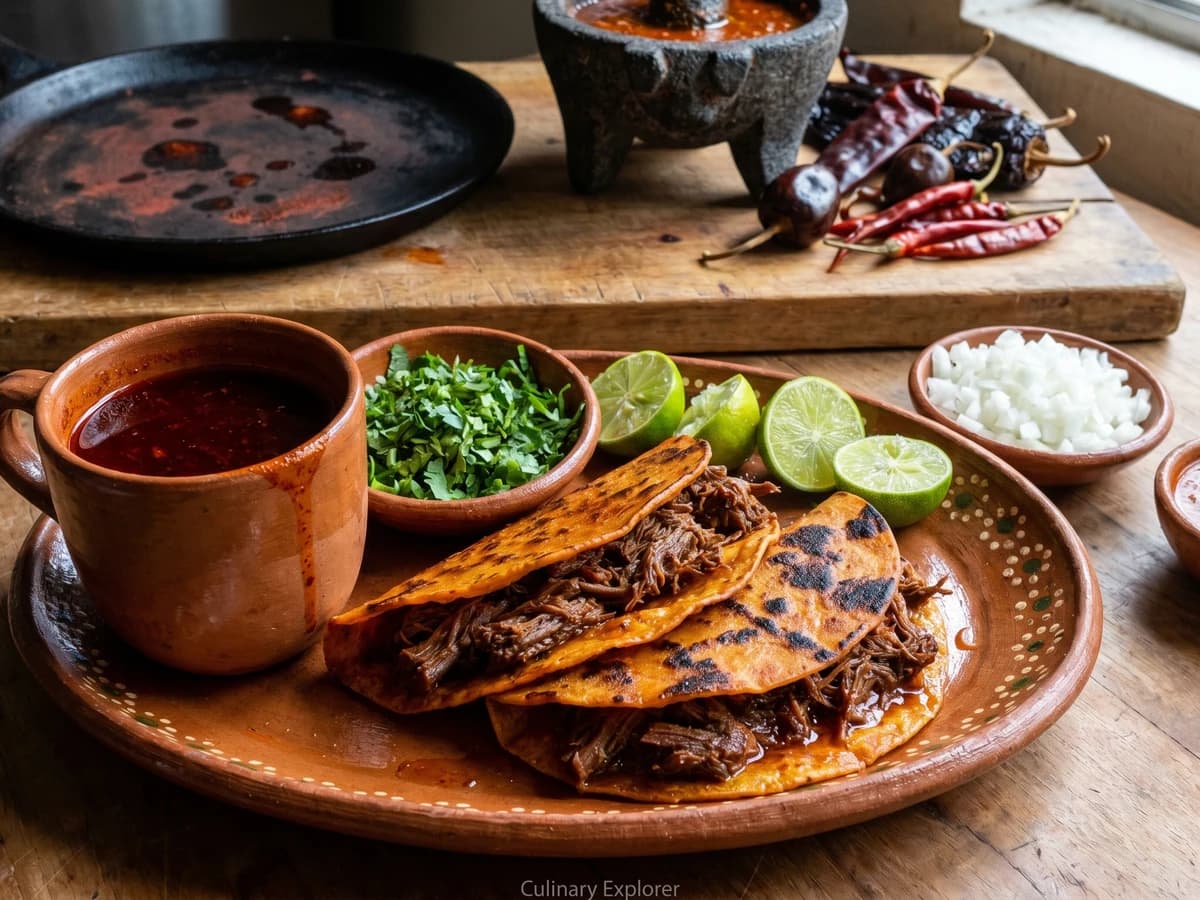
Jalisco's goat birria, born around Cocula and carried into Guadalajara's markets, slow-braised in ancho, guajillo, cascabel, and chile de arbol, then tucked into corn tortillas crisped in its own red fat.
A cooking platform built around craft, culture, and the stories behind what we eat.
Created by
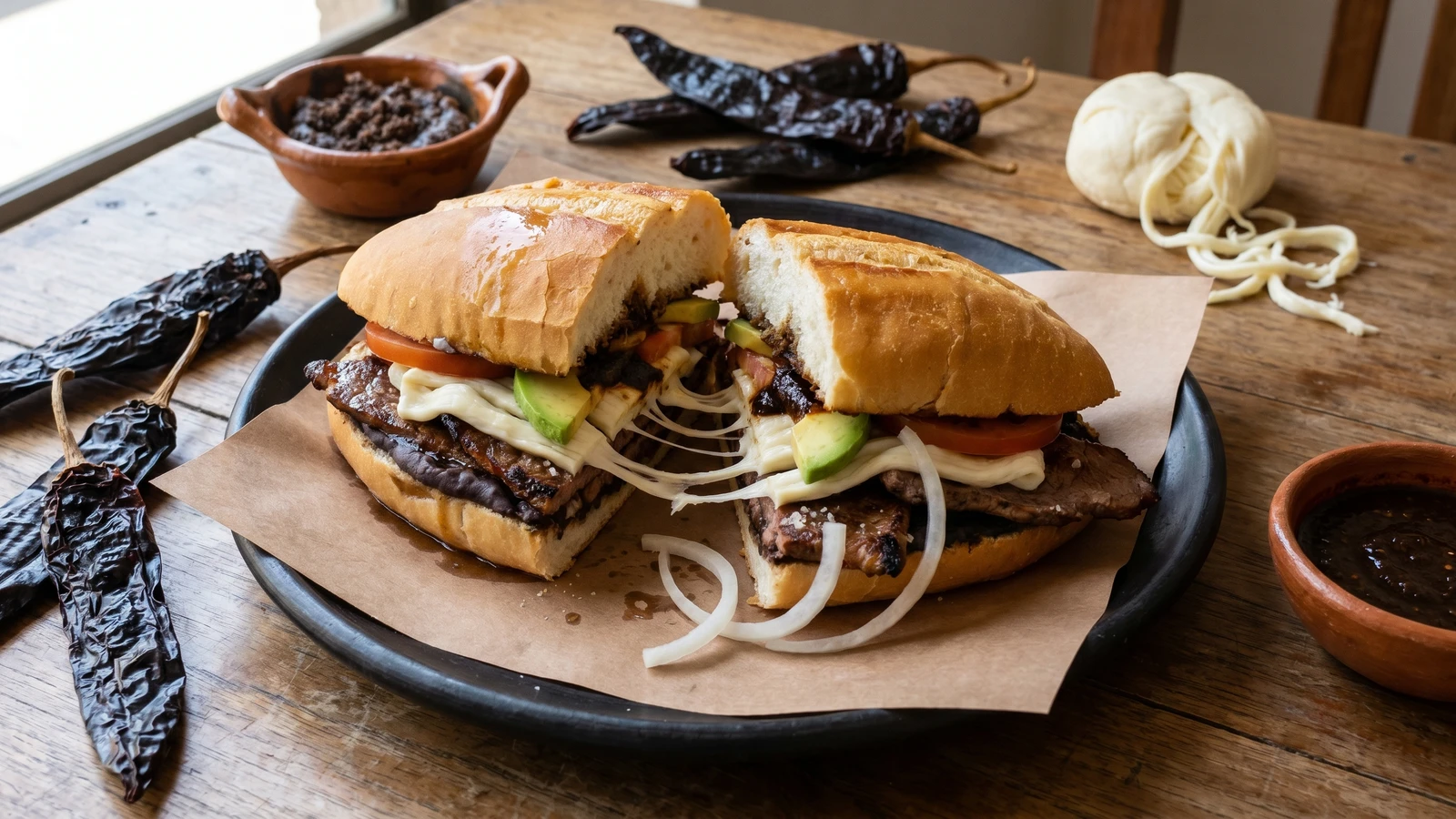
Oaxaca's market torta built on asiento-smeared bolillo, black bean paste, thin-cut tasajo grilled until the salt blooms, and hand-pulled quesillo that softens over the hot meat. Esto no es comida de un solo Mexico.
This torta is from Oaxaca. Not from a restaurant menu that says 'Oaxacan-style.' From the market stalls inside the Central de Abastos, where the women who assemble these have been doing it for decades, where the smell of tasajo on the comal hits you three aisles before you reach the comedor.
The bread gets asiento. Both cut sides. Asiento is the dark, granular sediment from the bottom of the cazo where chicharrón is fried: pork fat with memory, caramelized, slightly bitter, rich in a way no other fat in Mexico replicates. No other state uses it this way. In Oaxaca, it goes on bolillos the way butter goes on toast in other countries, without measuring, without hesitation. Then the frijoles negros, also fried in asiento, spread thick as plaster. Then the tasajo, grilled fast and hot until the edges char and the salt blooms white on the surface. Then quesillo, pulled into long strings by hand and draped over the hot meat so it softens into something elastic and warm. Avocado, tomato, and a salsa made from chile pasilla oaxaqueño, the smoked chile that exists nowhere else with that exact fruity, smoky depth.
I first ate this torta in 2004, sitting on a plastic stool in the Central de Abastos with grease running down my wrist and brown paper on my lap. The woman who made it did not ask what I wanted. She said 'tasajo' and started building. I watched her hands: asiento, frijoles, carne, quesillo, aguacate, salsa, closed, wrapped, done. Thirty seconds. She had been making that torta since before I was born. I wrote down nothing that day because there was nothing to write down. The recipe was the hands. Recetas probadas y garantizadas.
Tasajo, thin-cut salted beef dried in the high-altitude sun of Oaxaca's Valles Centrales, has been a preservation staple since colonial-era cattle ranching expanded across the region, and the Central de Abastos market in Oaxaca city remains the epicenter of its commerce, where vendors drape the dark red sheets over wooden racks like curtains. Asiento, the caramelized pork sediment left at the bottom of the cazo after rendering chicharrón, exists as a bread spread and cooking fat almost exclusively in Oaxacan cuisine, a byproduct that no other Mexican state elevated to the status of essential ingredient. Quesillo, Oaxaca's hand-pulled string cheese, shares a stretching technique with Italian mozzarella but developed independently through colonial-era dairy practices in the Valles Centrales, where the town of Reyes Etla still produces the most prized versions and sends them across the state wrapped in blue plastic bags.
Quantity
4
split lengthwise
Quantity
1 pound
Quantity
8 ounces
pulled into long strips by hand
Quantity
4 tablespoons
divided: 3 tablespoons for the bread, 1 tablespoon for the beans
Quantity
1
sliced
Quantity
1 medium
sliced into 8 rounds
Quantity
for serving
sliced into thin rings
Quantity
2 cups beans plus 1/2 cup broth
Quantity
1 tablespoon
Quantity
to taste
Quantity
4
stemmed
Quantity
2
unpeeled
Quantity
1/4 cup
Quantity
1/4 teaspoon
| Ingredient | Quantity |
|---|---|
| bolillos oaxaqueños or telerassplit lengthwise | 4 |
| tasajo (Oaxacan thin-cut salted beef) | 1 pound |
| quesillo (Oaxacan string cheese)pulled into long strips by hand | 8 ounces |
| asiento (dark pork lard sediment from chicharrón production)divided: 3 tablespoons for the bread, 1 tablespoon for the beans | 4 tablespoons |
| ripe Hass avocadosliced | 1 |
| ripe tomatosliced into 8 rounds | 1 medium |
| white onion (optional)sliced into thin rings | for serving |
| cooked black beans with their broth | 2 cups beans plus 1/2 cup broth |
| asiento or pork lard (manteca de cerdo), for the beans | 1 tablespoon |
| kosher salt, for the beans | to taste |
| dried chile pasilla oaxaqueño (chile mije)stemmed | 4 |
| garlic clovesunpeeled | 2 |
| water, for the salsa | 1/4 cup |
| kosher salt, for the salsa | 1/4 teaspoon |
Heat a dry comal or cast iron skillet over medium heat. Lay the stemmed pasilla oaxaqueño chiles flat on the surface and press gently with a spatula for about 15 seconds per side. They are already smoked, so you are not toasting them raw. You are waking up the oils. The skin will puff slightly and the kitchen will fill with a smoky, fruity scent that smells nothing like a regular pasilla. That distinction matters. This chile is grown and smoked in the Sierra Mixe and the Cañada region of Oaxaca and it has no substitute. Set the chiles aside.
On the same hot comal, place the two unpeeled garlic cloves. Let them sit for about five minutes, turning occasionally, until the skin is spotted dark and the flesh inside is soft when you press it. Peel them and set aside.
Tear the toasted pasilla oaxaqueño into rough pieces and place in a blender with the peeled roasted garlic, the water, and the salt. Blend until you have a thick, rustic salsa with visible flecks of chile skin. It should not be perfectly smooth. Taste it. The flavor should be smoky and direct with a slow, moderate heat that builds. If you have a molcajete, use it instead of the blender. The texture from the stone changes the salsa, rougher, more broken, the way the market women in the Central de Abastos make it. Set aside.
Heat the tablespoon of asiento or lard in a heavy skillet over medium heat. When it shimmers, add the cooked black beans and their broth. Mash with a bean masher or the back of a wooden spoon, pressing and folding until you have a thick, spreadable paste. The consistency should hold its shape on a spoon without running. If it is too thick, add a splash of bean broth. Season with salt. The asiento gives the beans a roasted pork flavor that oil cannot replicate. La manteca es el sabor. Keep warm.
Get the comal or grill screaming hot over high heat. Lay the tasajo sheets flat on the surface. They are thin, often no thicker than a few millimeters, so they cook fast. One to two minutes per side. Watch for the edges to darken and curl and the salt to bloom white on the surface. The meat should char in spots but stay pliable, not stiff. Pull each sheet off as it finishes and stack them on a cutting board. Cut or tear the grilled tasajo into pieces that will fit inside the bolillo. Do not cut them too small. The meat should hang out of the bread a little. That is the Oaxacan way.
Split each bolillo lengthwise. Place them cut side down on the hot comal for about one minute, until the surface turns golden and slightly crisp. Pull them off and immediately spread about two teaspoons of asiento on each cut side while the bread is hot. The heat melts the asiento into the crumb. You will see the dark fat soak in and the bread turn a shade darker. This is correct. The asiento is not a garnish. It is the foundation. Spread the refried black beans generously on the bottom half of each bolillo.
On top of the bean layer, pile the hot grilled tasajo. Drape the hand-pulled quesillo strips over the meat immediately so the residual heat softens the cheese without fully melting it. You want it to stretch when you bite, not pool into a puddle. Layer the avocado slices and tomato rounds next. Spoon a generous line of the salsa de pasilla oaxaqueño over the tomato. Add a few thin rings of raw white onion if you like them. Close the torta and press down gently with your palm. The bread should compress just enough to hold everything together. Wrap the bottom half in paper if you are eating it standing up, the way it is eaten at the mercado. Asi se hace y punto.
1 serving (about 450g)
Culinary guides, cultural storytelling, and the editorial depth that makes cooking meaningful.
Discover Culinary ExplorerChef Lupita
Jalisco's goat birria, born around Cocula and carried into Guadalajara's markets, slow-braised in ancho, guajillo, cascabel, and chile de arbol, then tucked into corn tortillas crisped in its own red fat.
Chef Lupita
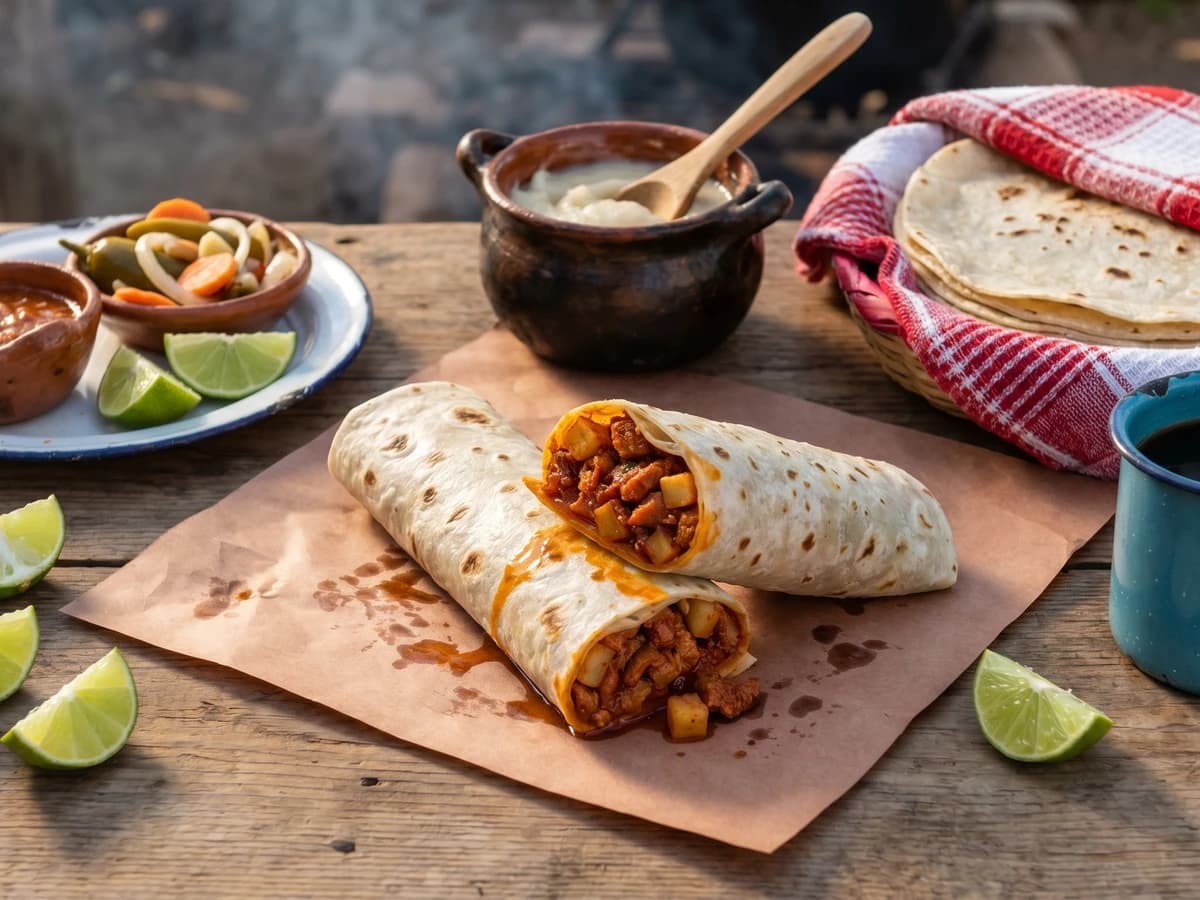
Sonora's working morning burrito: chicharrón de cáscara stewed in chile colorado with diced potato, rolled tight in a paper-thin tortilla sobaquera and eaten standing up at the carreta.
Chef Lupita
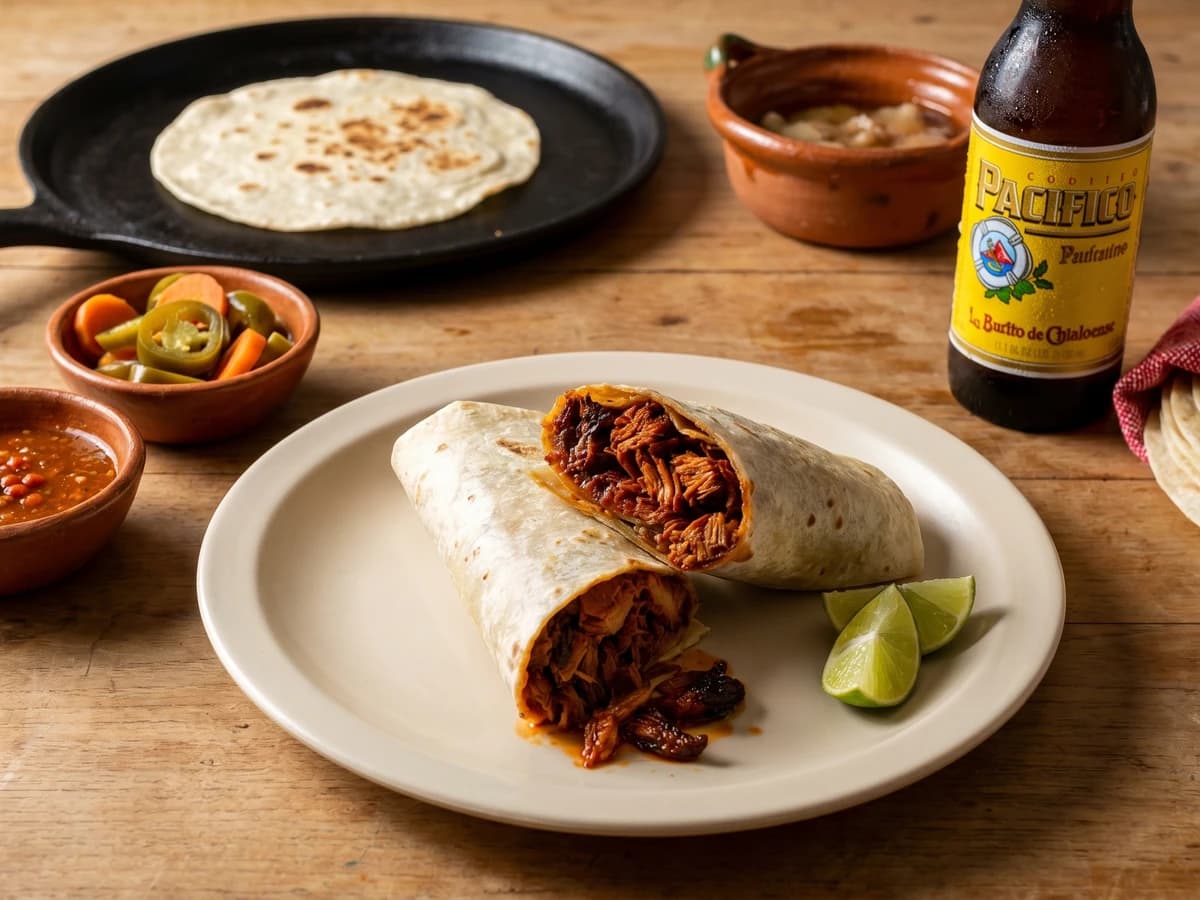
Mocorito's pork chilorio, shredded and confited in lard with chile ancho and pasilla, rolled into a thin handmade flour tortilla. The burrito Sinaloa sends out into the world.
Chef Lupita
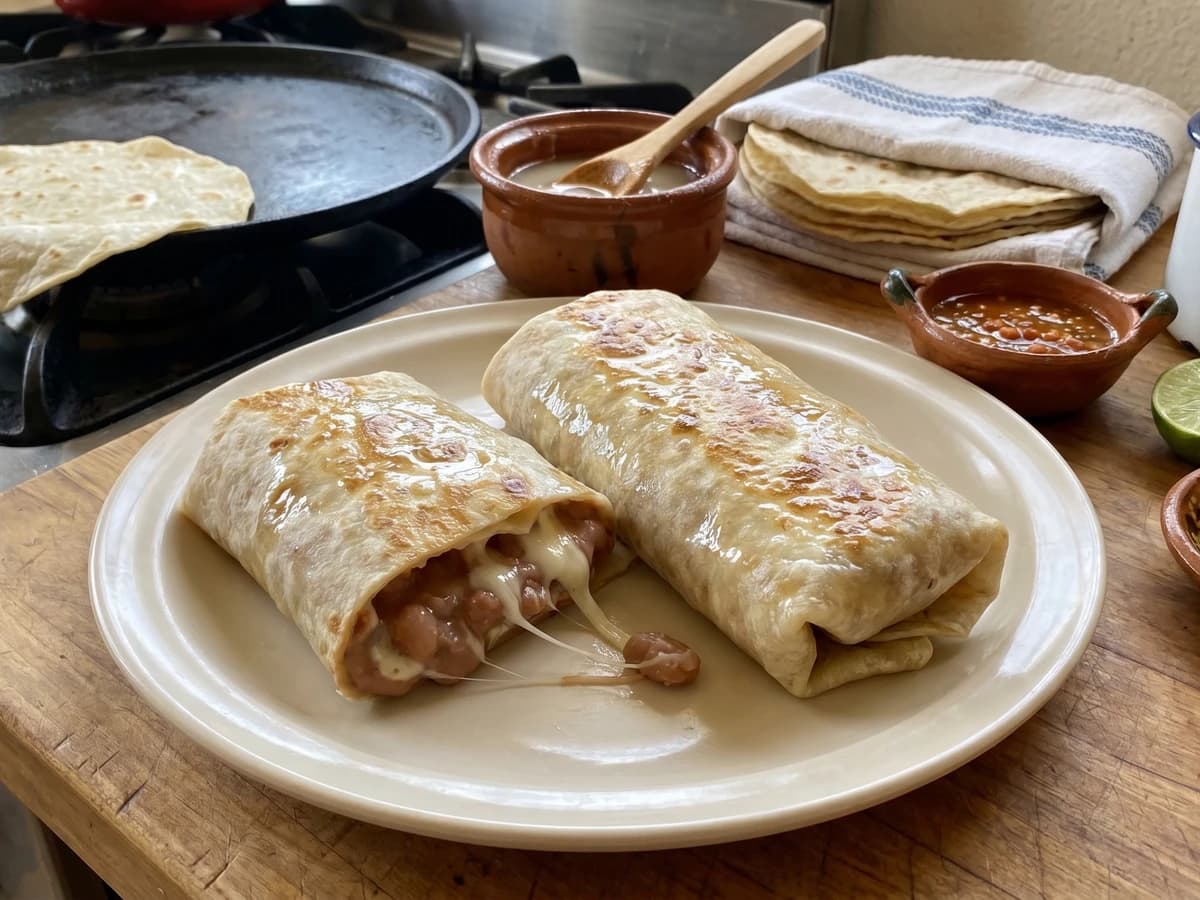
Sonora's morning burrito of mashed pinto frijoles puercos and melted queso asadero, wrapped in a paper-thin sobaquera and seared on the comal until the cheese pulls in long strings.