Chef Lupita
Birria Tacos with Consome
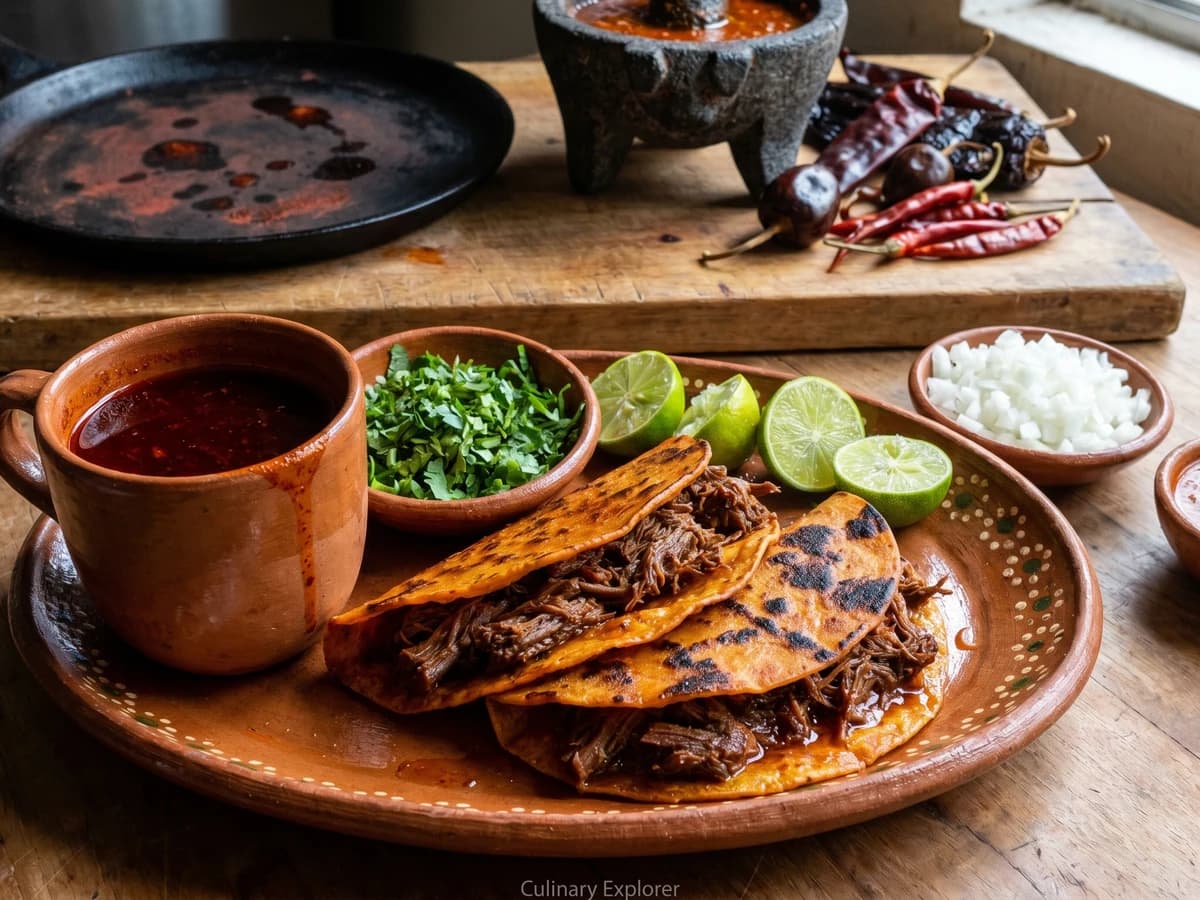
Jalisco's goat birria, born around Cocula and carried into Guadalajara's markets, slow-braised in ancho, guajillo, cascabel, and chile de arbol, then tucked into corn tortillas crisped in its own red fat.
A cooking platform built around craft, culture, and the stories behind what we eat.
Created by
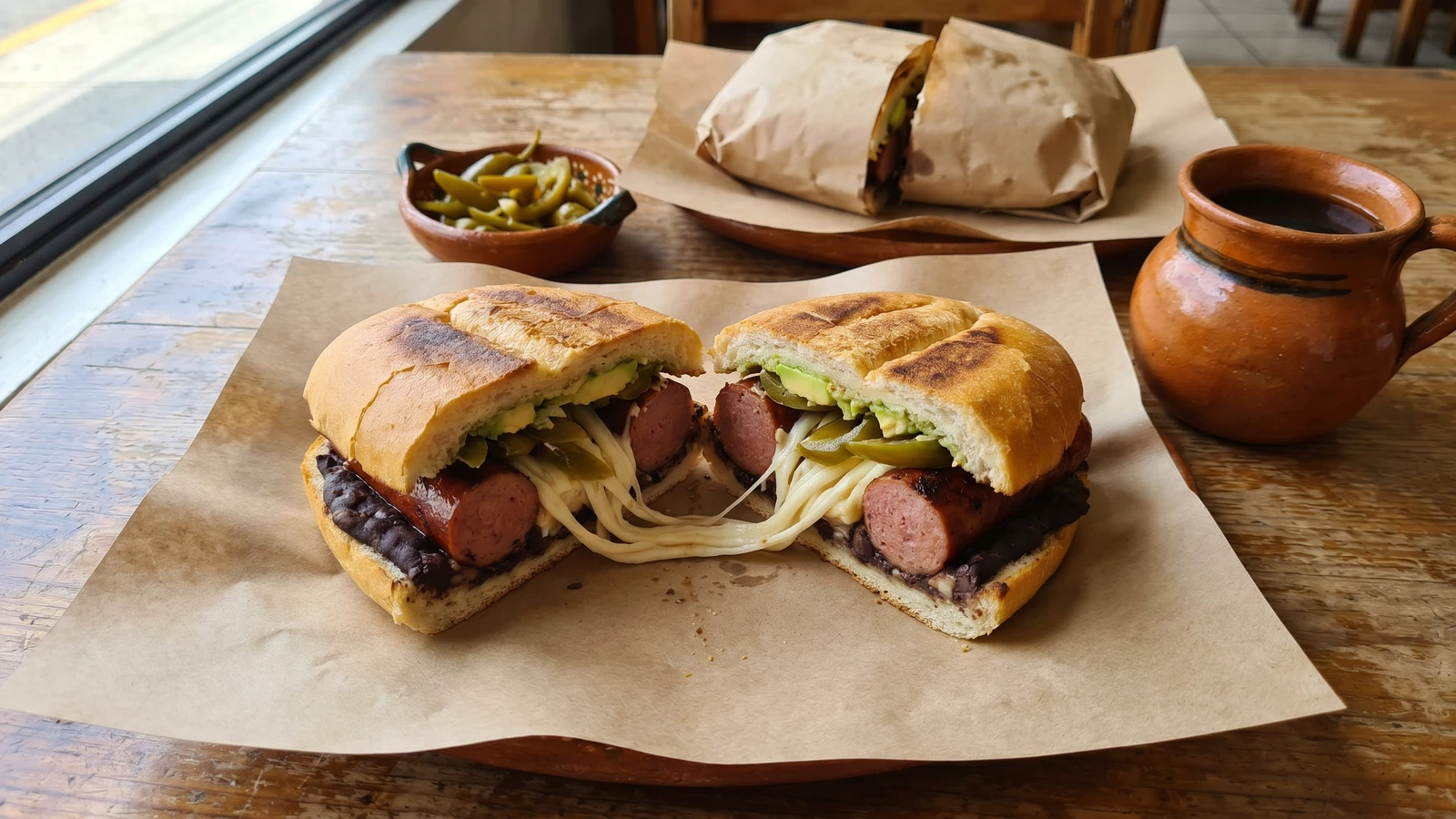
Ejutla de Crespo's century-old smoked beef sausage, split and griddled until the crust darkens, built into a torta with Oaxacan quesillo, frijoles negros refritos with avocado leaf, and tangy chiles en escabeche on a toasted telera.
Ejutla de Crespo sits at the southern end of Oaxaca's Valles Centrales, about ninety minutes from the capital on the road toward the coast. It's a small town. Thursday is market day. And the thing every Oaxacan knows about Ejutla is the salchicha: a smoked beef sausage cured with vinegar, Mexican oregano, clove, and cinnamon that has been made by the same families for over a hundred years. You smell the smokehouses before you see them.
The sausage is beef, not pork. That distinction matters. Beef is leaner, denser, and the smoke clings to it differently. The vinegar cure gives it a tang that cuts through the richness of the fat, and the spicing, oregano, clove, cinnamon, black pepper, is warm and aromatic without being sweet. It tastes like nothing else in Oaxaca, and Oaxaca is a state that already has more distinct flavors per square kilometer than most countries. Cada estado, su propia cocina, and within Oaxaca, cada pueblo tambien.
The torta is how most people eat it. A telera split open, spread thick with frijoles negros refritos made properly with manteca and a dried avocado leaf for that faint anise note that only Oaxacan cooks insist on. The sausage goes on next, split lengthwise and griddled until the cut side darkens and the fat renders. Then strips of quesillo draped over the hot meat so the cheese softens but doesn't disappear. Pickled chiles on top. That's the torta. No twelve-ingredient sauce, no three-hour project. The sausage does the work because the sausage IS the work: a hundred years of curing and smoking perfected by the women and men of Ejutla who pass the recipe and the smokehouse down together.
I bought my first torta de salchicha ejuteca at the Thursday market in Ejutla from a woman who had been selling them for thirty years. She split the telera with her hands, not a knife, spread the beans thick, and laid the sausage in without ceremony. She handed it to me wrapped in papel de estraza and said nothing. The torta said everything. Saber cocinar es saber vivir.
The salchicha ejuteca traces its origins to the late 19th or early 20th century in Ejutla de Crespo, a market town in Oaxaca's Valles Centrales district, where local butchers developed a method of curing and smoking beef sausages seasoned with vinegar, Mexican oregano, clove, cinnamon, and black pepper. Unlike most Mexican embutidos, which are pork-based, the ejuteca tradition centers on beef, likely reflecting the cattle economy of Oaxaca's southern central valleys and the availability of local hardwoods for smoking. The sausage has been recognized in state-level efforts to catalog and preserve Oaxacan culinary patrimony, though it remains largely unknown outside the state, overshadowed by Oaxaca's more famous moles, tlayudas, and chapulines in the national imagination.
Quantity
4 (about 1 1/4 pounds total)
Quantity
4
Quantity
2 cups
with 1/2 cup of their broth
Quantity
3 tablespoons, divided
Quantity
1
Quantity
to taste
Quantity
8 ounces
pulled into long strips
Quantity
1/2 cup
sliced
Quantity
1
sliced
| Ingredient | Quantity |
|---|---|
| salchichas ejutecas (smoked beef sausages from Ejutla de Crespo) | 4 (about 1 1/4 pounds total) |
| telera rolls | 4 |
| cooked black beanswith 1/2 cup of their broth | 2 cups |
| manteca de cerdo (pork lard) | 3 tablespoons, divided |
| dried avocado leaf (hoja de aguacate) | 1 |
| kosher salt | to taste |
| quesillo (Oaxacan string cheese)pulled into long strips | 8 ounces |
| chiles en escabeche (pickled jalapeños or chiles de agua)sliced | 1/2 cup |
| ripe avocado (optional)sliced | 1 |
Melt 2 tablespoons of manteca de cerdo in a cast iron skillet or small cazuela over medium heat. When the lard shimmers, add the cooked black beans with their broth and drop in the dried avocado leaf. The avocado leaf is the Oaxacan aromatic for beans. It gives them a faint anise note that no other herb replicates. If someone tells you to use bay leaf instead, they have not cooked in Oaxaca. Mash the beans with a bean masher or the back of a wooden spoon, working them into a thick, spreadable paste. Cook for five to seven minutes, stirring often, until the beans pull away from the sides of the pan and hold their shape on a spoon. Season with salt. Remove the avocado leaf. Set aside and keep warm.
Split each salchicha ejuteca lengthwise, opening it like a book so it lies flat. You want maximum surface contact with the hot comal. Heat a dry comal or cast iron skillet over medium-high heat and add the remaining tablespoon of lard. Lay the sausage halves cut-side down. Let them cook undisturbed for two to three minutes until the cut side develops a dark caramelized crust and the fat begins to render. Flip and cook another minute on the skin side. The kitchen will smell like smoke and cloves and vinegar. That is a hundred years of Ejutla's curing tradition coming through the sausage. Do not overcook. The sausage is already smoked and fully cured. You are building crust, not cooking it through.
Split each telera in half horizontally. Place them cut-side down on the hot comal or skillet, pressing gently, for about one minute until they are golden and lightly crisp. A telera is soft bread by nature. You want it warm and toasted enough to hold the beans and the sausage without falling apart, but not so hard it fights the bite. If you cannot find teleras, a bolillo will work. A baguette will not. The crumb structure is wrong.
Spread a generous, thick layer of the refried black beans on the bottom half of each telera. Lay the griddled sausage on top of the beans, cut-side up. Drape the quesillo strips over the hot sausage so the cheese softens from the residual heat. Do not melt the quesillo under a broiler or in a microwave. It should go soft and yielding, not liquid. Add a few slices of pickled chile and the avocado if using. Close with the top half of the telera. Press down gently until you feel the layers settle against each other. Eat immediately. This is not a torta that waits. Recetas probadas y garantizadas.
1 serving (about 460g)
Culinary guides, cultural storytelling, and the editorial depth that makes cooking meaningful.
Discover Culinary ExplorerChef Lupita
Jalisco's goat birria, born around Cocula and carried into Guadalajara's markets, slow-braised in ancho, guajillo, cascabel, and chile de arbol, then tucked into corn tortillas crisped in its own red fat.
Chef Lupita
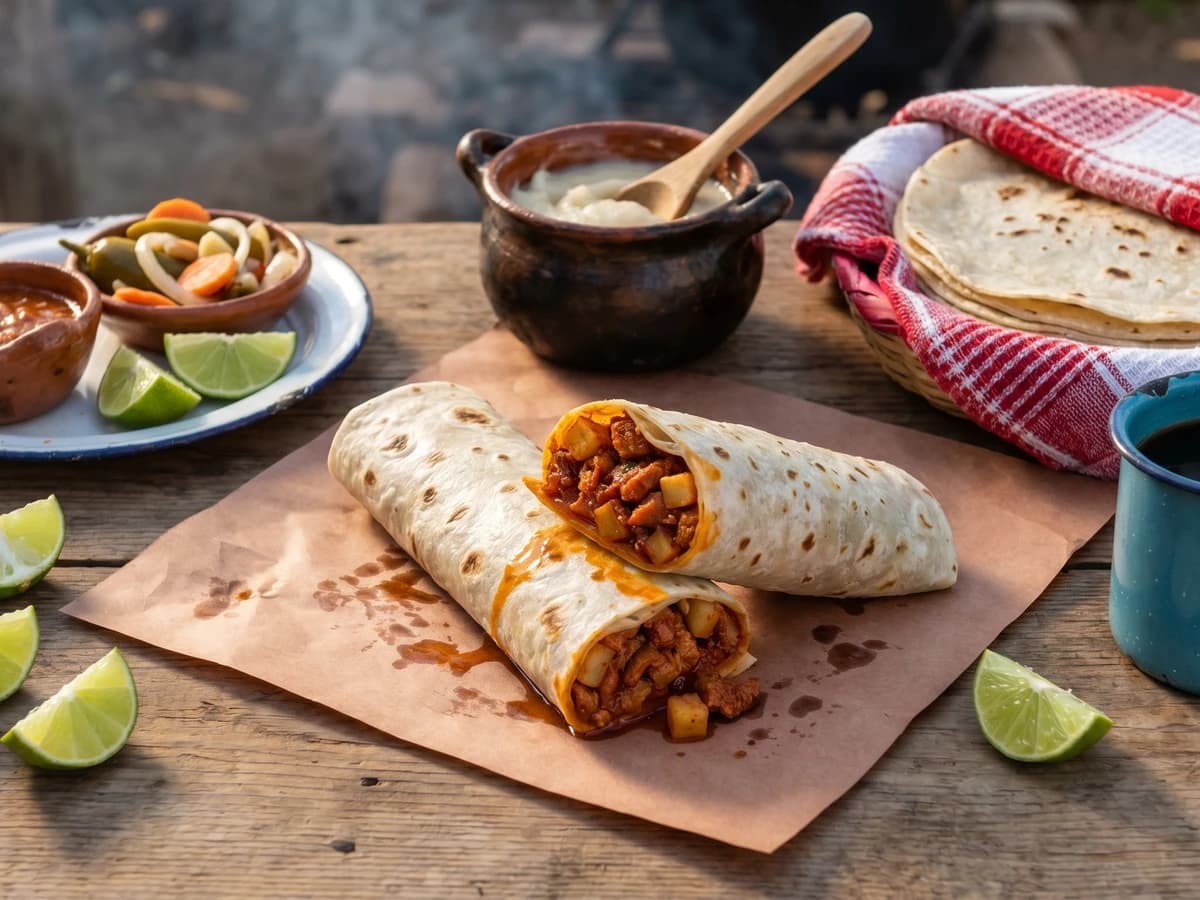
Sonora's working morning burrito: chicharrón de cáscara stewed in chile colorado with diced potato, rolled tight in a paper-thin tortilla sobaquera and eaten standing up at the carreta.
Chef Lupita
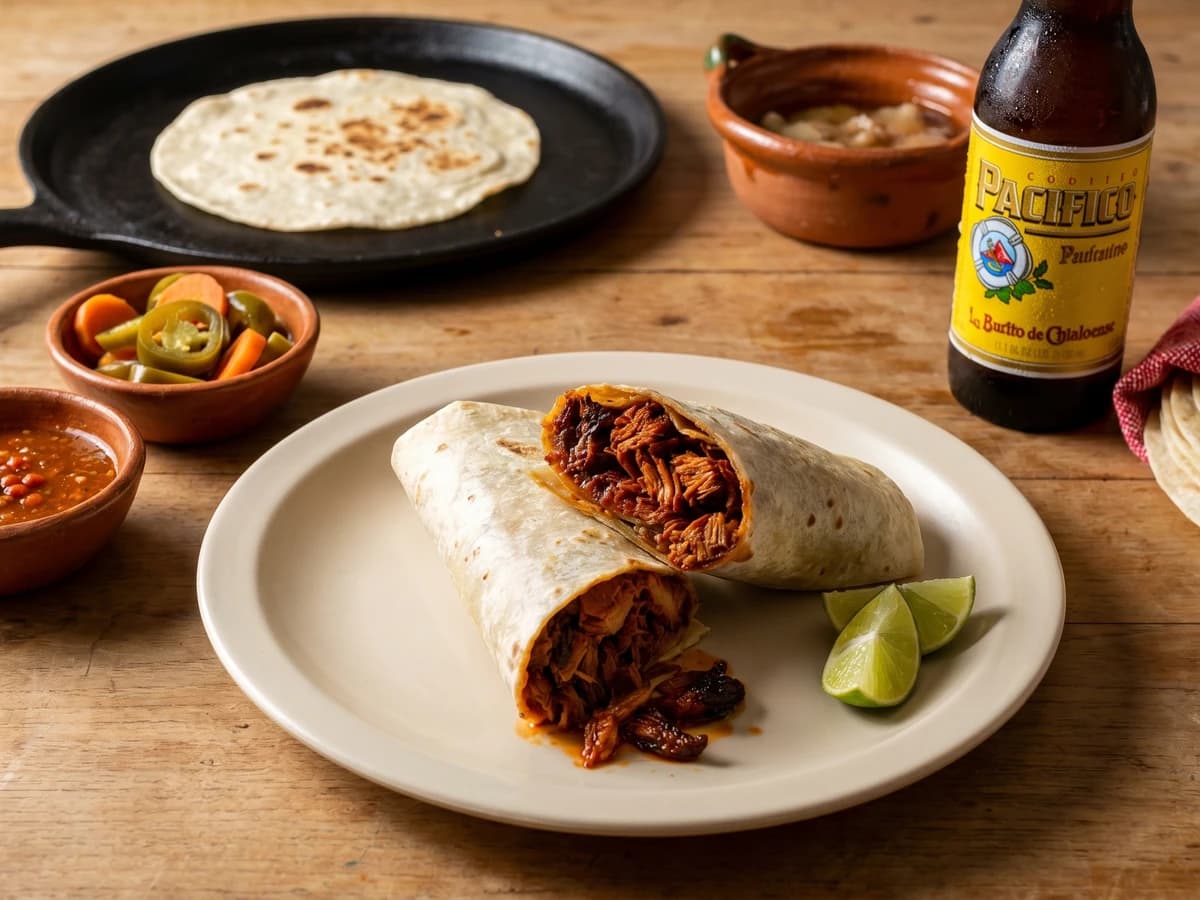
Mocorito's pork chilorio, shredded and confited in lard with chile ancho and pasilla, rolled into a thin handmade flour tortilla. The burrito Sinaloa sends out into the world.
Chef Lupita
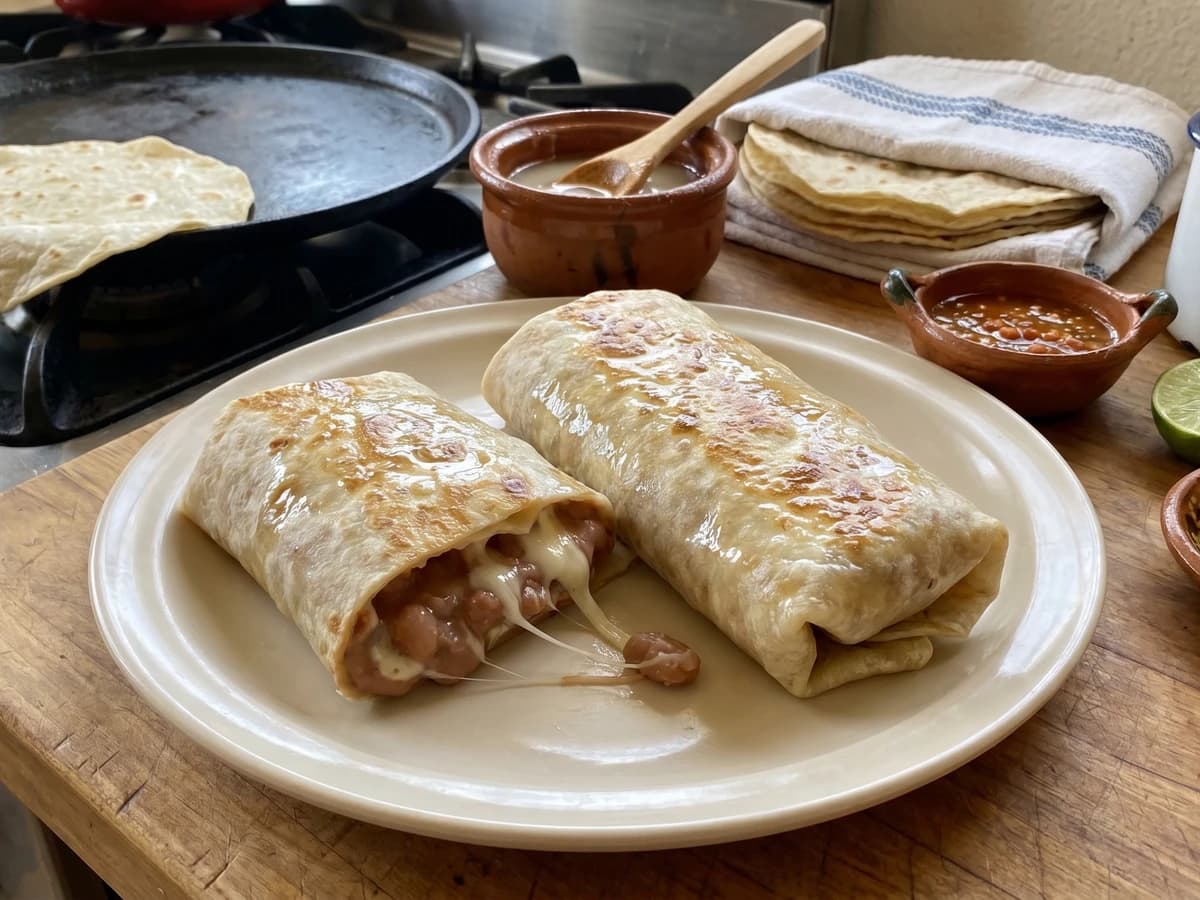
Sonora's morning burrito of mashed pinto frijoles puercos and melted queso asadero, wrapped in a paper-thin sobaquera and seared on the comal until the cheese pulls in long strings.