Chef Lupita
Birria Tacos with Consome
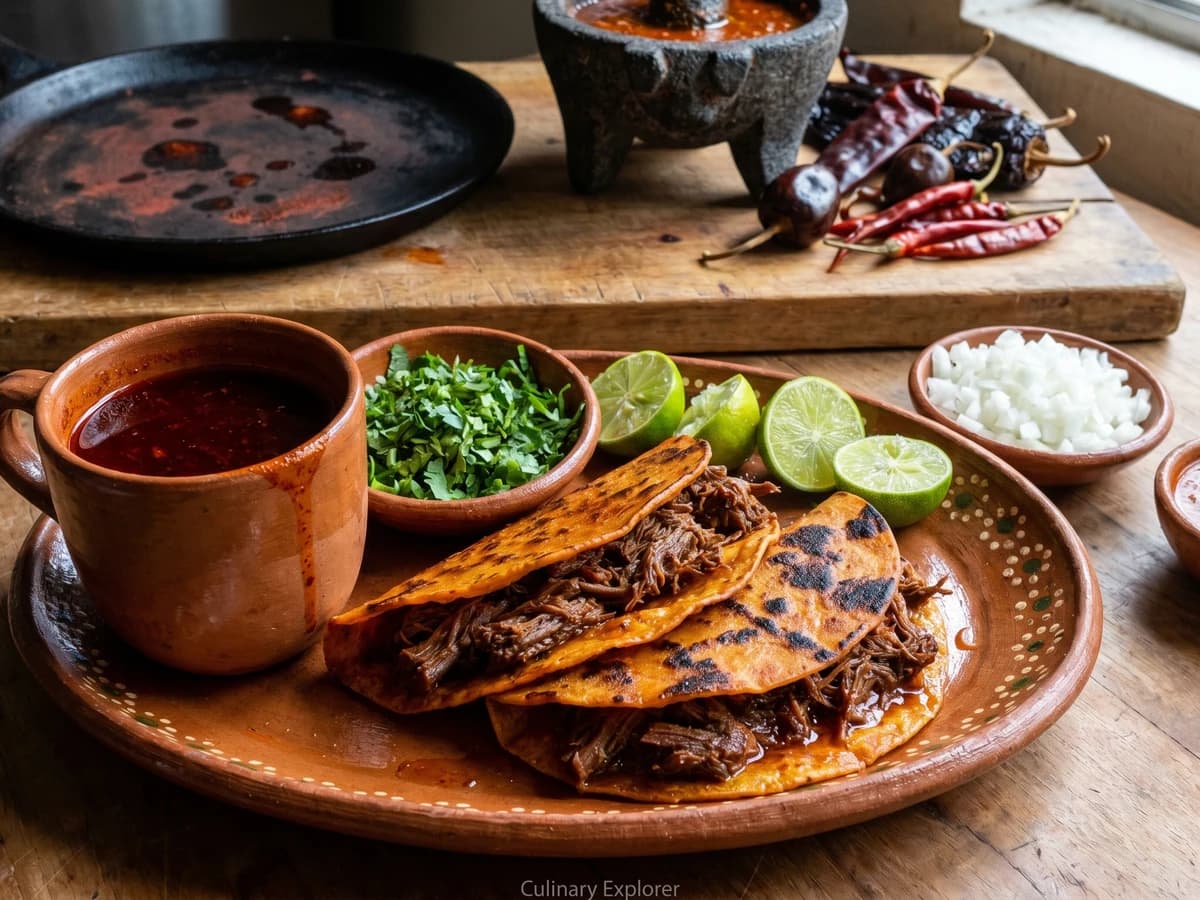
Jalisco's goat birria, born around Cocula and carried into Guadalajara's markets, slow-braised in ancho, guajillo, cascabel, and chile de arbol, then tucked into corn tortillas crisped in its own red fat.
A cooking platform built around craft, culture, and the stories behind what we eat.

Created by
Sinaloa's torta de pierna, slow-roasted pork leg pulled into shreds and tucked into a toasted bolillo with avocado, crema, pickled chiles, and refried beans. The lunch counter classic of Culiacan.
This torta is from Culiacan. Sinaloa, the northwest, the state of shrimp boats and tomato fields and lunch counters that have been making the same sandwich since their grandfather opened the place. The torta de pierna is what you order at noon when you have an hour, ten pesos heavier than a taco and twice as serious.
The pork leg is the dish. Pierna, slow-roasted with garlic, orange, and a splash of vinegar until the meat surrenders and the jugo turns into a glossy syrup that you pour back over the shreds. This is not carnitas. Carnitas belongs to Michoacan and it is fried in lard. Pierna belongs to the north and it is braised. Different state, different technique, different sandwich. The bolillo has to be fresh and it has to be toasted on the cut side. A soft bolillo goes to mush under the jugo and the crema and you have a wet napkin instead of a torta.
My mother did not make tortas de pierna. She was from Jalisco and she made tortas ahogadas, which is a different argument for a different day. I learned this one in Culiacan, standing at a lunch counter on Avenida Obregon, watching a senora pull pork off a leg the size of a small dog while she told me in two sentences what mattered: pierna con jugo, frijoles refritos, aguacate, crema, y chiles en escabeche. Bolillo bien tostado. Nothing else. Saber cocinar es saber vivir, and in Sinaloa, knowing how to build a torta is part of the same knowledge.
The torta as a Mexican format dates to the late 19th century, when French-influenced bolillo and telera breads from the Porfiriato era were paired with native fillings to create a working-class lunch that did not require utensils. Sinaloa's torta de pierna emerged as a distinct regional version in the early 20th century, building on the state's pork-raising tradition and the northwestern preference for braised rather than fried meats; the practice of dressing the shredded pork in its own reduced jugo before assembly is the Sinaloa signature that distinguishes it from Mexico City's drier tortas de pierna. The use of refried pinto beans rather than black beans on the bolillo reflects northern Mexico's bean geography, where pinto is king from Sinaloa through Chihuahua and Sonora and black bean barely registers.
Quantity
4 pounds
skin on if you can get it
Quantity
1
cloves separated and peeled
Quantity
1 medium
quartered
Quantity
2
Quantity
1 tablespoon
Quantity
1 teaspoon
Quantity
1 teaspoon
Quantity
2 tablespoons
Quantity
3 tablespoons
Quantity
1 cup
Quantity
1/4 cup
Quantity
2 cups, plus more as needed
Quantity
6
Quantity
2
sliced
Quantity
1 cup
Quantity
1
sliced into thin rings
Quantity
1 cup
Quantity
2
sliced thin
Quantity
1 cup
Quantity
about 1 1/2 cups
for spreading
Quantity
for serving
| Ingredient | Quantity |
|---|---|
| bone-in pork leg (pierna de cerdo)skin on if you can get it | 4 pounds |
| head of garliccloves separated and peeled | 1 |
| white onionquartered | 1 medium |
| bay leaves | 2 |
| dried Mexican oregano | 1 tablespoon |
| whole black peppercorns | 1 teaspoon |
| ground cumin | 1 teaspoon |
| kosher salt | 2 tablespoons |
| manteca de cerdo (pork lard) | 3 tablespoons |
| fresh orange juice | 1 cup |
| white vinegar | 1/4 cup |
| water | 2 cups, plus more as needed |
| fresh bolillos or teleras | 6 |
| ripe Hass avocadossliced | 2 |
| Mexican crema | 1 cup |
| large white onionsliced into thin rings | 1 |
| pickled jalapenos en escabeche, with carrots | 1 cup |
| large red tomatoessliced thin | 2 |
| shredded green cabbage or romaine | 1 cup |
| refried pinto beansfor spreading | about 1 1/2 cups |
| salsa de chiltepin or salsa verde (optional) | for serving |
Pat the pork leg dry. In a molcajete or small bowl, mash the garlic cloves with the salt, peppercorns, cumin, and oregano until you have a rough paste. Rub the paste over every surface of the pork, working it into the seams and under the skin if it is on. Let the meat sit at room temperature for thirty minutes. The salt needs time to wake up the muscle. Skip this and the seasoning sits on the surface instead of going inside.
Melt the manteca in a heavy Dutch oven or wide cazuela over medium-high heat. Lay the pork in fat side down and let it sit. Do not move it. After five or six minutes, when a deep mahogany crust has formed, turn it to the next side. Repeat until every face is browned. La manteca es el sabor and this is where the torta starts to taste like Sinaloa and not like a boiled sandwich.
Pour the orange juice and white vinegar into the pot. Scrape up the brown bits stuck to the bottom. Add the quartered onion, the bay leaves, and two cups of water. The liquid should come about a third of the way up the pork. Not more. This is a braise, not a soup. Bring everything to a gentle simmer.
Cover the pot tightly and slide it into a 300F oven. Cook for three hours, turning the pork once at the halfway mark. Check the liquid every hour. If it falls below half an inch, add a splash of water. The meat is ready when a fork slides into the thickest part with no resistance and the bone wiggles loose. No me vengas con atajos. Pierna takes the time it takes.
Lift the pork onto a cutting board and let it rest for twenty minutes. The juices need to settle back into the meat. While it rests, set the pot back over medium heat and reduce the cooking liquid by half until it turns into a glossy, intense jugo. Strain it. Shred the pork with two forks, pulling along the grain into long, irregular strands. Discard nothing but the bone. The fat goes back in. Pour the reduced jugo over the shredded meat and toss until every strand is dressed.
Slice each bolillo lengthwise without cutting all the way through. Pull out a little of the soft interior crumb to make room for the filling. Toast the cut sides on a dry comal or under a broiler until they turn golden and crisp at the edges. A bolillo that is not toasted goes soggy under the meat and the jugo. Asi se hace y punto.
Spread a generous layer of warm refried pinto beans on the bottom half of each bolillo. Pile a fistful of the shredded pork on top, letting some of the jugo soak into the bread. Layer on tomato slices, shredded cabbage, white onion rings, and avocado. Drizzle the crema in a heavy zigzag. Tuck pickled jalapenos and carrots in along the edges. Close the torta and press down with the palm of your hand to compact it. Cut on the diagonal. Serve with salsa de chiltepin on the side for the ones who want more heat. Cada estado, su propia cocina, y esta es de Culiacan.
1 serving (about 590g)
Culinary guides, cultural storytelling, and the editorial depth that makes cooking meaningful.
Discover Culinary ExplorerChef Lupita
Jalisco's goat birria, born around Cocula and carried into Guadalajara's markets, slow-braised in ancho, guajillo, cascabel, and chile de arbol, then tucked into corn tortillas crisped in its own red fat.
Chef Lupita
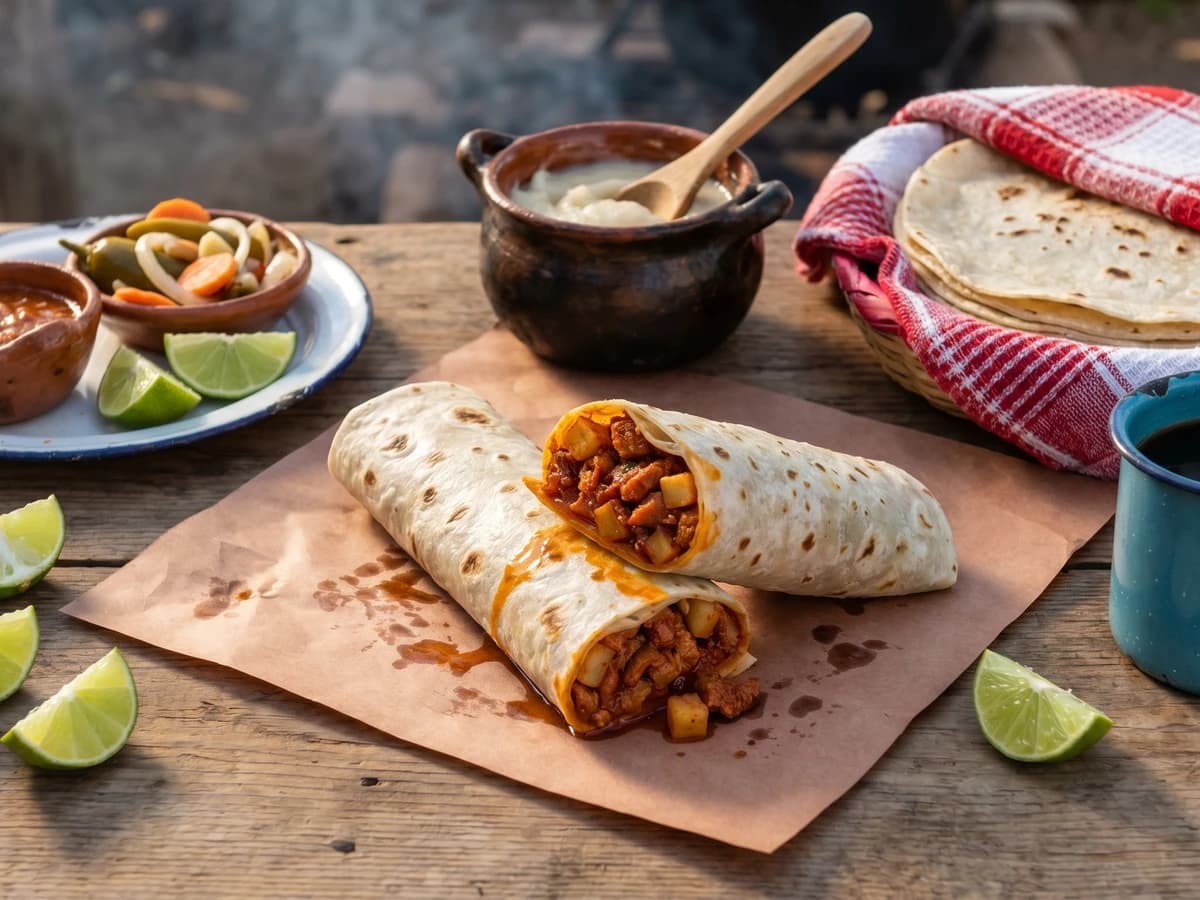
Sonora's working morning burrito: chicharrón de cáscara stewed in chile colorado with diced potato, rolled tight in a paper-thin tortilla sobaquera and eaten standing up at the carreta.
Chef Lupita
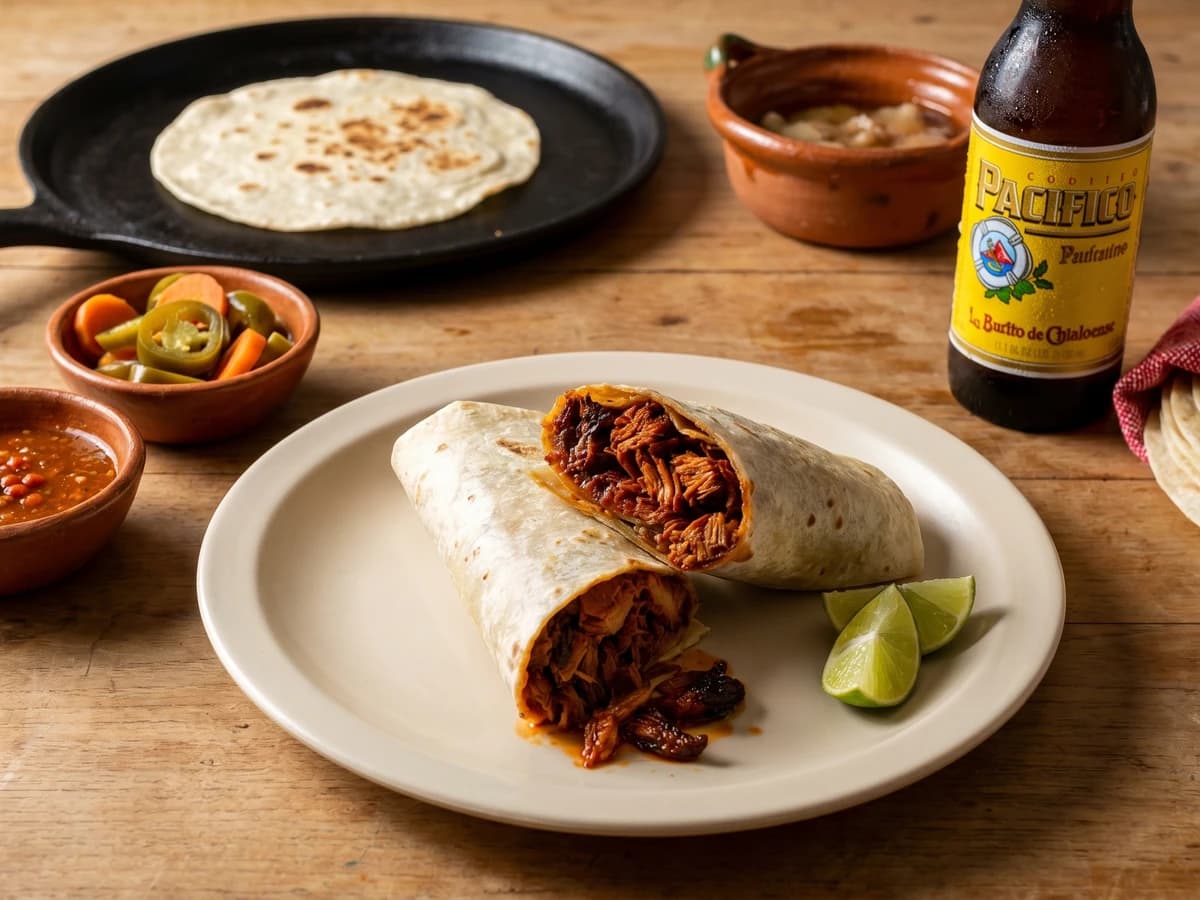
Mocorito's pork chilorio, shredded and confited in lard with chile ancho and pasilla, rolled into a thin handmade flour tortilla. The burrito Sinaloa sends out into the world.
Chef Lupita
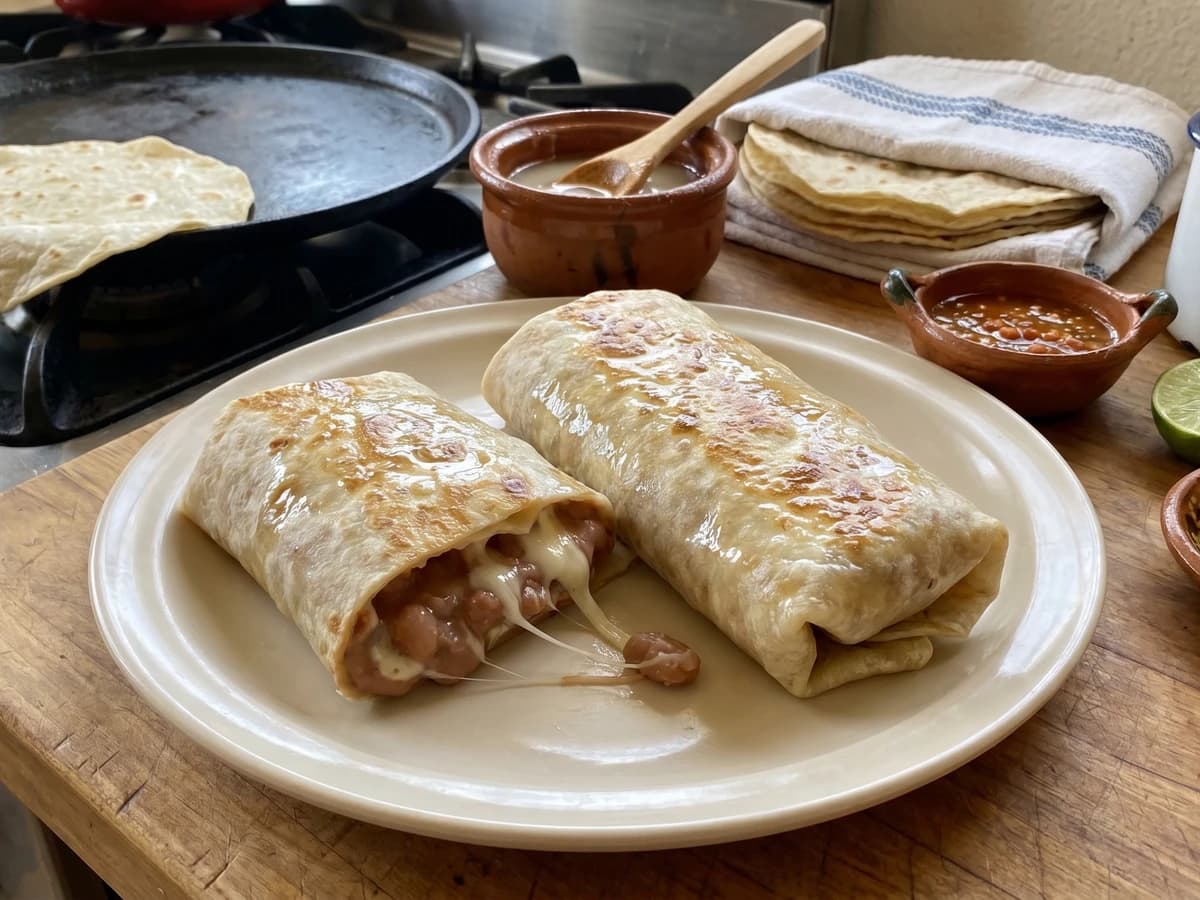
Sonora's morning burrito of mashed pinto frijoles puercos and melted queso asadero, wrapped in a paper-thin sobaquera and seared on the comal until the cheese pulls in long strings.