Chef Lupita
Birria Tacos with Consome
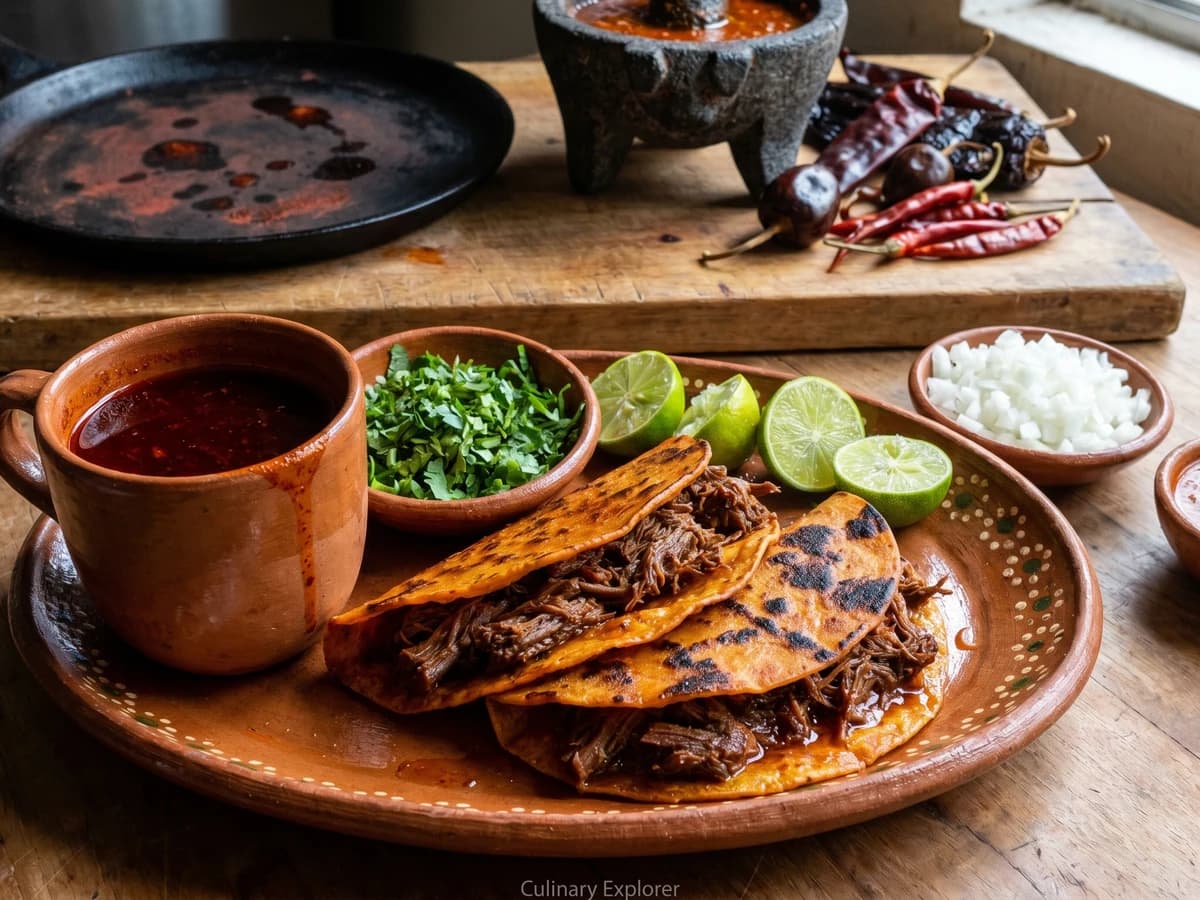
Jalisco's goat birria, born around Cocula and carried into Guadalajara's markets, slow-braised in ancho, guajillo, cascabel, and chile de arbol, then tucked into corn tortillas crisped in its own red fat.
A cooking platform built around craft, culture, and the stories behind what we eat.
Created by
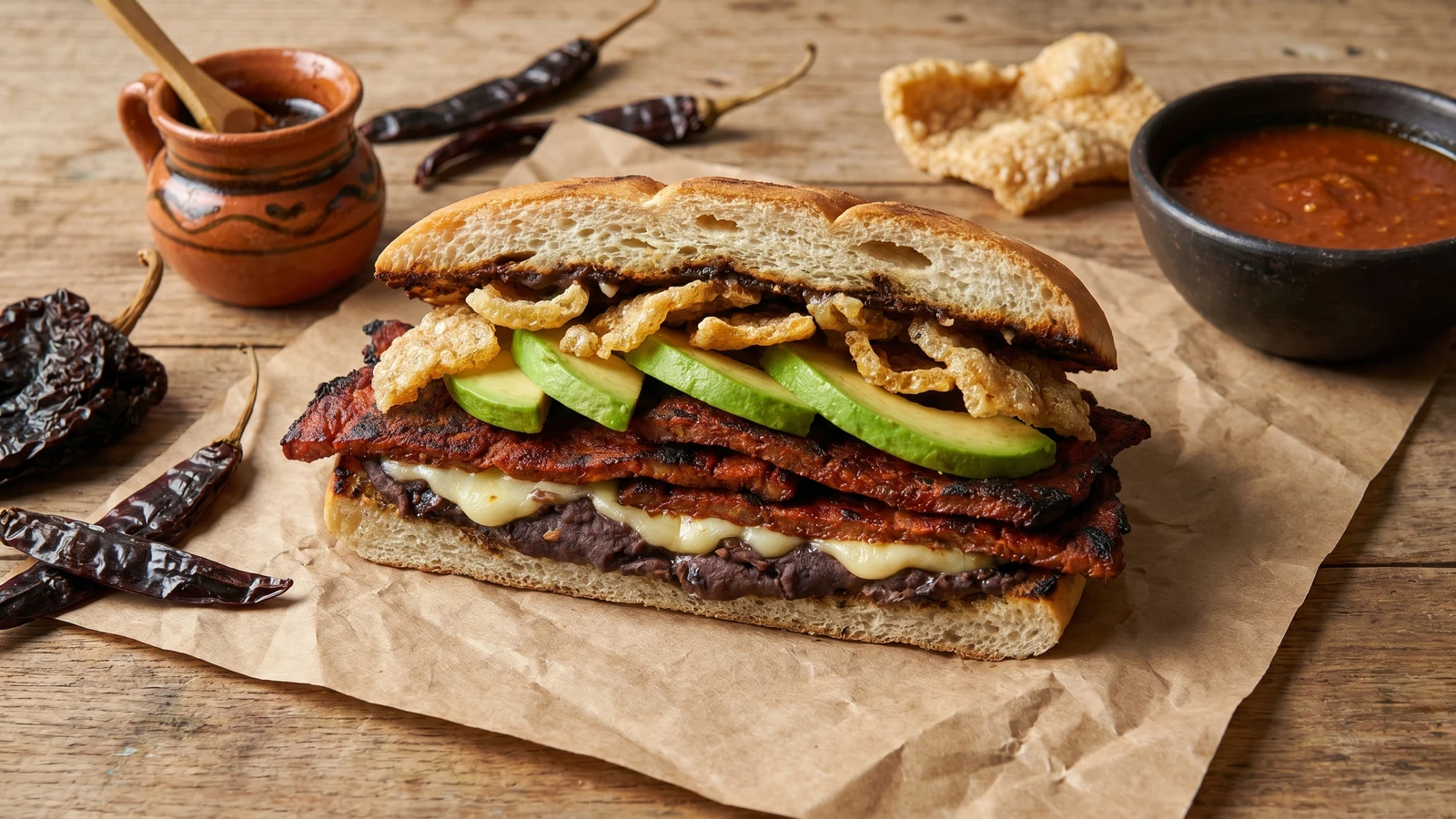
Oaxaca's chile-rubbed pork torta from the Valles Centrales, layered on bolillo spread with asiento, refried black beans, quesillo pulled into strings, and chicharrón crumbled by hand over the top. The market torta, built at home.
This torta is from Oaxaca. The Valles Centrales, specifically, where the Mercado 20 de Noviembre in the capital city runs its Pasillo de Carnes like an open-air cathedral of smoke and comal. Walk through it at noon and you'll see the cecina enchilada laid out in sheets on the grills, chile-red and glistening, the pork sliced so thin you can almost see through it. The women running those stalls have been building tortas like this one for decades. They don't measure. They don't hesitate. They spread, they layer, they fold the paper around it, and they hand it to you warm. That is the standard.
What makes this torta Oaxacan and not from anywhere else is the asiento. It's the dark, heavy sediment left at the bottom of the cazo after rendering manteca de cerdo. Most states discard it or feed it to the dogs. Oaxaca spreads it on bread. It coats the inside of the bolillo with a concentrated pork flavor that butter and oil cannot touch. Without asiento, you have a sandwich. With it, you have a torta oaxaquena. The cecina enchilada brings the chile: ancho and pasilla oaxaqueno ground into a paste, rubbed onto thin-cut pork, and dried until the surface is tacky and the color is a deep brick red. The quesillo, Oaxaca's string cheese, melts against the warm meat. And the chicharron goes on last, crumbled by hand, desmenuzado, in jagged golden shards that crack against the soft layers underneath.
My mother kept chicharron in a paper bag by the stove. She was not Oaxacan, she was from Jalisco, but she understood that chicharron was a tool, not a snack. She would crumble it over frijoles, over tostadas, over anything that needed salt and crunch. 'El chicharron no se corta, se truena,' she would say. You don't cut it. You crack it. This torta respects that. Cada estado, su propia cocina, and this one is Oaxaca's.
Cecina enchilada derives its name from the Latin 'siccina,' meaning dried meat, a Spanish preservation technique that Oaxacan cooks transformed by applying regional chile pastes to thin-sliced pork, creating a product distinct from the beef cecina of Morelos or the salt-cured tasajo sold alongside it in the same markets. The Mercado 20 de Noviembre in Oaxaca de Juarez, constructed in 1952, became the commercial epicenter for cecina enchilada and tasajo, with its Pasillo de Carnes operating as an open-air grill hall where vendors cook the meat over mesquite and encino coals to order while diners eat at communal tables. Asiento, the dark sediment left in the cazo after rendering manteca de cerdo, is unique to Oaxacan culinary practice as a bread spread and cooking fat; its use in tortas and tlayudas is a regional identity marker found in no other Mexican state, and it was recognized by Oaxacan food historians as one of the defining elements of the state's street food culture well before the UNESCO inscription of Traditional Mexican Cuisine in 2010.
Quantity
1 1/2 pounds
sliced 1/8 inch thick by your butcher
Quantity
4
stemmed and seeded
Quantity
2
stemmed and seeded
Quantity
2
peeled
Quantity
1 teaspoon, plus more to taste
Quantity
1 tablespoon
Quantity
1 tablespoon
Quantity
2 cups beans with 1/2 cup broth
Quantity
4 tablespoons, divided
2 tablespoons for beans, 2 tablespoons for bolillos
Quantity
1/2 teaspoon
Quantity
4
split lengthwise
Quantity
8 ounces
pulled into long strips
Quantity
4 ounces
crumbled by hand
Quantity
1 ripe
sliced
Quantity
for serving
| Ingredient | Quantity |
|---|---|
| boneless pork leg (pierna de cerdo)sliced 1/8 inch thick by your butcher | 1 1/2 pounds |
| dried chile anchostemmed and seeded | 4 |
| dried chile pasilla oaxaqueñostemmed and seeded | 2 |
| garlic clovespeeled | 2 |
| kosher salt | 1 teaspoon, plus more to taste |
| white vinegar | 1 tablespoon |
| water | 1 tablespoon |
| cooked black beans with broth | 2 cups beans with 1/2 cup broth |
| asiento2 tablespoons for beans, 2 tablespoons for bolillos | 4 tablespoons, divided |
| kosher salt (for beans) | 1/2 teaspoon |
| bolillossplit lengthwise | 4 |
| quesillo (Oaxacan string cheese)pulled into long strips | 8 ounces |
| chicharrón (pork cracklings)crumbled by hand | 4 ounces |
| Hass avocadosliced | 1 ripe |
| salsa de chile pasilla oaxaqueño or salsa roja (optional) | for serving |
Heat a dry comal or heavy skillet over medium. Toast the chile ancho and chile pasilla oaxaqueno separately, pressing them flat against the comal with a spatula for about 20 seconds per side. They should puff, darken slightly, and release a smoky, earthy smell that fills the room. The pasilla oaxaqueno is already smoky from its drying process, so it goes fast. Do not let them blacken. Burned chile makes a bitter paste and there is no way to undo it.
Place the toasted chiles in a bowl and cover with hot tap water. Not boiling. Let them sit for 15 minutes until soft and pliable. Drain the chiles and transfer to a blender with the garlic, salt, vinegar, and tablespoon of water. Blend until you have a thick, smooth paste with the consistency of tomato paste. It should be deep brick red, almost brown. Scrape down the sides and blend again. The paste needs to be smooth enough to spread thin across the pork without leaving chunks.
Lay the thin pork slices out on a clean surface. Using your hands or the back of a spoon, spread the chile paste evenly across both sides of every slice. You want a thin, even coat, not a thick layer. The paste should cling to the meat like paint. Lay the rubbed slices in a single layer on a wire rack set over a sheet pan. Refrigerate uncovered for at least four hours, and overnight is better. The surface should feel dry and tacky to the touch when it's ready. That tackiness is the cure working and the chiles bonding with the pork.
Heat 2 tablespoons of asiento in a small heavy skillet over medium heat. When it melts and the dark fat begins to shimmer, add the black beans with their broth. Mash with a bean masher or the back of a wooden spoon, working them against the bottom of the skillet until you have a thick, spreadable paste. The consistency should hold its shape on a spoon but still be wet enough to spread across bread without tearing it. Season with salt. Keep warm over the lowest heat while you grill the cecina.
Get your comal or a cast iron skillet screaming hot over high heat. No oil. The chile paste and the pork fat are enough. Lay the cecina slices flat on the comal and cook for about 60 to 90 seconds per side. The chile crust will darken and blister at the edges, and the thin meat will cook through fast. Watch it. This is not a piece of meat you can walk away from. Thin pork on high heat goes from done to leather in thirty seconds. Pull each slice as soon as you see the edges curl and the surface has charred patches against the red. Roughly chop or fold the grilled cecina into pieces that will fit inside a bolillo.
Split the bolillos lengthwise if they are not already split. Place them cut-side down on the comal over medium heat for about a minute, until the bread is golden and has a slight crunch on the surface but is still soft inside. While the bread is warm, spread a generous half-tablespoon of asiento across the cut surface of each half. Both halves. The asiento melts into the warm bread and the bolillo absorbs it like a sponge. This is the base layer and it is not optional. Without asiento, you are building on the wrong foundation.
Work on the bottom half of each bolillo first. Spread a thick layer of the refried black beans across the asiento. Lay the chopped or folded cecina enchilada on the beans while the meat is still hot. Drape the pulled quesillo strips over the cecina so the warmth of the meat softens the cheese. Fan the avocado slices over the quesillo. Now take your chicharron and crush it over the open torta with both hands, letting the jagged shards fall where they fall. Desmenuzado. Spoon salsa over the chicharron if you want heat, or serve it on the side. Press the top half of the bolillo down, give it one firm press with your palm, and wrap it in papel estraza if you want to eat it the way they do in the mercado. Recetas probadas y garantizadas.
1 serving (about 470g)
Culinary guides, cultural storytelling, and the editorial depth that makes cooking meaningful.
Discover Culinary ExplorerChef Lupita
Jalisco's goat birria, born around Cocula and carried into Guadalajara's markets, slow-braised in ancho, guajillo, cascabel, and chile de arbol, then tucked into corn tortillas crisped in its own red fat.
Chef Lupita
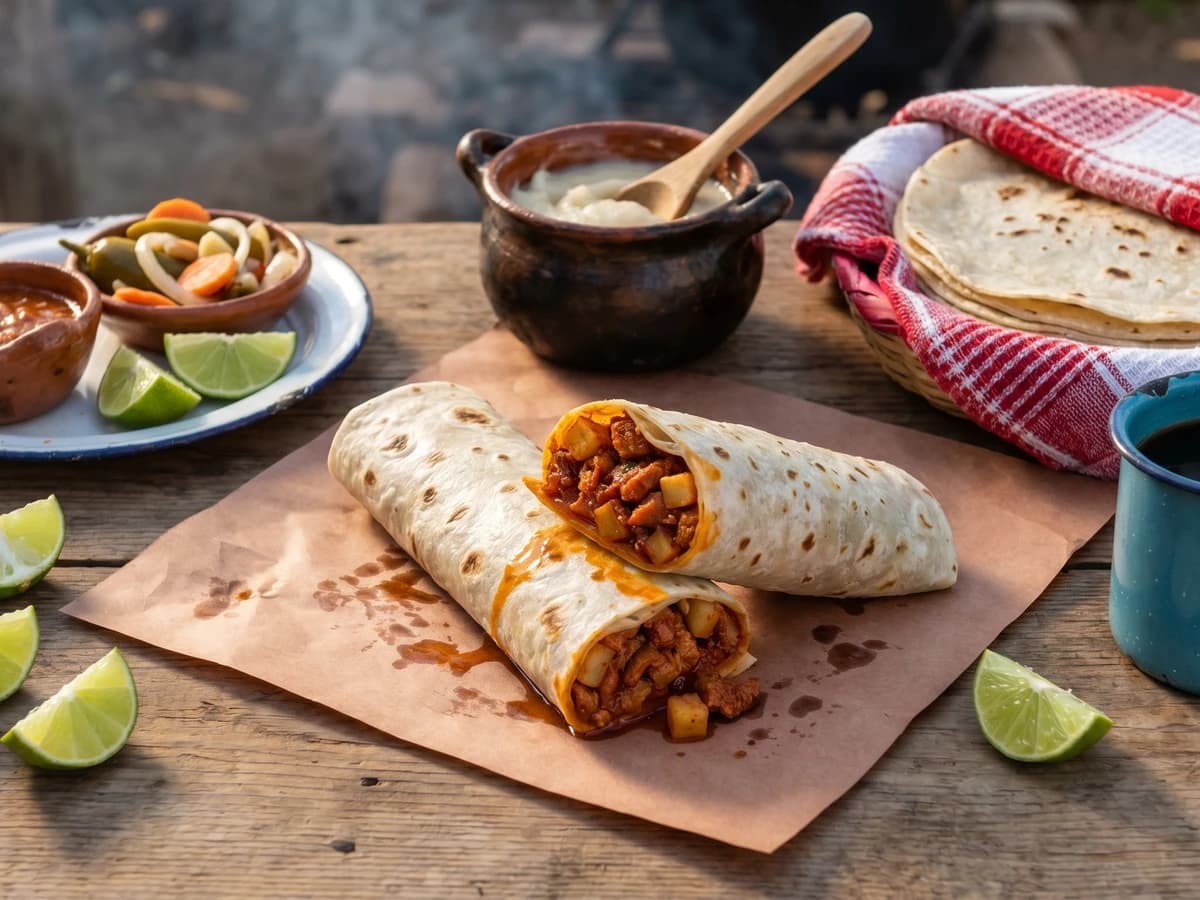
Sonora's working morning burrito: chicharrón de cáscara stewed in chile colorado with diced potato, rolled tight in a paper-thin tortilla sobaquera and eaten standing up at the carreta.
Chef Lupita
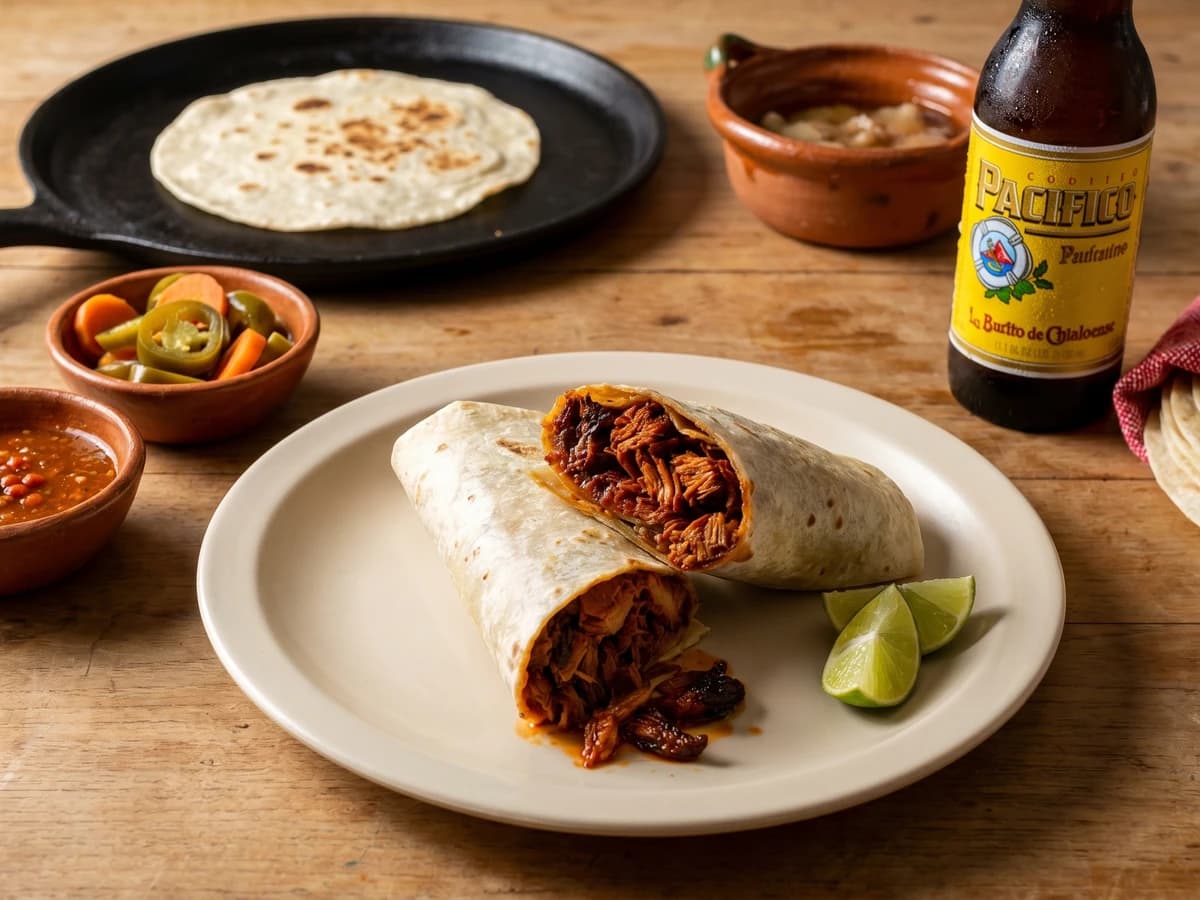
Mocorito's pork chilorio, shredded and confited in lard with chile ancho and pasilla, rolled into a thin handmade flour tortilla. The burrito Sinaloa sends out into the world.
Chef Lupita
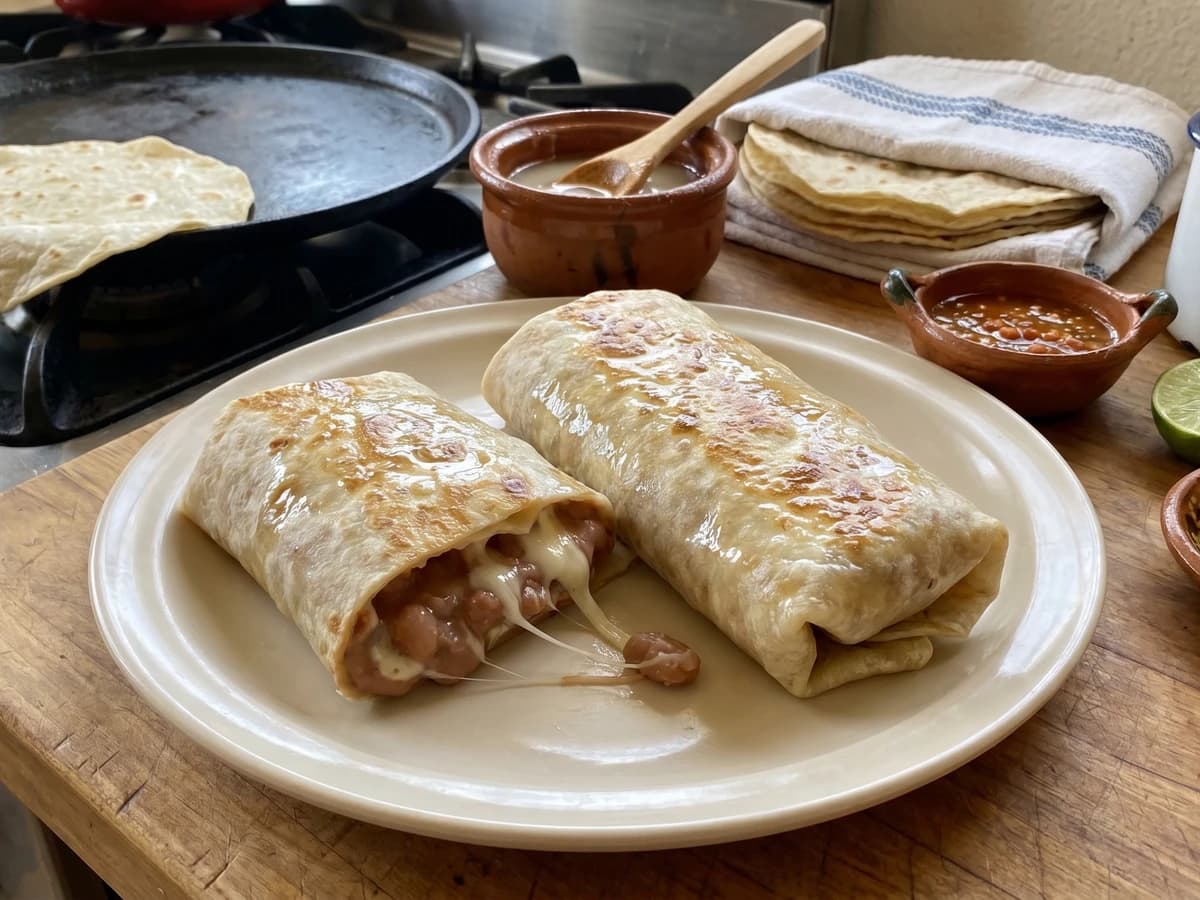
Sonora's morning burrito of mashed pinto frijoles puercos and melted queso asadero, wrapped in a paper-thin sobaquera and seared on the comal until the cheese pulls in long strings.