
Chef Graziella
Bruschetta al Pomodoro Fresco
Grilled bread rubbed with garlic, crowned with ripe tomatoes, anointed with your finest oil. This is bruschetta as it exists in Italy, not the soggy appetizer Americans invented.
A cooking platform built around craft, culture, and the stories behind what we eat.

Created by
Umbria's ancient griddle bread, charred from the hot testo and split open for thin folds of local prosciutto. This is what simplicity means when you have nothing to hide behind.
The first useful thing to know about Italian cooking is that, as such, it actually doesn't exist. What exists are the regional cuisines of Italy, each with its own traditions, ingredients, and griddle breads. In Umbria, they make torta al testo, cooked on a terracotta or cast iron disc called a testo that has been passed down through families for generations.
This is not focaccia. It is not pizza bianca. It is something older and simpler: flour, water, salt, and heat. The baking soda gives a slight lift, though traditionally the bread was unleavened and cooked over embers. Shepherds carried the testo into the hills and made this bread over open fires, filling it with whatever they had: wild greens, sausage, cheese.
The prosciutto filling is Umbrian restraint made visible. A few slices of good prosciutto, draped inside warm bread. Nothing else. The fat softens against the heat. The salt of the meat meets the char of the crust. What you keep out is as significant as what you put in.
The testo, the flat cooking stone that gives this bread its name, dates to Etruscan times, when the people of central Italy baked unleavened breads over fire. Umbrian farmers and shepherds carried this portable griddle into the fields for centuries, making torta al testo a food of necessity that survived because of its perfection. The bread appears in regional documents from the Middle Ages, always associated with the rural poor who needed sustenance that traveled.
Quantity
300g
Quantity
1/2 teaspoon
Quantity
1/2 teaspoon
Quantity
2 tablespoons
Quantity
150ml
Quantity
8 ounces
sliced thin
| Ingredient | Quantity |
|---|---|
| all-purpose flour | 300g |
| fine sea salt | 1/2 teaspoon |
| baking soda | 1/2 teaspoon |
| extra virgin olive oil | 2 tablespoons |
| warm water | 150ml |
| prosciutto crudosliced thin | 8 ounces |
Combine the flour, salt, and baking soda in a large bowl. Make a well in the center and add the olive oil and warm water. Stir with a fork until a shaggy dough forms, then turn out onto a clean surface and knead for 5 minutes. The dough should become smooth and pliable, not sticky. If it clings to your hands, dust with flour. If it cracks, wet your palms slightly. Cover with a clean towel and let rest for 15 minutes.
Divide the dough into four equal pieces. Roll each piece into a ball, then flatten with your palms. Using a rolling pin, roll each piece into a round about 8 inches across and one-quarter inch thick. The edges need not be perfect. This is peasant bread, not patisserie.
Place a large cast iron skillet or griddle over medium-high heat. Let it heat for at least 3 minutes. The pan must be properly hot before the dough touches it. To test, flick a few drops of water onto the surface. They should sizzle and evaporate immediately.
Place one dough round in the dry pan. No oil. Cook until the bottom develops dark spots and the surface begins to bubble and puff, about 3 minutes. Flip and cook the second side until charred in places and cooked through, another 2 to 3 minutes. The bread should sound hollow when tapped. Repeat with remaining dough rounds, keeping finished tortas wrapped in a clean towel to stay warm.
While the torta is still warm, split it horizontally with a serrated knife, as you would a pita. Work carefully because steam will escape. Drape thin slices of prosciutto inside, allowing the warmth of the bread to soften the fat slightly. Close the torta and serve immediately. The prosciutto should not be cold against hot bread. It should be barely warmed, the fat just beginning to turn translucent at the edges.
1 serving (about 170g)
Culinary guides, cultural storytelling, and the editorial depth that makes cooking meaningful.
Discover Culinary ExplorerChef Graziella
Grilled bread rubbed with garlic, crowned with ripe tomatoes, anointed with your finest oil. This is bruschetta as it exists in Italy, not the soggy appetizer Americans invented.
Chef Graziella
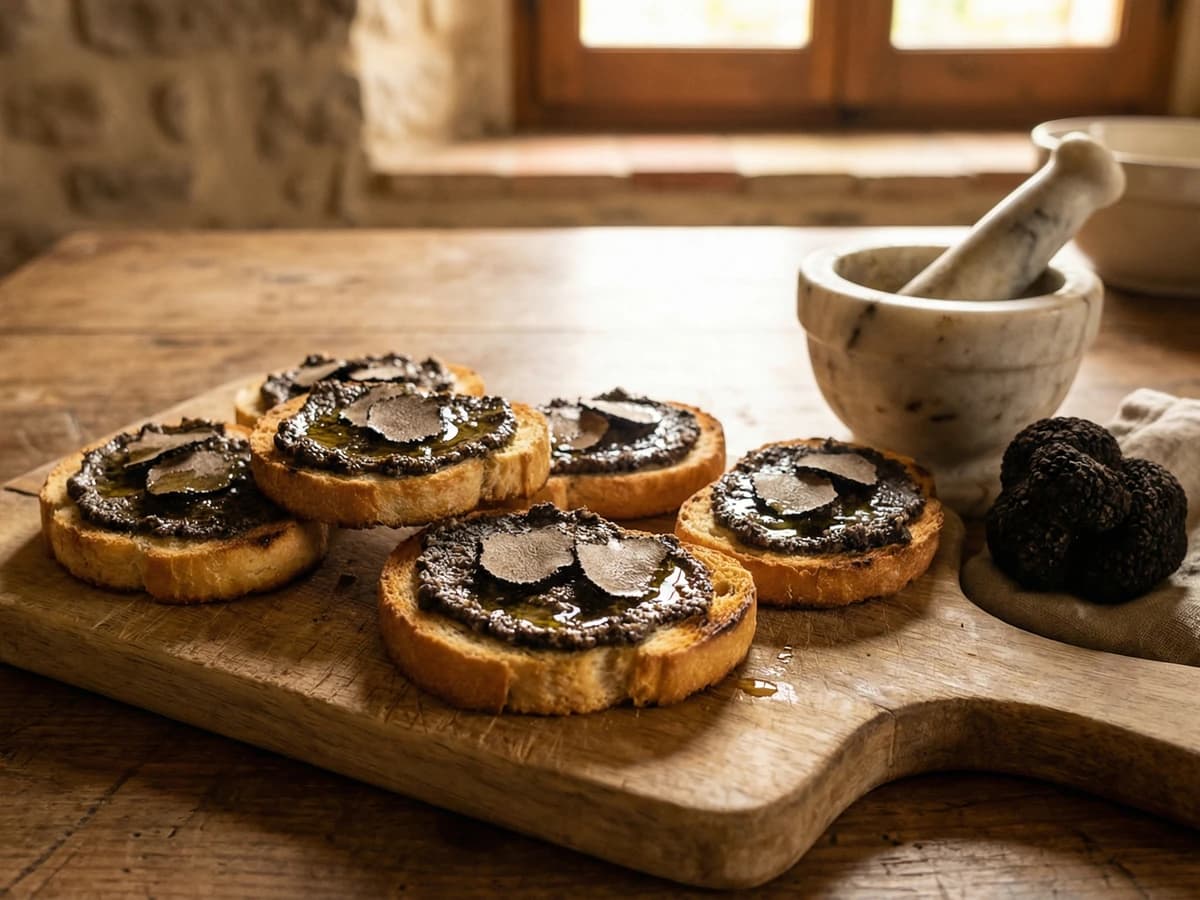
The black truffles of Norcia, pounded to a paste with nothing but olive oil and restraint, spread on warm bread. This is Umbrian luxury in its purest form.

Chef Graziella
Fire-charred peppers wrapped around a filling of tuna, capers, and anchovy. Made a day ahead, the flavors marry into something greater than their parts. This is antipasto as it should be.
Chef Graziella
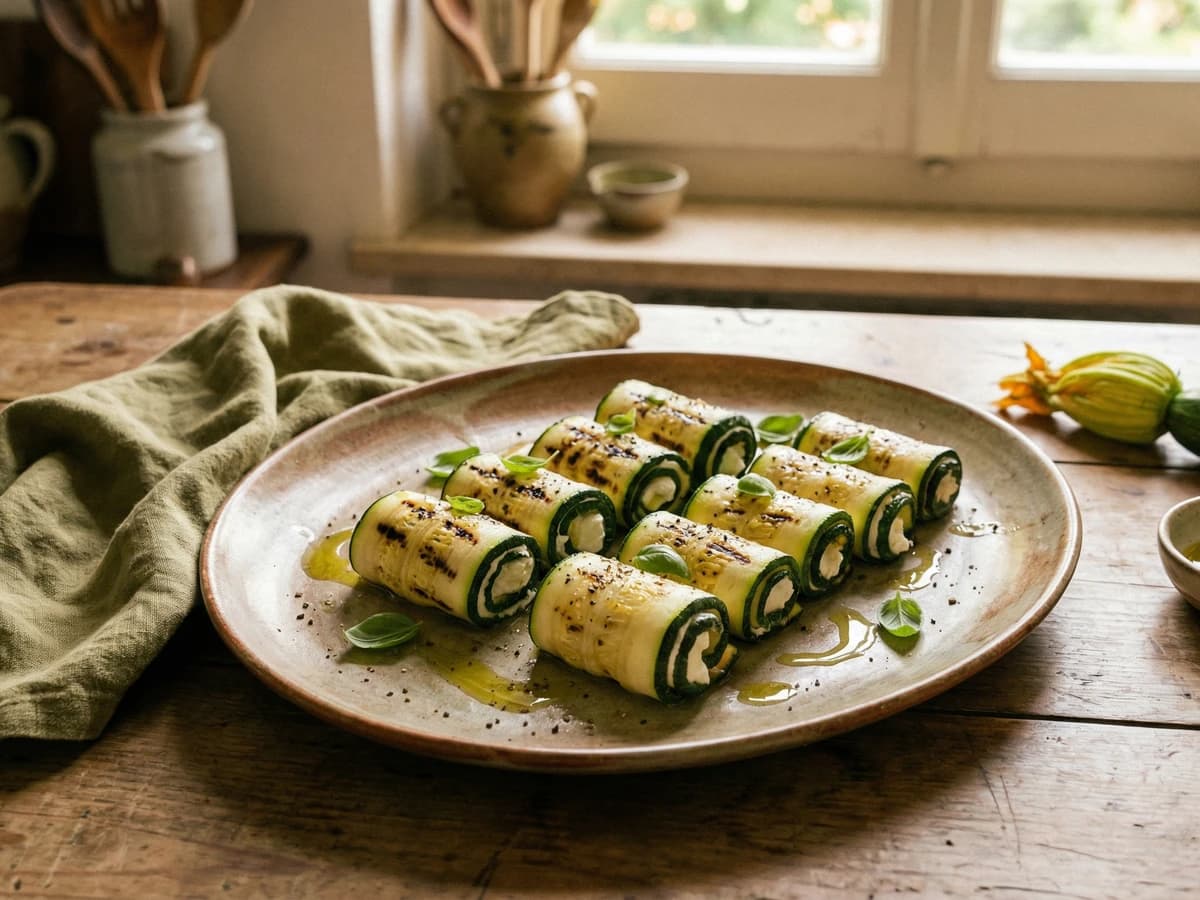
Thin ribbons of summer zucchini, kissed by flame and wrapped around fresh goat cheese brightened with herbs. An antipasto that proves restraint creates elegance.