
Chef Jeong-sun
Albaechu-mul-kimchi (Baby Cabbage Water Kimchi)
Tender baby napa cabbage in a clear pear-garlic brine, lightly fermented until the broth turns clean and bright, the summer kimchi a beginner can make without a kimjang floor.
A cooking platform built around craft, culture, and the stories behind what we eat.
Created by
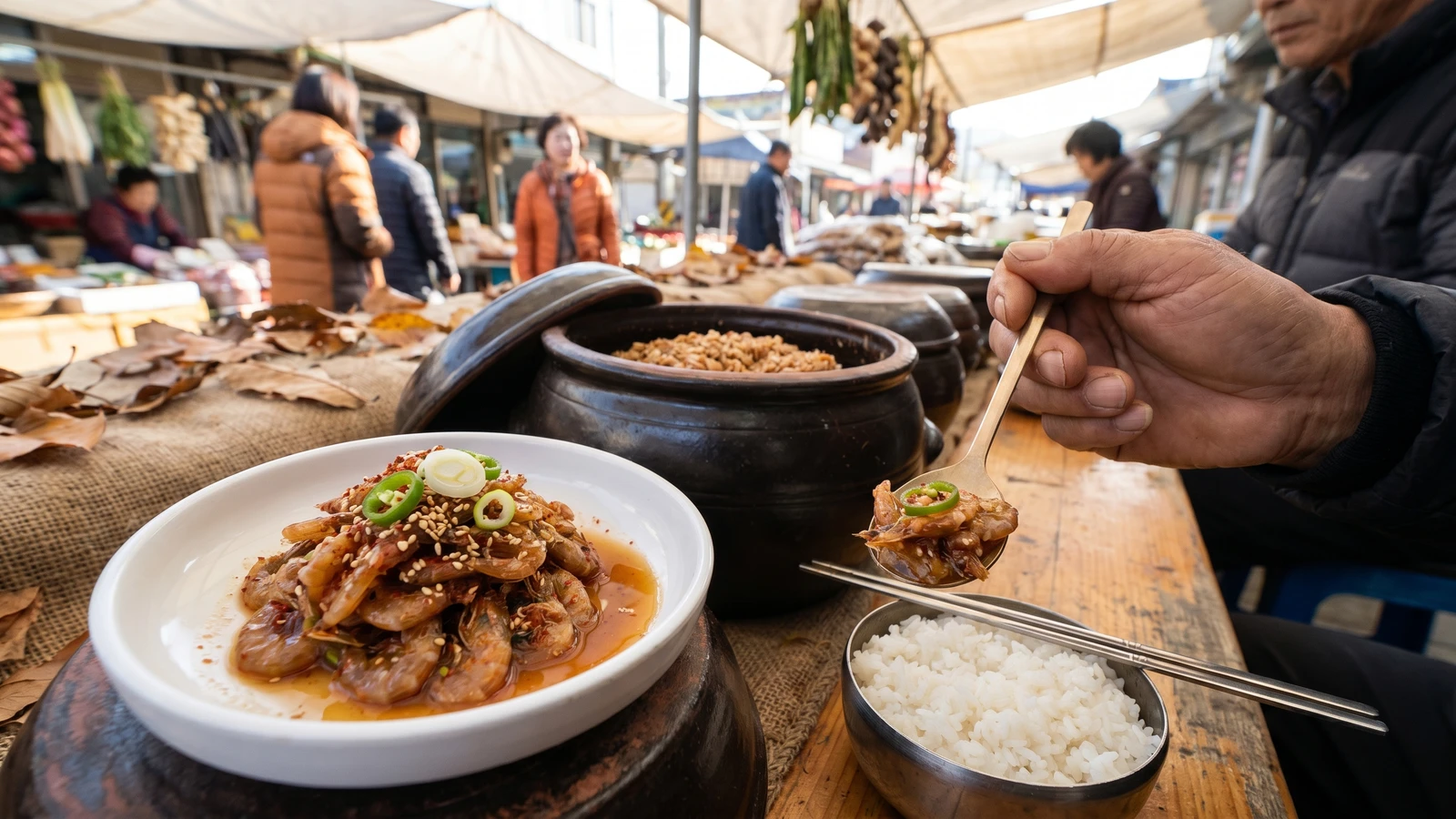
A Jeolla salted shrimp preserve made from clean-water toha, weighed with enough sea salt to age safely, then seasoned in small batches so the tiny shrimp still taste like themselves.
Toha-jeot begins in the season, not at the stove. In Jeolla, the good shrimp were caught when the rice-field water ran clean and cold, tiny gray things so small a careless cook would lose half of them in the washing bowl. They are dear because the water has to be clean and the catch is never large. Cook the month you're standing in. If your market cannot give you fresh toha, don't force this dish from poor shrimp.
The technique is plain and unforgiving: clean shrimp, clean jar, salt by weight, then patience. Notebook 62 says 25 percent salt by the drained weight of the shrimp, which gives the ferment enough strength for a home refrigerator while leaving the shrimp still readable under the salt. Less salt may taste friendly in the first week and punish you in the fifth. I won't shorten that corner.
What changes with modern life is the vessel and the schedule. An onggi is beautiful, but a clean glass jar in a cold refrigerator is honest work. What doesn't change is the weighing. Write it down. Memory is a borrowed bowl. Tonight this dish asks you for a scale, a jar, and restraint; the table comes later, when one small spoonful can season a whole mouthful of rice.
Toha-jeot is especially associated with Jeolla, including Damyang in South Jeolla, where tiny freshwater shrimp were caught in clean paddy channels, ponds, and slow streams after the rice-field season. The name toha is written with characters meaning earth shrimp, but prized toha are not from dirty water; they disappear when waterways are polluted, which is one reason the condiment became scarcer and more expensive in the twentieth century. Unlike larger sea shrimp jeot (saeu-jeot), used widely for kimchi and seasoning, toha-jeot is treated more often as a table jeotgal, mixed in small amounts with chili and aromatics for rice, ssam, and special meals.
Quantity
500g
alive or just harvested if possible
Quantity
1 liter
chilled
Quantity
20g
Quantity
125g
non-iodized, 25 percent of drained shrimp weight
Quantity
25g salt plus 75g boiled and cooled water
Quantity
1 cup
for seasoning a small serving batch
Quantity
1 tablespoon
Quantity
1 small clove, about 5g
minced
Quantity
1/2 teaspoon, about 2g
grated
Quantity
1 teaspoon
Quantity
1 teaspoon
Quantity
1 tablespoon
finely sliced
Quantity
1 small
finely chopped
Quantity
1/2 teaspoon
| Ingredient | Quantity |
|---|---|
| fresh toha (tiny freshwater shrimp)alive or just harvested if possible | 500g |
| boiled and cooled waterchilled | 1 liter |
| coarse sea salt for rinse brine | 20g |
| Korean coarse sea salt (cheonilyeom)non-iodized, 25 percent of drained shrimp weight | 125g |
| covering brine (optional) | 25g salt plus 75g boiled and cooled water |
| aged toha-jeotfor seasoning a small serving batch | 1 cup |
| fine gochugaru (Korean chili flakes) | 1 tablespoon |
| garlicminced | 1 small clove, about 5g |
| gingergrated | 1/2 teaspoon, about 2g |
| maesil-cheong (green plum syrup) or rice syrup | 1 teaspoon |
| toasted sesame seeds | 1 teaspoon |
| scallionfinely sliced | 1 tablespoon |
| green chili (optional)finely chopped | 1 small |
| toasted sesame oil (optional) | 1/2 teaspoon |
Use only very fresh toha from a trusted fishmonger or producer who can tell you where the shrimp were harvested. They should smell clean and briny, never sour, muddy, or like ammonia. Keep them cold over ice while you work. No amount of salt repairs bad seafood, and freshwater shrimp from unknown water do not belong in a ferment.
Wash a 1-liter glass jar or small onggi and its weight with hot soapy water, then boil the jar for 10 minutes or run it through a sanitize cycle. Let everything air-dry completely. This is not fussiness. A slow raw seafood ferment gives careless hands time to show themselves.
Dissolve 20g salt in 1 liter chilled boiled water to make a 2 percent brine. Swish the shrimp gently in the brine for 10 seconds, lift them out, and leave any grit behind. Repeat once if needed, then drain in a fine strainer for 20 minutes. Do not soak them and do not rinse under plain tap water, because plain water makes the tiny bodies swell and lose their clean flavor.
Weigh the drained shrimp. For 500g shrimp, measure 125g sea salt. If your shrimp weigh differently, multiply the drained weight by 0.25. Master Seong-nyeo made me weigh after washing, not before, because the water clinging to the shrimp lies. Toss the shrimp gently with about 100g of the salt and keep 25g aside for packing.
Sprinkle a little of the reserved salt in the bottom of the jar. Pack in the salted shrimp, pressing lightly to remove air pockets, then scatter the remaining salt over the top as a salt cap. Set a clean fermentation weight over the shrimp so they stay below their own brine as it forms. Leave at least 2 inches of headspace.
Put the jar straight into the refrigerator, 2 to 5 degrees C, and age 45 to 60 days. Open it once a week with clean hands and a clean spoon, press the shrimp back under the brine, then close it again. The shrimp will turn from gray and translucent to amber-tan, the brine will deepen, and the smell should be salty, shrimp-rich, and clean. Throw it away if you see fuzzy mold, black spots, a swollen lid, a rotten smell, or a slippery film that is not just brine.
For the table, measure 1 cup aged toha-jeot with a spoonful of its brine. Stir in the gochugaru, garlic, ginger, maesil-cheong or rice syrup, sesame seeds, scallion, and green chili if using. Let it sit 30 minutes before serving so the chili softens into the brine. Add sesame oil only if the batch will be eaten that day. Seasoning the whole jar makes the aromatics tired before the shrimp is finished.
Serve toha-jeot in very small spoonfuls with hot rice, bossam, ssam leaves, juk (rice porridge), or a plain bowl that needs salt and depth. The base jar keeps 4 to 6 months refrigerated if the shrimp stay covered and every spoon is clean. The seasoned batch keeps up to 2 weeks refrigerated. This is raw fermented seafood; pregnant people, elderly guests, and anyone immunocompromised should choose a commercially produced jeotgal or eat it cooked into a stew.
1 serving (about 95g)
Culinary guides, cultural storytelling, and the editorial depth that makes cooking meaningful.
Discover Culinary ExplorerChef Jeong-sun
Tender baby napa cabbage in a clear pear-garlic brine, lightly fermented until the broth turns clean and bright, the summer kimchi a beginner can make without a kimjang floor.

Chef Jeong-sun
The kimchi from before chili, salted napa cabbage packed with radish, pear, jujube, and pine nuts in a clear brine that turns quietly tart in the jar.

Chef Jeong-sun
A pale summer cucumber kimchi, split and stuffed with radish and chives, then held in a cool pear brine so the cucumber stays clean, crunchy, and plainly itself.

Chef Jeong-sun
Flat spring bomdong cabbage, lightly brined and tucked into a clear pear-radish kimchi broth, made without chili and eaten young while the leaves still taste like spring.