Chef Lupita
Birria Tacos with Consome
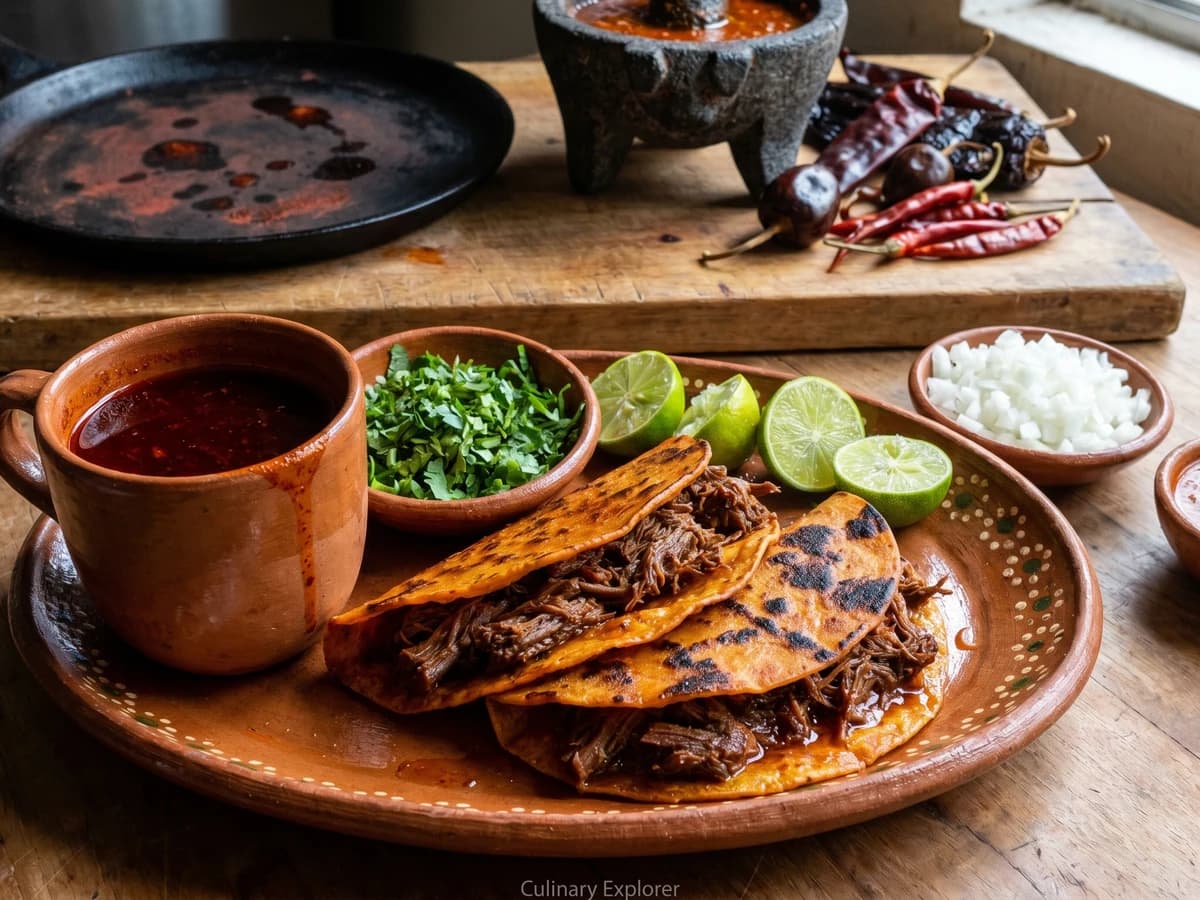
Jalisco's goat birria, born around Cocula and carried into Guadalajara's markets, slow-braised in ancho, guajillo, cascabel, and chile de arbol, then tucked into corn tortillas crisped in its own red fat.
A cooking platform built around craft, culture, and the stories behind what we eat.

Created by
The market vegetariana from Oaxaca's Valles Centrales: a giant leathery tortilla spread with asiento and frijol negro cooked with hoja de aguacate, draped with quesillo, and piled with sautéed wild mushrooms and squash blossoms in epazote.
This is Oaxaca. Valles Centrales. The Central de Abastos, the 20 de Noviembre market, every mercado in the city where the tlayuderas sit behind their comales and build these to order. The tlayuda is a tortilla the size of a dinner plate, cooked twice on clay until the edges dry and crack and the center stays just pliable enough to fold. It is the architecture of Oaxacan street food, and everything else is what you build on top.
The foundation is asiento, the dark, smoky sediment left at the bottom of the cazo after rendering lard. In Oaxaca they spread it on the tlayuda the way the French spread butter on bread, and with the same conviction. Yes, this is a vegetarian tlayuda. No, the asiento is not negotiable. At every tlayuda stall in Oaxaca, vegetariana means no tasajo, no cecina, no chorizo on top. The asiento and the lard in the beans are the floor you stand on, not the furniture. If you want to make this without any pork fat at all, you can, but you will be making a different dish from a different tradition, and I won't be the one to teach it to you.
The hongos silvestres come down from the Sierra Norte during the rainy season, June through October, piled in baskets at the market by women who know every mushroom by name and by smell. If you are making this in January, use what your market sells: cremini, oyster, a mix. The flor de calabaza is best in summer when the squash plants are producing freely and the flowers are fat and fragrant. Out of season, they shrink, and some markets won't carry them. Cook what the season gives you. That is how the senoras at the market have always cooked.
I learned this combination from a tlayudera at the Central de Abastos who had been cooking on the same comal for thirty-two years. She sautéed the hongos with chile de agua, a fresh green chile that grows only in Oaxaca, and tore epazote straight from the stem into the pan. Her beans were black, cooked with hoja de aguacate, the toasted avocado leaf that gives Oaxacan frijoles their faint anise perfume. She folded the tlayuda in half, pressed it on the comal until the quesillo melted, and handed it to me on a piece of wax paper. No plate. No garnish. Perfection. Cada estado, su propia cocina.
The tlayuda takes its name from a Zapotec tradition of large, partially dehydrated corn tortillas that have been a daily staple of the Valles Centrales de Oaxaca since pre-Columbian times, made from a drier masa and cooked on clay comales at lower heat to achieve their characteristic leathery texture. The practice of spreading asiento, the unrefined sediment from lard rendering, as the base layer predates refrigeration and served both as a fat source and a preservation technique that kept the tortilla pliable in the Oaxacan heat. The Central de Abastos market and the older Mercado 20 de Noviembre in the city of Oaxaca remain the commercial strongholds of the tlayuderas, women who have resisted industrialization more successfully than almost any other Mexican street food tradition, still forming each tortilla by hand and cooking them on clay comales fired by wood or charcoal.
Quantity
1 pound
picked over and rinsed
Quantity
3
Quantity
1 medium
divided: half for beans, half sliced for filling
Quantity
4
divided: 2 whole for beans, 2 minced for filling
Quantity
4 tablespoons
divided
Quantity
to taste
Quantity
1 pound
torn or sliced into bite-sized pieces
Quantity
12
pistils removed, roughly chopped
Quantity
1
stemmed, seeded, and cut into thin strips
Quantity
3 to 4 sprigs
leaves stripped from the stems
Quantity
4
Quantity
1/4 cup
Quantity
1 pound
pulled into long strips
Quantity
for serving
Quantity
for serving
| Ingredient | Quantity |
|---|---|
| dried black beanspicked over and rinsed | 1 pound |
| dried hojas de aguacate (avocado leaves) | 3 |
| white oniondivided: half for beans, half sliced for filling | 1 medium |
| garlic clovesdivided: 2 whole for beans, 2 minced for filling | 4 |
| pork lard (manteca de cerdo)divided | 4 tablespoons |
| kosher salt | to taste |
| mixed mushrooms (hongos silvestres, cremini, or oyster)torn or sliced into bite-sized pieces | 1 pound |
| fresh squash blossoms (flor de calabaza)pistils removed, roughly chopped | 12 |
| fresh chile de agua or poblanostemmed, seeded, and cut into thin strips | 1 |
| fresh epazoteleaves stripped from the stems | 3 to 4 sprigs |
| tlayuda tortillas (12 to 14 inches) | 4 |
| asiento (unrefined pork lard sediment) | 1/4 cup |
| quesillo (Oaxacan string cheese)pulled into long strips | 1 pound |
| salsa de pasilla oaxaqueno (optional) | for serving |
| lime wedges (optional) | for serving |
Place the black beans in a large pot and cover with cold water by three inches. Add two whole garlic cloves, the onion half (in one piece), and the hojas de aguacate. Do not add salt. Salt at the start toughens the skins and you will regret it two hours later. Bring to a boil, reduce to a gentle simmer, partially cover, and cook for two to two and a half hours, until the beans are completely soft and the broth is dark and fragrant with the avocado leaf. Add a generous teaspoon of salt in the last twenty minutes. The hoja de aguacate is what makes these beans Oaxacan: a faint anise-like perfume that no other herb replicates. Without it, you have beans. With it, you have frijoles oaxaquenos.
Drain the cooked beans, reserving one cup of the dark cooking liquid. Discard the spent onion, garlic, and avocado leaves. In a wide skillet or clay cazuela, melt two tablespoons of the lard over medium heat. Add the drained beans and begin mashing them with the back of a wooden spoon or a bean masher, pressing and stirring constantly. Add splashes of the reserved cooking liquid as needed. You want a thick, spreadable paste that holds its shape on a spoon but is not dry or crumbly. Think of the consistency of refried beans at a good Oaxacan fonda: dense enough to support a layer of quesillo on top. Taste for salt. Set aside.
Gently open each squash blossom and pull out the pistil inside. It is bitter and tough and has no business in the finished dish. Tear the blossoms into two or three rough pieces. If your mushrooms are large, tear them into bite-sized pieces by hand rather than chopping with a knife. Torn edges absorb more fat, crisp better, and hold on to the epazote.
Melt the remaining two tablespoons of lard in a wide skillet over medium-high heat. When the lard shimmers, add the sliced onion half and cook until it softens and turns translucent, about three minutes. Add the minced garlic and the chile de agua strips. Cook for one minute, stirring. Add the mushrooms and spread them in a single layer. Do not touch them. Let them sit for two full minutes so the undersides brown and caramelize. Stir once, then let them sit again. When the mushrooms are golden and have released their liquid, add the epazote leaves and the chopped squash blossoms. Cook for one more minute, just until the blossoms wilt and turn bright against the dark mushrooms. Season with salt. Take the pan off the heat.
Set a large comal or cast iron griddle over medium heat. Place one tlayuda directly on the surface and let it warm for about one minute, until the center becomes pliable and the edges begin to crisp and curl. You want the center flexible enough to fold but the edges dry and crackly. That contrast between leathery center and crisp edge is the signature texture of a proper tlayuda. If the whole thing goes stiff, your heat is too high. If it stays limp, your heat is too low.
Working quickly while the tlayuda is warm on the comal, spread a thin layer of asiento across the entire surface with the back of a spoon. The asiento should go on like a dark, smoky butter. Over the asiento, spread a generous layer of the bean paste, leaving about a one-inch border at the edges. Lay the quesillo strips across the beans, letting them drape and tangle. The residual heat from the comal will begin to soften and melt the cheese. Pile a quarter of the mushroom and squash blossom filling on one half of the tlayuda. Fold it in half, press gently with your hand, and let it sit on the comal for another minute so the bottom crisps and the cheese melts into the beans. Or leave it open and flat, abierta, if you want to see the colors. Both ways are Oaxacan. Both are correct.
Slide the finished tlayuda onto a plate, a wooden board, or a piece of wax paper, the way the market stalls do it. Serve with salsa de pasilla oaxaqueno and lime wedges on the side. Repeat with the remaining three tortillas, assembling each one fresh on the hot comal. A tlayuda waits for nobody. It is best the moment it comes off the heat, when the quesillo is still pulling in long strings and the edges crackle when you bite through them. Recetas probadas y garantizadas.
1 serving (about 600g)
Culinary guides, cultural storytelling, and the editorial depth that makes cooking meaningful.
Discover Culinary ExplorerChef Lupita
Jalisco's goat birria, born around Cocula and carried into Guadalajara's markets, slow-braised in ancho, guajillo, cascabel, and chile de arbol, then tucked into corn tortillas crisped in its own red fat.
Chef Lupita
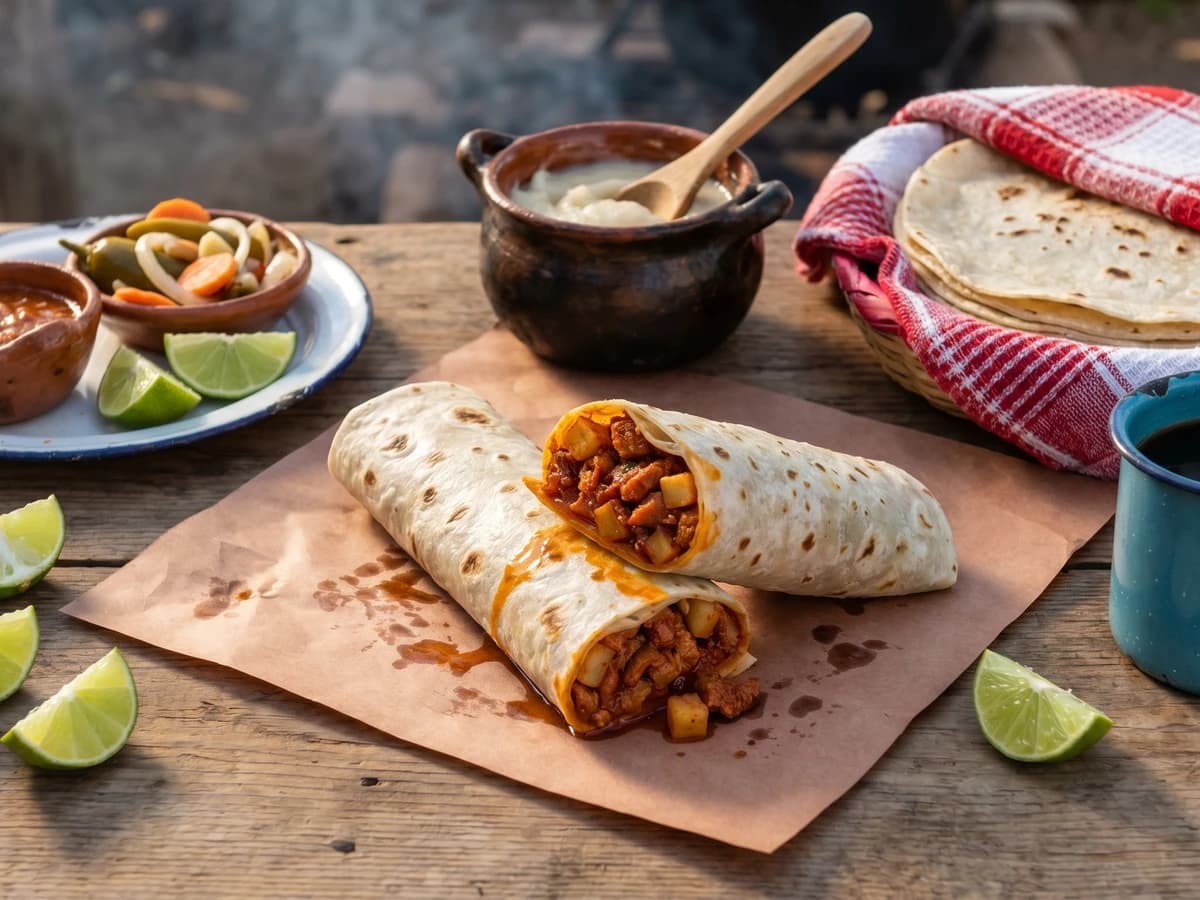
Sonora's working morning burrito: chicharrón de cáscara stewed in chile colorado with diced potato, rolled tight in a paper-thin tortilla sobaquera and eaten standing up at the carreta.
Chef Lupita
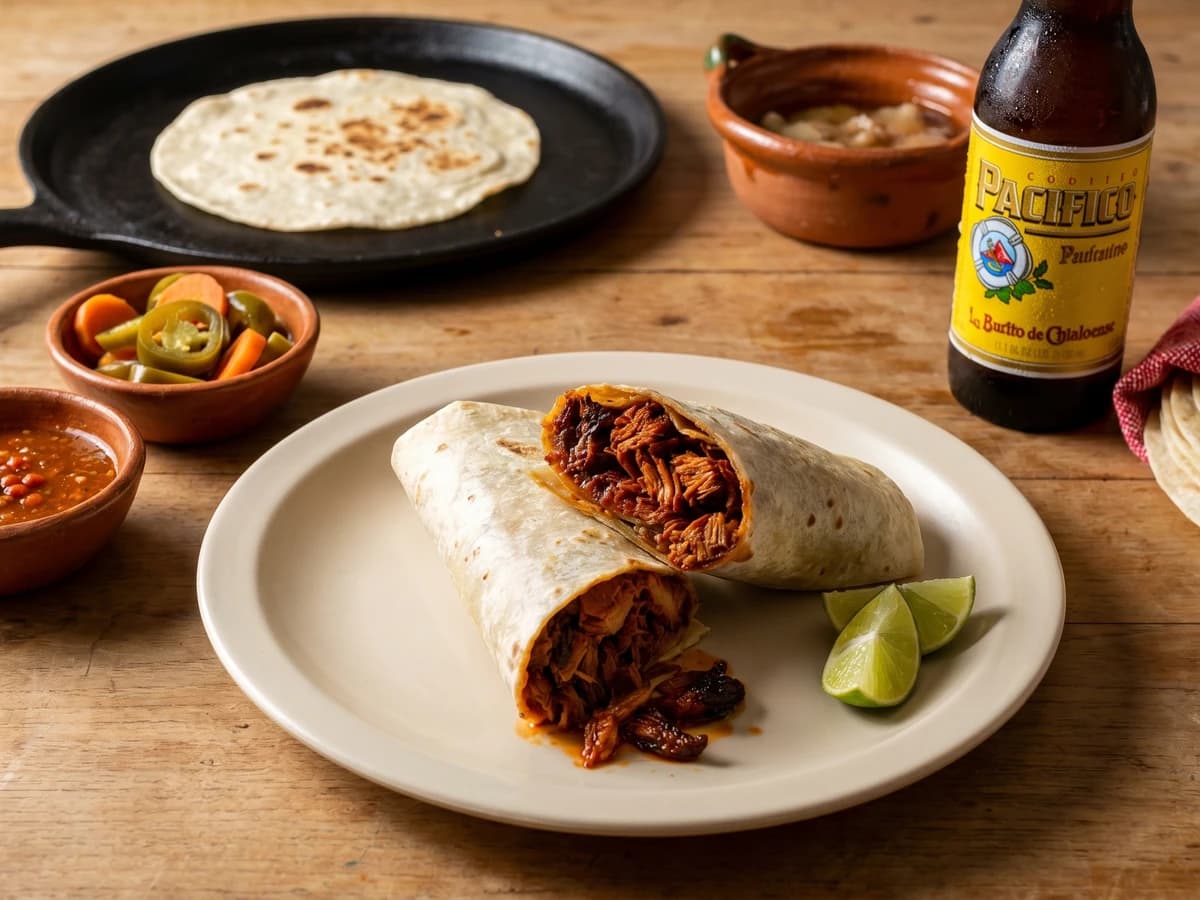
Mocorito's pork chilorio, shredded and confited in lard with chile ancho and pasilla, rolled into a thin handmade flour tortilla. The burrito Sinaloa sends out into the world.
Chef Lupita
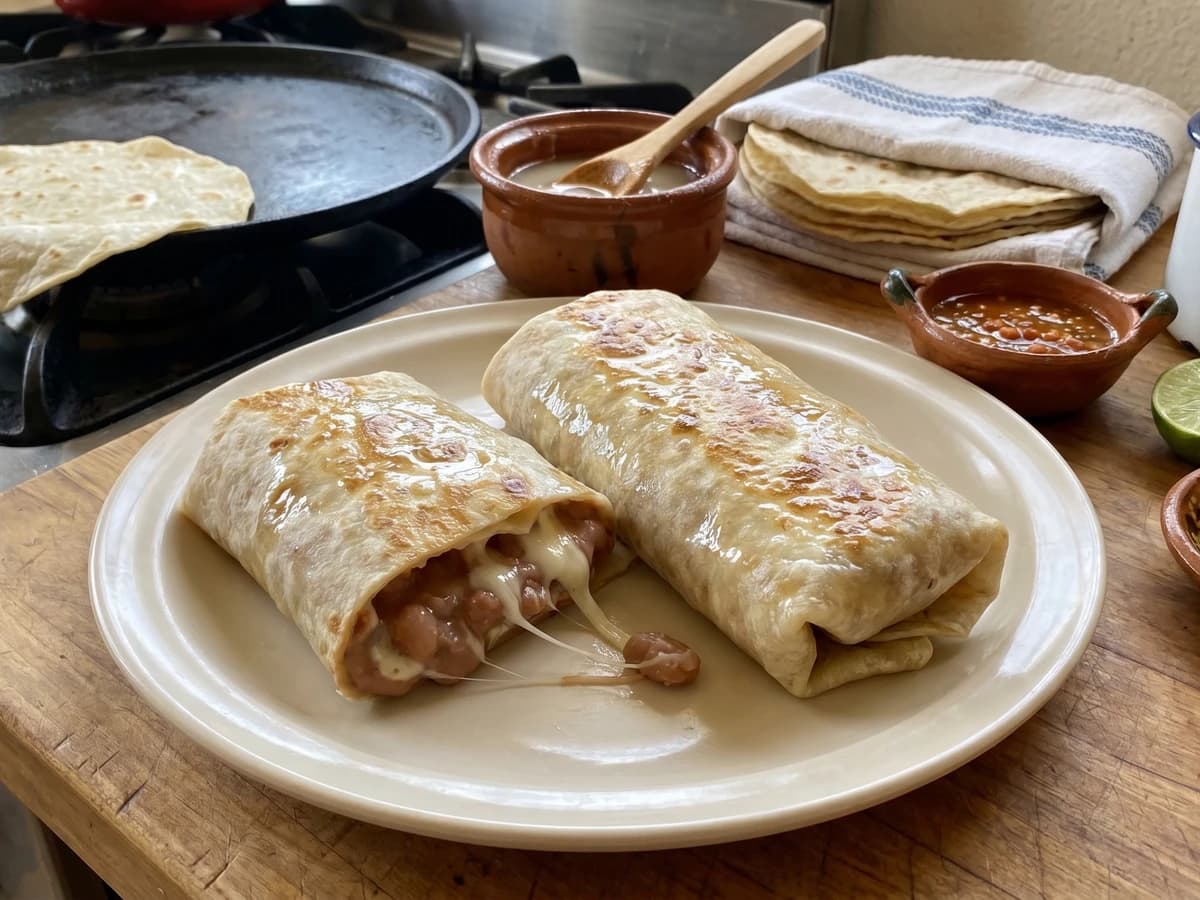
Sonora's morning burrito of mashed pinto frijoles puercos and melted queso asadero, wrapped in a paper-thin sobaquera and seared on the comal until the cheese pulls in long strings.