Chef Lupita
Birria Tacos with Consome
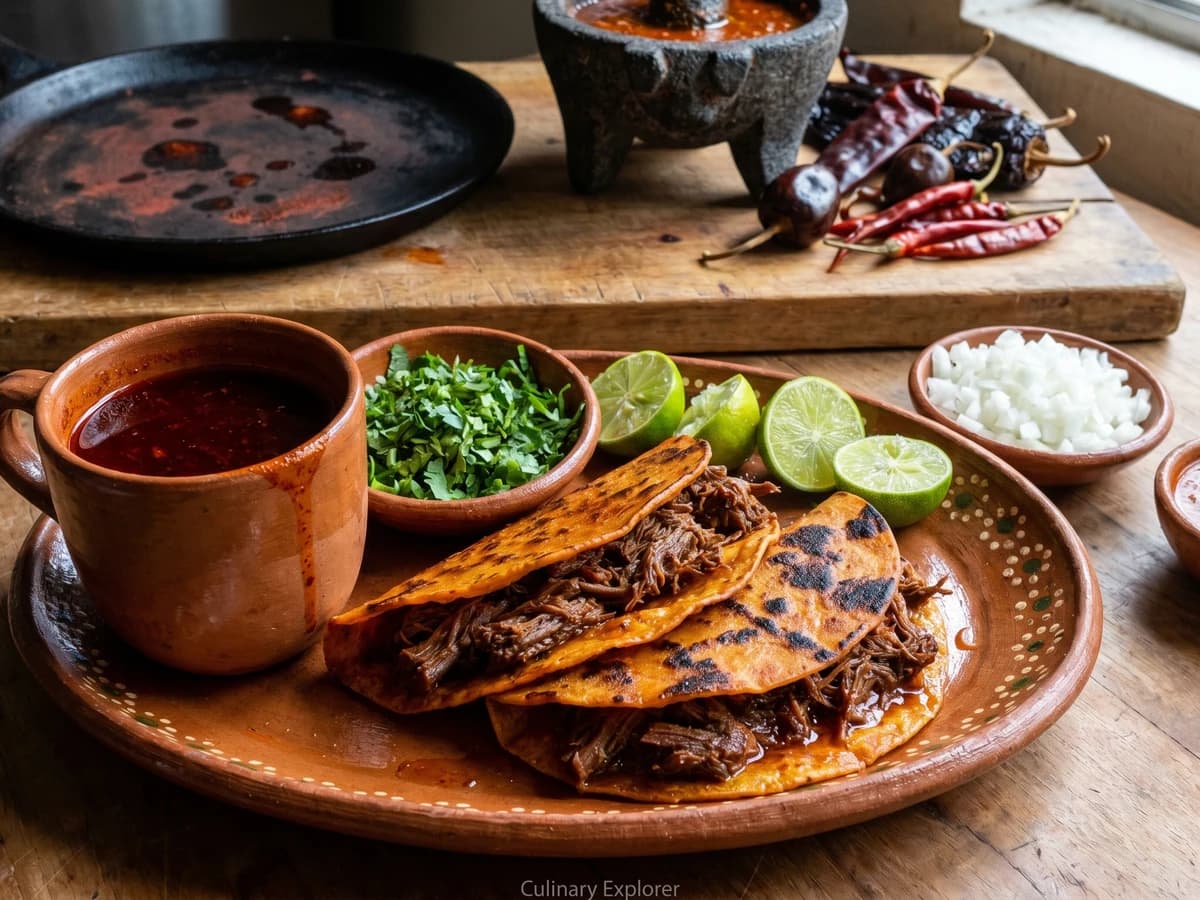
Jalisco's goat birria, born around Cocula and carried into Guadalajara's markets, slow-braised in ancho, guajillo, cascabel, and chile de arbol, then tucked into corn tortillas crisped in its own red fat.
A cooking platform built around craft, culture, and the stories behind what we eat.
Created by
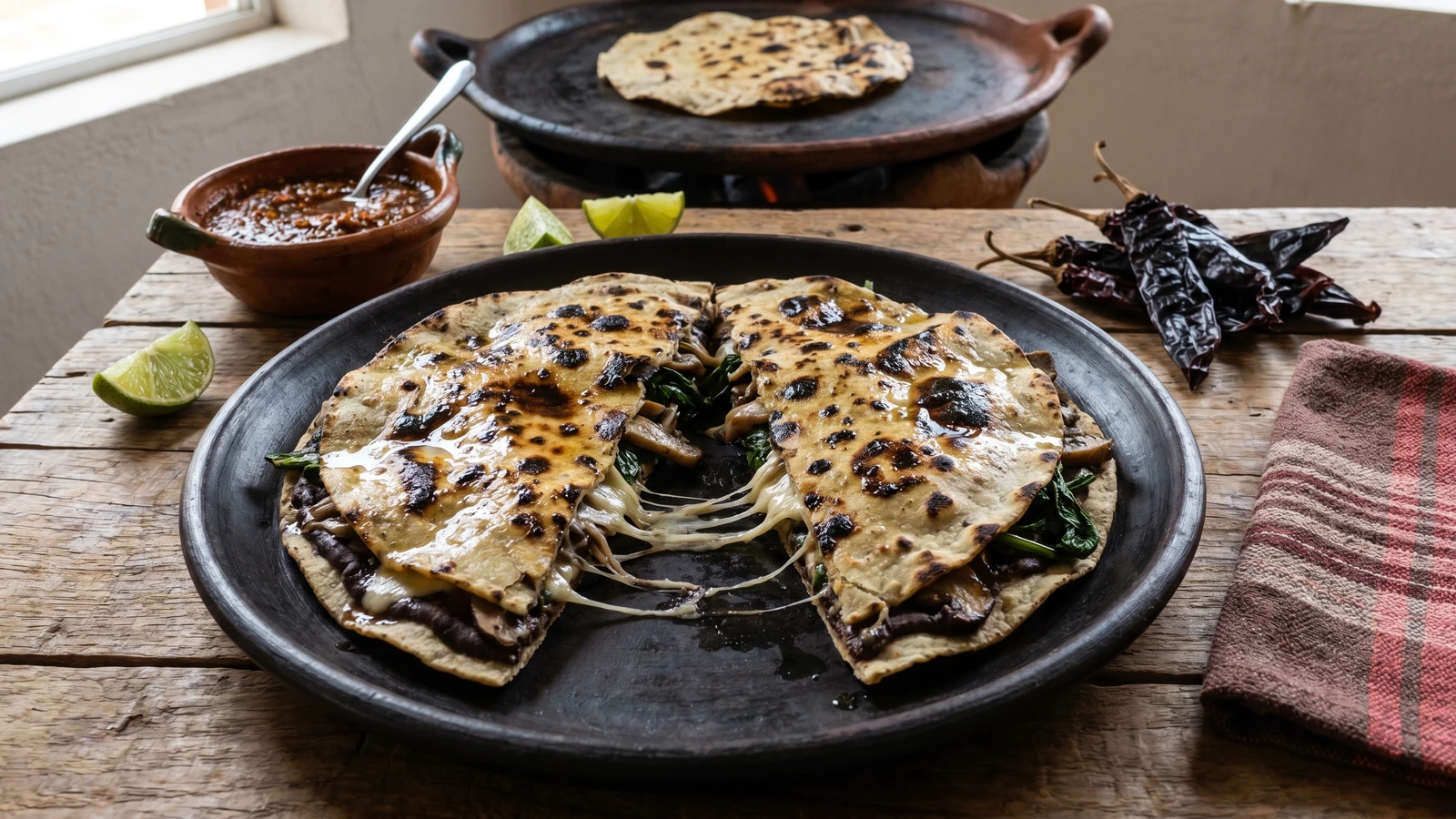
Oaxaca's Sierra Norte tlayuda, spread with asiento and frijol negro paste, piled with sauteed wild mushrooms, quelites, and flor de calabaza, folded over quesillo, and toasted on a clay comal until the edges char.
This is a Sierra Norte dish. Not the Valles Centrales, not the Istmo, not the Costa. The Sierra Norte of Oaxaca, where the cloud forests begin above Ixtlan de Juarez and the cooking follows what grows on the mountain.
The tlayuda you know from the Central de Abastos in Oaxaca city, spread wide with tasajo and quesillo and chapulines, that is a market tlayuda from the valley floor. Up in the Sierra, the tlayuda is quieter. Sparse on meat, generous with whatever the women brought down from the hillsides that morning: hongos silvestres pulled from under the oaks after the rain, quelites gathered at the milpa's edge, flor de calabaza still cool from the field. The mountain feeds you differently than the valley does. The base is the same: a massive corn tortilla, wider than a dinner plate, dried on a clay comal until it goes leathery and crisp in patches. Then asiento, not clean white manteca but the dark, smoky sediment from the bottom of the rendering pot, the part with all the flavor. Then black bean paste, frijoles negros fried until they hold. On top: the mushrooms, the greens, the quesillo pulled into long strings. Fold it in half. Press it back onto the comal until the cheese softens and the tortilla chars at the fold.
I collected this version in Guelatao from a senora who sold tlayudas outside the municipal building on market days. Her mushrooms came from her own land. Her quelites grew where her cornfield ended and the forest began. She told me the Sierra feeds you if you know where to look, and she did not mean it as poetry. She meant it as economy. Every ingredient on that tlayuda was free except the salt and the quesillo. Saber cocinar es saber vivir.
If you cannot find true hongos silvestres, oyster mushrooms and chanterelles come closest to what the Sierra Norte provides. If you cannot find quelites, use young amaranth greens or the freshest spinach you can get. But know what you are missing. A substitution is a compromise, not an upgrade. Cada estado, su propia cocina, and this one belongs to the mountains of Oaxaca.
The tlayuda, sometimes spelled clayuda, is a Zapotec food form documented in the Valles Centrales of Oaxaca since at least the colonial period, though its origins almost certainly predate the Spanish arrival; the word likely traces to Nahuatl 'tlaxcalli' filtered through regional Zapotec adaptation. In the Sierra Norte, where Zapotec and Chinantec communities maintained distinct foodways through geographic isolation well into the 20th century, the tlayuda evolved as a vehicle for whatever the mountain provided seasonally: wild mushrooms during the rainy months of June through September, quelites from the milpa margins year-round, and dried chile pasilla oaxaqueno, a smoke-dried chilaca unique to Oaxaca, during the winter months when fresh ingredients grew scarce. The 2010 UNESCO inscription of Traditional Mexican Cuisine as Intangible Cultural Heritage specifically cited the milpa system of corn, beans, squash, and chile as a paradigm, and the Sierra Norte tlayuda is that system on a single plate: corn tortilla, frijol negro, flor de calabaza, and foraged greens from the milpa's wild edges.
Quantity
4 (about 12 to 14 inches in diameter)
Quantity
4 tablespoons, divided
Quantity
2 cups
with 1/4 cup of their cooking liquid reserved
Quantity
1 pound
torn into bite-sized pieces (oyster mushrooms and chanterelles if wild are unavailable)
Quantity
2 large bunches, about 8 ounces
tough stems removed, roughly chopped
Quantity
8 to 10
pistils and sepals removed, roughly torn
Quantity
1 small
sliced into thin half-moons
Quantity
3 cloves
finely chopped
Quantity
2 sprigs
leaves stripped from the stems
Quantity
8 ounces
pulled into long thin strings
Quantity
4
Quantity
2 cloves
unpeeled
Quantity
1/2 teaspoon, plus more to taste
Quantity
3 tablespoons
Quantity
for serving
| Ingredient | Quantity |
|---|---|
| large tlayuda tortillas | 4 (about 12 to 14 inches in diameter) |
| asiento (unrefined pork lard sediment) | 4 tablespoons, divided |
| cooked frijoles negroswith 1/4 cup of their cooking liquid reserved | 2 cups |
| mixed wild mushrooms (hongos silvestres)torn into bite-sized pieces (oyster mushrooms and chanterelles if wild are unavailable) | 1 pound |
| quelites (quintonil or amaranth greens)tough stems removed, roughly chopped | 2 large bunches, about 8 ounces |
| squash blossoms (flor de calabaza)pistils and sepals removed, roughly torn | 8 to 10 |
| white onionsliced into thin half-moons | 1 small |
| garlic (for the filling)finely chopped | 3 cloves |
| fresh epazoteleaves stripped from the stems | 2 sprigs |
| quesillo (Oaxacan string cheese)pulled into long thin strings | 8 ounces |
| dried chile pasilla oaxaqueno | 4 |
| garlic (for the salsa)unpeeled | 2 cloves |
| kosher salt | 1/2 teaspoon, plus more to taste |
| water (for the salsa) | 3 tablespoons |
| lime wedges (optional) | for serving |
Heat a dry clay comal or heavy skillet over medium. Lay the four dried chile pasilla oaxaqueno flat on the surface and toast for about 20 seconds per side, pressing gently with a spatula. They should puff, darken one shade, and fill the kitchen with a sharp, smoky smell that is unmistakably Oaxacan. Do not let them blacken. Set them aside. On the same comal, toast the two unpeeled garlic cloves, rolling them every minute or so, until the skins are charred in spots and the garlic inside is soft, about 8 minutes. Peel the garlic when cool enough to handle.
Tear the toasted chiles into pieces, discarding the stems. Place them in a molcajete or a blender with the peeled roasted garlic, the salt, and three tablespoons of water. Grind or blend into a rough, thick paste. This is not a smooth salsa. It should have texture, grit, and a deep smokiness that hits the back of the throat. Taste it. If it needs more salt, add it now. If it needs more water to loosen, add a tablespoon at a time. You want it spreadable, not pourable. Set it aside.
In a medium skillet, melt one tablespoon of asiento over medium heat. Add the cooked frijoles negros and their reserved cooking liquid. Mash them with the back of a wooden spoon or a bean masher as they cook, working them until the paste is thick enough to hold its shape on a spoon, about 8 to 10 minutes. The asiento gives the beans a depth that vegetable oil never will. Season with salt to taste. The paste should be assertive, not bland. Set it aside and keep it warm.
Wipe the skillet clean and melt one tablespoon of asiento over medium-high heat. Add the sliced onion and cook for two minutes until it softens. Add the chopped garlic and stir for 30 seconds, until fragrant. Add the torn mushrooms in a single layer as much as you can. Let them sit undisturbed for two minutes so they sear and release their liquid. The Sierra Norte mushrooms have a woodsy, earthy smell that fills the pan. When the liquid cooks off and the edges start to brown, add the chopped quelites and the epazote leaves. Stir everything together and cook for three more minutes, until the greens wilt completely. Add the torn flor de calabaza in the last minute. It needs almost no cooking. Season with salt. The filling should taste like the forest and the milpa together on a spoon.
Place one tlayuda tortilla on a dry comal over medium-low heat. Let it warm for one minute on each side until it becomes pliable enough to fold without cracking but still holds some stiffness. Spread a thin layer of asiento across the entire surface, about one half tablespoon per tlayuda. The asiento should melt into the tortilla on contact. Then spread a generous layer of the bean paste over one half of the tortilla, covering it edge to edge. The asiento is the first layer of flavor and the seal that keeps the tortilla crisp. The bean paste is the mortar that holds everything together.
Over the bean paste, lay a generous handful of the quesillo strings, then pile the mushroom and quelite filling on top. Fold the bare half of the tlayuda over the filled half and press down gently with your hand or a spatula. Increase the heat to medium. Toast the folded tlayuda for two to three minutes per side, pressing occasionally, until the tortilla is deeply charred in spots and the quesillo has softened and begun to pull. You will hear the tortilla crackle against the comal. The cheese should be melted but not running out the sides. Repeat with the remaining three tlayudas.
Transfer each tlayuda to a cutting board and cut into halves or leave whole. Serve immediately with the salsa de chile pasilla oaxaqueno on the side and lime wedges at the table. The salsa goes on by the spoonful, as much or as little as the eater wants. The first bite should be crisp tortilla, then the smoky asiento, then the earthy beans, then the mushrooms and greens, then the pull of the cheese. That is the Sierra Norte on a plate. Recetas probadas y garantizadas.
1 serving (about 410g)
Culinary guides, cultural storytelling, and the editorial depth that makes cooking meaningful.
Discover Culinary ExplorerChef Lupita
Jalisco's goat birria, born around Cocula and carried into Guadalajara's markets, slow-braised in ancho, guajillo, cascabel, and chile de arbol, then tucked into corn tortillas crisped in its own red fat.
Chef Lupita
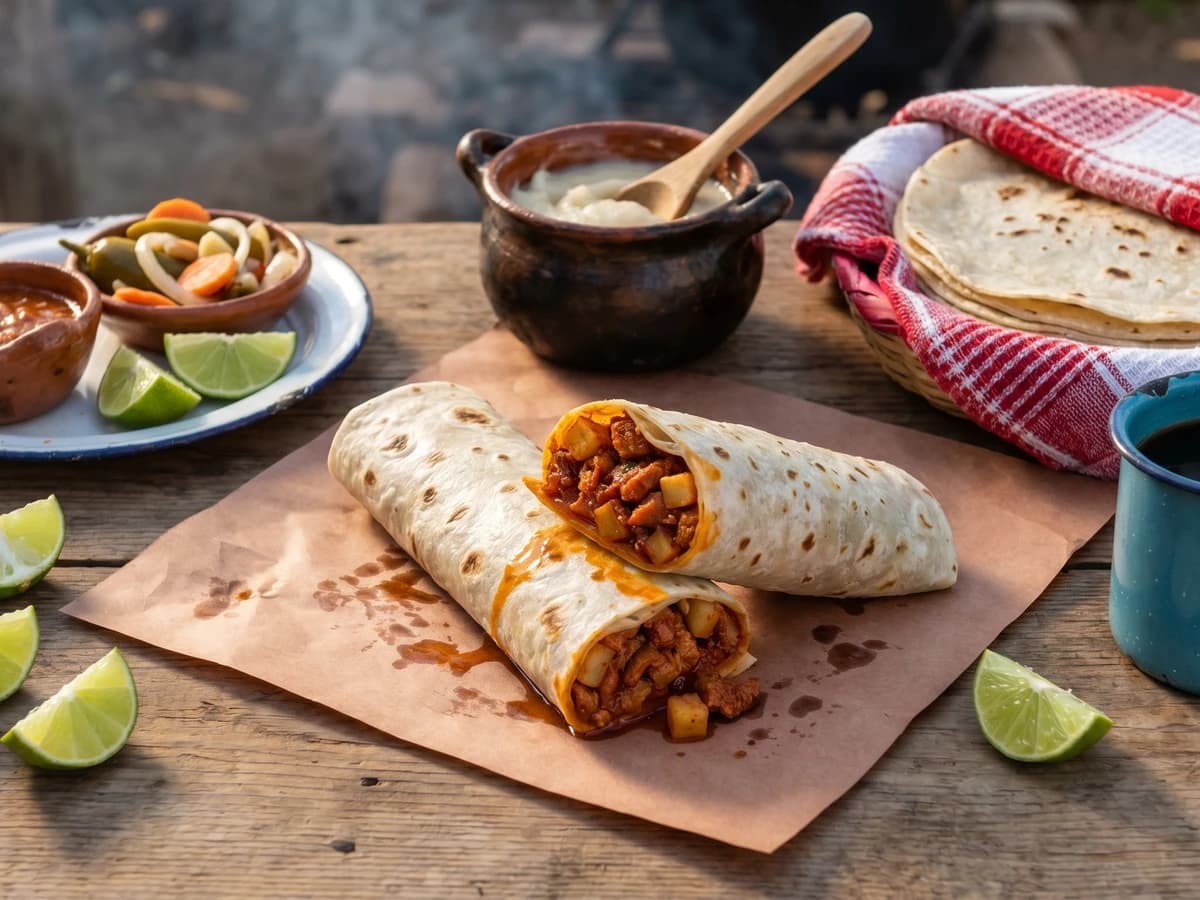
Sonora's working morning burrito: chicharrón de cáscara stewed in chile colorado with diced potato, rolled tight in a paper-thin tortilla sobaquera and eaten standing up at the carreta.
Chef Lupita
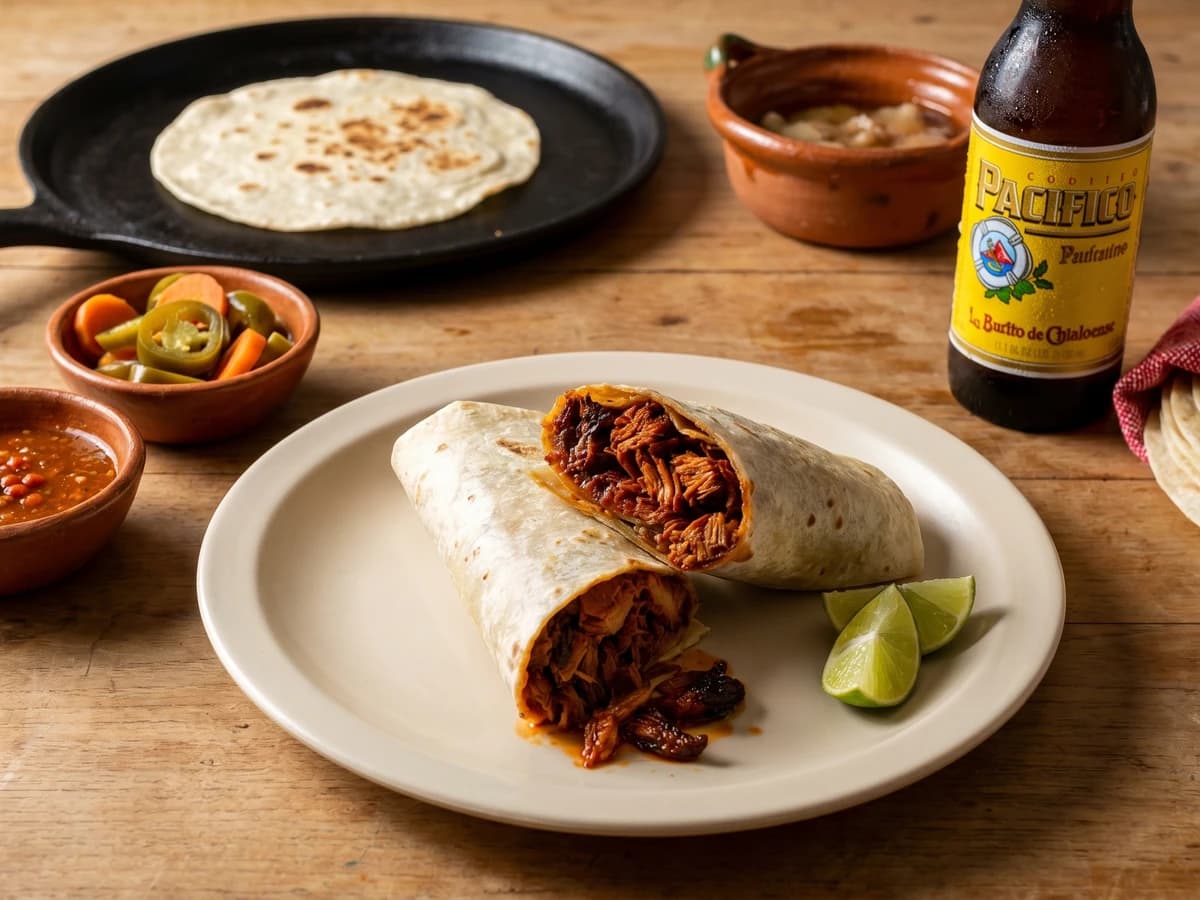
Mocorito's pork chilorio, shredded and confited in lard with chile ancho and pasilla, rolled into a thin handmade flour tortilla. The burrito Sinaloa sends out into the world.
Chef Lupita
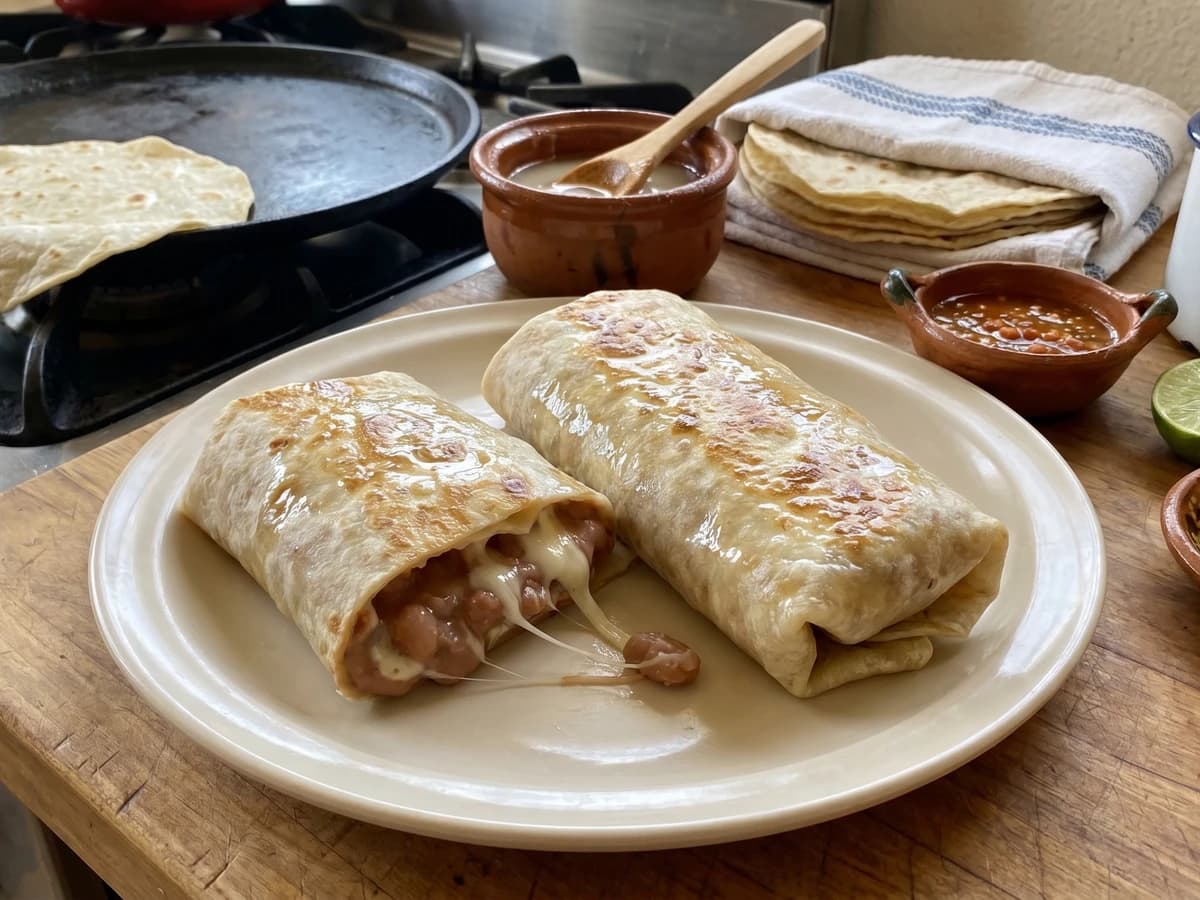
Sonora's morning burrito of mashed pinto frijoles puercos and melted queso asadero, wrapped in a paper-thin sobaquera and seared on the comal until the cheese pulls in long strings.